
ITL-0faded80aab1
Watch the video

Figure 1. After infant cardiopulmonary bypass, biochemical activation, clot breakdown on a tracing, and clinical bleeding need to be interpreted together. Conceptual illustration.
Key points
- A rise in a fibrinolysis biomarker does not by itself establish clinically important hyperfibrinolysis or a need for more tranexamic acid (TXA).
- Tissue plasminogen activator antigen, plasmin–antiplasmin complexes, and ROTEM maximum lysis measure different parts of the process.
- In 90 infants receiving routine TXA, the biomarkers rose but did not correlate with ROTEM maximum lysis.
- Higher plasmin–antiplasmin levels were associated with less early chest-drain bleeding. This was an association, not a protective treatment effect.
- Decisions about additional hemostatic treatment should address the bleeding phenotype and the clot defect, rather than a research biomarker in isolation.
An infant has separated from cardiopulmonary bypass (CPB) and has already received TXA. If postoperative testing shows activation of fibrinolysis, has the drug failed? And if the ROTEM tracing shows little lysis, can fibrinolysis be excluded?
A mechanistic study by Siemens and colleagues makes both shortcuts difficult to defend. Its practical message is to distinguish evidence that the fibrinolytic system has been activated from evidence that ongoing clot breakdown is causing the patient's bleeding.[1]
Three tests, three different questions
Tissue plasminogen activator antigen (tPA-Ag) measures antigen, including tPA bound to its inhibitor. It does not quantify only the free, active enzyme. Plasmin–antiplasmin complexes (PAP) form when plasmin is neutralized by α2-antiplasmin: they signal plasmin generation and inhibition, not the concentration of freely active plasmin.
ROTEM maximum lysis (ML), by comparison, describes loss of clot firmness during the assay. It is a functional observation under test conditions, with limited sensitivity for small changes in fibrinolytic activity. A biomarker can therefore rise without a matching change in ML. Conversely, a reassuring ML does not demonstrate that every molecular component of fibrinolysis is inactive.[1]
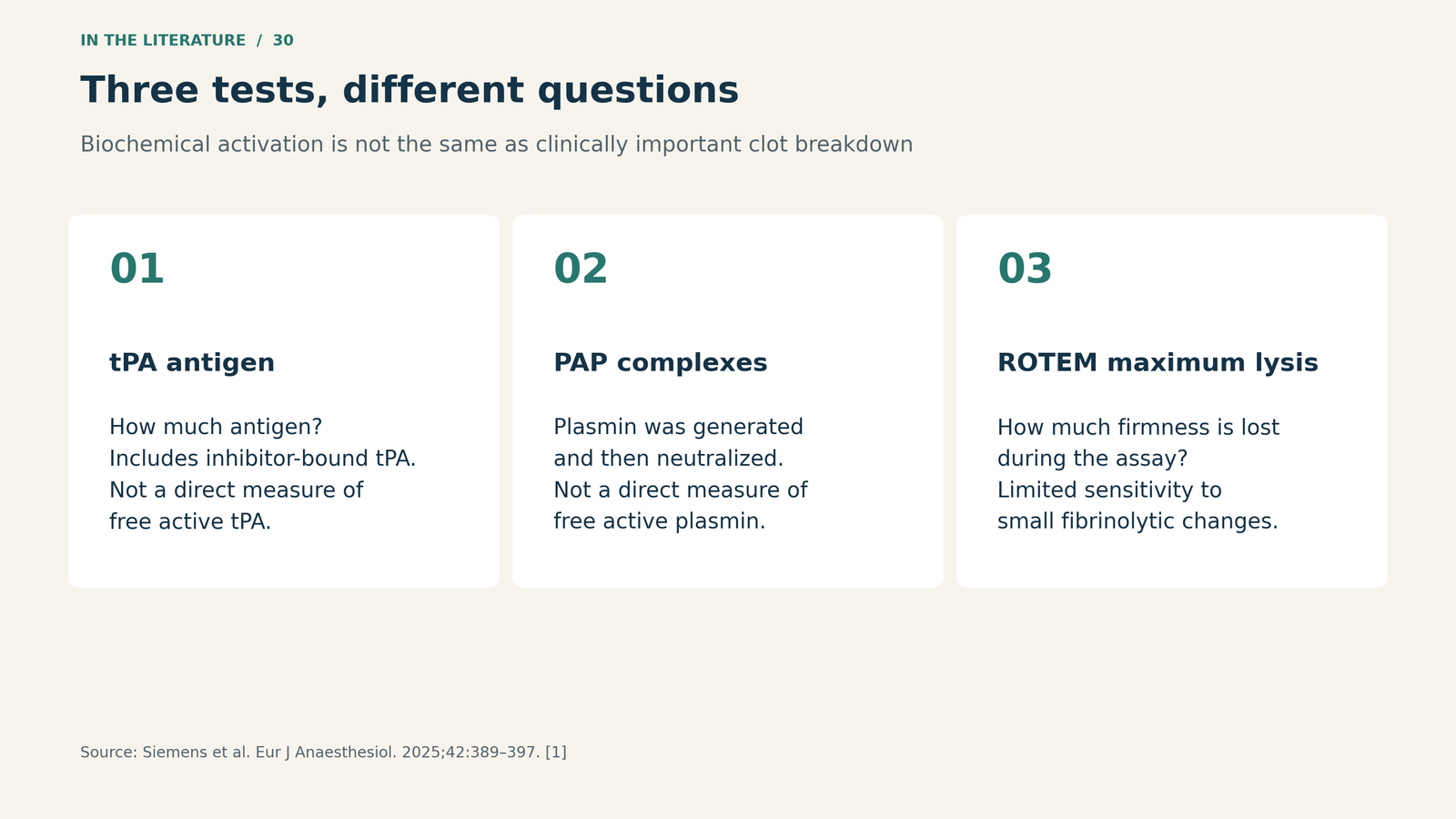
Figure 2. The tests answer related but nonidentical questions. PAP is a complex containing inhibited plasmin, not a direct assay of free plasmin. Based on Siemens et al.[1]

What happened in the 90 infants?
This prospective cohort substudy was nested within the FIBCON trial. Infants at higher bleeding risk, identified by low FIBTEM clot firmness during CPB, had been randomized to fibrinogen concentrate (60 infants) or placebo (30). All received TXA, with three intravenous doses of 10 mg/kg around induction, heparin administration, and separation from CPB. None received additional TXA. The comparison was therefore not TXA versus no TXA, nor one TXA dose versus another.[1]
The investigators measured tPA-Ag and PAP at CPB initiation, after separation, and four hours after pediatric ICU admission; ROTEM was sampled at additional time points. Biomarkers increased, and 18 of 90 infants reached the study's ROTEM criterion for hyperfibrinolysis at some point. Yet neither tPA-Ag nor PAP correlated with ML.
More importantly, in the multivariable analysis, higher PAP and greater clot firmness were associated with less chest-drain blood loss during the first four ICU hours. ML itself was not significantly associated with that bleeding outcome. These findings do not make PAP a treatment target or establish that raising PAP prevents bleeding. They show why “higher fibrinolysis marker equals more hemorrhage” is an unreliable interpretation in this setting.[1]
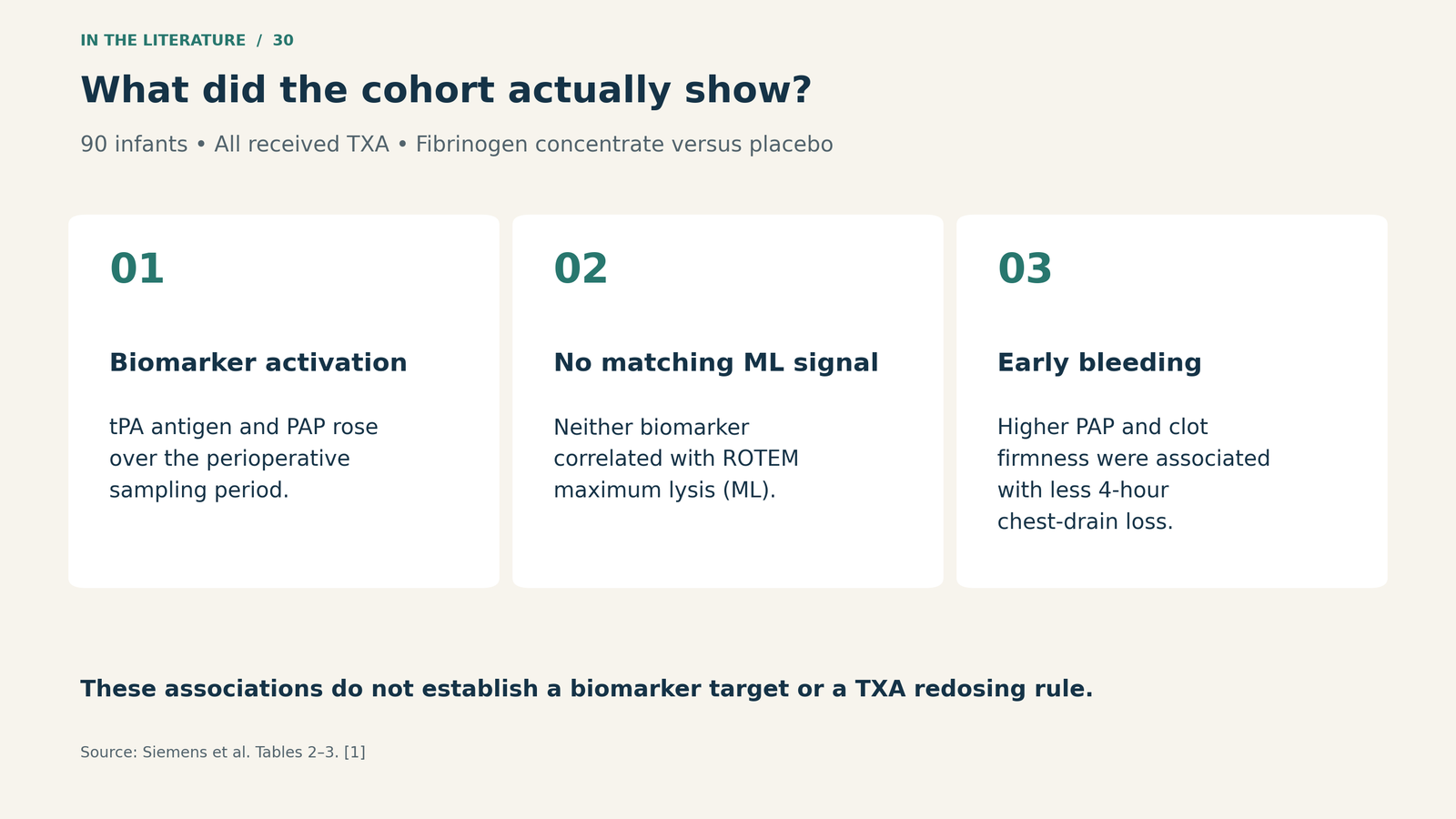
Figure 3. Three observations from the same cohort. The clinical association concerns early chest-drain loss, not all postoperative bleeding or long-term outcomes.[1]

Fibrinogen changes the picture—but does not create a TXA dosing rule
After fibrinogen concentrate, ROTEM lysis decreased in a different temporal pattern from placebo, while PAP was higher overall. Providing more substrate for clot formation and for interactions within the fibrinolytic system may help explain the apparent discrepancy. The proposed mechanisms remain hypotheses: the study did not measure free tPA activity, plasminogen activator inhibitor-1, or several other regulators.[1]
This matters at the bedside. A weak clot, a clot that is being broken down, and bleeding from a surgical source call for different responses. Neither an isolated PAP rise nor a low ML establishes which problem predominates. The study also cannot show that giving more TXA, switching antifibrinolytic drugs, or giving fibrinogen to every infant improves outcomes.
Bring the result back to the bleeding patient
Start with the amount and trajectory of bleeding and the surgical assessment. Interpret clot firmness, the fibrinogen contribution, platelet status, and heparin reversal alongside the lysis result. If bleeding continues, reassess the whole pattern after treatment rather than using one marker as an automatic escalation trigger.
A separate single-center study compared 40 neonates and infants managed with a ROTEM-guided strategy with 28 historical controls. The strategy was associated with less intraoperative platelet and cryoprecipitate use and less postoperative drainage. However, other treatment practices also changed, including factor-concentrate use; the study was not randomized. It supports investigating targeted management, not copying its entire drug algorithm or attributing every improvement to ROTEM alone.[2]
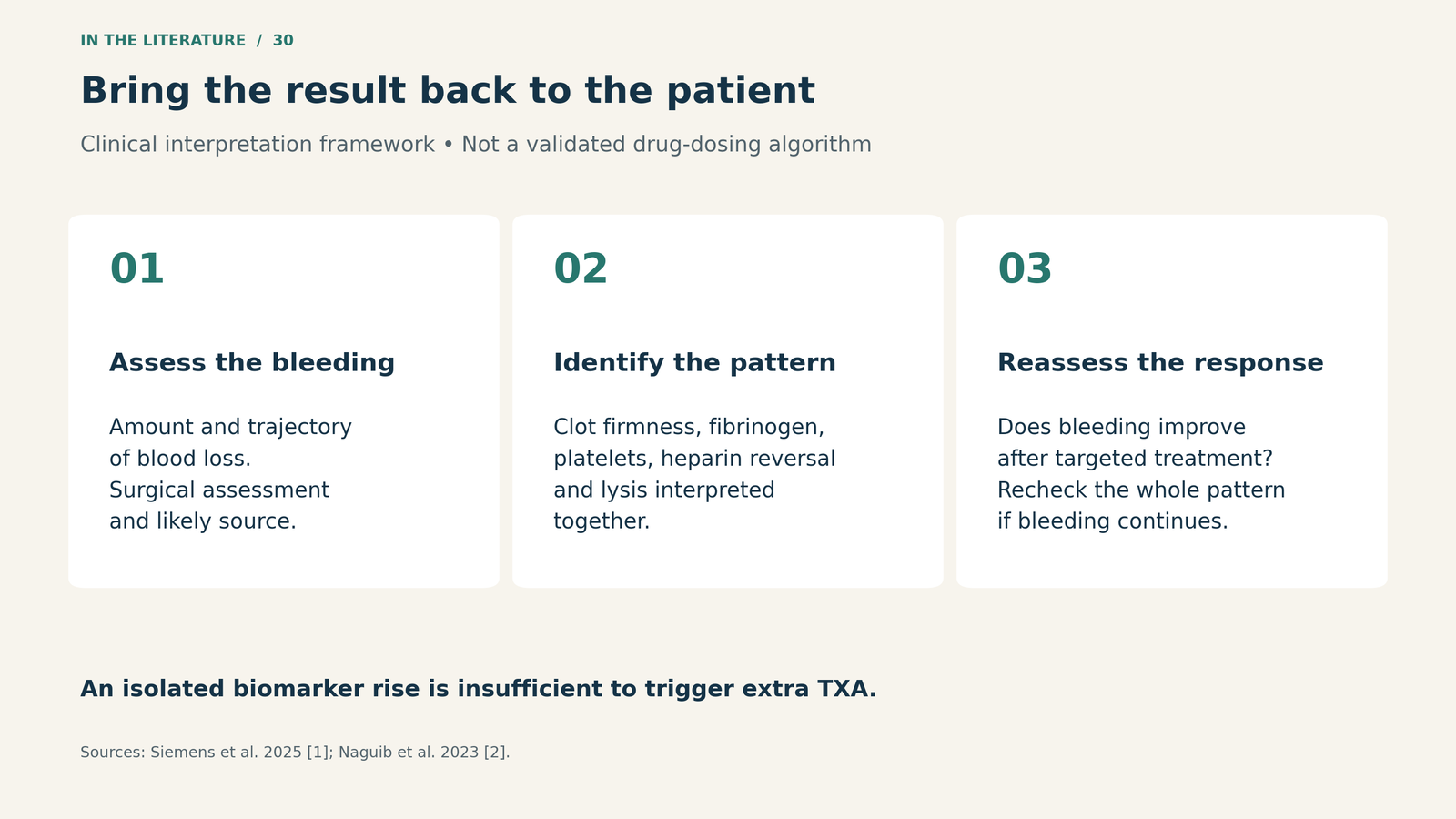
Figure 4. A clinical interpretation framework, not a validated TXA redosing algorithm. The next intervention depends on the combined clinical and hemostatic assessment.[1, 2]

Three takeaways
- Read the assay before treating the number. tPA antigen, PAP, and ROTEM lysis are not interchangeable measures.
- A biomarker rise is not a TXA failure test. This study did not test biomarker-guided redosing or alternative antifibrinolytic treatment.
- Treat the bleeding problem that is present. Combine surgical assessment, clot strength, fibrinogen and platelet evaluation, heparin reversal, and lysis; then reassess the response.
References
- Siemens K, Parmar K, Harris J, Hunt BJ, Tibby SM. Fibrinolytic activity in infants undergoing cardiac surgery on cardiopulmonary bypass with routine tranexamic acid: a prospective cohort substudy within the FIBrinogen CONcentrate randomised control trial. Eur J Anaesthesiol. 2025;42(5):389–397. doi:10.1097/EJA.0000000000002124.
- Naguib AN, Carrillo SA, Corridore M, Bigelow AM, Walczak A, Tram NK, et al. A ROTEM-guided algorithm aimed to reduce blood product utilization during neonatal and infant cardiac surgery. J Extra Corpor Technol. 2023;55(2):60–69. doi:10.1051/ject/2023017.