ITL-092b1d7bd0df
Juan Li, MD · Updated November 18, 2026
Key points
- Intubation is the riskiest moment for staff. It raised the odds of coronavirus infection about sixfold, while N95 masks were strongly protective.[1]
- Protection is a bundle. Experts and guidelines call for full PPE with an N95, a minimal team, a videolaryngoscope and viral filters.[2], [3]
- Skip the boxes. Intubating boxes and other improvised barriers are not recommended.[3]
- Real-world experience was reassuring. In Wuhan, no intubator wearing high-level PPE was infected, though patients desaturated fast.[4], [5]
- Full PPE did not cost the airway. Level 3 PPE was not linked to lower first-pass success.[6]
A patient with suspected viral pneumonia is tiring on high-flow oxygen in the emergency department and needs intubation now. How should the team protect itself and the airway?
The risk to staff
Tracheal intubation was associated with healthcare-worker coronavirus infection (OR 6.69), and wearing N95 masks was protective (OR 0.11). When full PPE was worn, no healthcare workers performing aerosol-generating procedures contracted the virus, although the review relies heavily on retrospective observational studies (Chan et al., Crit Care Med 2021).[1]
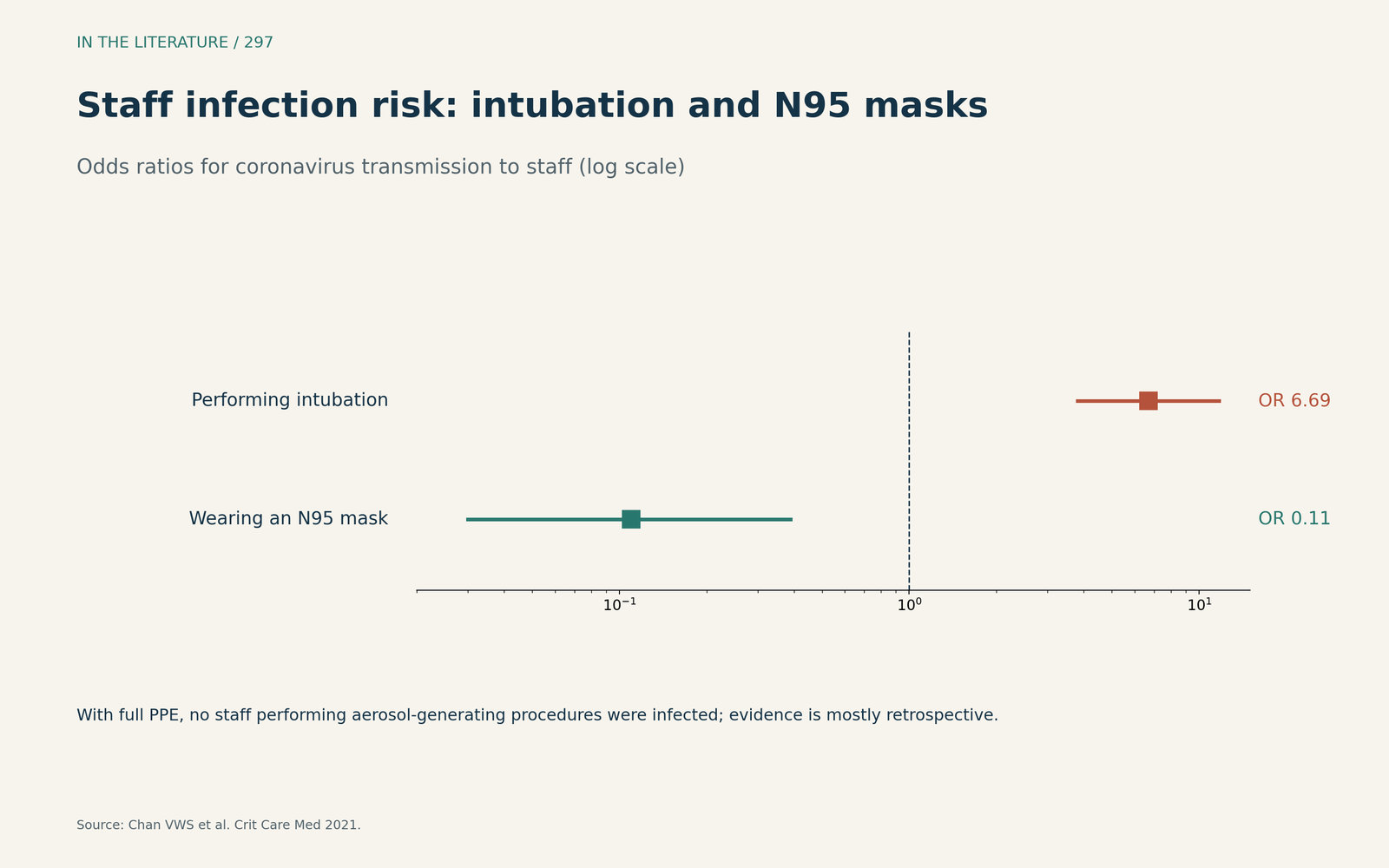
Figure 1. Intubation raised staff infection odds; N95 masks lowered them. Data from Chan et al.[1] View larger.

What consensus and guidelines advise
An international ICU Delphi panel considers tracheal intubation in COVID a high-risk aerosol-generating procedure and advises a coverall or gown, an N95 mask, surgical gloves and goggles or a face shield; intubation should be performed with a videolaryngoscope if available (Nasa et al., Lancet Infect Dis 2022).[2]
The 2025 AHA guideline (Cao et al., Circulation 2025) states that for high-consequence respiratory pathogens, video laryngoscopy is preferred over direct laryngoscopy, team leaders should minimize the number of people in the room, and a high-efficiency particulate air filter should remove fugitive aerosols from ventilation device outflow. Bacterial-viral filters remove more than 99.9% of transmissible viruses and infectious aerosols, and intubating boxes and other improvised barrier devices are not recommended.[3]
Lessons from the front line
In a Wuhan series of 202 emergency intubations, operators wore at least Level 3 PPE and none became infected. Mask ventilation after induction was used in 93% of intubations, eleven intubators reported vision hampered by mask fogging, and the authors recommend videolaryngoscopy over direct laryngoscopy (Yao et al., Br J Anaesth 2020).[4] A practical protocol advises that clinicians should not remove the patient's current oxygen therapy in favour of bag preoxygenation, and warns that COVID patients desaturate very quickly during laryngoscopy and intubation (Ghia et al., J Cardiothorac Vasc Anesth 2020).[5]
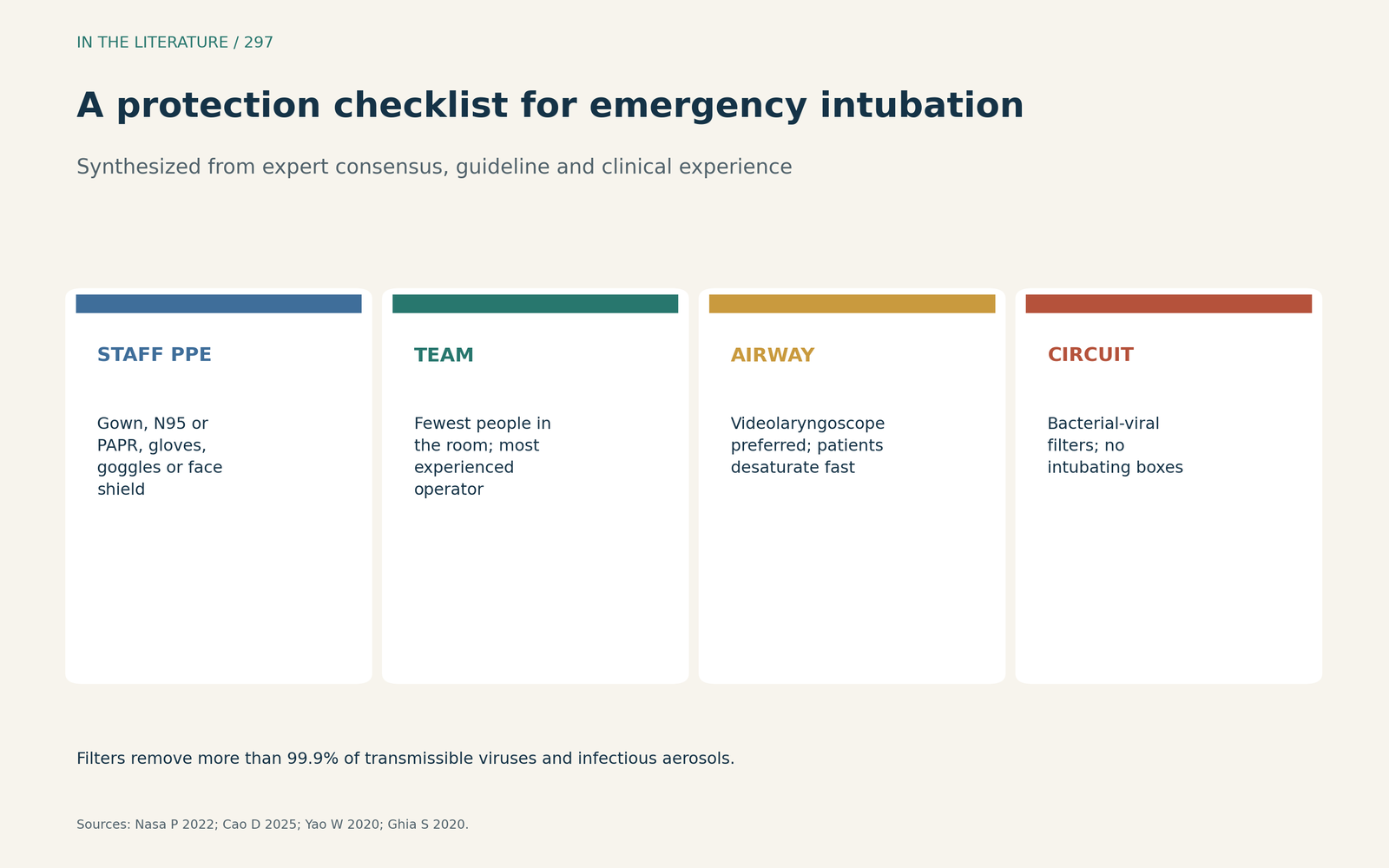
Figure 2. Protect staff, team, airway and circuit together. Synthesized from Nasa et al., the AHA guideline, Yao et al. and Ghia et al.[2], [3], [4], [5] View larger.

Does protection cost the airway?
In 2431 emergency department intubations, 1159 (47.7%) were done with Level 3 PPE, and Level 3 PPE was not significantly associated with first-pass intubation success in any subgroup (Tsuji et al., Acute Med Surg 2026).[6]
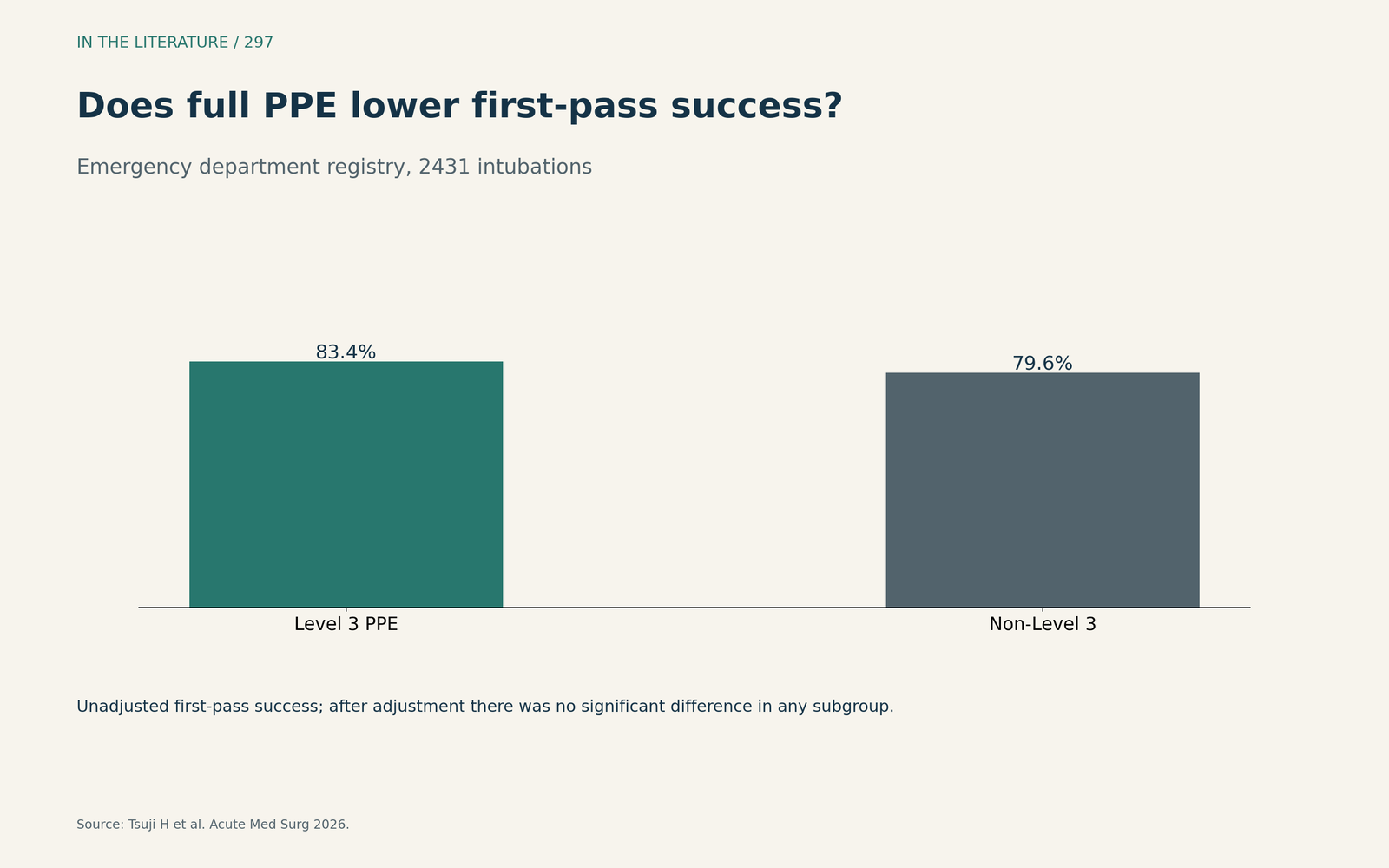
Figure 3. First-pass success was similar with full PPE after adjustment. Data from Tsuji et al.[6] View larger.

Three takeaways
- Treat intubation as a high-risk aerosol-generating procedure and wear full PPE with an N95 or PAPR.[1], [2]
- Keep the team small, use a videolaryngoscope and viral filters, and avoid improvised boxes.[3], [4]
- Expect rapid desaturation, but do not fear that full PPE will cost first-pass success.[5], [6]
References
- Chan VWS, Ng HHL, Rahman L, et al. Transmission of severe acute respiratory syndrome coronavirus 1 and severe acute respiratory syndrome coronavirus 2 during aerosol-generating procedures in critical care: a systematic review and meta-analysis of observational studies. Crit Care Med. 2021;49(7):1159–1168. doi:10.1097/CCM.0000000000004965
- Nasa P, Azoulay E, Chakrabarti A, et al. Infection control in the intensive care unit: expert consensus statements for SARS-CoV-2 using a Delphi method. Lancet Infect Dis. 2022;22:e74–e87. doi:10.1016/S1473-3099(21)00626-5
- Cao D, Arens AM, Chow SL, et al. Part 10: adult and pediatric special circumstances of resuscitation: 2025 American Heart Association guidelines for cardiopulmonary resuscitation and emergency cardiovascular care. Circulation. 2025;152(suppl 2):S578–S672. doi:10.1161/CIR.0000000000001380
- Yao W, Wang T, Jiang B, et al. Emergency tracheal intubation in 202 patients with COVID-19 in Wuhan, China: lessons learnt and international expert recommendations. Br J Anaesth. 2020;125(1):e28–e37. doi:10.1016/j.bja.2020.03.026
- Ghia S, Lazar M, Epstein J, Bhatt HV. "Anesthesia stat" to intubate a coronavirus disease 2019 (COVID-19) patient: implications for the anesthesiologist. J Cardiothorac Vasc Anesth. 2020;34:2566–2570. doi:10.1053/j.jvca.2020.05.016
- Tsuji H, Shiga T, Chiba T, et al. Association of level 3 personal protective equipment with intubation success in the emergency department. Acute Med Surg. 2026;13(1):e70121. doi:10.1002/ams2.70121