
ITL-092b1d7bd0df
Juan Li, MD · 更新于2026年11月18日
核心要点
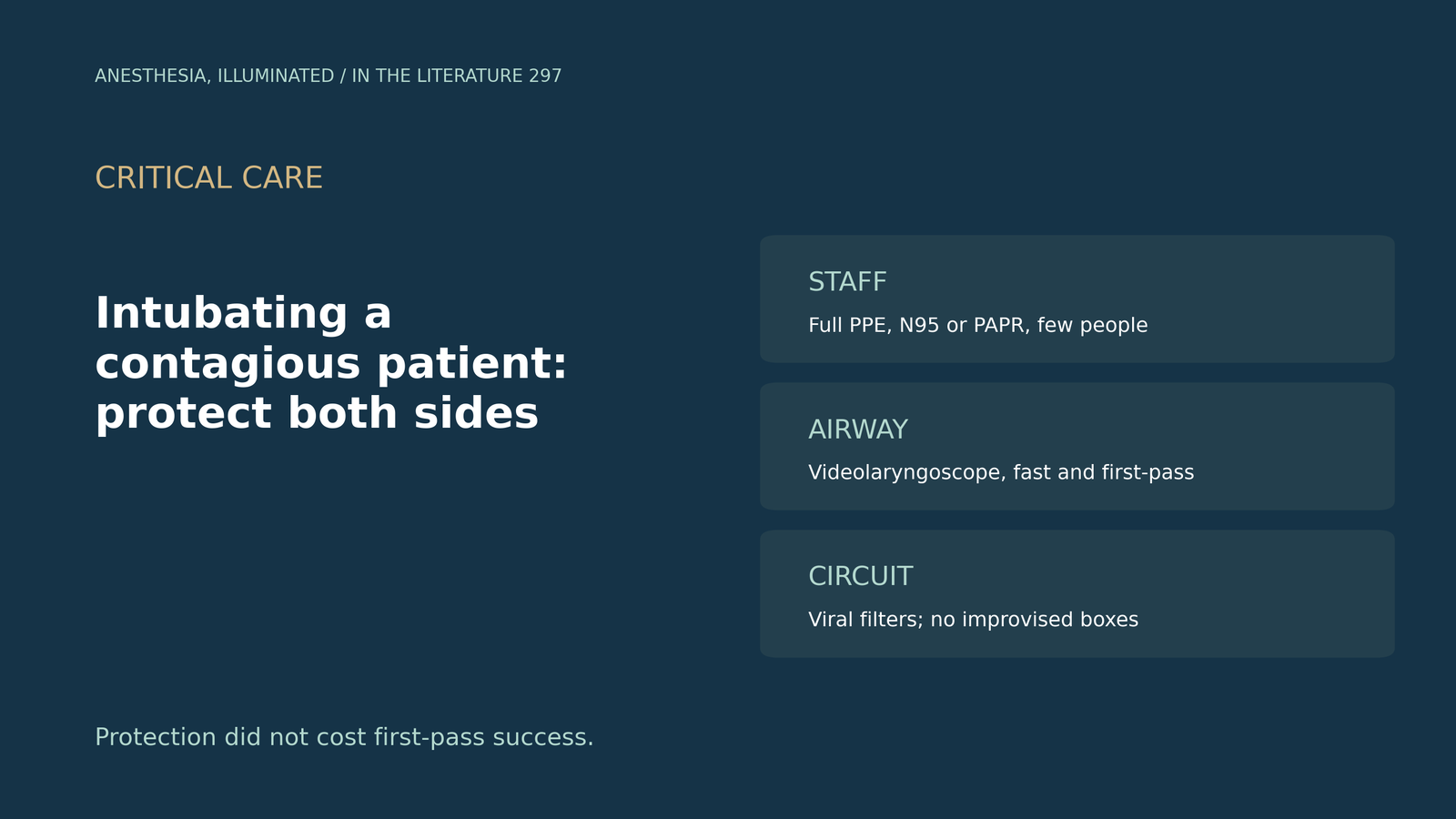
- 插管是医护人员风险最高的时刻。插管使冠状病毒感染几率升高约 6 倍,而 N95 口罩有很强的保护作用。[1]
- 防护是一整套措施。专家和指南要求全套防护加 N95、精简团队、可视喉镜和病毒过滤器。[2], [3]
- 不用插管箱。不推荐插管箱等临时屏障装置。[3]
- 一线经验令人放心。武汉佩戴高级别防护的插管者无人感染,但患者氧饱和度下降很快。[4], [5]
- 全套防护不影响气道管理。3 级防护与首次插管成功率降低无关。[6]
一位疑似病毒性肺炎患者在急诊高流量氧疗下逐渐疲劳,需要立即插管。团队应如何保护自己和患者的气道?
医护人员面临的风险
气管插管与医护人员冠状病毒感染相关(OR 6.69),佩戴 N95 口罩有保护作用(OR 0.11)。在全套防护下,参与产生气溶胶操作的医护人员无人感染,不过该综述主要依据回顾性观察研究(Chan 等,Crit Care Med 2021)。[1]
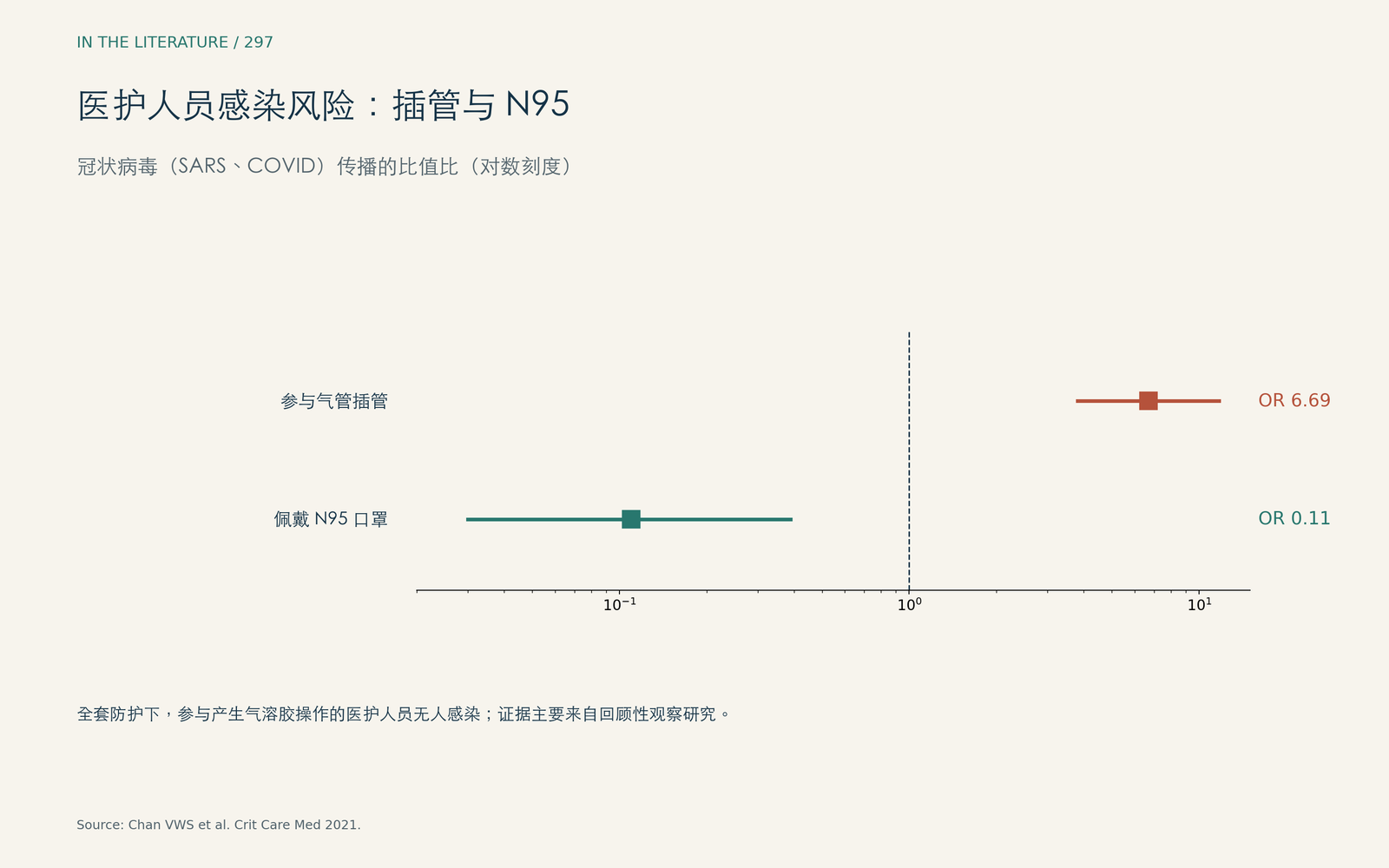
图 1. 插管使医护人员感染几率升高;N95 口罩使其降低。数据来自 Chan 等。[1] 查看大图。

共识与指南的建议
一个国际 ICU Delphi 专家组认为,COVID 患者气管插管是高风险的产生气溶胶操作,建议穿连体防护服或隔离衣、戴 N95 口罩、外科手套和护目镜或面屏;如有条件应使用可视喉镜插管(Nasa 等,Lancet Infect Dis 2022)。[2]
2025 年 AHA 指南(Cao 等,Circulation 2025)指出,对于高后果呼吸道病原体,可视喉镜优于直接喉镜;团队负责人应尽量减少室内人数;应在通气装置出口使用高效空气过滤器清除逸散的气溶胶。细菌-病毒过滤器可去除超过 99.9% 的可传播病毒和感染性气溶胶;不推荐使用插管箱和其他临时屏障装置。[3]
一线的经验
在武汉的 202 例紧急插管中,操作者至少佩戴 3 级防护,无人感染。93% 的插管在诱导后进行了面罩通气,11 名插管者报告面罩起雾影响视野;作者推荐可视喉镜而非直接喉镜(Yao 等,Br J Anaesth 2020)。[4] 一份实用方案建议,不要为了用简易呼吸器预充氧而撤除患者当前的氧疗,并提醒 COVID 患者在喉镜暴露和插管时氧饱和度下降非常快(Ghia 等,J Cardiothorac Vasc Anesth 2020)。[5]
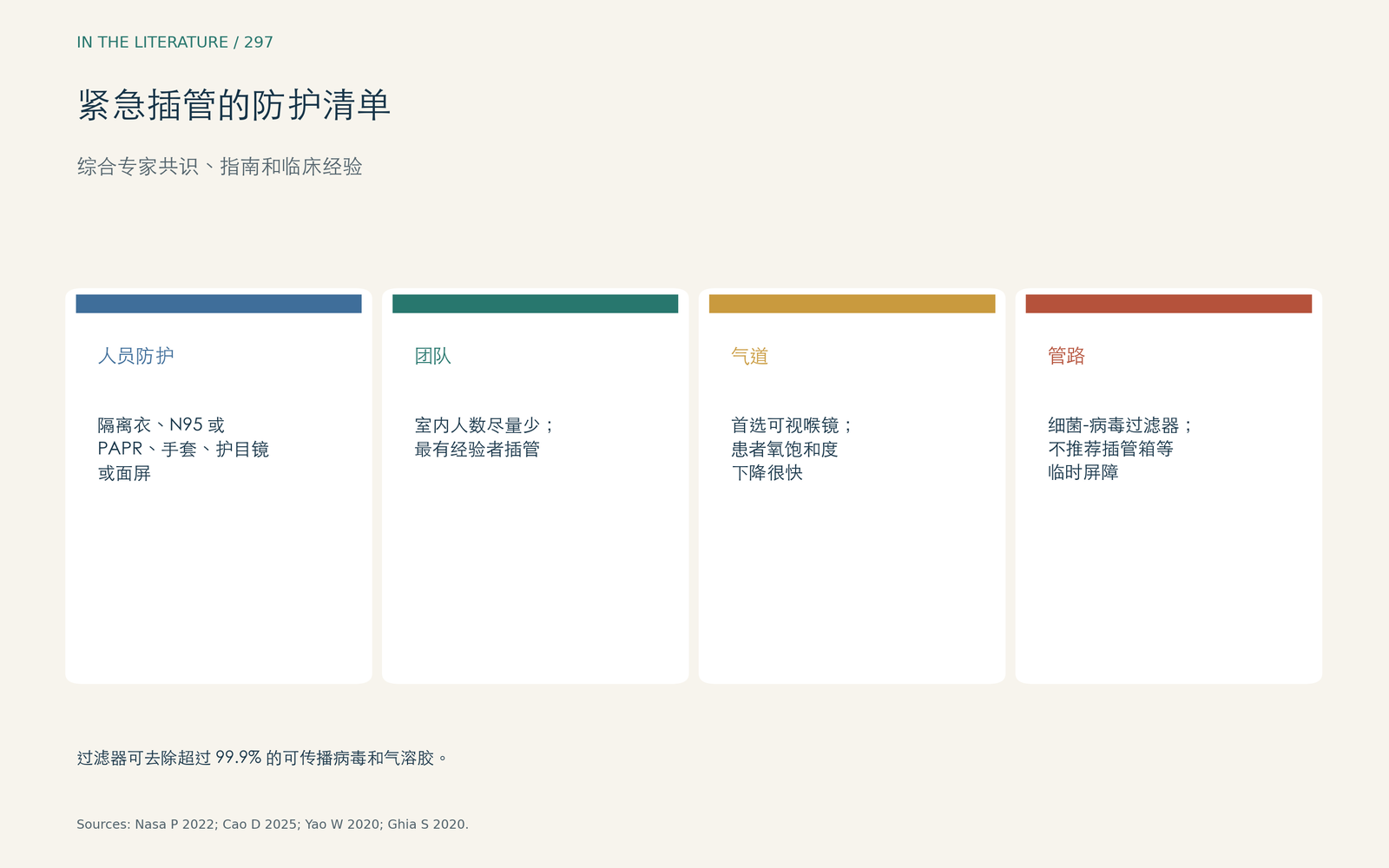
图 2. 人员、团队、气道和管路要一起防护。综合 Nasa 等、AHA 指南、Yao 等和 Ghia 等。[2], [3], [4], [5] 查看大图。

防护会影响气道管理吗?
在 2431 例急诊插管中,1159 例(47.7%)在 3 级防护下完成;在所有亚组中,3 级防护与首次插管成功率均无显著关联(Tsuji 等,Acute Med Surg 2026)。[6]
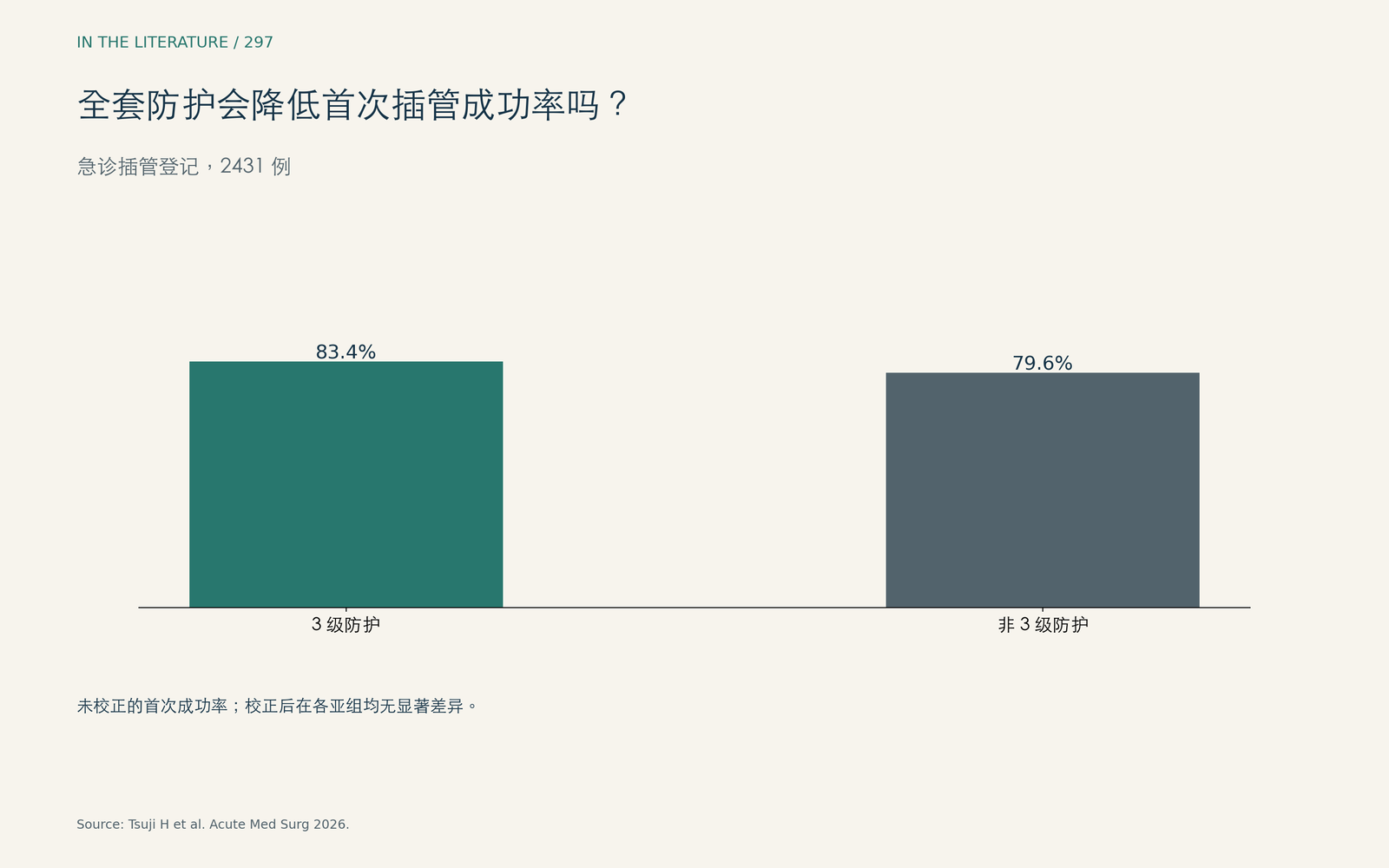
图 3. 校正后,全套防护下的首次插管成功率相近。数据来自 Tsuji 等。[6] 查看大图。

临床带走的三点
- 把插管当作高风险的产生气溶胶操作,穿戴全套防护并使用 N95 或 PAPR。[1], [2]
- 精简团队,使用可视喉镜和病毒过滤器,不用临时插管箱。[3], [4]
- 预期氧饱和度会快速下降,但不必担心全套防护会降低首次插管成功率。[5], [6]
参考文献
- Chan VWS, Ng HHL, Rahman L, et al. Transmission of severe acute respiratory syndrome coronavirus 1 and severe acute respiratory syndrome coronavirus 2 during aerosol-generating procedures in critical care: a systematic review and meta-analysis of observational studies. Crit Care Med. 2021;49(7):1159–1168. doi:10.1097/CCM.0000000000004965
- Nasa P, Azoulay E, Chakrabarti A, et al. Infection control in the intensive care unit: expert consensus statements for SARS-CoV-2 using a Delphi method. Lancet Infect Dis. 2022;22:e74–e87. doi:10.1016/S1473-3099(21)00626-5
- Cao D, Arens AM, Chow SL, et al. Part 10: adult and pediatric special circumstances of resuscitation: 2025 American Heart Association guidelines for cardiopulmonary resuscitation and emergency cardiovascular care. Circulation. 2025;152(suppl 2):S578–S672. doi:10.1161/CIR.0000000000001380
- Yao W, Wang T, Jiang B, et al. Emergency tracheal intubation in 202 patients with COVID-19 in Wuhan, China: lessons learnt and international expert recommendations. Br J Anaesth. 2020;125(1):e28–e37. doi:10.1016/j.bja.2020.03.026
- Ghia S, Lazar M, Epstein J, Bhatt HV. "Anesthesia stat" to intubate a coronavirus disease 2019 (COVID-19) patient: implications for the anesthesiologist. J Cardiothorac Vasc Anesth. 2020;34:2566–2570. doi:10.1053/j.jvca.2020.05.016
- Tsuji H, Shiga T, Chiba T, et al. Association of level 3 personal protective equipment with intubation success in the emergency department. Acute Med Surg. 2026;13(1):e70121. doi:10.1002/ams2.70121