
ITL-7920f967ea18
Juan Li, MD · Updated November 18, 2026
Key points
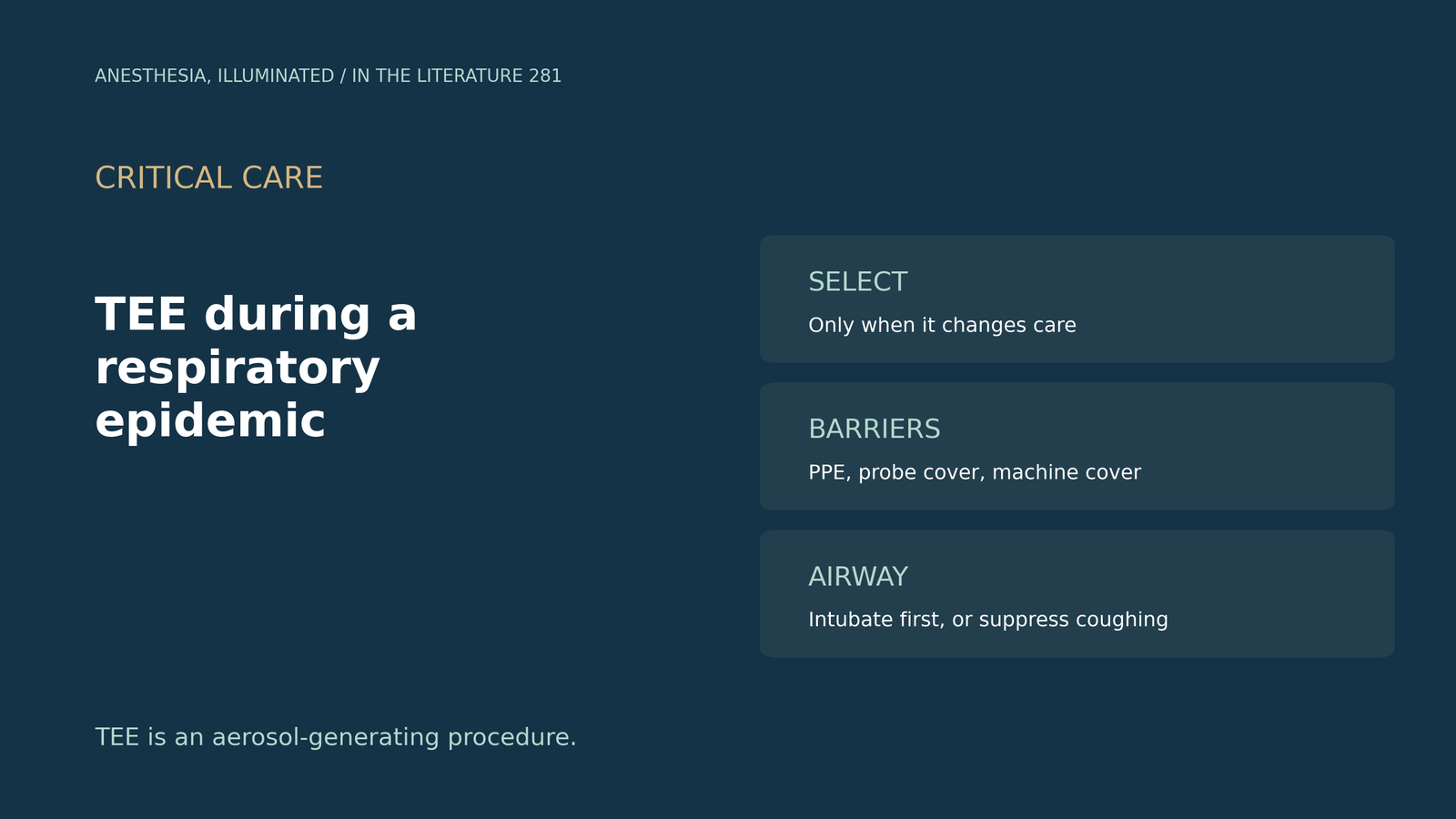
- Select, then focus. TEE should be limited to selected patients on a risk/benefit balance, with a focused, step-by-step exam.[1]
- Intubate before you insert. The covered probe goes in only after tracheal intubation, and probe and machine are disinfected afterwards.[1]
- A simple cover helps. In a mannequin test, a standard ultrasound probe cover kept simulated secretions off the operator's hands.[2]
- Awake TEE needs cough control. Suppress the gag reflex, expect coughing at probe removal, and consider an endoscopy oxygen mask.[3], [4]
- Protect staff and other patients. Shorten time in the room, wear airway-level PPE, and screen urgent cardiac admissions.[5], [6], [7]
A patient with suspected respiratory infection needs urgent cardiac surgery, and the team wants intraoperative TEE. How should the probe, the staff and the next patient be protected?
Who gets TEE, and how
The EACTA/SCA consensus (Guarracino et al., J Cardiothorac Vasc Anesth 2021) states that TEE should be limited to selected patients on a risk/benefit balance, and that a focused, step-by-step TEE examination should be considered. The covered TEE probe is inserted only after tracheal intubation, and proper disinfection of probe and machine is mandatory, as recommended by manufacturers. For aerosol-generating procedures such as bronchoscopy and TEE, the consensus lists specific PPE, including a well-fitted filtering mask or PAPR. TEE and anaesthesia machines can be covered with disposable transparent plastic sheets, and testing should be done as close to surgery as possible, preferably within 48 hours. Unreferenced statements in the consensus are expert opinion.[1]
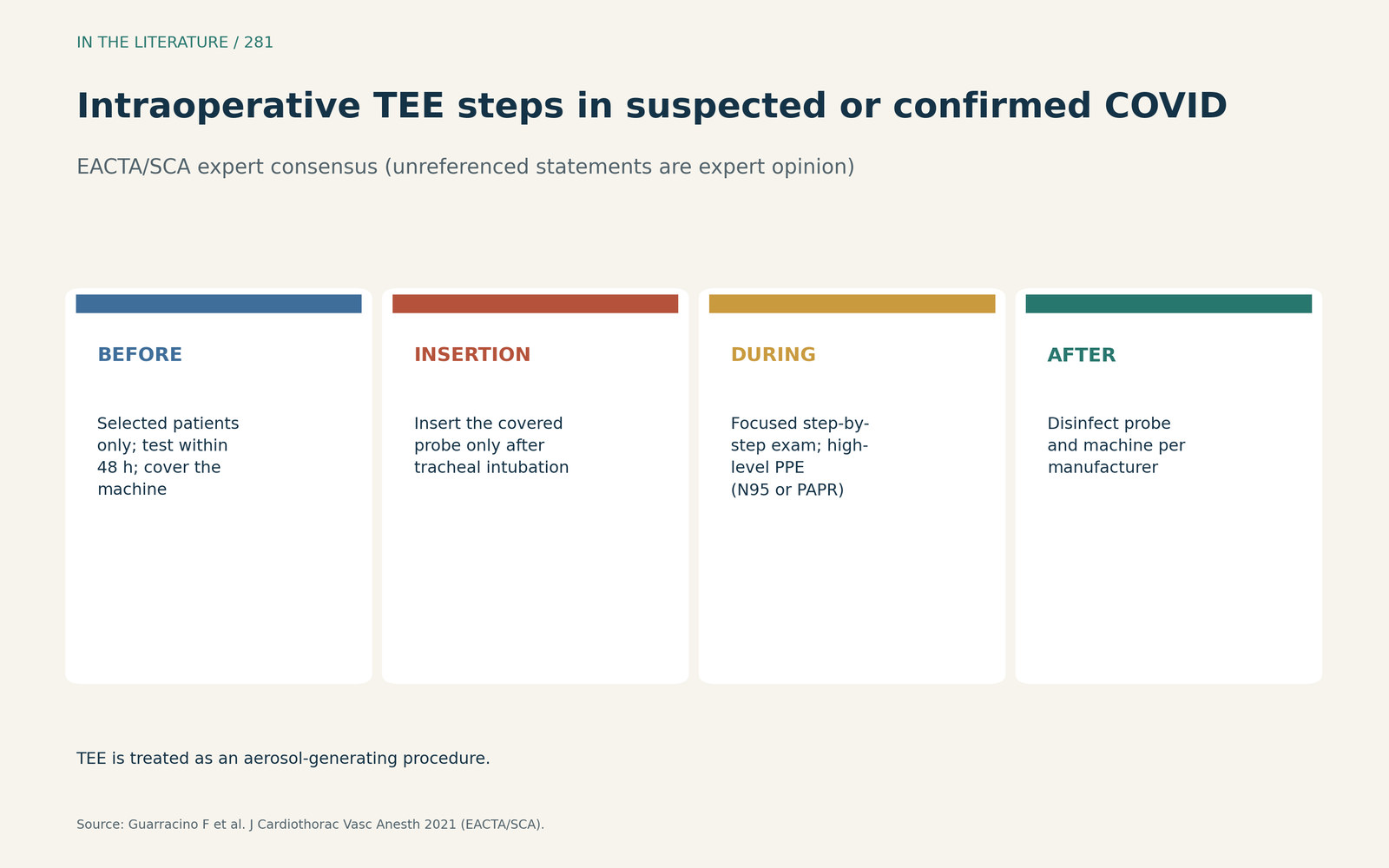
Figure 1. Select, intubate before insertion, keep the exam focused, and disinfect. Data from the EACTA/SCA consensus.[1] View larger.

Probe covers
A standard ultrasound probe cover was taped to the base of the TEE handle and used during emergency surgery (Moulthrop et al., J Cardiothorac Vasc Anesth 2021). In a mannequin test, no Glo Germ reached the operator's hands with a covered probe, whereas with an uncovered probe, contamination was visible on the echocardiographer's hand and a wide surrounding region. A mannequin cannot replicate the moisture and soft tissue of a human, and custom TEE probe covers can cost twice as much as standard ultrasound probe covers.[2]
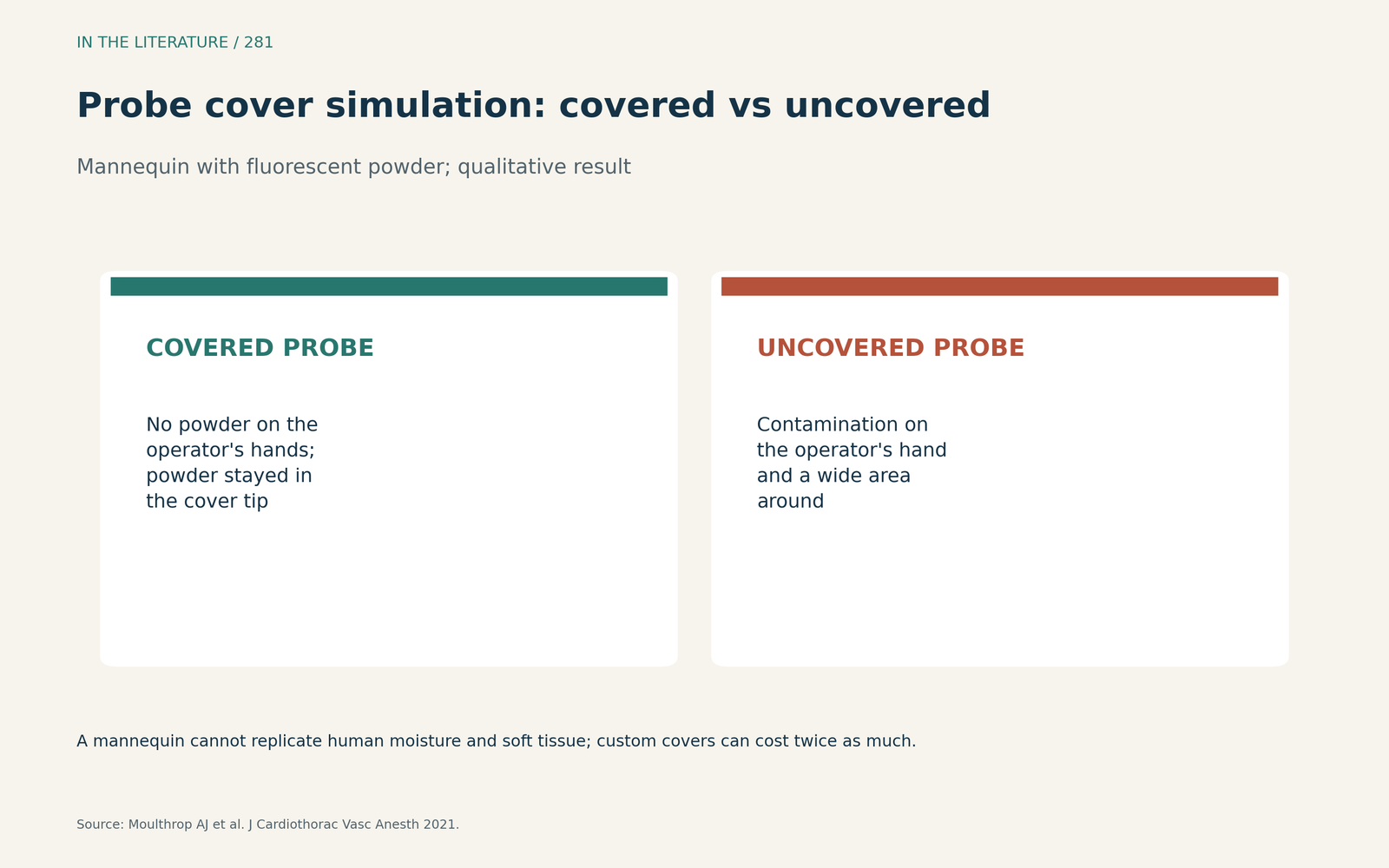
Figure 2. A standard cover contained the fluorescent marker in a qualitative mannequin test. Data from Moulthrop et al.[2] View larger.

TEE in awake or sedated patients
TEE probe insertion stimulates the gag reflex, which can provoke cough and sneezing; suppressing the gag reflex with topical anaesthetic spray and IV sedation is suggested, and the authors of one echo-lab letter observed more coughing at probe removal than at insertion (Behjati and Tohidi, Caspian J Intern Med 2024).[3] An endoscopy oxygen mask with self-sealing ports delivers an FiO2 of 0.88–0.95 with its reservoir bag, and the mask also acts as a physical barrier to coughing (Gonzalez, J Am Soc Echocardiogr 2021); the author is an educational consultant to the mask manufacturer.[4]
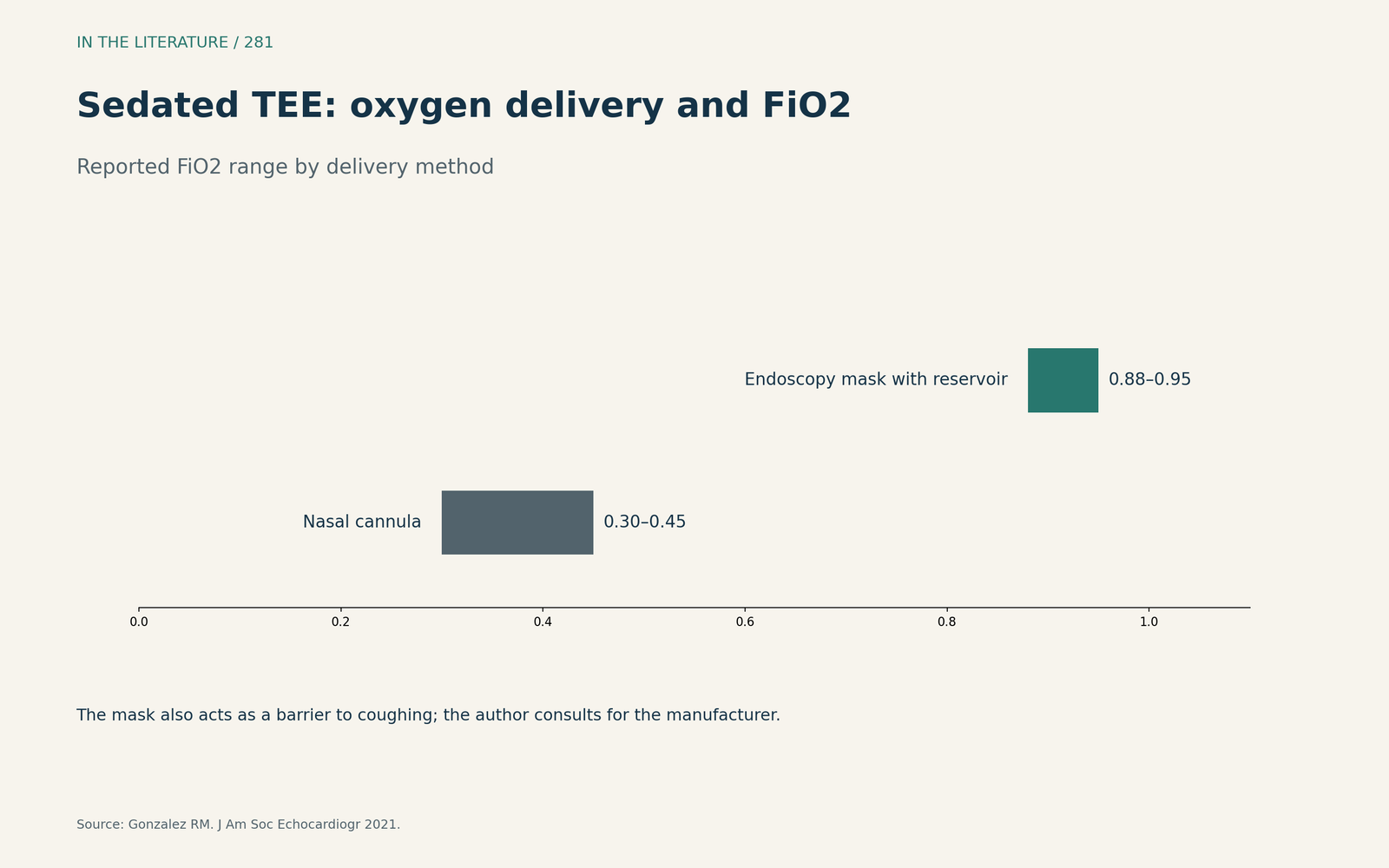
Figure 3. An endoscopy mask gives far higher FiO2 than a nasal cannula and also blocks coughing. Data from Gonzalez.[4] View larger.

Protecting staff and patients
A focused protocol in 38 COVID ICU patients moved strain analysis outside the room to limit sonographer exposure (Kaminski et al., J Am Soc Echocardiogr 2020).[5] For suspected or proven infection, minimum PPE is a gown, gloves, an N95 respirator and an eye shield, and procedures involving the nose, mouth or airway need even more aggressive protection (Maracaja et al., J Cardiothorac Vasc Anesth 2020).[6] On the patient side, every urgent cardiac admission should probably be isolated initially and screened, and separate pathways should be kept until virological results are available (Pisano et al., J Cardiothorac Vasc Anesth 2020).[7]
Three takeaways
- Treat TEE as aerosol-generating: do it only when it changes care, and keep it focused.[1]
- In anaesthetised patients, intubate first, then insert a covered probe; cover the machine and disinfect afterwards.[1], [2]
- In awake patients, suppress the gag reflex, prepare for coughing at removal, and consider a barrier oxygen mask.[3], [4]
References
- Guarracino F, Shernan SK, El Tahan M, et al. EACTA/SCA recommendations for the cardiac anesthesia management of patients with suspected or confirmed COVID-19 infection: an expert consensus from the European Association of Cardiothoracic Anesthesiology and Society of Cardiovascular Anesthesiologists with endorsement from the Chinese Society of Cardiothoracic and Vascular Anesthesiology. J Cardiothorac Vasc Anesth. 2021;35(7):1953–1963. doi:10.1053/j.jvca.2021.02.039
- Moulthrop AJ, Kolarczyk LM, Teeter EG. Preventing contamination during transesophageal echocardiography in the face of the coronavirus disease 2019 (COVID-19) pandemic: a Glo Germ experience. J Cardiothorac Vasc Anesth. 2021;35(9):2824–2826. doi:10.1053/j.jvca.2021.02.051
- Behjati M, Tohidi F. Transesophageal echocardiography probe intubation or extubation: which side is generating more aerosols associated with spreading COVID-19 contamination? Caspian J Intern Med. 2024;15(4):748–749. doi:10.22088/cjim.15.4.748
- Gonzalez RM. Maximizing patient and staff safety during transesophageal echocardiography in the COVID-19 era by use of a new oxygen delivery system: endoscopy oxygen masks with self-sealing endoscope insertion ports. J Am Soc Echocardiogr. 2021;34(4):453–454. doi:10.1016/j.echo.2020.12.022
- Kaminski A, Payne A, Roemer S, Ignatowski D, Khandheria BK. Answering to the call of critically ill patients: limiting sonographer exposure to COVID-19 with focused protocols. J Am Soc Echocardiogr. 2020;33(7):902–903. doi:10.1016/j.echo.2020.05.006
- Maracaja L, Blitz D, Maracaja DLV, Walker CA. How 3D printing can prevent spread of COVID-19 among healthcare professionals during times of critical shortage of protective personal equipment. J Cardiothorac Vasc Anesth. 2020;34:2847–2849. doi:10.1053/j.jvca.2020.04.004
- Pisano A, Landoni G, Zangrillo A. Protecting high-risk cardiac patients during the COVID-19 outbreak. J Cardiothorac Vasc Anesth. 2020;34:1698. doi:10.1053/j.jvca.2020.03.043