
ITL-27f697b67c22
Juan Li, MD · Updated November 18, 2026
Key points
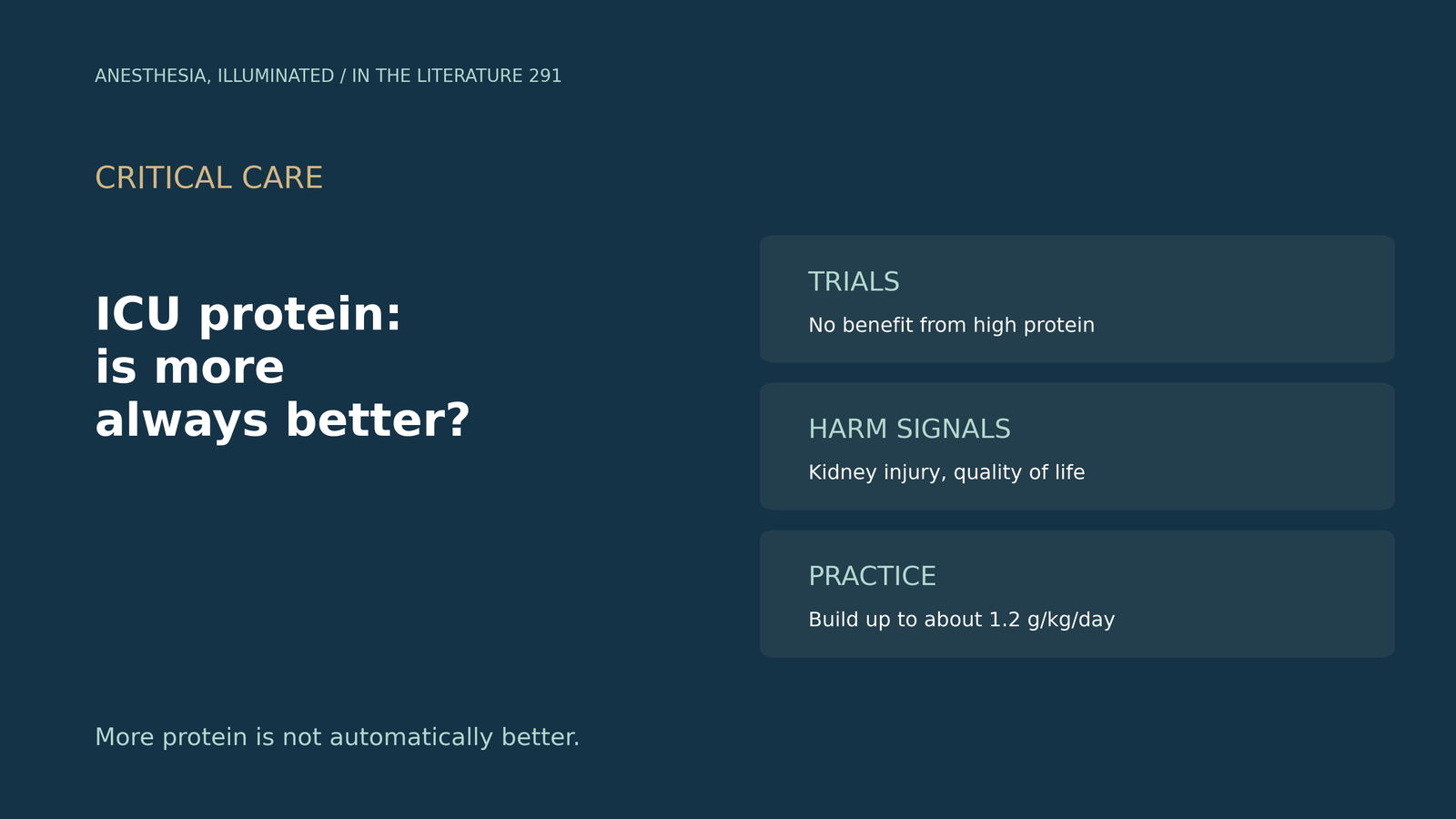
- The biggest pragmatic trial found no benefit. EFFORT Protein showed no improvement and possible harm in kidney injury.[1]
- A blinded trial found harm. PRECISe linked high protein to worse quality of life and more GI intolerance.[2]
- Pooled trials agree. Overall mortality did not change, but mortality rose with higher protein in acute kidney injury.[3], [4]
- Observational data point the other way, but are confounded. Higher-protein groups usually also got more energy.[5]
- Practice is shifting. Trialists suggest building up over 5 days to a maximum of about 1.2 g/kg/day.[6]
A ventilated patient on day 3 is receiving 1.0 g/kg/day of protein, and the team wonders whether to push toward 2 g/kg/day. Is more protein better?
The large trials
EFFORT Protein randomized 1329 ventilated patients at high nutritional risk (Heyland et al., Lancet 2023). Higher protein doses did not improve outcomes and might have worsened outcomes in patients with acute kidney injury and high organ-failure scores; the authors caution against high protein doses in acute kidney injury, although the trial was underpowered for 60-day mortality.[1]
PRECISe randomized 935 patients in a double-blinded trial of high (2.0 g/kg/day) vs standard (1.3 g/kg/day) enteral protein (Bels et al., Lancet 2024). High protein resulted in worse health-related quality of life, gastrointestinal intolerance was more common, and higher protein appeared to be associated with higher mortality; the mechanism of harm is unknown.[2]
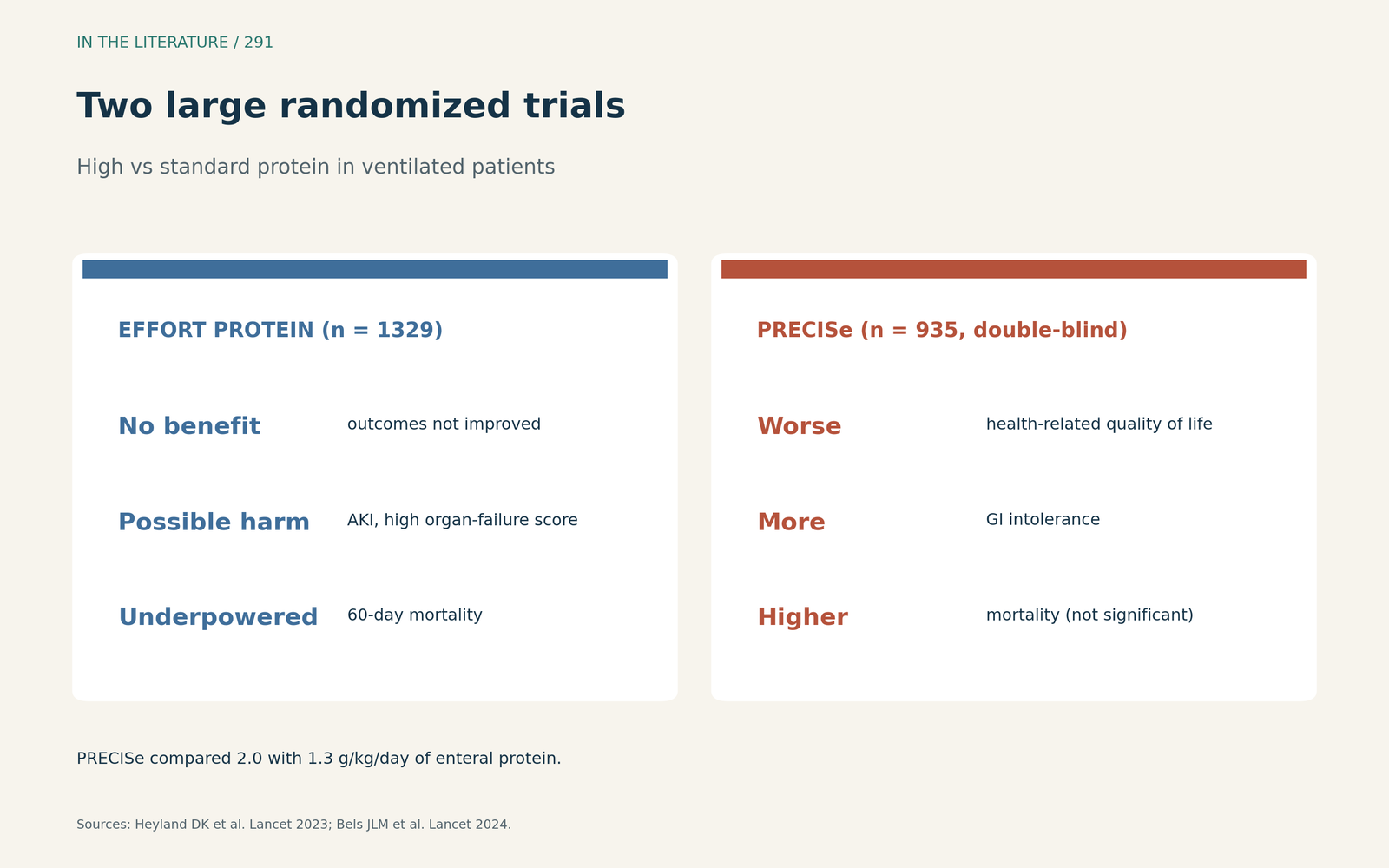
Figure 1. Neither large trial showed benefit, and both raised harm signals. Data from EFFORT Protein and PRECISe.[1], [2] View larger.

Pooled evidence
In a meta-analysis with trial sequential analysis (Lee et al., Crit Care 2024), higher protein did not affect overall mortality (low certainty), but in patients with acute kidney injury it increased mortality (RR 1.42) and raised serum urea by 2.31 mmol/L.[3] The latest meta-analysis pooled 14 trials with 6553 patients (Summers et al., Clin Nutr 2026): greater protein delivery did not affect mortality (RR 1.01), quality of life was lower with greater protein, and in acute kidney injury greater protein was associated with increased mortality (1.29).[4]
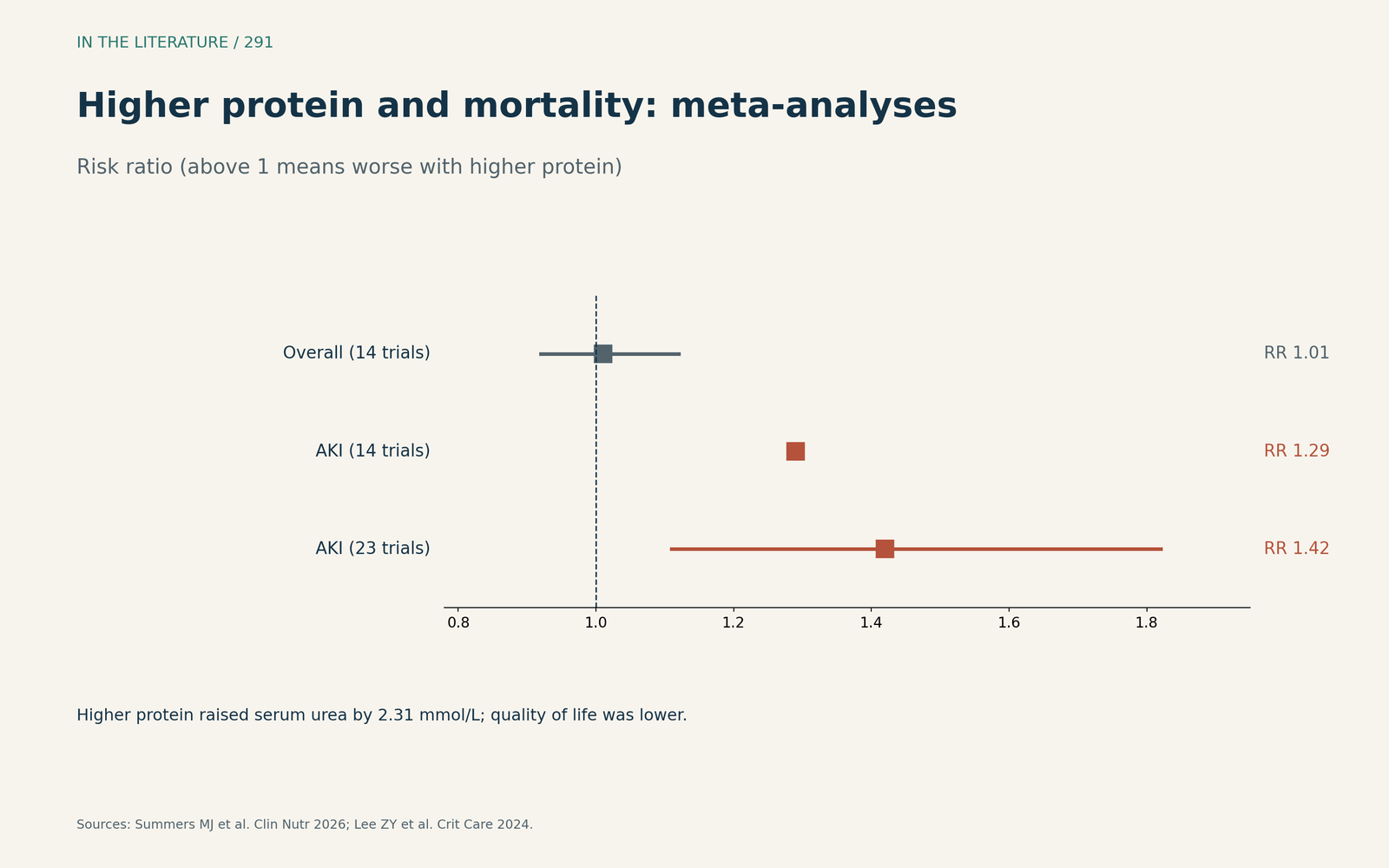
Figure 2. No overall effect, but consistent harm signals in acute kidney injury. Data from Summers et al. and Lee et al.[3], [4] View larger.

A meta-analysis including observational studies favoured high protein only for 60-day mortality (RR 0.72), but most included studies had at least a serious risk of bias from confounding, and in most studies the high-protein group also received more energy (van Ruijven et al., Clin Nutr 2023).[5]
What to do now
Three recent multicentre trials together enrolled 5633 patients. Interpreting them, trialists suggest increasing protein progressively over the first 5 days to a maximum of 1.2 g/kg/day once patients are haemodynamically stable, and remind clinicians that only about 60% of prescribed nutrition is actually delivered (Chapple et al., Crit Care 2026).[6]
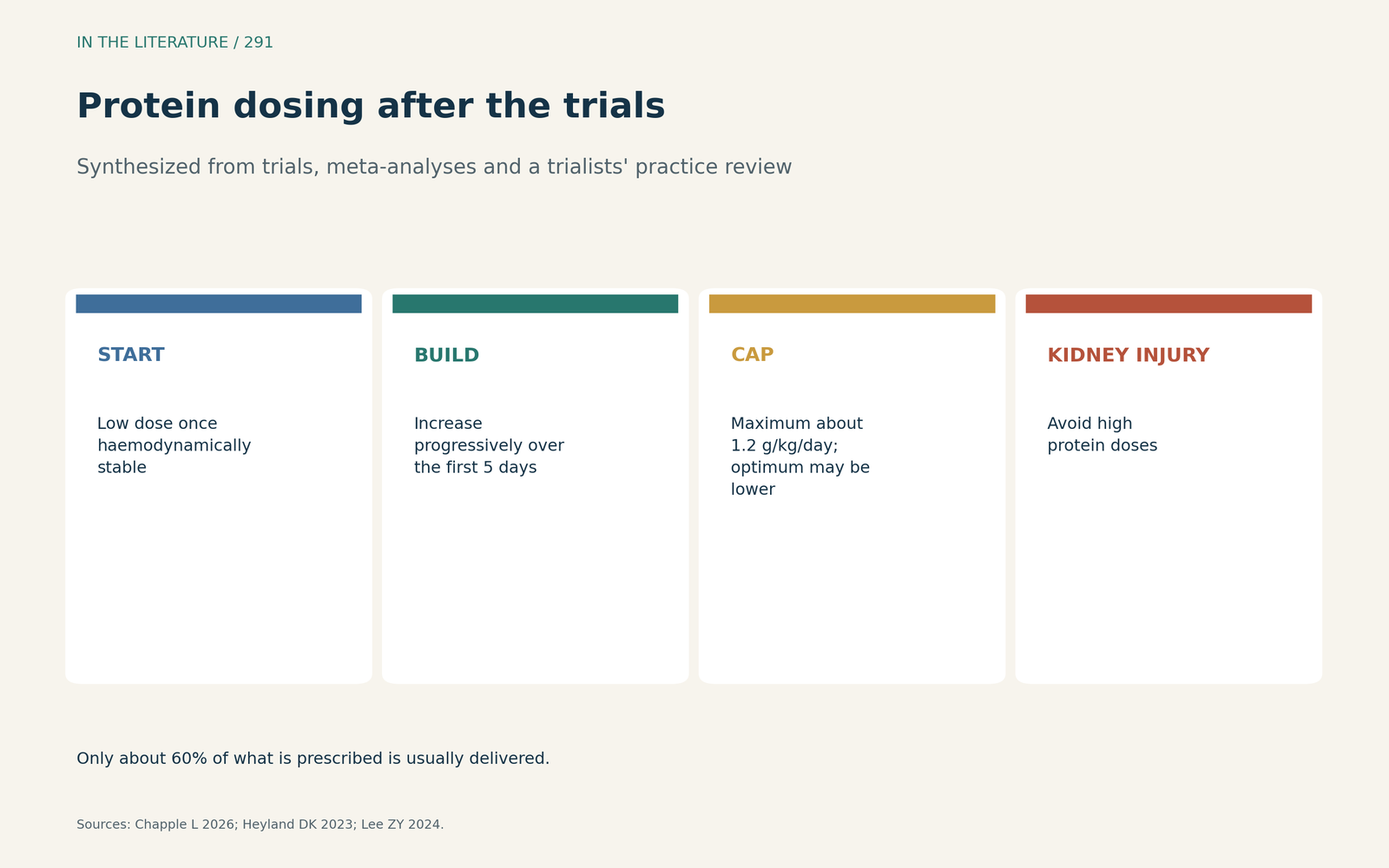
Figure 3. Start low, build up, cap around 1.2 g/kg/day, and avoid high doses in kidney injury. Synthesized from Chapple et al., EFFORT Protein and Lee et al.[1], [3], [6] View larger.

Three takeaways
- More protein is not better: high doses did not improve outcomes and may reduce quality of life.[1], [2], [4]
- Avoid high protein doses in acute kidney injury, where pooled data show higher mortality.[3], [4]
- Build protein up over the first days toward about 1.2 g/kg/day, and check what is actually delivered.[5], [6]
References
- Heyland DK, Patel J, Compher C, et al.; EFFORT Protein Trial team. The effect of higher protein dosing in critically ill patients with high nutritional risk (EFFORT Protein): an international, multicentre, pragmatic, registry-based randomised trial. Lancet. 2023;401:568–576. doi:10.1016/S0140-6736(22)02469-2
- Bels JLM, Thiessen S, van Gassel RJJ, et al.; PRECISe study team. Effect of high versus standard protein provision on functional recovery in people with critical illness (PRECISe): an investigator-initiated, double-blinded, multicentre, parallel-group, randomised controlled trial in Belgium and the Netherlands. Lancet. 2024;404:659–669. doi:10.1016/S0140-6736(24)01304-7
- Lee ZY, Dresen E, Lew CCH, et al. The effects of higher versus lower protein delivery in critically ill patients: an updated systematic review and meta-analysis of randomized controlled trials with trial sequential analysis. Crit Care. 2024;28:15. doi:10.1186/s13054-023-04783-1
- Summers MJ, Bels JLM, Karahalios A, et al. Optimal delivery of enteral protein in the critically ill: a systematic review and meta-analysis of randomised controlled trials. Clin Nutr. 2026;61:106665. doi:10.1016/j.clnu.2026.106665
- van Ruijven IM, Abma J, Brunsveld-Reinders AH, et al. High protein provision of more than 1.2 g/kg improves muscle mass preservation and mortality in ICU patients: a systematic review and meta-analyses. Clin Nutr. 2023;42:2395–2403. doi:10.1016/j.clnu.2023.09.026
- Chapple L, Bels J, Lee ZY, et al. Interpreting protein dose trials in critical illness: a guide for the bedside clinician. Crit Care. 2026;30:352. doi:10.1186/s13054-026-06116-4