ITL-27f697b67c22
Juan Li, MD · 更新于2026年11月18日
核心要点
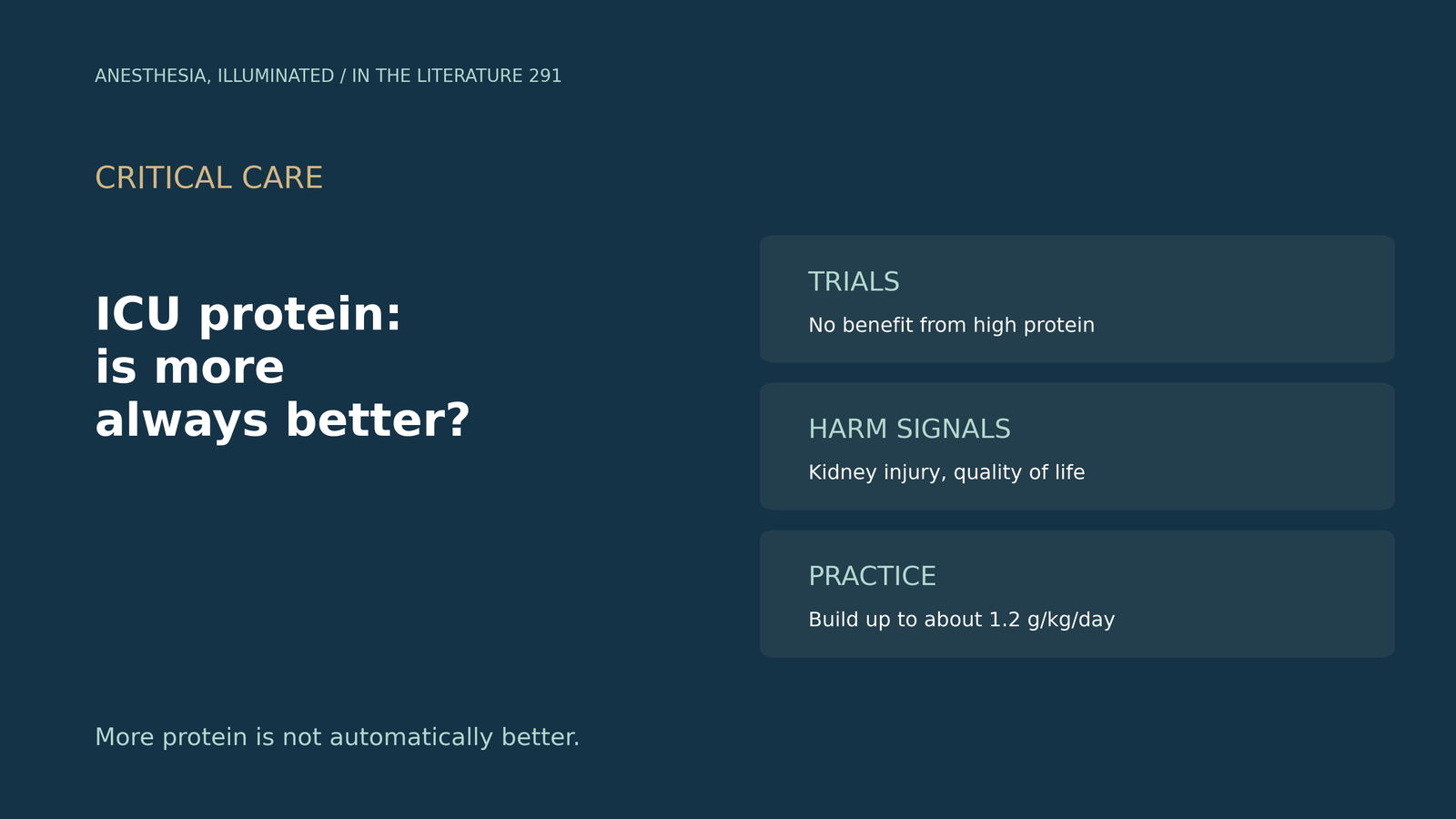
- 最大的实用性试验未见获益。EFFORT Protein 显示没有改善,在肾损伤患者中可能有害。[1]
- 一项双盲试验发现了危害。PRECISe 中高蛋白与更差的生活质量和更多胃肠不耐受相关。[2]
- 汇总试验结论一致。总体死亡率不变,但急性肾损伤患者中高蛋白使死亡率升高。[3], [4]
- 观察性数据方向相反,但存在混杂。高蛋白组通常同时得到更多能量。[5]
- 临床做法正在改变。试验者建议在 5 天内逐步增加到最多约 1.2 g/kg/天。[6]
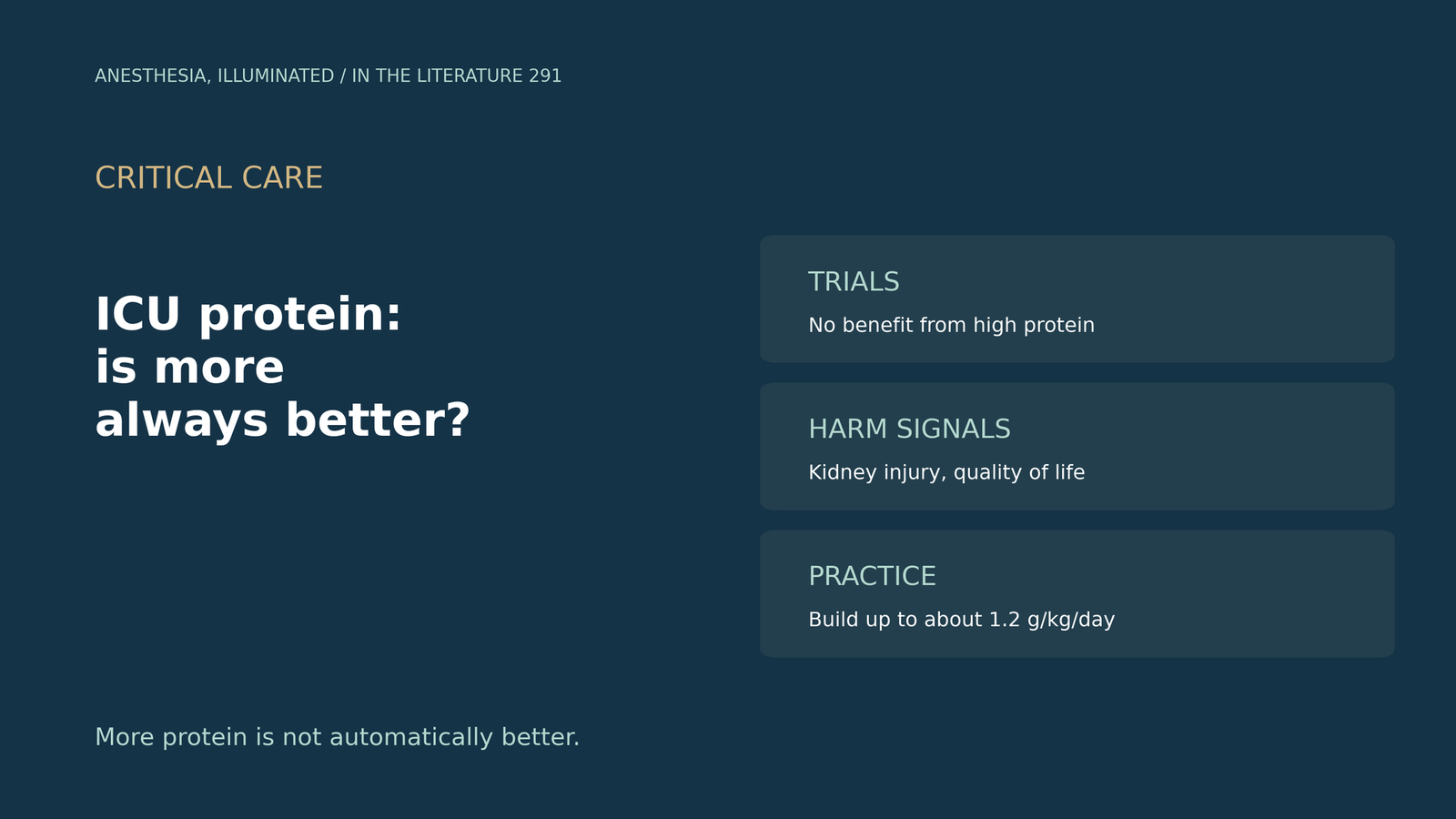
一位机械通气患者在第 3 天的蛋白摄入为 1.0 g/kg/天,团队考虑是否推到 2 g/kg/天。蛋白越多越好吗?
大型试验
EFFORT Protein 随机纳入 1329 例营养高风险的机械通气患者(Heyland 等,Lancet 2023)。高剂量蛋白没有改善结局,在急性肾损伤和器官衰竭评分高的患者中可能使结局恶化;作者提醒不要对急性肾损伤患者使用高剂量蛋白,不过该试验检验 60 天死亡率的效能不足。[1]
PRECISe 是一项双盲试验,随机纳入 935 例患者,比较高剂量(2.0 g/kg/天)与标准剂量(1.3 g/kg/天)的肠内蛋白(Bels 等,Lancet 2024)。高蛋白导致健康相关生活质量更差,胃肠不耐受更常见,似乎还与更高死亡率相关;危害机制尚不清楚。[2]
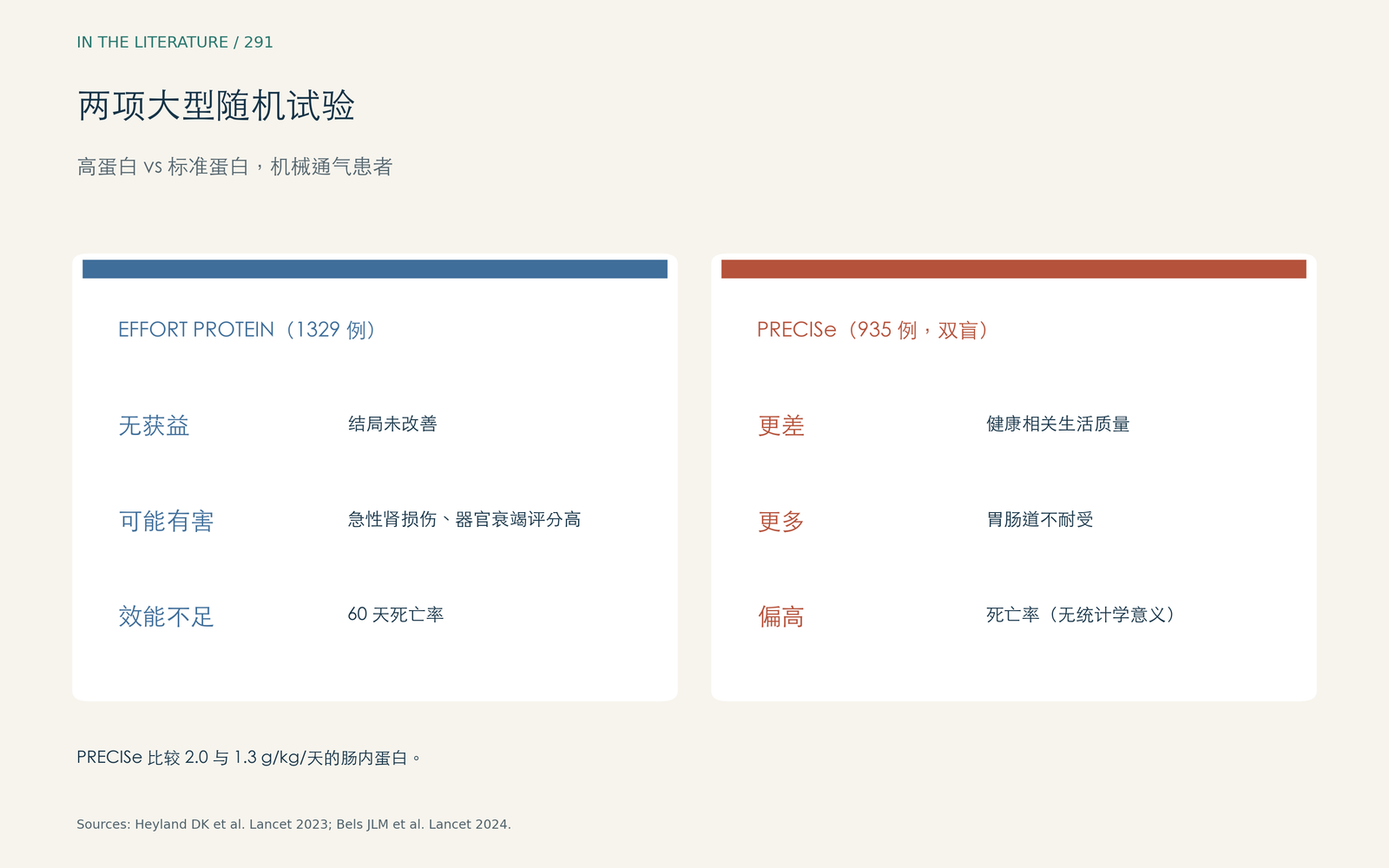
图 1. 两项大型试验均未显示获益,都出现了危害信号。数据来自 EFFORT Protein 和 PRECISe。[1], [2] 查看大图。

汇总证据
在一项结合试验序贯分析的荟萃分析中(Lee 等,Crit Care 2024),高蛋白不影响总体死亡率(低确定性),但在急性肾损伤患者中使死亡率升高(RR 1.42),并使血尿素升高 2.31 mmol/L。[3] 最新的荟萃分析汇总了 14 项试验、6553 例患者(Summers 等,Clin Nutr 2026):更高的蛋白给予不影响死亡率(RR 1.01),生活质量更低;在急性肾损伤中,更高的蛋白与死亡率升高相关(1.29)。[4]
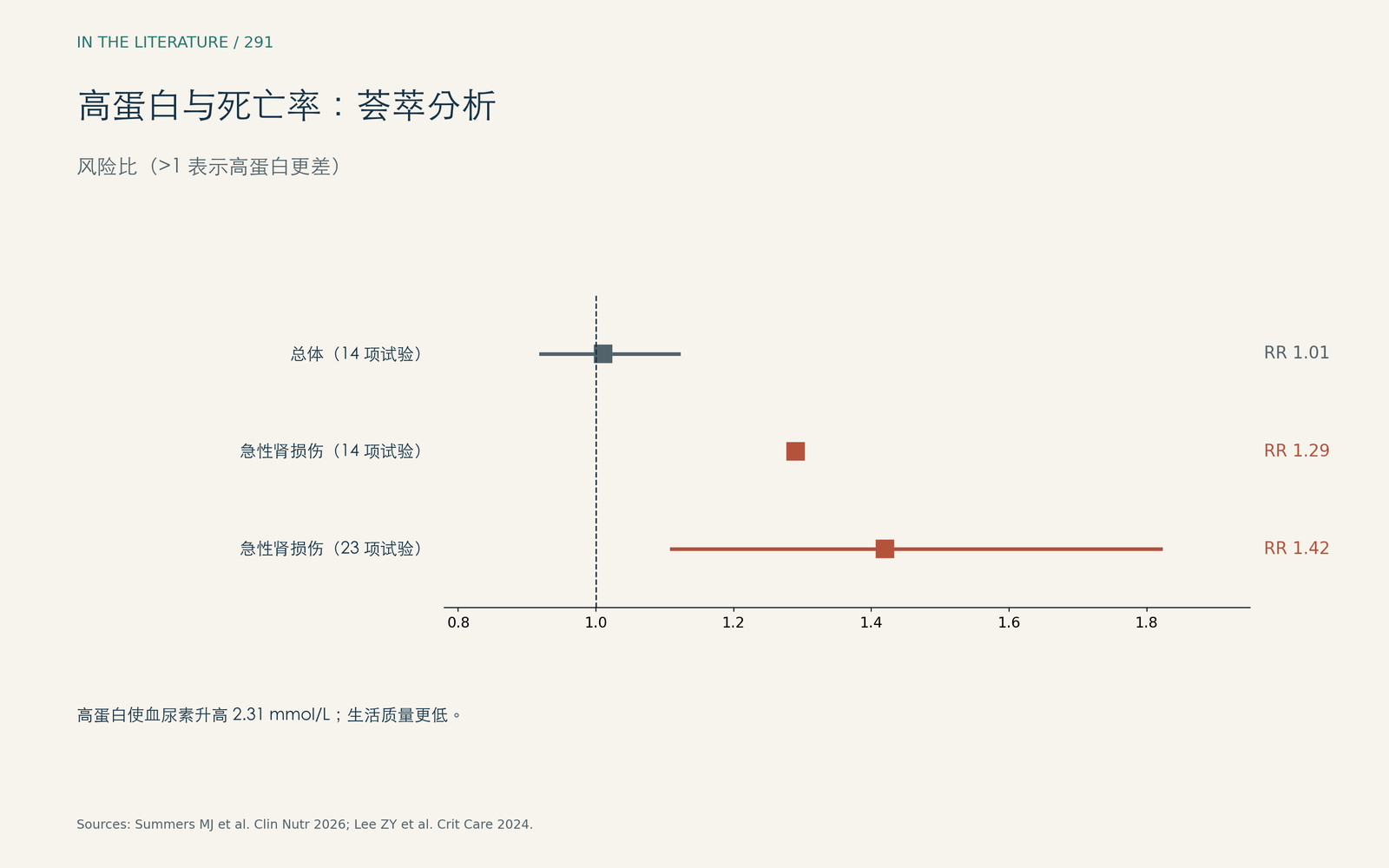
图 2. 总体无影响,但急性肾损伤中的危害信号一致。数据来自 Summers 等和 Lee 等。[3], [4] 查看大图。

一项纳入观察性研究的荟萃分析仅在 60 天死亡率上偏向高蛋白(RR 0.72),但大多数研究至少存在严重的混杂偏倚风险,而且在多数研究中高蛋白组同时得到了更多能量(van Ruijven 等,Clin Nutr 2023)。[5]
现在怎么做
最近三项多中心试验共纳入 5633 例患者。试验者在解读时建议,在血流动力学稳定后,于前 5 天逐步增加蛋白质,最多约 1.2 g/kg/天;并提醒处方的营养实际上通常只送达约 60%(Chapple 等,Crit Care 2026)。[6]
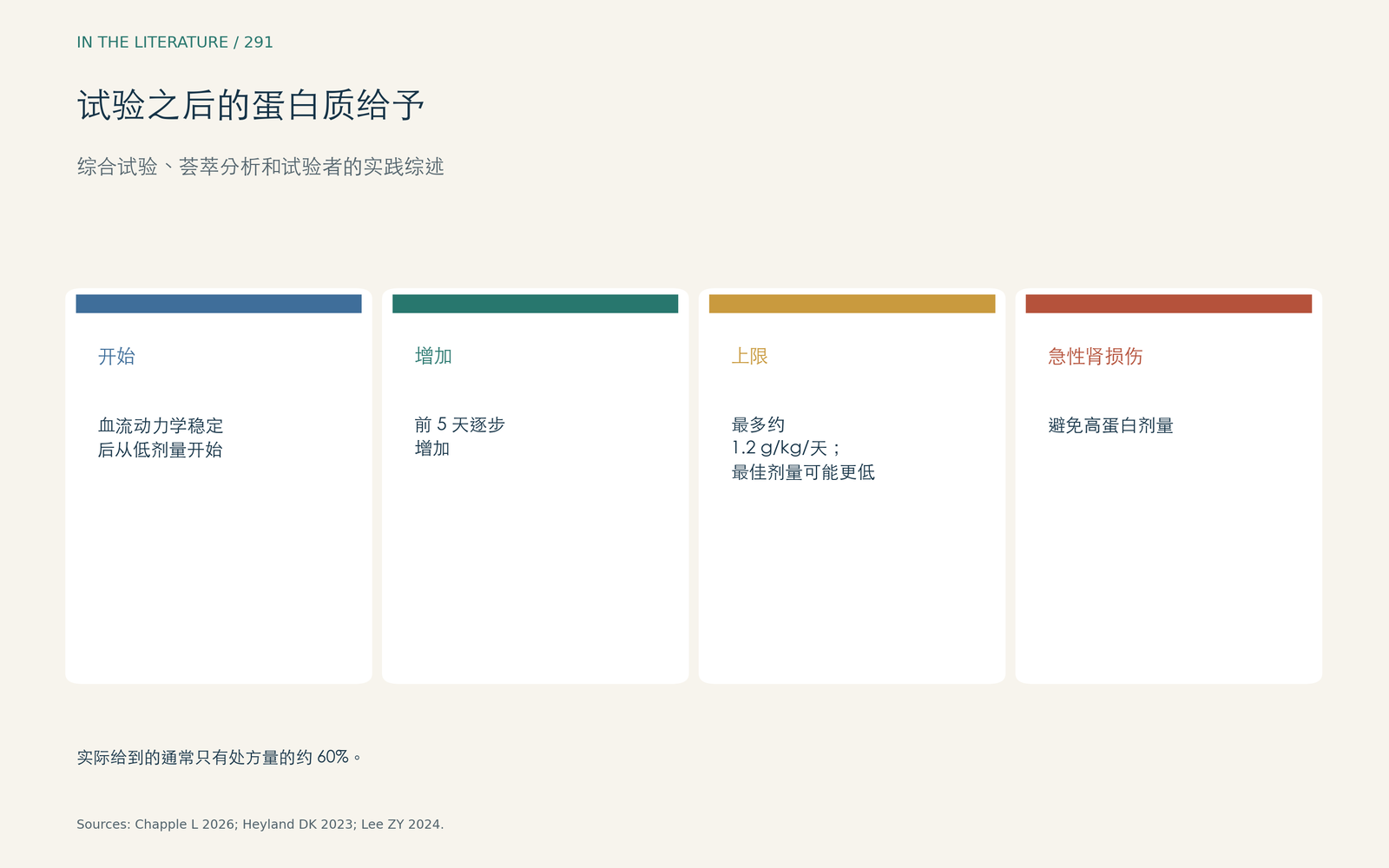
图 3. 低剂量开始、逐步增加、上限约 1.2 g/kg/天,急性肾损伤时避免高剂量。综合 Chapple 等、EFFORT Protein 和 Lee 等。[1], [3], [6] 查看大图。

临床带走的三点
- 蛋白并非越多越好:高剂量没有改善结局,还可能降低生活质量。[1], [2], [4]
- 急性肾损伤患者避免高剂量蛋白,汇总数据显示其死亡率更高。[3], [4]
- 在最初几天逐步增加到约 1.2 g/kg/天,并核对实际送达的剂量。[5], [6]
参考文献
- Heyland DK, Patel J, Compher C, et al.; EFFORT Protein Trial team. The effect of higher protein dosing in critically ill patients with high nutritional risk (EFFORT Protein): an international, multicentre, pragmatic, registry-based randomised trial. Lancet. 2023;401:568–576. doi:10.1016/S0140-6736(22)02469-2
- Bels JLM, Thiessen S, van Gassel RJJ, et al.; PRECISe study team. Effect of high versus standard protein provision on functional recovery in people with critical illness (PRECISe): an investigator-initiated, double-blinded, multicentre, parallel-group, randomised controlled trial in Belgium and the Netherlands. Lancet. 2024;404:659–669. doi:10.1016/S0140-6736(24)01304-7
- Lee ZY, Dresen E, Lew CCH, et al. The effects of higher versus lower protein delivery in critically ill patients: an updated systematic review and meta-analysis of randomized controlled trials with trial sequential analysis. Crit Care. 2024;28:15. doi:10.1186/s13054-023-04783-1
- Summers MJ, Bels JLM, Karahalios A, et al. Optimal delivery of enteral protein in the critically ill: a systematic review and meta-analysis of randomised controlled trials. Clin Nutr. 2026;61:106665. doi:10.1016/j.clnu.2026.106665
- van Ruijven IM, Abma J, Brunsveld-Reinders AH, et al. High protein provision of more than 1.2 g/kg improves muscle mass preservation and mortality in ICU patients: a systematic review and meta-analyses. Clin Nutr. 2023;42:2395–2403. doi:10.1016/j.clnu.2023.09.026
- Chapple L, Bels J, Lee ZY, et al. Interpreting protein dose trials in critical illness: a guide for the bedside clinician. Crit Care. 2026;30:352. doi:10.1186/s13054-026-06116-4