ITL-34e659e9f9f8
Juan Li, MD · Updated November 18, 2026
Key points
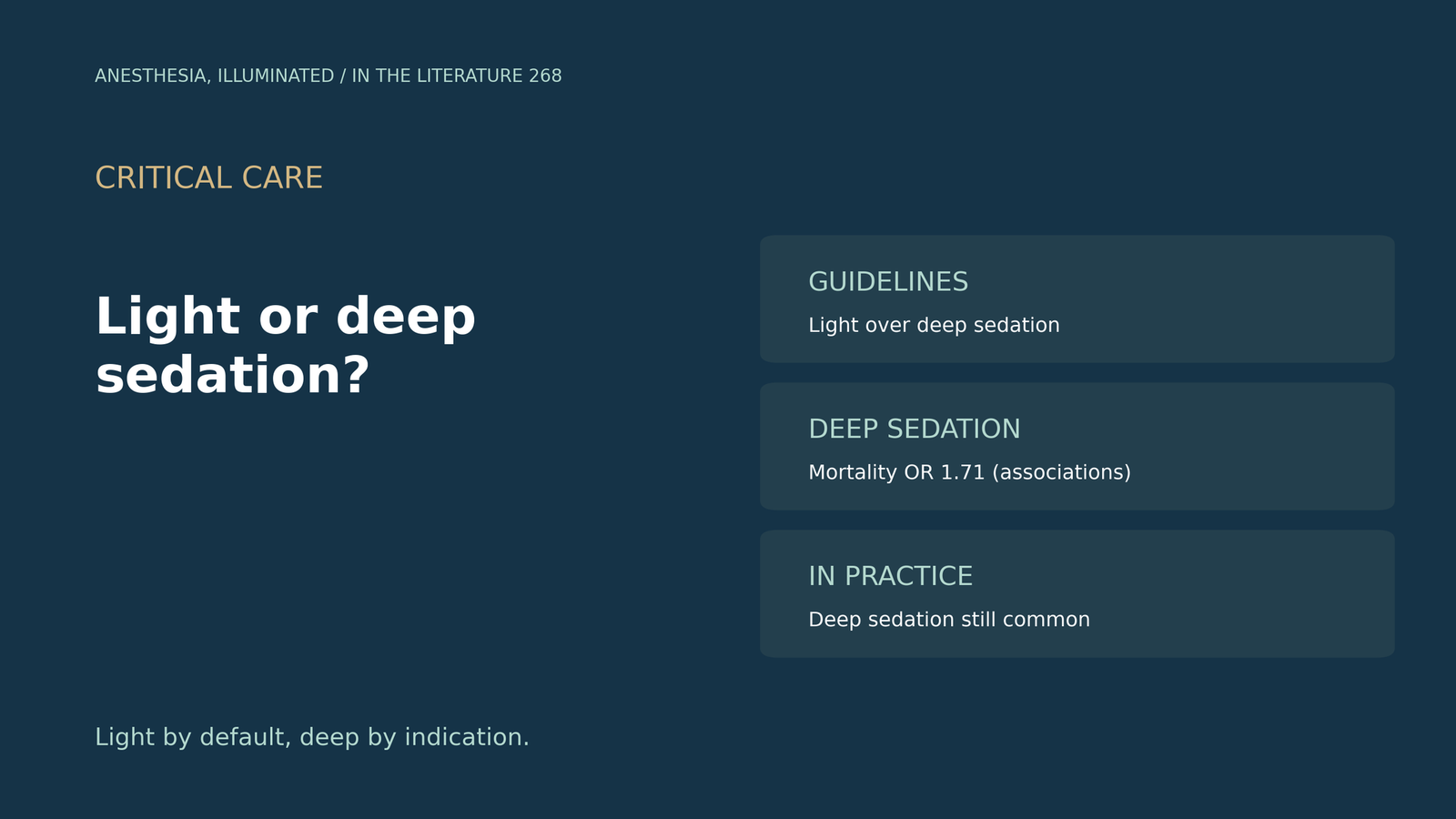
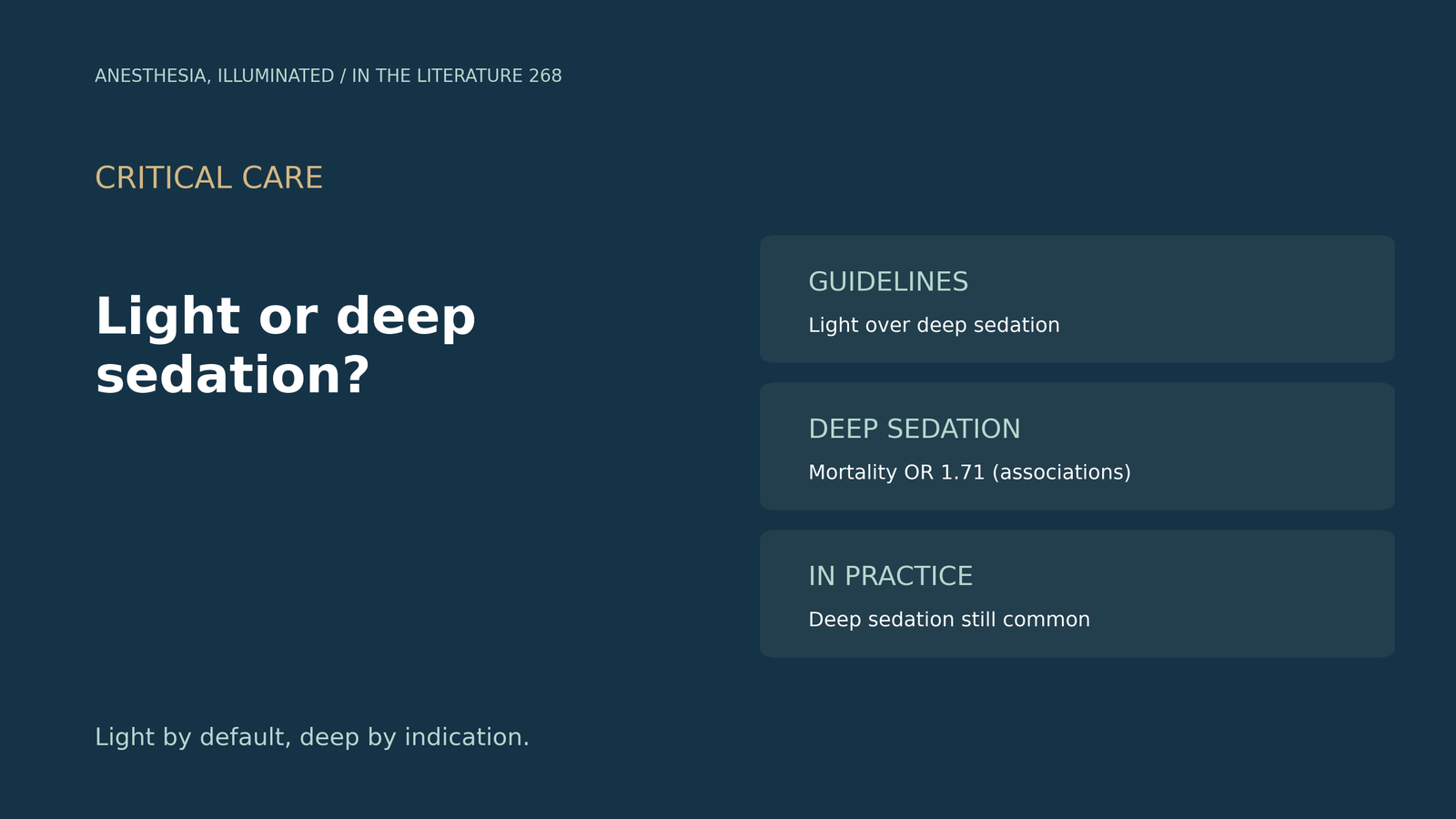
- Light by default. The SCCM guideline suggests light rather than deep sedation in mechanically ventilated adults.[1]
- Agent choice follows the target. Dexmedetomidine is suggested over propofol where light sedation or less delirium is the priority, at the cost of more bradycardia.[2]
- Deep sedation tracks with harm. It was associated with higher mortality (OR 1.71), mostly in observational data.[3]
- Targets are hard to hit. Deep sedation was frequent in SPICE III despite a light target.[4]
- Deep sedation is still requested. In A2B, clinicians asked for it on 25–30% of days.[5]
A patient with pneumonia is intubated and ventilated on day 2 in the ICU. How deeply should this patient be sedated?
What the guidelines recommend
The SCCM guideline (Devlin et al., Crit Care Med 2018) suggests light rather than deep sedation in critically ill, mechanically ventilated adults. Across eight RCTs, light sedation was not associated with 90-day mortality (RR 1.01, 95% CI 0.80–1.27) but was associated with a reduced tracheostomy rate (RR 0.57, 0.41–0.80); no universally accepted definition of light sedation exists, and no RCT evaluated cognitive or physical function.[1] The focused update (Lewis et al., Crit Care Med 2025) suggests dexmedetomidine over propofol where light sedation or less delirium is the priority; dexmedetomidine probably increases bradycardia (RR 1.65), and if a patient requires deep sedation or has a high bradycardia risk, alternative sedatives should be considered.[2]
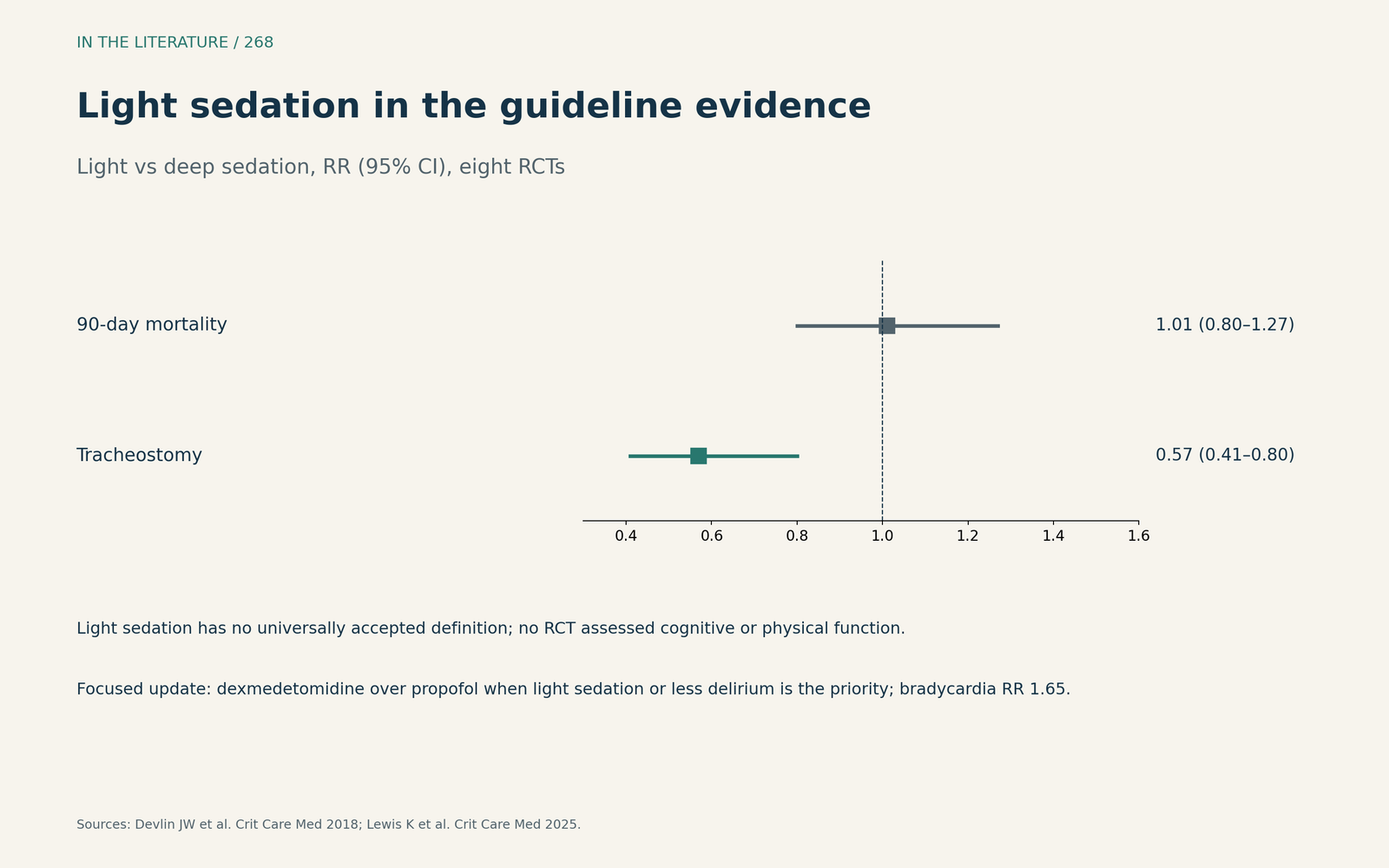
Figure 1. Light sedation did not change mortality but reduced tracheostomy. Data from the SCCM guideline and its focused update.[1], [2] View larger.

Deep sedation and outcomes
A meta-analysis (Zheng et al., Front Med 2026) pooled eleven studies (6 RCTs, 5 cohorts) with 3,466 patients. Deep sedation was associated with more delirium (OR 1.34), but this association was significant only in non-randomized studies, with an odds ratio of 1.25 (0.94–1.65) in RCTs. It was also associated with higher mortality (OR 1.71, 95% CI 1.32–2.21) and a longer ICU stay (mean difference 1.17 days), although the authors note that these associations do not establish causation.[3]
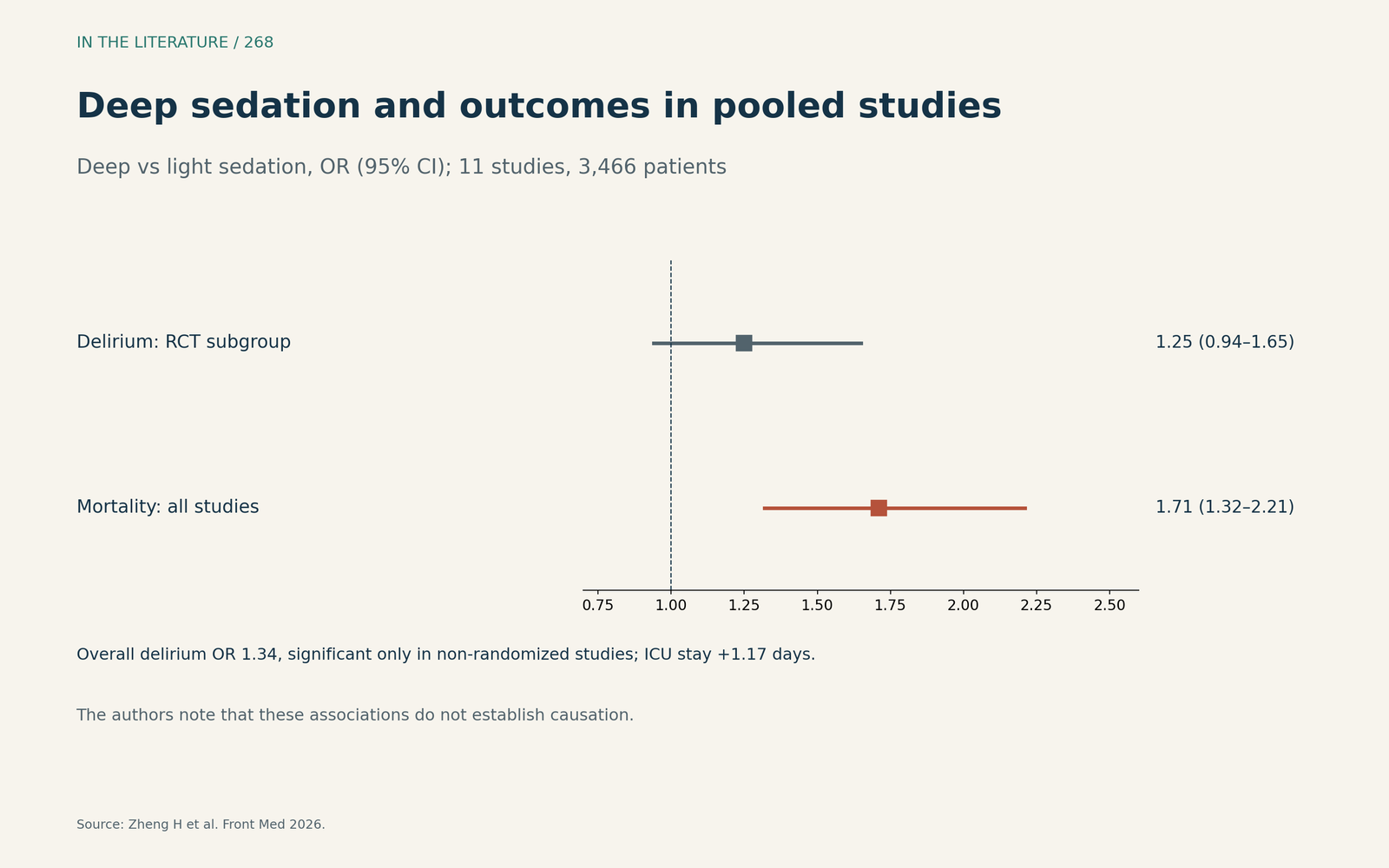
Figure 2. Deep sedation was associated with worse outcomes; the delirium signal was not significant in randomized trials. Data from Zheng et al.[3] View larger.

What the trials of lighter sedation show
SPICE III (Shehabi et al., N Engl J Med 2019) enrolled 4000 ventilated patients and targeted light sedation with early dexmedetomidine or usual care: 90-day mortality was not lower, deep sedation was frequently reported in both groups, and bradycardia and hypotension were more common with dexmedetomidine.[4] In A2B (Walsh et al., JAMA 2025; 1437 adults), algorithms targeted a RASS of −2 to +1 unless clinicians requested deeper sedation, which they did on 25–30% of days; agitation was more frequent with dexmedetomidine than with propofol (RR 1.54).[5] The ABCDEF bundle was associated with less delirium (RR 0.57), with low certainty (Sosnowski et al., Int J Nurs Stud 2023).[6] In TEAM (Hodgson et al., N Engl J Med 2022; 750 ventilated adults), early mobilization with sedation minimization was associated with increased adverse events.[7] In a cohort study (Iwatani and Morimoto, Nurs Crit Care 2026), any agitation during the ICU stay was associated with later psychological impairment (adjusted OR 2.61), and the authors conclude that lighter sedation alone may not be sufficient.[8]
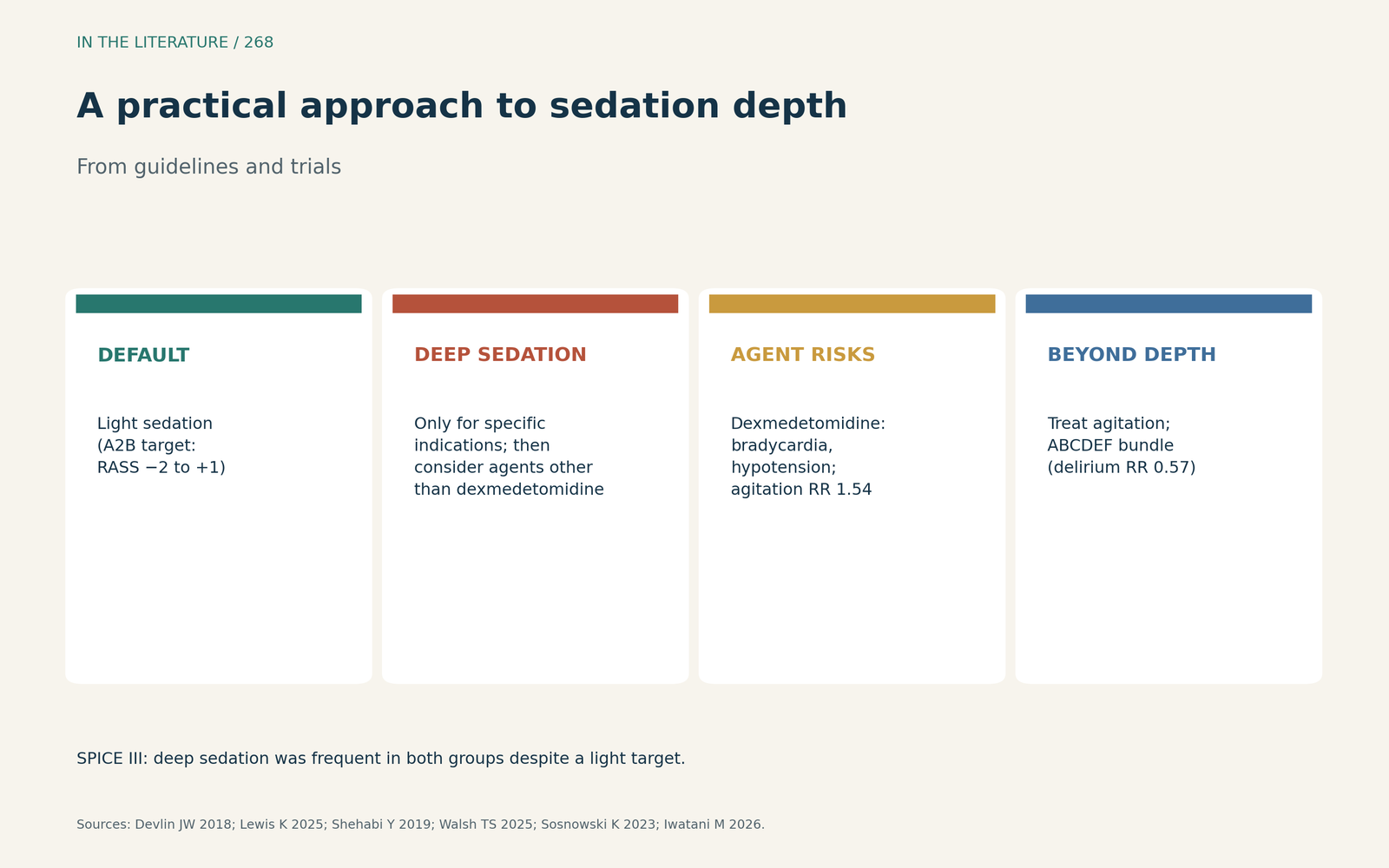
Figure 3. Default to light sedation, but treat agitation and choose agents by risk. Synthesized from the SCCM guidelines, SPICE III, A2B and Iwatani and Morimoto.[1], [2], [4], [5], [8] View larger.

Three takeaways
- Target light sedation in ventilated adults unless there is a specific reason for deep sedation.[1], [3]
- Expect drift toward deeper sedation, and check depth often; agents chosen for light sedation carry bradycardia, hypotension or agitation risks.[2], [4], [5]
- Light sedation is not enough on its own: treat agitation, use the ABCDEF bundle and mobilize carefully.[6], [7], [8]
References
- Devlin JW, Skrobik Y, Gélinas C, et al. Clinical practice guidelines for the prevention and management of pain, agitation/sedation, delirium, immobility, and sleep disruption in adult patients in the ICU. Crit Care Med. 2018;46(9):e825–e873. doi:10.1097/CCM.0000000000003299
- Lewis K, Balas MC, Stollings JL, et al. A focused update to the clinical practice guidelines for the prevention and management of pain, anxiety, agitation/sedation, delirium, immobility, and sleep disruption in adult patients in the ICU. Crit Care Med. 2025;53(3):e711–e727. doi:10.1097/CCM.0000000000006574
- Zheng H, Yin Z, Zhang Q. The impact of sedation depth on the occurrence of delirium and prognosis in intensive care unit patients: a meta-analysis. Front Med (Lausanne). 2026;13:1823354. doi:10.3389/fmed.2026.1823354
- Shehabi Y, Howe BD, Bellomo R, et al. Early sedation with dexmedetomidine in critically ill patients. N Engl J Med. 2019;380(26):2506–2517. doi:10.1056/NEJMoa1904710
- Walsh TS, Parker RA, Aitken LM, et al. Dexmedetomidine- or clonidine-based sedation compared with propofol in critically ill patients: the A2B randomized clinical trial. JAMA. 2025;334(1):32–45. doi:10.1001/jama.2025.7200
- Sosnowski K, Lin F, Chaboyer W, et al. The effect of the ABCDE/ABCDEF bundle on delirium, functional outcomes, and quality of life in critically ill patients: a systematic review and meta-analysis. Int J Nurs Stud. 2023;138:104410. doi:10.1016/j.ijnurstu.2022.104410
- TEAM Study Investigators and the ANZICS Clinical Trials Group; Hodgson CL, Bailey M, Bellomo R, et al. Early active mobilization during mechanical ventilation in the ICU. N Engl J Med. 2022;387(19):1747–1758. doi:10.1056/NEJMoa2209083
- Iwatani M, Morimoto M. Early sedation intensity and psychological outcomes in critically ill adults. Nurs Crit Care. 2026;31:e70500. doi:10.1111/nicc.70500