
ITL-2e291ef3112a
Watch the video

Figure 1. The clinical decision is whether an early oxygenation signal translates into recovery that matters to the patient. Editorial illustration; not a circuit assembly diagram.
Key points
- NOCARD tested 40 ppm nitric oxide (NO) through the oxygenator gas inlet during CPB, stopping at the end of bypass. It did not test postoperative rescue inhaled NO.
- The unadjusted primary comparison—hypoxemia within 24 hours—was 72.5% with NO versus 87.2% with control; P=0.084. A positive result at ICU admission is a different finding.
- A favorable signal in 34 patients with baseline hypoxemia is a reason for further study, not a validated rule to start NO whenever PaO₂/FiO₂ is below 300.
- NOCARD did not demonstrate shorter ventilation, shorter admission, or fewer postoperative pulmonary complications. Routine prophylaxis cannot be justified by the oxygenation signal alone. [1]
After induction for elective cardiac surgery, the PaO₂/FiO₂ ratio is below 300. Bypass is about to start. Should the team add NO to the oxygenator gas supply to protect the lungs?
The useful question is not whether NO has plausible protective effects. It is whether this particular regimen improves recovery enough to support routine use—and whether a low baseline oxygenation ratio reliably identifies patients who benefit.
What NOCARD actually tested
This single-center randomized trial enrolled adults having elective CABG, valve surgery, or combined procedures. The intervention was 40 ppm NO delivered to the oxygenator gas inlet throughout CPB, compared with no NO. Delivery stopped when CPB ended. Baseline PaO₂/FiO₂ was measured after anesthesia induction and before incision; “baseline hypoxemia” therefore describes that perioperative measurement, not necessarily chronic lung disease or an awake preoperative abnormality. Hypoxemia was defined as PaO₂/FiO₂ below 300. [1]
The participant flow is important: 119 patients were randomized, 100 received their assigned intervention, and 98 were analyzed—51 with NO and 47 controls. One patient in each group who subsequently required rescue inhaled NO was excluded from analysis. The intended sample of 300 was not reached, and there was no strict ventilation protocol. These details make the findings less secure than a large, fully analyzed randomized cohort would be. [1]
Separate the primary outcome from the early signal
Within 24 hours, hypoxemia occurred in 37/51 NO patients and 41/47 controls. The numerical difference favored NO, but the unadjusted comparison did not reach statistical significance. At ICU admission, however, hypoxemia was less frequent with NO: 47.1% versus 68.1%, P=0.043. These are overlapping observations from the same patients, not two independent confirmations of benefit. [1]
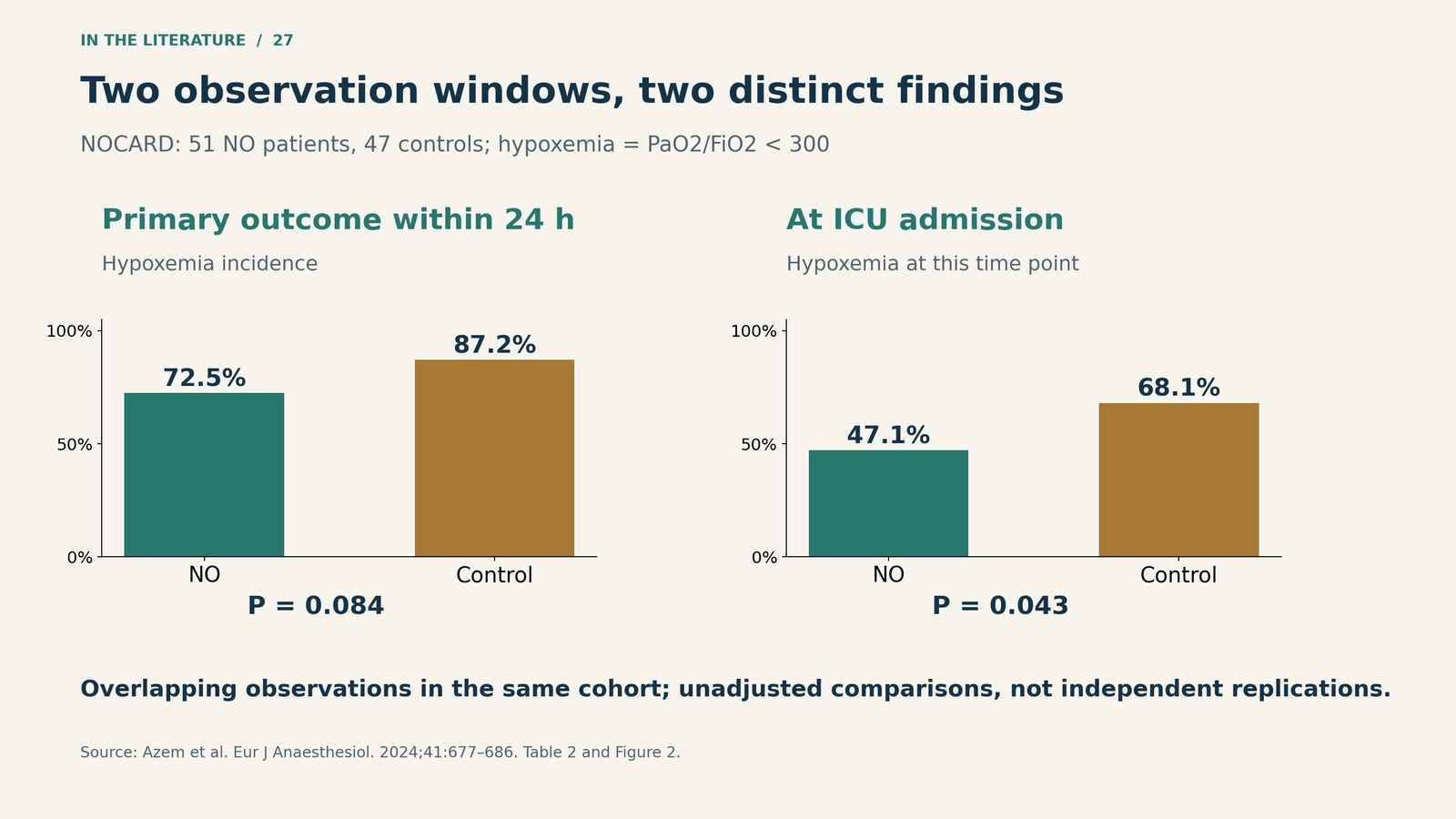
Figure 2. Observed hypoxemia rates, with NO first and control second. The 24-hour primary comparison and the ICU-admission time point must remain distinct. Percentages are observed proportions, not individual risk predictions. Source: NOCARD, Table 2 and Figure 2.

The investigators also reported an adjusted association between NO and lower overall hypoxemia odds: OR 0.29, 95% CI 0.091–0.911. That result deserves acknowledgment. It does not remove the small sample, exclusions after randomization, or the absence of a demonstrated improvement in recovery. Conversely, P=0.084 does not prove that NO has no effect. The fair conclusion is that the trial offers a physiological signal without establishing a routine clinical indication. [1]
Does a low baseline PaO₂/FiO₂ identify the right patient?
Among the 34 patients with baseline hypoxemia, ICU-admission hypoxemia occurred in 11/18 receiving NO versus 15/16 controls. Their oxygenation trajectory also favored NO. This is an interesting subgroup, especially because clinicians often want to direct an intervention toward patients at higher risk. [1]
But a favorable result within one small subgroup, together with a nonsignificant result in another, does not itself establish that baseline hypoxemia modifies the treatment effect. Nor does it validate PaO₂/FiO₂ below 300 as a prescribing threshold. The timing of the measurement matters: the study used a value obtained after induction under the ventilation and inspired oxygen conditions present at that moment.
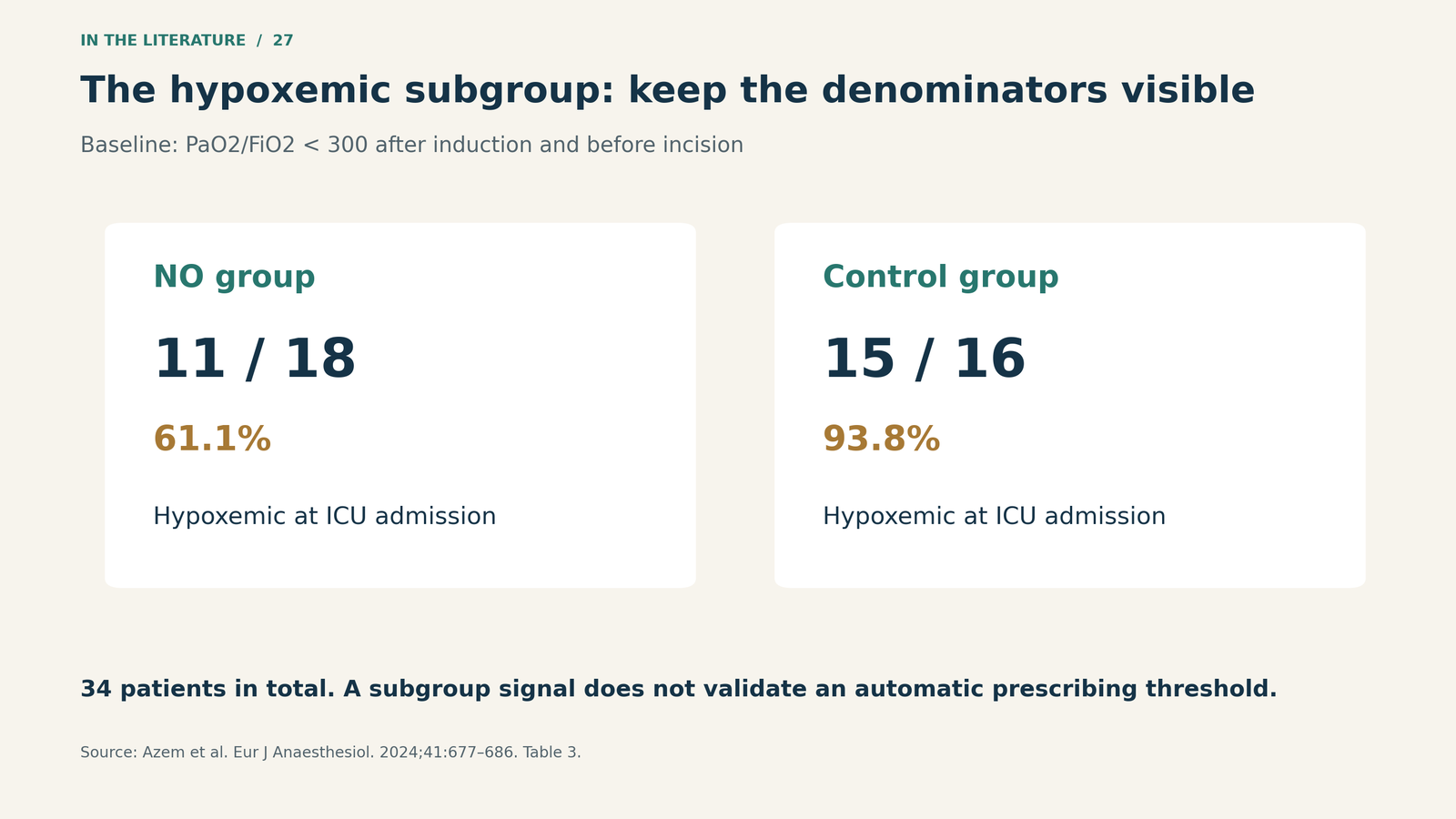
Figure 3. The subgroup comprised 18 NO patients and 16 controls. The outcome shown is hypoxemia at ICU admission, not ventilator-free survival or avoidance of postoperative respiratory failure. Source: NOCARD, Table 3.

For the patient in front of us, the ratio should prompt attention to the oxygenation problem and its clinical context. It should not automatically trigger a prophylactic NO order on the strength of this subgroup alone.
Did better oxygenation shorten recovery?
In NOCARD, median mechanical ventilation duration was 9.33 hours with NO and 9 hours with control; hospital stay was 5 days in both groups. There was no demonstrated reduction in postoperative pulmonary complications or ICU stay. Maximum methemoglobin was modestly higher with NO—median 1.3% versus 1.0%—which reinforces that a physiological intervention still requires appropriate monitoring rather than being treated as a harmless circuit add-on. [1]
A systematic review published in 2026, searching through April 2025, likewise reported no significant shortening of ventilation or hospital stay across its included adult studies. Its studies used different doses, treatment durations, and populations; some continued treatment after bypass. That synthesis provides context, but it is not a direct replication of NOCARD’s CPB-only 40 ppm regimen or a definitive answer for the baseline-hypoxemia subgroup. [2]
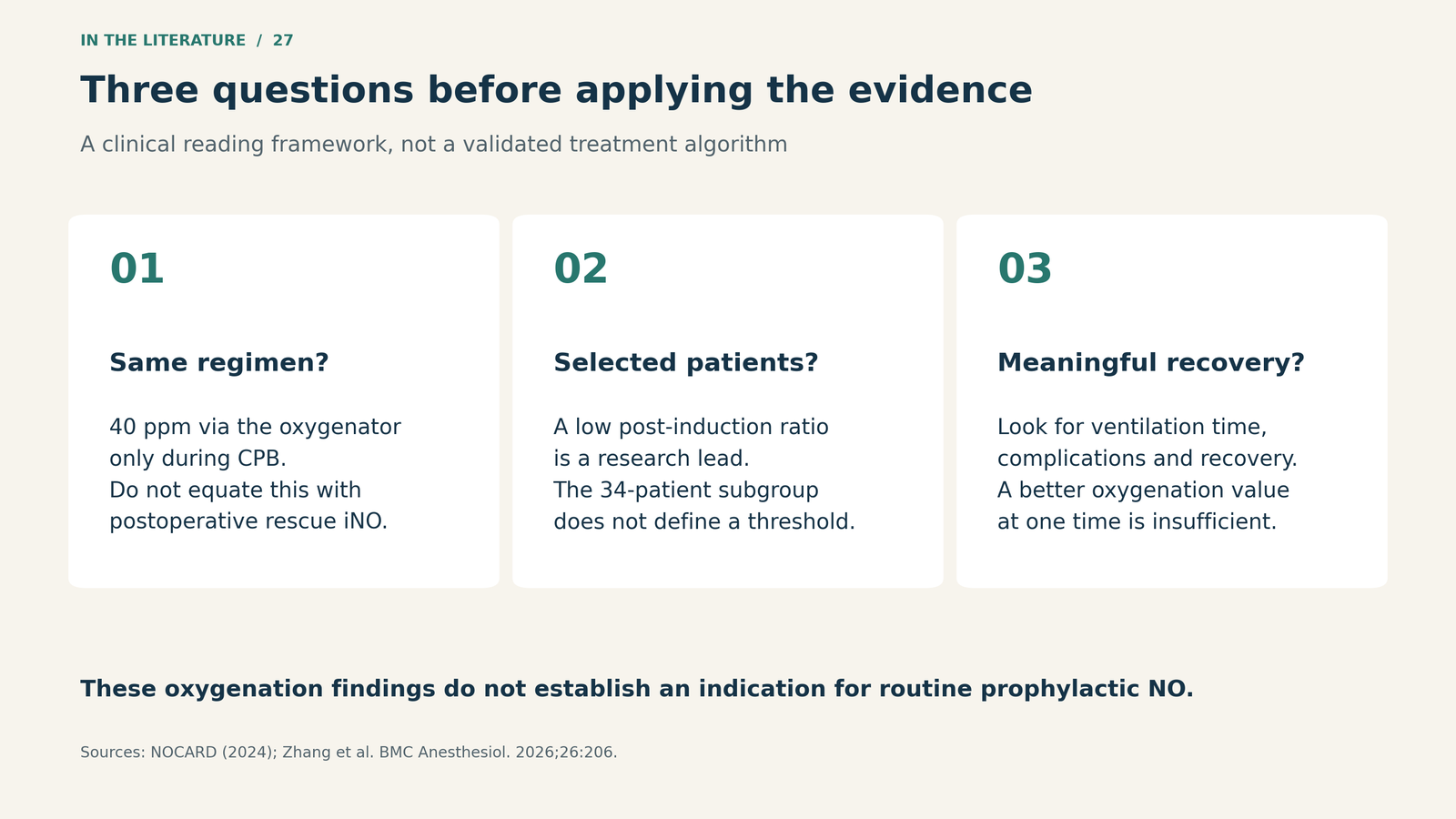
Figure 4. Questions to ask before translating the evidence into practice. This is a clinical reading framework, not a validated treatment algorithm. Sources: NOCARD and Zhang et al.

Three takeaways
- Name the regimen. NO in the oxygenator gas during CPB and rescue inhaled NO after CPB answer different clinical questions.
- Keep the outcomes separate. Better oxygenation at ICU admission does not establish fewer episodes over 24 hours or a shorter recovery.
- Do not turn the subgroup into a prescription. Baseline PaO₂/FiO₂ below 300 is an interesting selection hypothesis; this trial does not establish it as an indication for routine prophylactic NO.
References
- Azem K, Novakovsky D, Krasulya B, Fein S, Iluz-Freundlich D, Uhanova J, et al. Effect of nitric oxide delivery via cardiopulmonary bypass circuit on postoperative oxygenation in adults undergoing cardiac surgery (NOCARD trial): a randomised controlled trial. Eur J Anaesthesiol. 2024;41(9):677–686. doi:10.1097/EJA.0000000000002022.
- Zhang Y, Wang M, Chen G, Zhou Y. Benefits of nitric oxide administration during cardiopulmonary bypass on postoperative outcomes in adult patients: a meta-analysis and systematic review. BMC Anesthesiol. 2026;26:206. doi:10.1186/s12871-026-03707-0.