ITL-809134c6952a
Juan Li, MD · Updated November 18, 2026
Key points
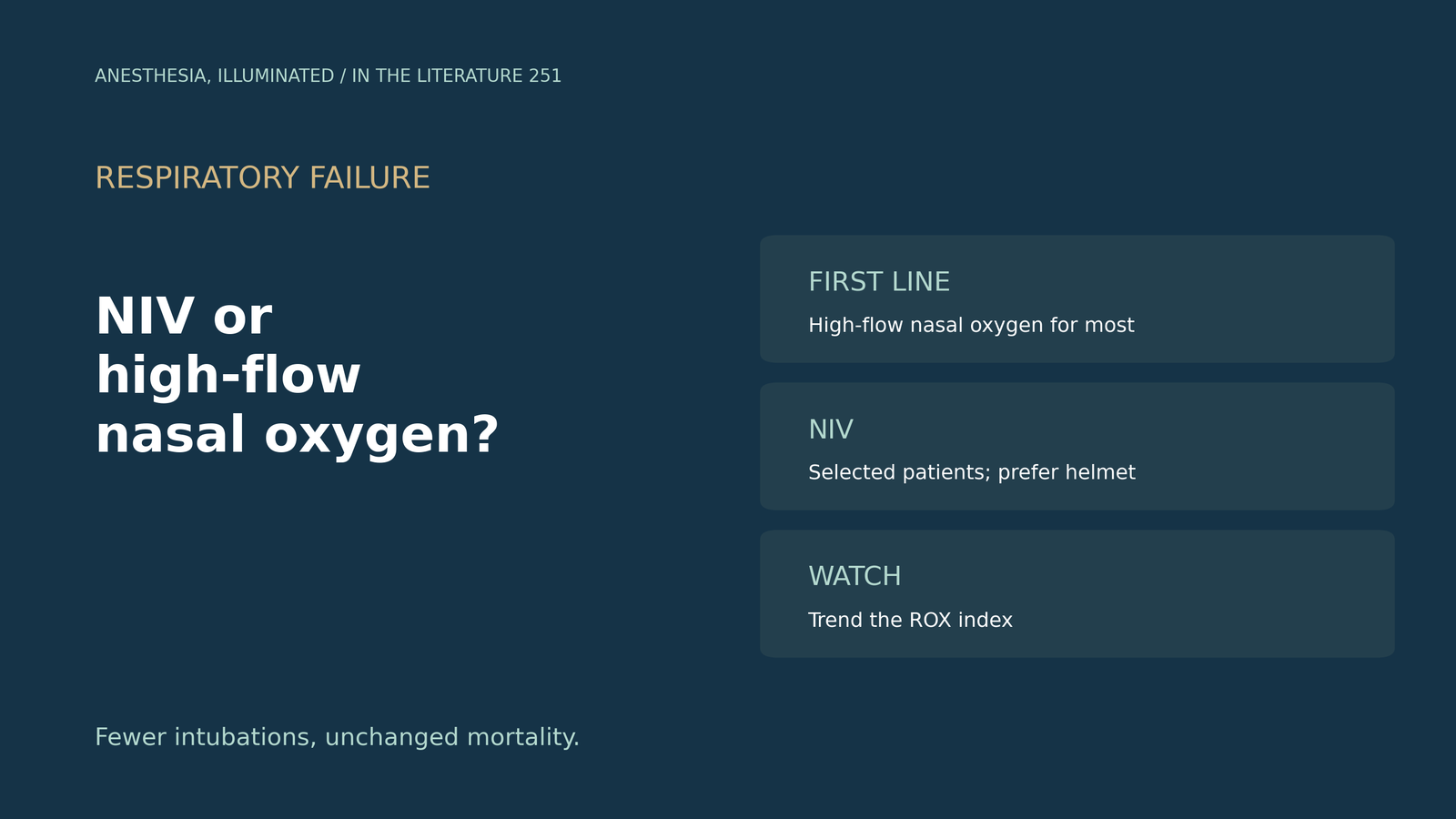
- High-flow first. The Surviving Sepsis guideline suggests HFNC rather than NIV as initial therapy, based on 7 RCTs with 2465 patients.[1]
- Face-mask NIV did not win. In FLORALI, intubation was 38% with HFNC, 47% with standard oxygen and 50% with NIV, not significantly different.[2]
- Helmet is different. Helmet NIV was linked to fewer intubations than face-mask NIV, but NIV overall did not beat HFNC.[3]
- Fewer tubes, same survival. In SOHO, HFNC lowered intubation versus standard oxygen (42.4% vs 48.4%), while mortality was 14.6% in both groups.[4]
- Watch the ROX index. It flags HFNC failure but is a screening tool.[5]
A patient with pneumonia has SpO2 88% on a non-rebreather mask, a respiratory rate of 32 and no immediate need for intubation. Should the next step be high-flow nasal oxygen or NIV?[1], [6]
The case for high-flow first
The Surviving Sepsis Campaign 2026 (Prescott et al., Crit Care Med 2026) suggests HFNC rather than NIV as initial therapy, based on 7 RCTs with 2465 patients, noting that HFNC is easier to apply and generally more comfortable.[1] For severe pneumonia not needing immediate intubation, the ERS/ESICM/ESCMID/ALAT guideline (Martin-Loeches et al., Eur Respir J 2023) suggests HFNO over standard oxygen.[6] In FLORALI (Frat et al., N Engl J Med 2015), intubation was 38% with HFNC, 47% with standard oxygen and 50% with face-mask NIV (P 0.18); tidal volume during NIV averaged 9.2 mL/kg, and the authors raised concern that volumes above 9 mL/kg may worsen injury.[2] In SOHO (Frat et al., N Engl J Med 2026), HFNC reduced intubation versus standard oxygen (42.4% vs 48.4%) but not day-28 mortality (14.6% in both), with initial settings averaging 51 L/min and FiO2 0.67.[4]
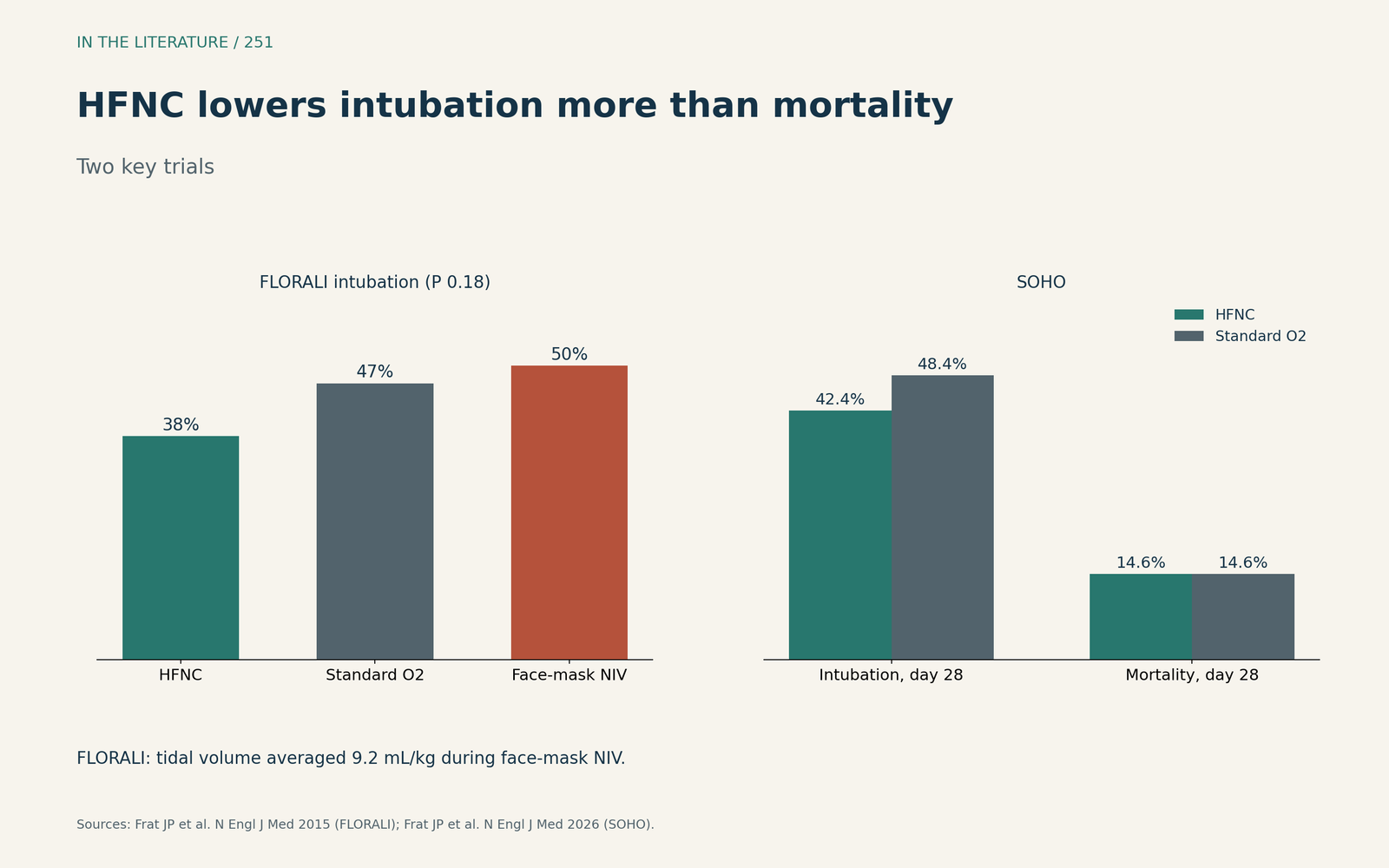
Figure 1. HFNC lowers intubation more than mortality. Data from FLORALI and SOHO.[2], [4] View larger.

Where NIV may still fit
A meta-analysis of 17 RCTs with 1738 patients (Aswanetmanee et al., Sci Rep 2023) found that NIV did not significantly reduce intubation compared with HFNC, although only two studies informed that comparison, while helmet NIV was associated with lower intubation than face-mask NIV.[3] The pneumonia guideline says NIV might be an option in certain patients with persistent hypoxaemia, that the choice between NIV and HFNO is not clear, and that helmet NIV reduced respiratory effort more than HFNO.[6] In immunocompromised patients (FLORALI-IM, Coudroy et al., Lancet Respir Med 2022), day-28 mortality was 36% with HFNC alone and 35% with NIV alternating, suggesting there may be no one-size-fits-all strategy.[7]
A network meta-analysis of 3804 participants (Ferreyro et al., JAMA 2020) associated helmet NIV (RR 0.40, low certainty) and face-mask NIV (RR 0.83) with lower mortality than standard oxygen.[8] In COVID-19 (HENIVOT, Grieco et al., JAMA 2021), helmet NIV did not increase days free of respiratory support compared with HFNC, although intubation was 30% versus 51%.[9] A review (Munshi et al., N Engl J Med 2022) advises starting with the method the team is most comfortable with, then assessing failure risk early; PaO2:FiO2 below 150 with ARDS indicates high risk of face-mask NIV failure.[10]
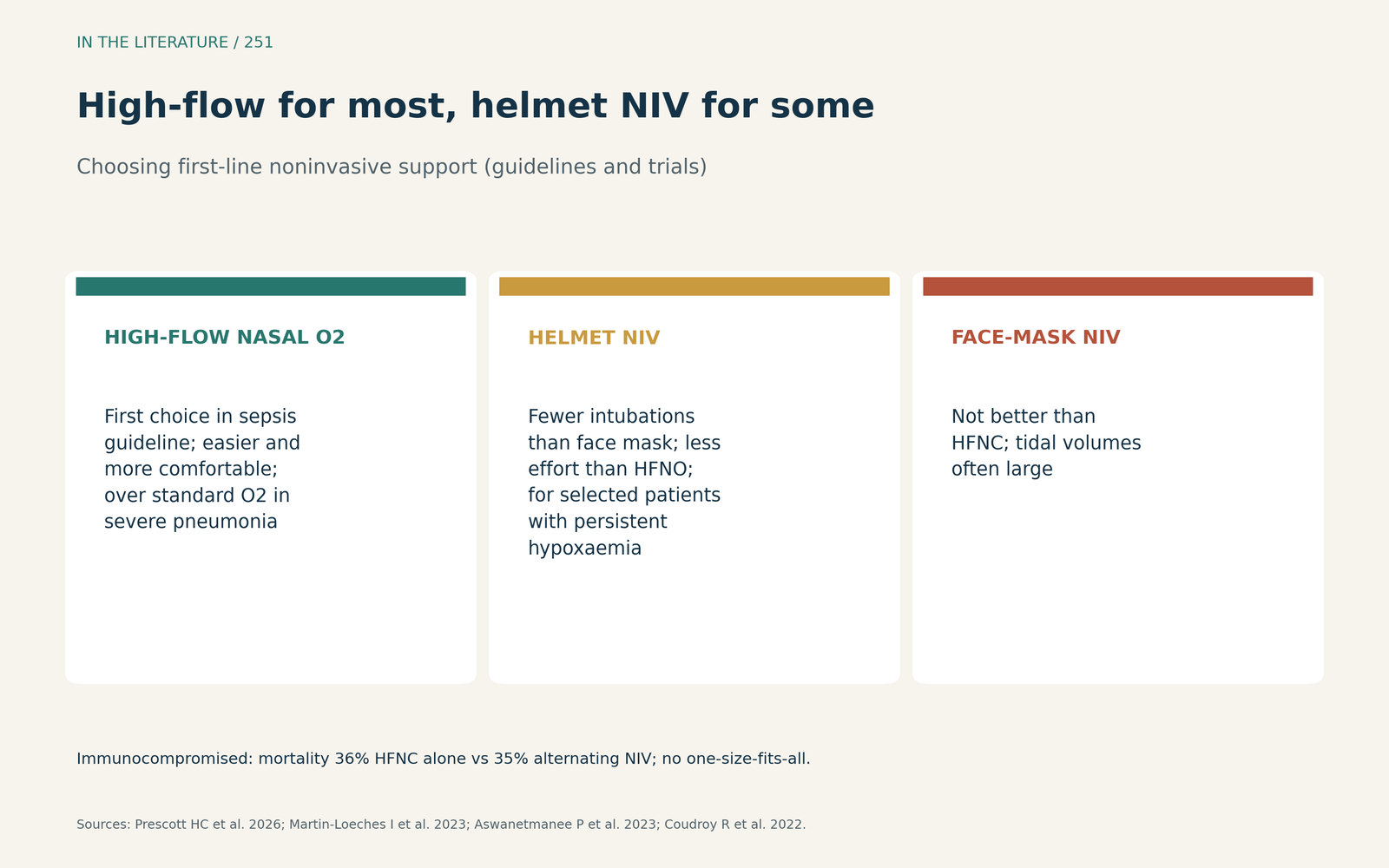
Figure 2. High-flow for most; helmet NIV for selected patients. Synthesized from Prescott et al., Martin-Loeches et al., Aswanetmanee et al. and Coudroy et al.[1], [6], [3], [7] View larger.

Recognizing failure
In a multicentre cohort (Li et al., PLoS One 2022), a ROX index below 4.58 at start and below 6.06 at 1 hour predicted HFNC failure; the ROX index is a screening tool and should be measured serially.[5] In COVID patients (Yau et al., Crit Care 2023), ROX had a summary AUC of 0.771, a cutoff of 5.23 was suggested, and 3.85 to 4.88 was described as an indeterminate range.[11]
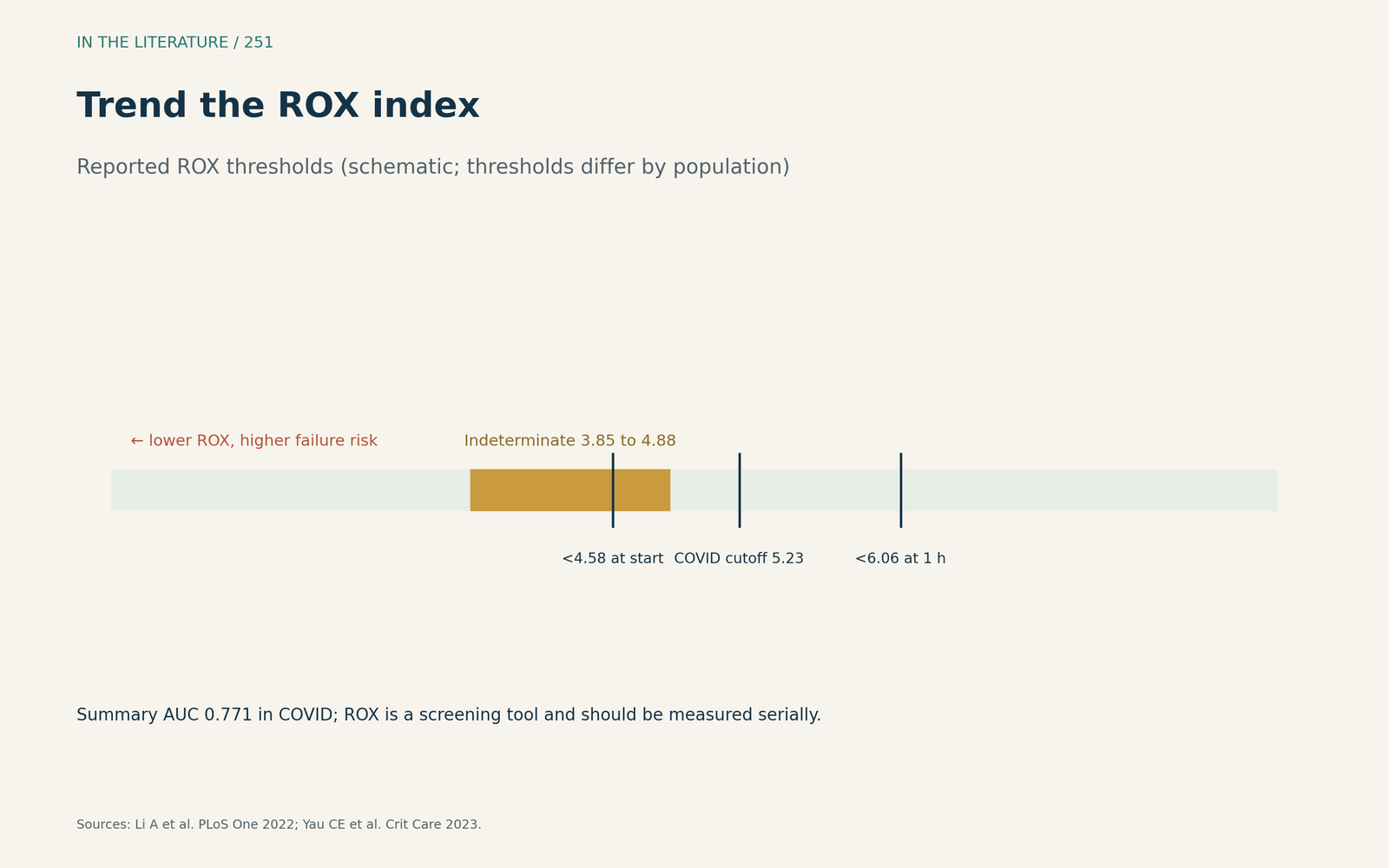
Figure 3. Trend the ROX index; thresholds differ by population. Data from Li et al. and Yau et al.[5], [11] View larger.

Three takeaways
- Use high-flow nasal oxygen as first-line support for most hypoxemic patients.[1], [6]
- If NIV is used, prefer a helmet and watch for large tidal volumes with a face mask.[3], [2]
- Recalculate the ROX index over time and act on a falling trend, alongside clinical judgment.[5], [11]
References
- Prescott HC, Antonelli M, Alhazzani W, et al. Surviving Sepsis Campaign: international guidelines for management of sepsis and septic shock 2026. Crit Care Med. 2026;54(4):725–812. doi:10.1097/CCM.0000000000007075
- Frat JP, Thille AW, Mercat A, et al. High-flow oxygen through nasal cannula in acute hypoxemic respiratory failure. N Engl J Med. 2015;372(23):2185–2196. doi:10.1056/NEJMoa1503326
- Aswanetmanee P, Limsuwat C, Maneechotesuwan K, Wongsurakiat P. Noninvasive ventilation in patients with acute hypoxemic respiratory failure: a systematic review and meta-analysis of randomized controlled trials. Sci Rep. 2023;13(1):8283. doi:10.1038/s41598-023-35323-0
- Frat JP, Quenot JP, Guitton C, et al. High-flow or standard oxygen in acute hypoxemic respiratory failure. N Engl J Med. 2026;394(21):2095–2106. doi:10.1056/NEJMoa2516087
- Li A, Cove ME, Phua J, et al. Expanding the utility of the ROX index among patients with acute hypoxemic respiratory failure. PLoS One. 2022;17(4):e0261234. doi:10.1371/journal.pone.0261234
- Martin-Loeches I, Torres A, Nagavci B, et al. ERS/ESICM/ESCMID/ALAT guidelines for the management of severe community-acquired pneumonia. Eur Respir J. 2023;61(4):2200735. doi:10.1183/13993003.00735-2022
- Coudroy R, Frat JP, Ehrmann S, et al. High-flow nasal oxygen alone or alternating with non-invasive ventilation in critically ill immunocompromised patients with acute respiratory failure: a randomised controlled trial. Lancet Respir Med. 2022;10(7):641–649. doi:10.1016/S2213-2600(22)00096-0
- Ferreyro BL, Angriman F, Munshi L, et al. Association of noninvasive oxygenation strategies with all-cause mortality in adults with acute hypoxemic respiratory failure: a systematic review and meta-analysis. JAMA. 2020;324(1):57–67. doi:10.1001/jama.2020.9524
- Grieco DL, Menga LS, Cesarano M, et al. Effect of helmet noninvasive ventilation vs high-flow nasal oxygen on days free of respiratory support in patients with COVID-19 and moderate to severe hypoxemic respiratory failure: the HENIVOT randomized clinical trial. JAMA. 2021;325(17):1731–1743. doi:10.1001/jama.2021.4682
- Munshi L, Mancebo J, Brochard LJ. Noninvasive respiratory support for adults with acute respiratory failure. N Engl J Med. 2022;387(18):1688–1698. doi:10.1056/NEJMra2204556
- Yau CE, Lee DYX, Vasudevan A, et al. Performance of the ROX index in predicting high flow nasal cannula failure in COVID-19 patients: a systematic review and meta-analysis. Crit Care. 2023;27(1):320. doi:10.1186/s13054-023-04567-7