ITL-809134c6952a
Juan Li, MD · 更新于2026年11月18日
核心要点
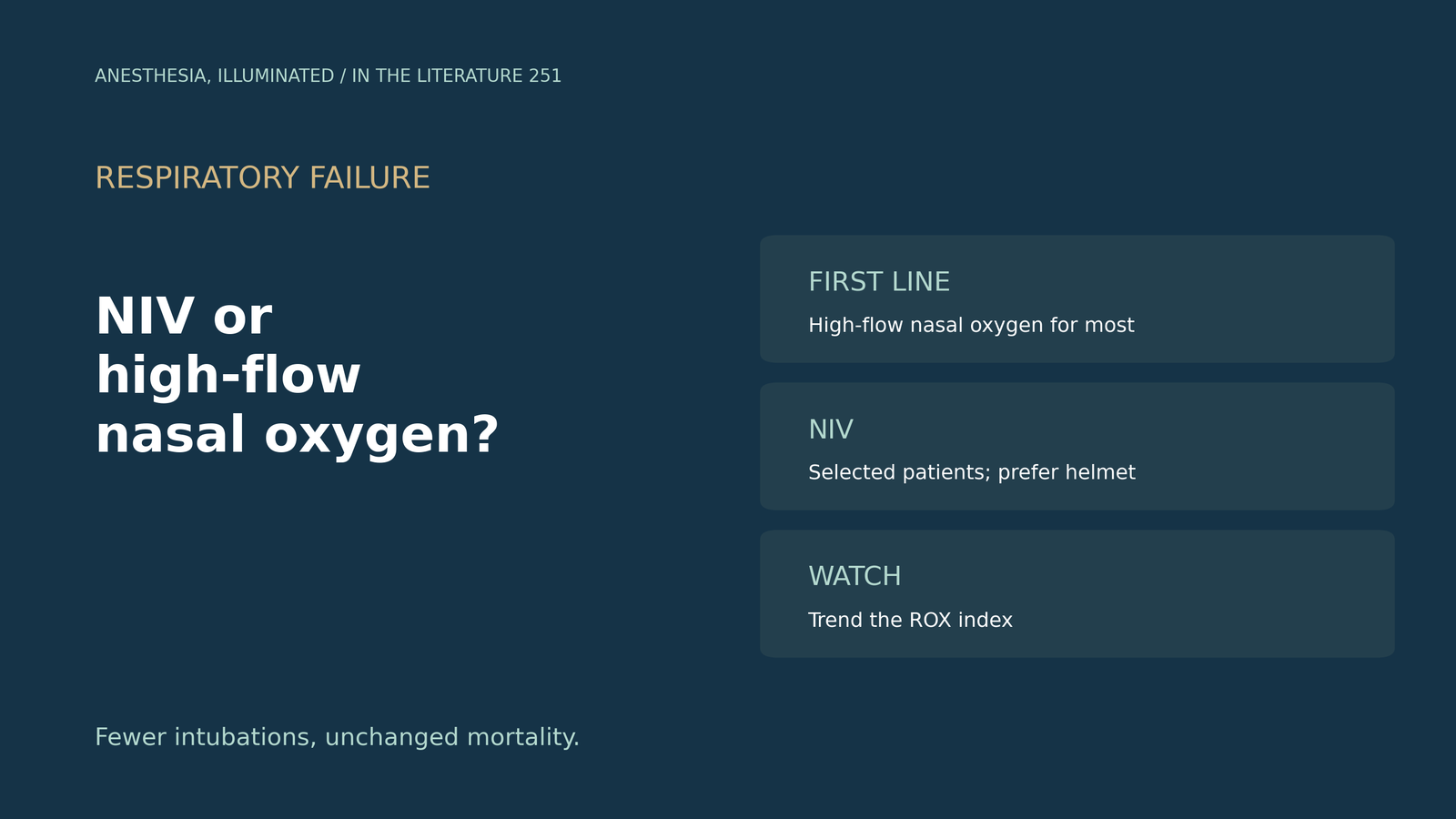
- 高流量优先。脓毒症指南基于7项RCT、2465例患者,建议首选HFNC而非无创通气。[1]
- 面罩无创通气没有胜出。FLORALI中,插管率HFNC为38%、标准氧疗47%、无创通气50%,差异无统计学意义。[2]
- 头盔不同。头盔无创通气的插管率低于面罩,但无创通气总体并未优于HFNC。[3]
- 插管减少,生存不变。SOHO中,HFNC较标准氧疗降低插管(42.4%对48.4%),两组死亡率均为14.6%。[4]
- 关注ROX指数。它可提示HFNC失败,但只是筛查工具。[5]
一位肺炎患者用储氧面罩时SpO2 88%,呼吸频率32次/分,暂不需要立即插管。下一步应该用高流量鼻氧还是无创通气?[1], [6]
高流量优先的理由
拯救脓毒症运动2026指南(Prescott等,Crit Care Med 2026)基于7项RCT、2465例患者,建议首选HFNC而非无创通气,并指出HFNC更易实施、患者通常更舒适。[1] 对于不需要立即插管的重症肺炎,ERS/ESICM/ESCMID/ALAT指南(Martin-Loeches等,Eur Respir J 2023)建议使用高流量鼻氧而非标准氧疗。[6] 在FLORALI中(Frat等,N Engl J Med 2015),插管率HFNC为38%、标准氧疗47%、面罩无创通气50%(P 0.18);无创通气时潮气量平均9.2 mL/kg,作者担心超过9 mL/kg可能加重肺损伤。[2] 在SOHO中(Frat等,N Engl J Med 2026),HFNC较标准氧疗降低了插管(42.4%对48.4%),但未降低第28天死亡率(两组均为14.6%);初始设置平均为51 L/min、FiO2 0.67。[4]
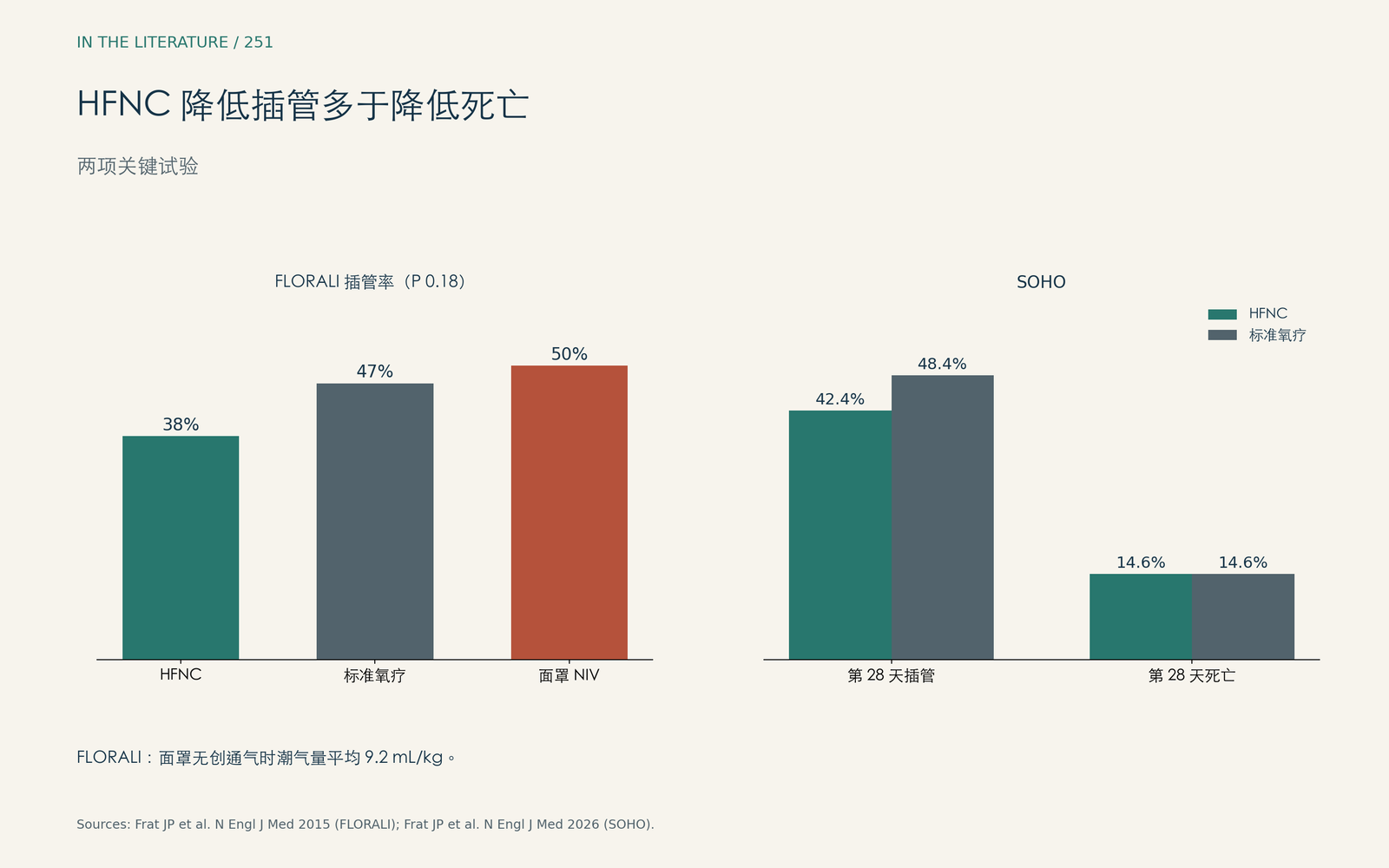
图1. HFNC降低插管多于降低死亡。数据来自FLORALI与SOHO。[2], [4] 查看大图。

无创通气仍可能适用的情况
一项纳入17项RCT、1738例患者的荟萃分析(Aswanetmanee等,Sci Rep 2023)发现,与HFNC相比,无创通气并未显著降低插管,但该比较仅有两项研究;头盔无创通气的插管率低于面罩。[3] 重症肺炎指南指出,无创通气可能适用于部分持续低氧的患者,无创通气与高流量鼻氧之间的选择尚不明确,头盔无创通气比高流量更能减轻呼吸做功。[6] 在免疫抑制患者中(FLORALI-IM,Coudroy等,Lancet Respir Med 2022),单用HFNC组第28天死亡率为36%,无创通气交替组为35%,提示可能不存在“一刀切”的策略。[7]
一项纳入 3804 名受试者的网络荟萃分析(Ferreyro 等,JAMA 2020)显示,与标准氧疗相比,头盔无创通气(RR 0.40,低确定性)和面罩无创通气(RR 0.83)与较低死亡率相关。[8] 在新冠肺炎中(HENIVOT,Grieco 等,JAMA 2021),头盔无创通气与 HFNC 相比并未增加无呼吸支持天数,但插管率为 30% 对 51%。[9] 一篇综述(Munshi 等,N Engl J Med 2022)建议先使用团队最熟悉的方式,再尽早评估失败风险;ARDS 患者 PaO2:FiO2 低于 150 提示面罩无创通气失败风险高。[10]
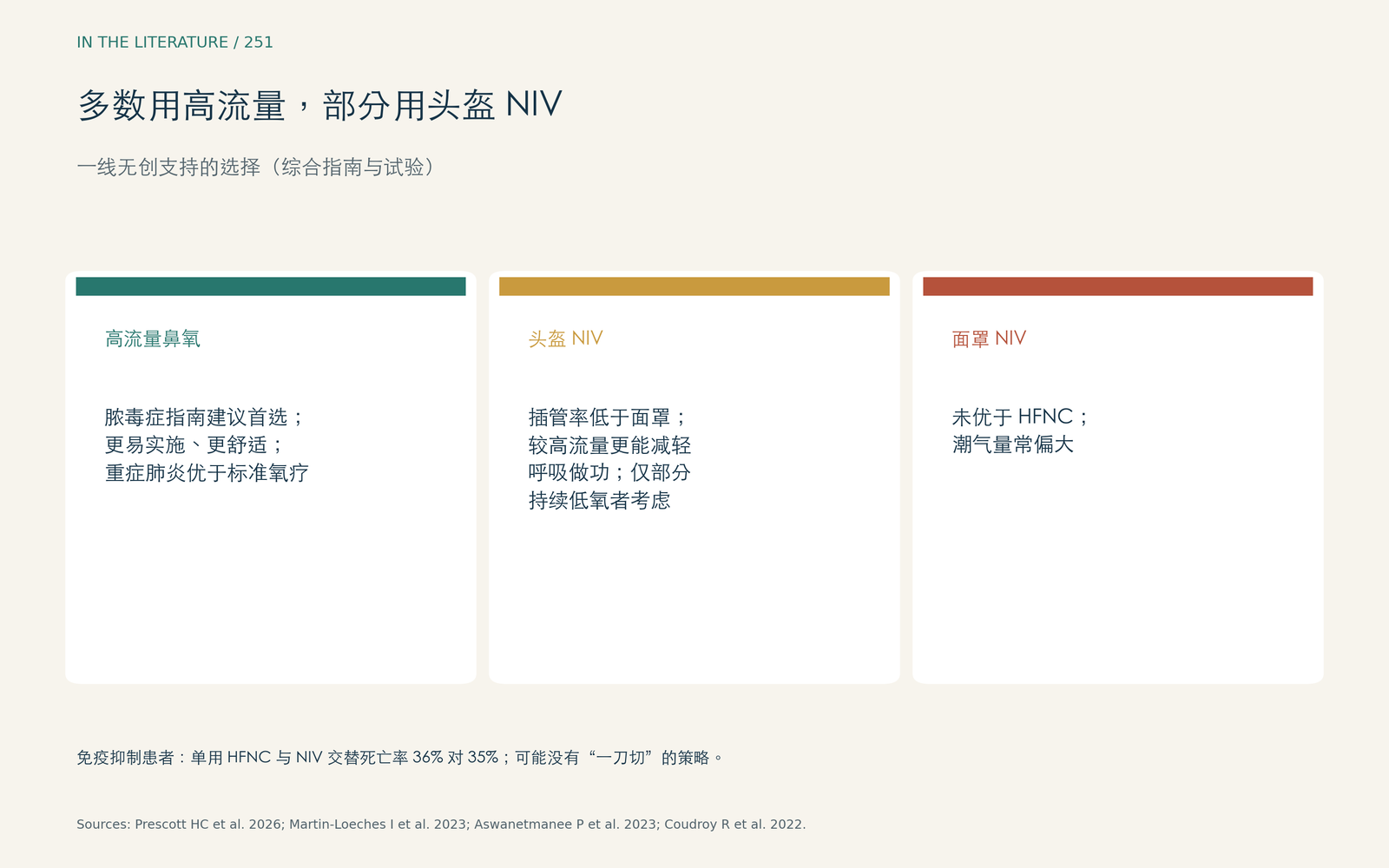
图2. 多数人用高流量;经过选择的患者用头盔无创通气。综合自Prescott等、Martin-Loeches等、Aswanetmanee等与Coudroy等。[1], [6], [3], [7] 查看大图。

识别失败
在一项多中心队列中(Li等,PLoS One 2022),开始时ROX指数低于4.58、1小时时低于6.06可预测HFNC失败;ROX指数是筛查工具,应连续测量。[5] 在COVID患者中(Yau等,Crit Care 2023),ROX的汇总AUC为0.771,建议界值为5.23,3.85–4.88被视为不确定区间。[11]
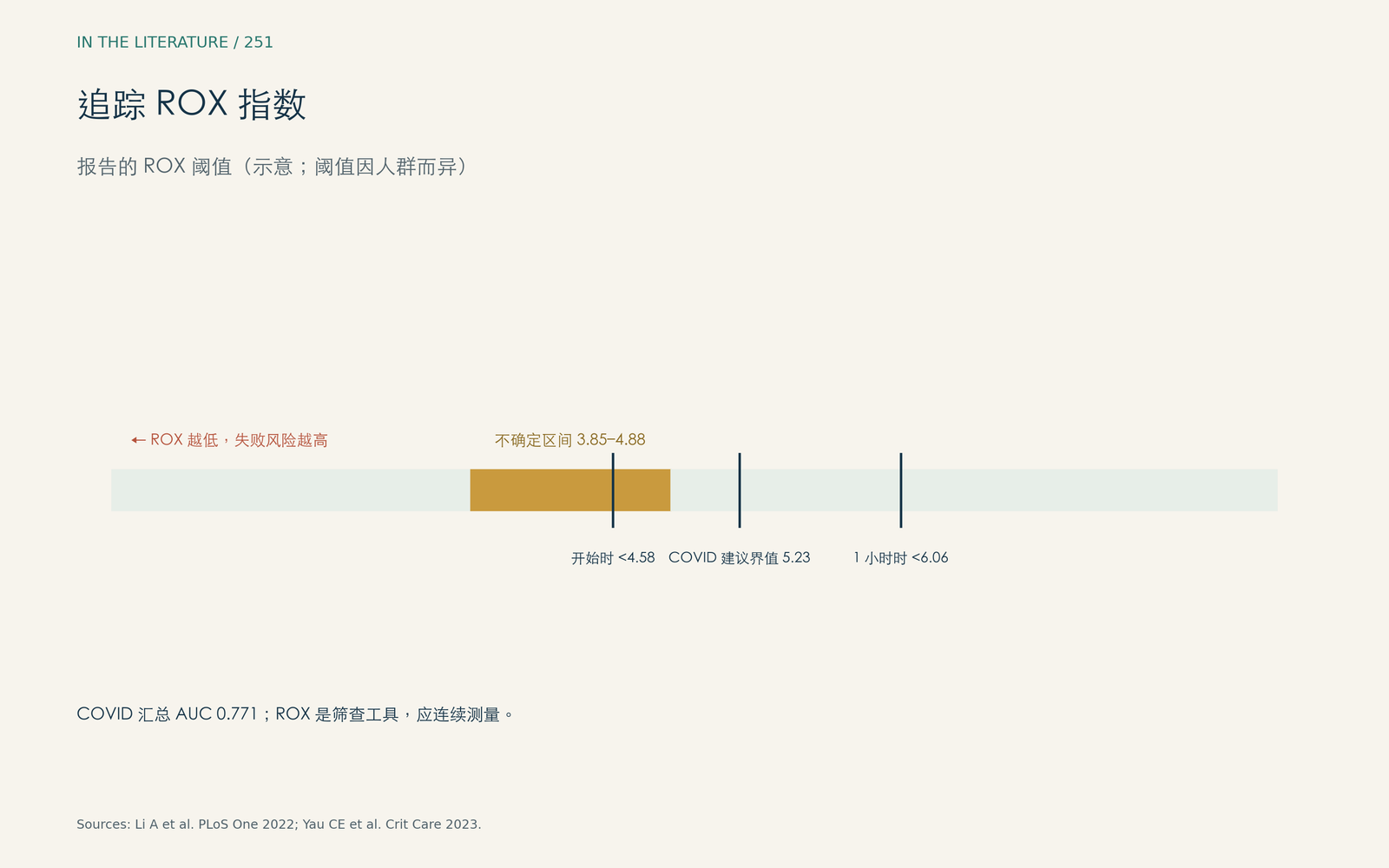
图3. 追踪ROX指数趋势;阈值因人群而异。数据来自Li等与Yau等。[5], [11] 查看大图。

临床带走的三点
参考文献
- Prescott HC, Antonelli M, Alhazzani W, et al. Surviving Sepsis Campaign: international guidelines for management of sepsis and septic shock 2026. Crit Care Med. 2026;54(4):725–812. doi:10.1097/CCM.0000000000007075
- Frat JP, Thille AW, Mercat A, et al. High-flow oxygen through nasal cannula in acute hypoxemic respiratory failure. N Engl J Med. 2015;372(23):2185–2196. doi:10.1056/NEJMoa1503326
- Aswanetmanee P, Limsuwat C, Maneechotesuwan K, Wongsurakiat P. Noninvasive ventilation in patients with acute hypoxemic respiratory failure: a systematic review and meta-analysis of randomized controlled trials. Sci Rep. 2023;13(1):8283. doi:10.1038/s41598-023-35323-0
- Frat JP, Quenot JP, Guitton C, et al. High-flow or standard oxygen in acute hypoxemic respiratory failure. N Engl J Med. 2026;394(21):2095–2106. doi:10.1056/NEJMoa2516087
- Li A, Cove ME, Phua J, et al. Expanding the utility of the ROX index among patients with acute hypoxemic respiratory failure. PLoS One. 2022;17(4):e0261234. doi:10.1371/journal.pone.0261234
- Martin-Loeches I, Torres A, Nagavci B, et al. ERS/ESICM/ESCMID/ALAT guidelines for the management of severe community-acquired pneumonia. Eur Respir J. 2023;61(4):2200735. doi:10.1183/13993003.00735-2022
- Coudroy R, Frat JP, Ehrmann S, et al. High-flow nasal oxygen alone or alternating with non-invasive ventilation in critically ill immunocompromised patients with acute respiratory failure: a randomised controlled trial. Lancet Respir Med. 2022;10(7):641–649. doi:10.1016/S2213-2600(22)00096-0
- Ferreyro BL, Angriman F, Munshi L, et al. Association of noninvasive oxygenation strategies with all-cause mortality in adults with acute hypoxemic respiratory failure: a systematic review and meta-analysis. JAMA. 2020;324(1):57–67. doi:10.1001/jama.2020.9524
- Grieco DL, Menga LS, Cesarano M, et al. Effect of helmet noninvasive ventilation vs high-flow nasal oxygen on days free of respiratory support in patients with COVID-19 and moderate to severe hypoxemic respiratory failure: the HENIVOT randomized clinical trial. JAMA. 2021;325(17):1731–1743. doi:10.1001/jama.2021.4682
- Munshi L, Mancebo J, Brochard LJ. Noninvasive respiratory support for adults with acute respiratory failure. N Engl J Med. 2022;387(18):1688–1698. doi:10.1056/NEJMra2204556
- Yau CE, Lee DYX, Vasudevan A, et al. Performance of the ROX index in predicting high flow nasal cannula failure in COVID-19 patients: a systematic review and meta-analysis. Crit Care. 2023;27(1):320. doi:10.1186/s13054-023-04567-7