
ITL-916b2e472b96
Juan Li, MD · Updated November 18, 2026
Key points
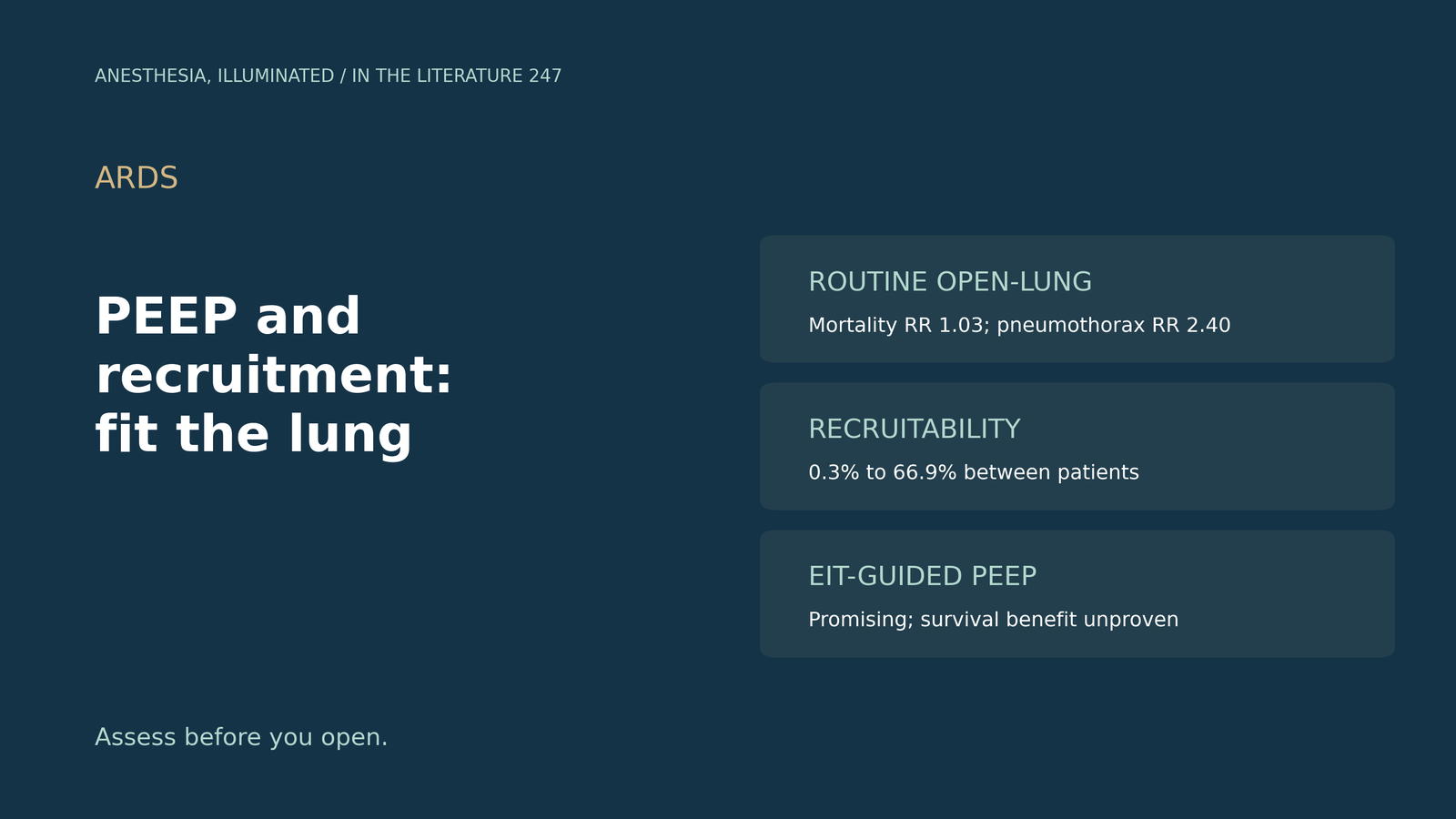
- Routine open-lung strategies did not help. Across seven trials, mortality was unchanged (RR 1.03), while pneumothorax needing drainage rose (RR 2.40).[1]
- Lungs differ. Recruitability ranged from 0.3% to 66.9% in 108 patients.[2]
- Tables can mislead. PEEP/FiO2 tables tend to select the highest PEEP in patients who do not respond.[2]
- Assess first. Recruitment and high PEEP without assessing recruitability can cause adverse effects.[1]
- EIT is promising, unproven. Mortality certainty for EIT-guided PEEP is low.[3]
A patient with moderate ARDS is on PEEP 10. The team debates a staircase recruitment manoeuvre and PEEP 18 versus following the table. What does the evidence support?[1], [2]
What routine recruitment showed
In a meta-analysis of seven open-lung trials with 1545 participants (Zeng et al., J Anesth Transl Med 2025), open-lung ventilation improved the oxygenation index at days 1, 3 and 7 but did not reduce mortality (RR 1.03); it increased pneumothorax requiring drainage (RR 2.40) and hypotension within 1 h.[1] The authors suggest many ART patients likely had low recruitability and unnecessarily high pressures; about 24 percent of patients have nearly non-recruitable lung on CT.[1] An earlier Cochrane review (Hodgson et al., 2016) found no significant change in 28-day mortality (RR 0.86) and no difference in barotrauma (RR 1.09).[4] In ART itself (Cavalcanti et al., JAMA 2017), recruitment with titrated PEEP raised 28-day mortality (55.3% vs 49.3%), and the authors concluded that their findings do not support routine recruitment with PEEP titration.[5]
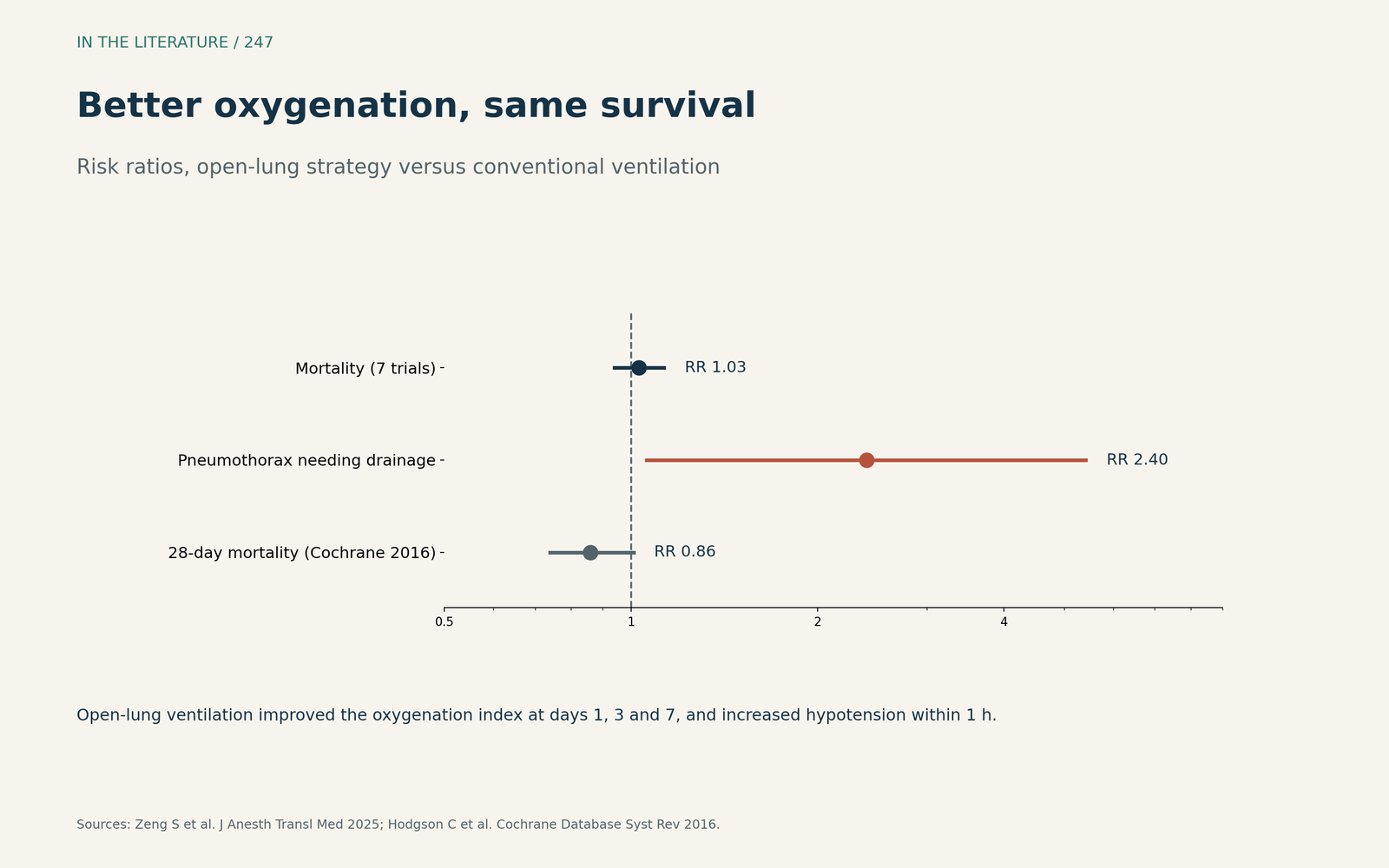
Figure 1. Better oxygenation did not mean better survival. Data from Zeng et al. and Hodgson et al.[1], [4] View larger.

Recruitability varies
In the RECRUIT study (Jonkman et al., Am J Respir Crit Care Med 2023), recruitability in 108 COVID ARDS patients ranged from 0.3% to 66.9%, the EIT approach assigned a different PEEP from the highest-compliance approach in 81%, and PEEP/FiO2 tables tended to select the highest PEEP in non-responders; whether this improves outcomes must be tested prospectively.[2] There is still no ideal method to determine optimal PEEP in individual patients, and one center does not routinely perform recruitment manoeuvres because of a lack of efficacy.[6]
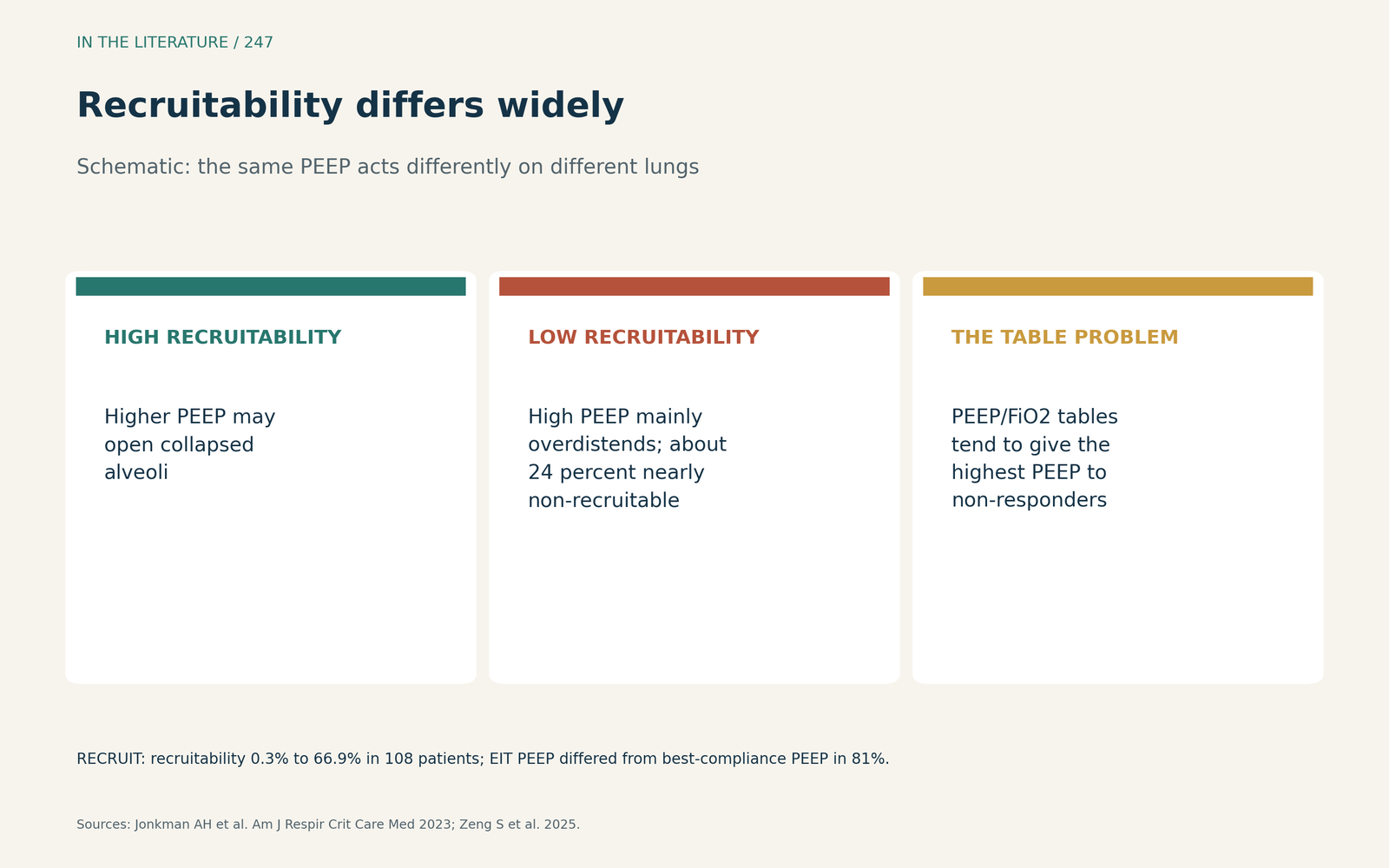
Figure 2. The same PEEP can recruit one lung and overstretch another (schematic). Data from Jonkman et al. and Zeng et al.[2], [1] View larger.

Personalized PEEP with EIT
Rauseo et al. (Ann Intensive Care 2026) pooled 9 studies with 356 patients: mortality certainty was low, and greater benefit may be expected with greater recruitability.[3] In a single-centre trial of 117 patients (He et al., Crit Care 2021), EIT-guided PEEP had a 6% absolute mortality decrease that was not statistically significant.[7] Franchineau et al. (Am J Respir Crit Care Med 2024) caution that setting PEEP solely on homogeneity cannot be recommended, and evidence that EIT strategies improve outcomes is still lacking.[8] Related perioperative and animal data fit this picture: in injured pig lungs, table PEEP without a recruitment maneuver caused the most collapse (Muders et al., Anesthesiology 2020);[9] in obese surgical patients, the benefits of individualized PEEP vanished after extubation (Simon et al., Anesthesiology 2021),[10] and in a small trial postoperative pulmonary complications were 4 of 20 with both individualized and fixed PEEP (Li et al., Anesthesiology 2023).[11]
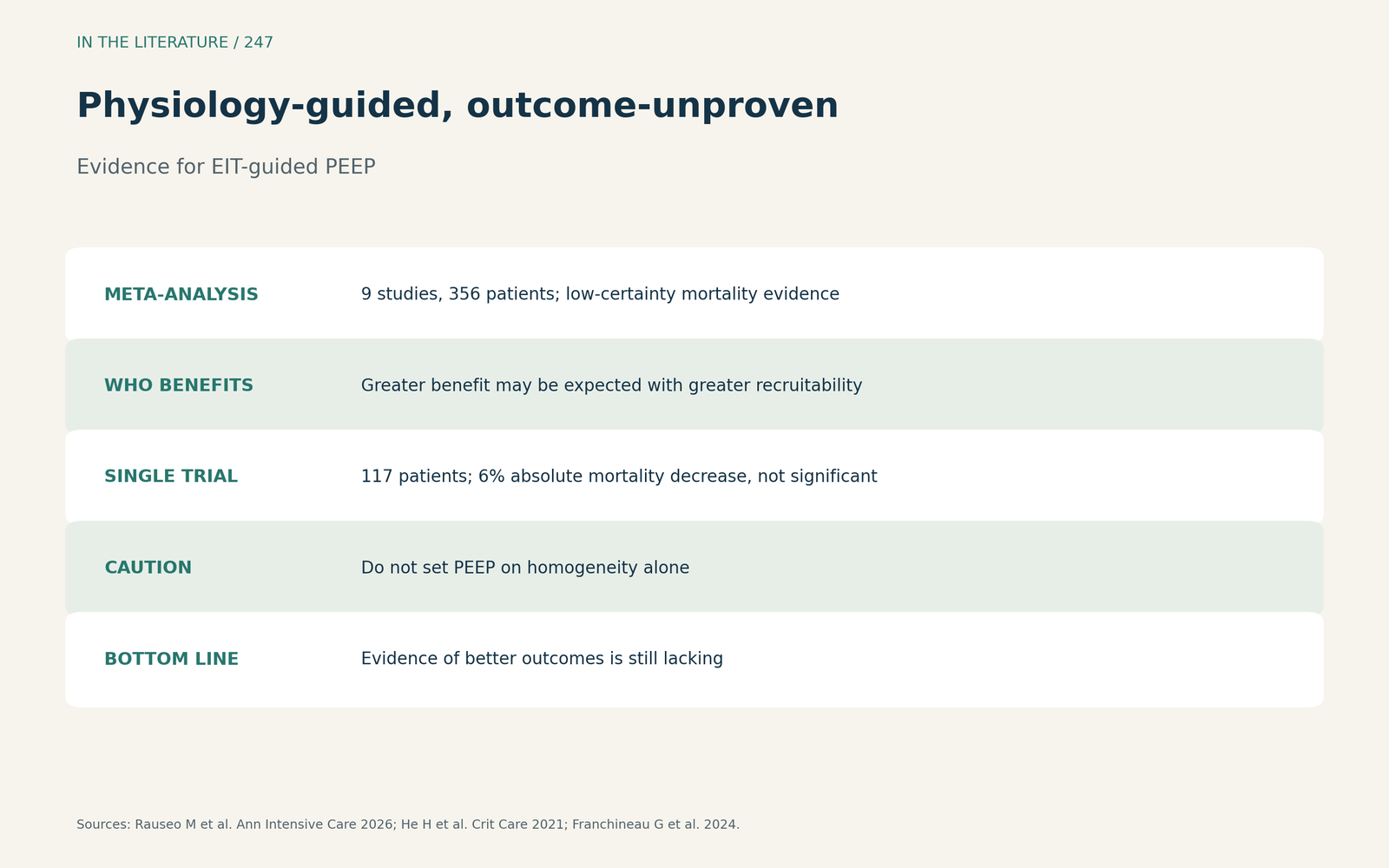
Figure 3. Physiology-guided, outcome-unproven. Data from Rauseo et al., He et al. and Franchineau et al.[3], [7], [8] View larger.

Three takeaways
- Do not use routine staircase recruitment and blanket high PEEP; they did not lower mortality and increased harm.[1]
- Assess recruitability before raising PEEP, and be wary of tables in non-responders.[1], [2]
- Use EIT or mechanics to individualize PEEP if available, but know the survival benefit is unproven.[3], [8]
References
- Zeng S, Yao Z, Guan C, et al. Open lung ventilation with low tidal volumes, staircase recruitment maneuvers, high PEEP and decremental PEEP titration vs ARDSNet in ARDS: a systematic review and meta-analysis. J Anesth Transl Med. 2025;4(3):148–160. doi:10.1016/j.jatmed.2025.08.001
- Jonkman AH, Alcala GC, Pavlovsky B, et al. Lung recruitment assessed by electrical impedance tomography (RECRUIT): a multicenter study of COVID-19 acute respiratory distress syndrome. Am J Respir Crit Care Med. 2023;208(1):25–38. doi:10.1164/rccm.202212-2300OC
- Rauseo M, Azzolina D, Scaramuzzo G, et al. Personalized positive-end expiratory pressure using electrical impedance tomography in ARDS patients: a systematic review and meta-analysis. Ann Intensive Care. 2026;16:100049. doi:10.1016/j.aicoj.2026.100049
- Hodgson C, Goligher EC, Young ME, et al. Recruitment manoeuvres for adults with acute respiratory distress syndrome receiving mechanical ventilation. Cochrane Database Syst Rev. 2016;11:CD006667. doi:10.1002/14651858.CD006667.pub3
- Writing Group for the Alveolar Recruitment for Acute Respiratory Distress Syndrome Trial (ART) Investigators; Cavalcanti AB, Suzumura EA, Laranjeira LN, et al. Effect of lung recruitment and titrated positive end-expiratory pressure (PEEP) vs low PEEP on mortality in patients with acute respiratory distress syndrome: a randomized clinical trial. JAMA. 2017;318(14):1335–1345. doi:10.1001/jama.2017.14171
- Wang CJ, Wang IT, Chen CH, et al. Recruitment-potential-oriented mechanical ventilation protocol and narrative review for patients with acute respiratory distress syndrome. J Pers Med. 2024;14(8):779. doi:10.3390/jpm14080779
- He H, Chi Y, Yang Y, et al. Early individualized positive end-expiratory pressure guided by electrical impedance tomography in acute respiratory distress syndrome: a randomized controlled clinical trial. Crit Care. 2021;25(1):230. doi:10.1186/s13054-021-03645-y
- Franchineau G, Jonkman AH, Piquilloud L, et al. Electrical impedance tomography to monitor hypoxemic respiratory failure. Am J Respir Crit Care Med. 2024;209(6):670–682. doi:10.1164/rccm.202306-1118CI
- Muders T, Luepschen H, Meier T, et al. Individualized positive end-expiratory pressure and regional gas exchange in porcine lung injury. Anesthesiology. 2020;132(4):808–824. doi:10.1097/ALN.0000000000003151
- Simon P, Girrbach F, Petroff D, et al. Individualized versus fixed positive end-expiratory pressure for intraoperative mechanical ventilation in obese patients: a secondary analysis. Anesthesiology. 2021;134(6):887–900. doi:10.1097/ALN.0000000000003762
- Li X, Liu H, Wang J, et al. Individualized positive end-expiratory pressure on postoperative atelectasis in patients with obesity: a randomized controlled clinical trial. Anesthesiology. 2023;139(3):262–273. doi:10.1097/ALN.0000000000004603