
ITL-9e079a7b5e52
Juan Li, MD · Updated November 18, 2026
Key points
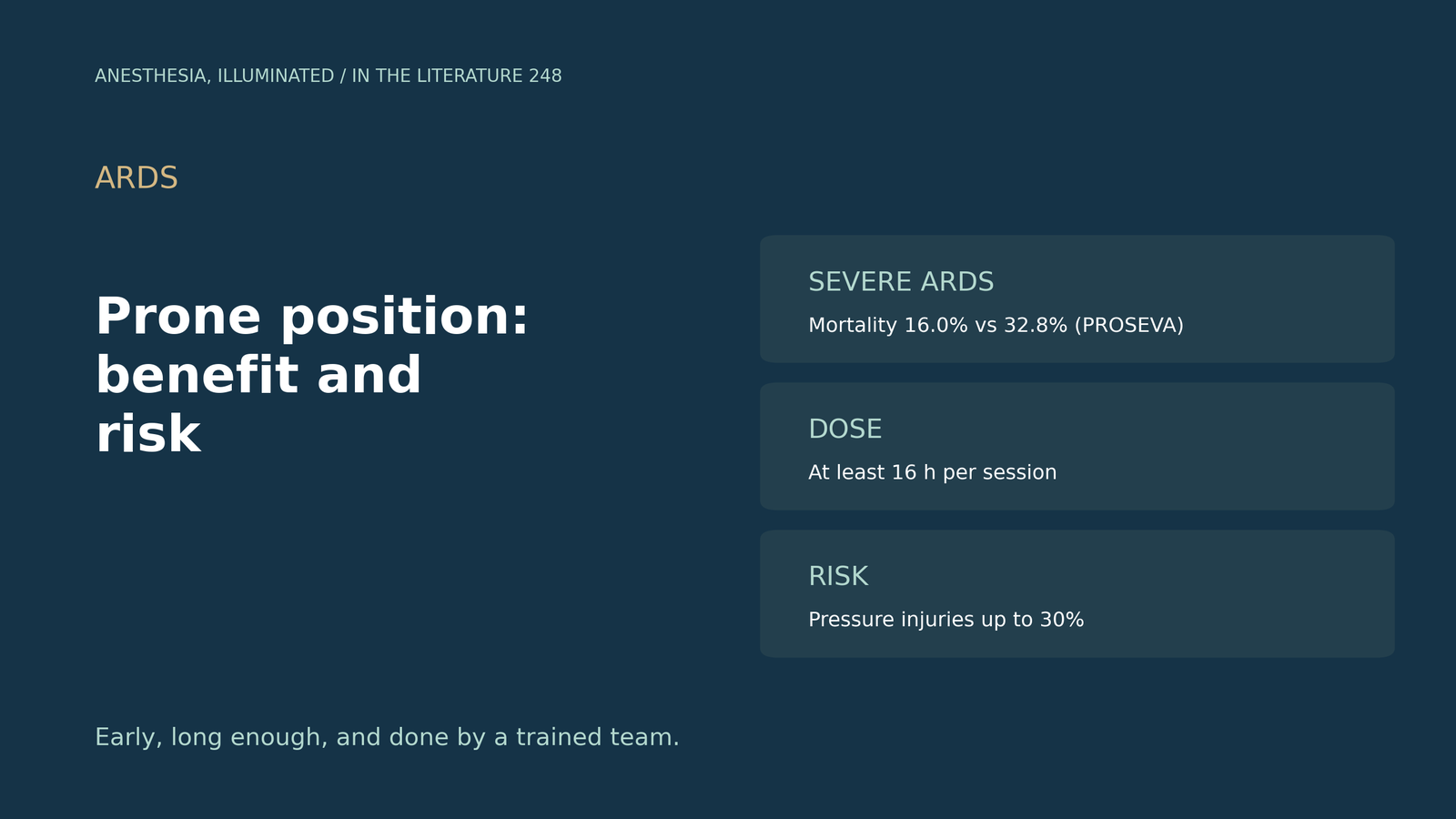
- Strong benefit in severe ARDS. In PROSEVA, 28-day mortality was 16.0% with proning versus 32.8% supine.[1]
- Long enough, not longer. Evidence supports at least 16 h per session; prolonged sessions showed no significant effect on 90-day mortality (HR 0.72).[2]
- Experience matters. Proning is technically demanding, and results may not generalize to inexperienced centers.[1]
- Main harm: pressure injuries, which can reach 30% during therapeutic proning.[3]
- On ECMO, unproven. Proning on VV-ECMO did not increase successful weaning by day 60 in PRONECMO.[4]
A patient with ARDS has a PaO2/FiO2 of 120 mmHg after 12 hours of lung-protective ventilation. The night team is small. Should the patient be proned now, and how can the risks be kept low?[1], [3]
The benefit
In PROSEVA (Guérin et al., N Engl J Med 2013), 28-day mortality was 16.0% with proning versus 32.8% supine; the mean session lasted 17 hours, and complications did not differ significantly between groups.[1] The authors acknowledged that proning is technically demanding and that results may not generalize to centers without experience.[1] Jung et al. (Crit Care 2025) pooled 9 studies with 1,045 patients and found that prolonged proning showed no significant effect on 90-day mortality (HR 0.72); with low to very low certainty, they support guideline-based proning of at least 16 h per session and do not support prolonged proning outside studies.[2] The response varies: in 30 patients with COVID-19 ARDS, 9 (30%) were nonresponders (Zarantonello et al., Anesthesiology 2022).[5] Animal work suggests one further benefit: spontaneous effort was milder and lung injury less in the prone position (Yoshida et al., Anesthesiology 2022).[6]
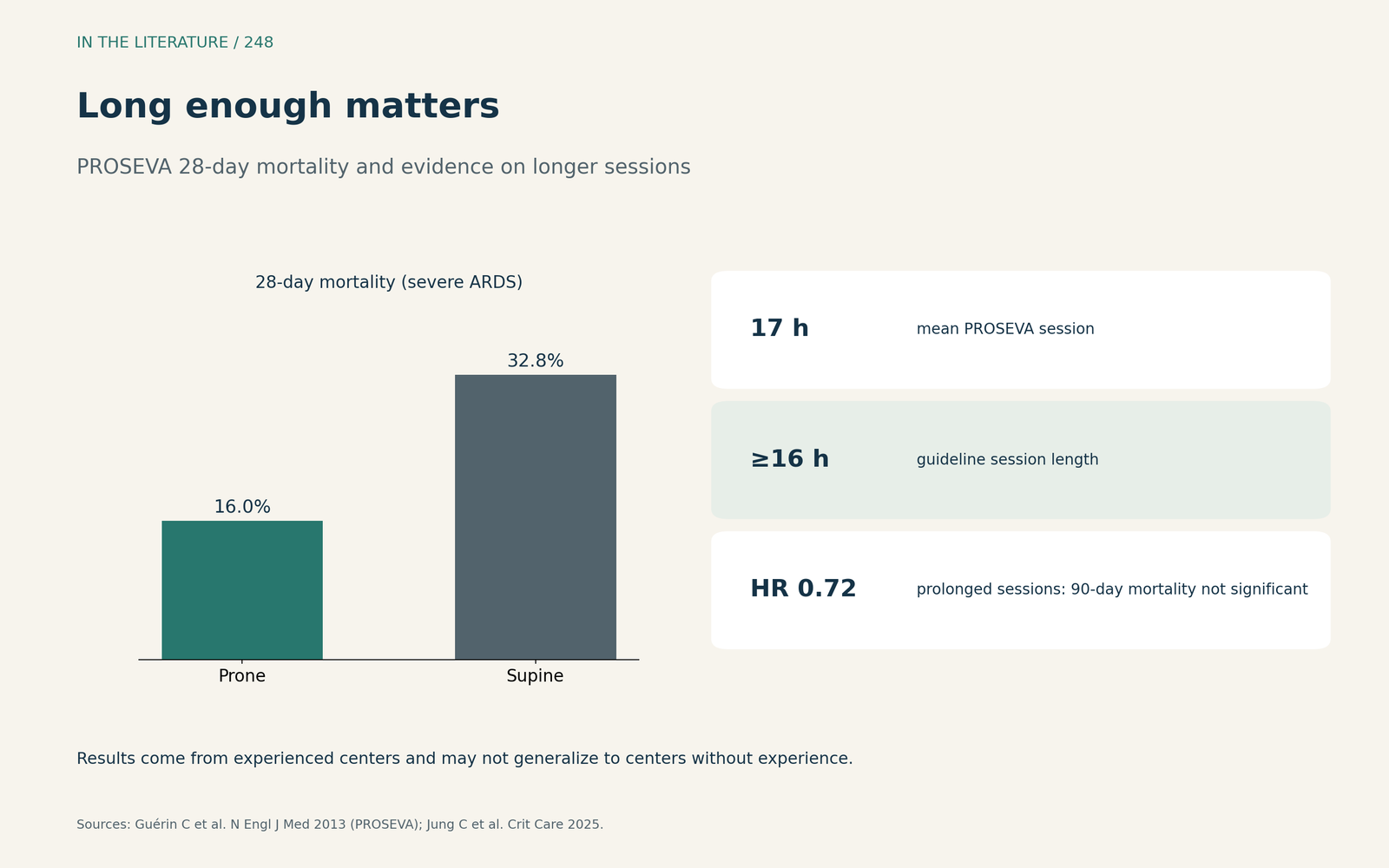
Figure 1. Long enough sessions matter; longer sessions are unproven. Data from Guérin et al. and Jung et al.[1], [2] View larger.

The risks
Pressure injuries can reach 30% during therapeutic proning, and prevention worked best within structured protocols supported by staff training; proning also causes minor but relevant complications such as facial edema.[3] Santarpino et al. (J Cardiothorac Vasc Anesth 2022) cite a multicenter trial that recorded 28 complications in 718 turning procedures.[7] On ECMO, proning can cause pressure sores, bleeding, airway dislodgement, lower ECMO flow and desaturation.[4]
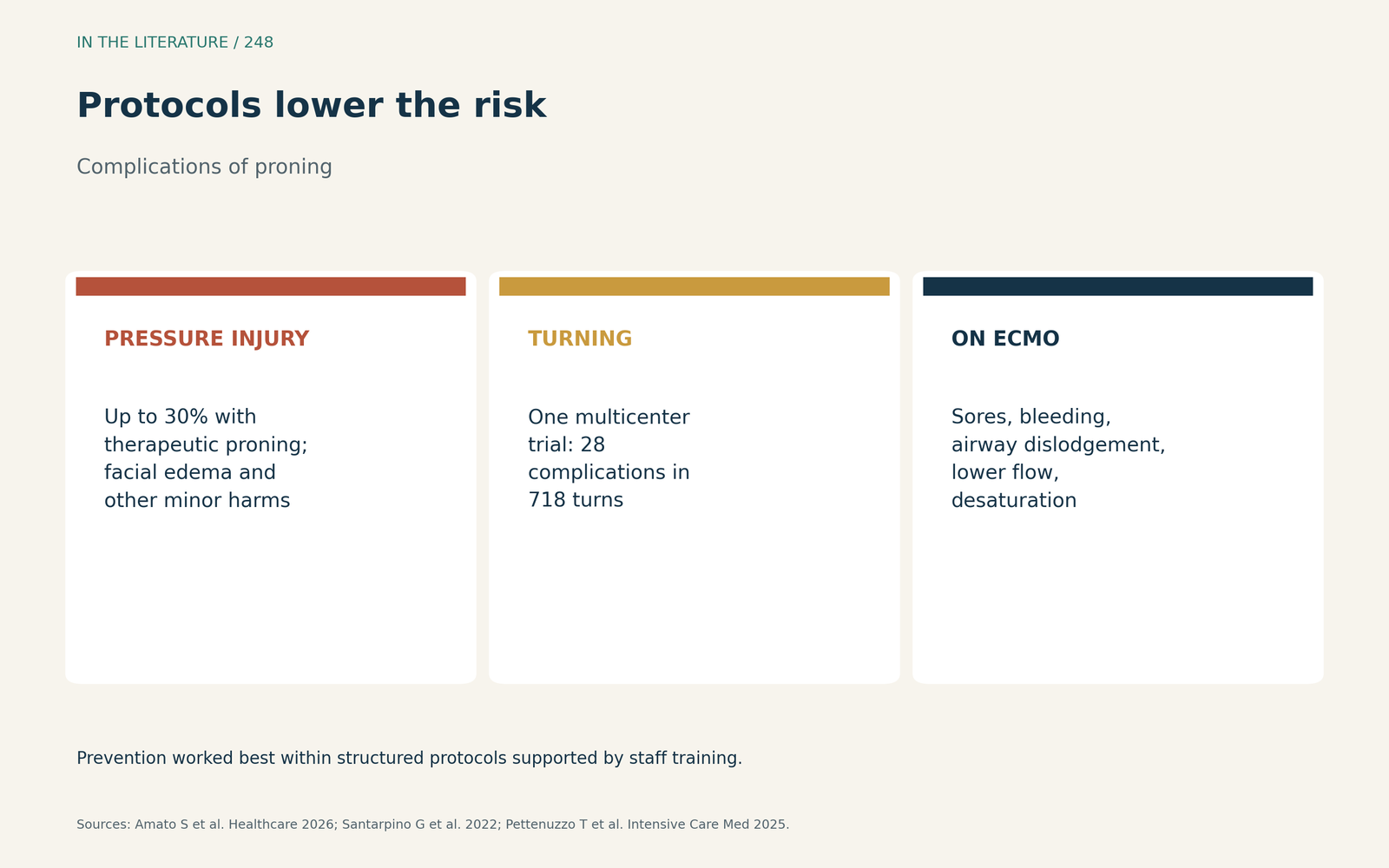
Figure 2. Protocols and trained teams lower the risk. Synthesized from Amato et al., Santarpino et al. and Pettenuzzo et al.[3], [7], [4] View larger.

Special settings
On VV-ECMO, proning did not increase successful weaning by day 60 in PRONECMO, and pooled data do not show that additional proning improves outcomes (Pettenuzzo et al., Intensive Care Med 2025).[4] In awake COVID patients, a meta-analysis of 17 trials with 2931 patients (Weatherald et al., BMJ 2022) found fewer intubations (24.2% vs 29.8%, RR 0.83) but no significant change in mortality (15.6% vs 17.2%, RR 0.90), with low adherence in many trials;[8] an individual-patient analysis found more survival without intubation (OR 1.42).[9] After cardiac surgery, concerns include sternotomy wound infection and hemodynamic instability,[7] though a 24-patient series reported proning was carried out safely, even after sternotomy.[10]
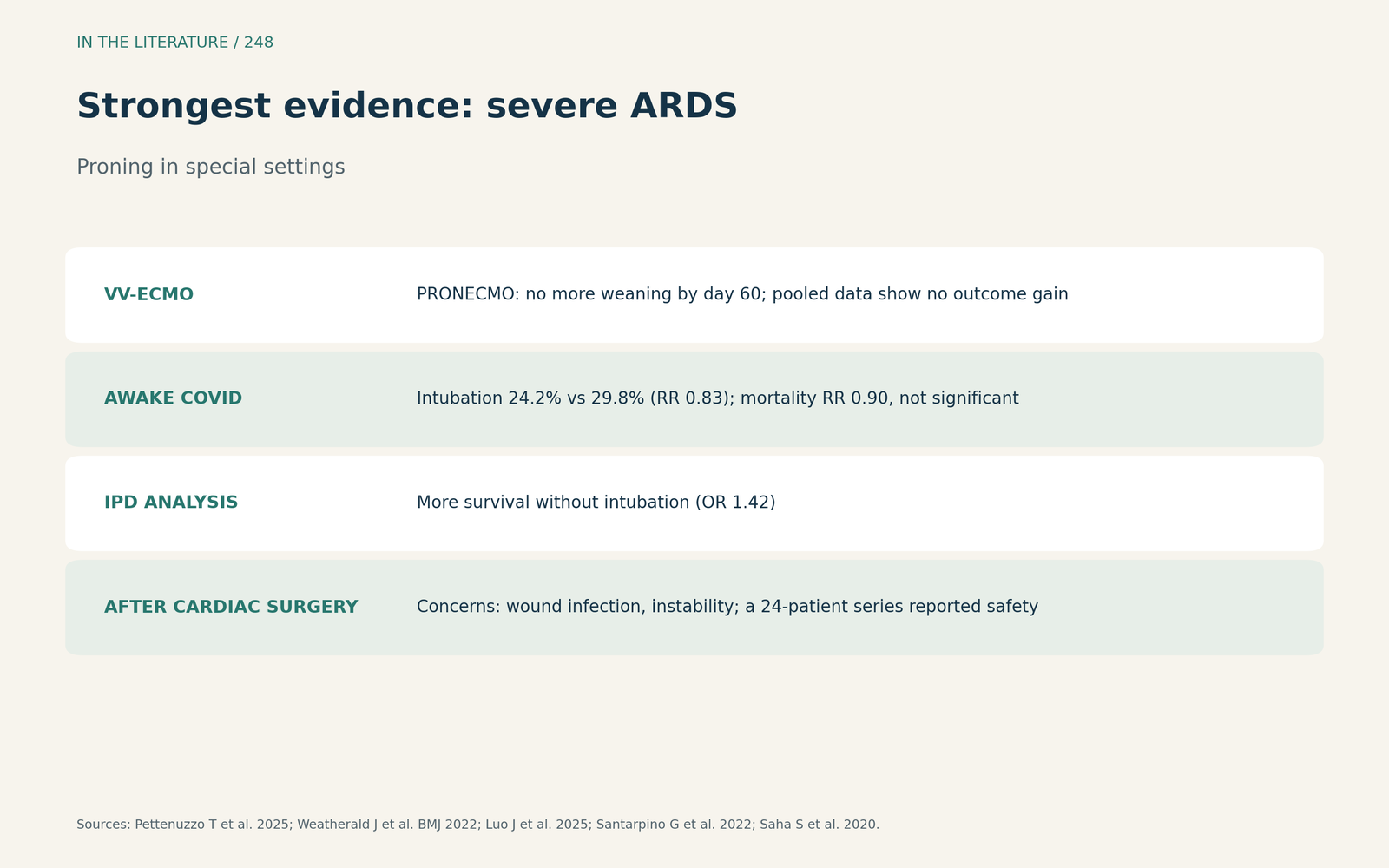
Figure 3. Strongest evidence is in sedated, ventilated severe ARDS. Data from Pettenuzzo et al., Weatherald et al., Luo et al., Santarpino et al. and Saha et al.[4], [8], [9], [7], [10] View larger.

Three takeaways
- Prone early in severe ARDS, for at least 16 hours per session.[1], [2]
- Use a trained team and a pressure-injury prevention protocol; the technique is not simple.[1], [3]
- Do not assume benefit carries over to ECMO, awake patients or very long sessions.[2], [4], [8]
References
- Guérin C, Reignier J, Richard JC, et al. Prone positioning in severe acute respiratory distress syndrome. N Engl J Med. 2013;368(23):2159–2168. doi:10.1056/NEJMoa1214103
- Jung C, Gillmann HJ, Stueber T. Effectiveness and safety of prolonged prone positioning in adult patients with acute respiratory distress syndrome (ARDS): a systematic review and meta-analysis. Crit Care. 2025;29(1):475. doi:10.1186/s13054-025-05712-0
- Amato S, Napolitano D, Lo Cascio A, et al. Evidence on measures for the prevention of pressure injuries in mechanically ventilated patients in prone positioning: a systematic review. Healthcare (Basel). 2026;14(4):443. doi:10.3390/healthcare14040443
- Pettenuzzo T, Balzani E, Sella N, et al. Prone positioning during veno-venous extracorporeal membrane oxygenation: a systematic review and meta-analysis. Intensive Care Med. 2025;51(5):930–941. doi:10.1007/s00134-025-07877-2
- Zarantonello F, Sella N, Pettenuzzo T, et al. Early physiologic effects of prone positioning in COVID-19 acute respiratory distress syndrome. Anesthesiology. 2022;137(3):327–339. doi:10.1097/ALN.0000000000004296
- Yoshida T, Engelberts D, Chen H, et al. Prone position minimizes the exacerbation of effort-dependent lung injury: exploring the mechanism in pigs and evaluating injury in rabbits. Anesthesiology. 2022;136(5):779–791. doi:10.1097/ALN.0000000000004165
- Santarpino G, Bonifazi R, Albanese M, et al. Prone positioning in postoperative cardiac surgery patients: a narrative review. J Cardiothorac Vasc Anesth. 2022;36(8):2636–2642. doi:10.1053/j.jvca.2021.07.045
- Weatherald J, Parhar KKS, Al Duhailib Z, et al. Efficacy of awake prone positioning in patients with covid-19 related hypoxemic respiratory failure: systematic review and meta-analysis of randomized trials. BMJ. 2022;379:e071966. doi:10.1136/bmj-2022-071966
- Luo J, Pavlov I, Tavernier E, et al. Awake prone positioning in adults with COVID-19 and acute hypoxemic respiratory failure: an individual participant data meta-analysis. JAMA Intern Med. 2025;185(5):572. doi:10.1001/jamainternmed.2025.0011
- Saha S, Jebran AF, Leistner M, et al. Turning things around: the role of prone positioning in the management of acute respiratory failure after cardiac surgery. J Cardiothorac Vasc Anesth. 2020;34(6):1434–1438. doi:10.1053/j.jvca.2019.10.055