ITL-ad2e9887506b
Juan Li, MD · Updated November 18, 2026
Key points
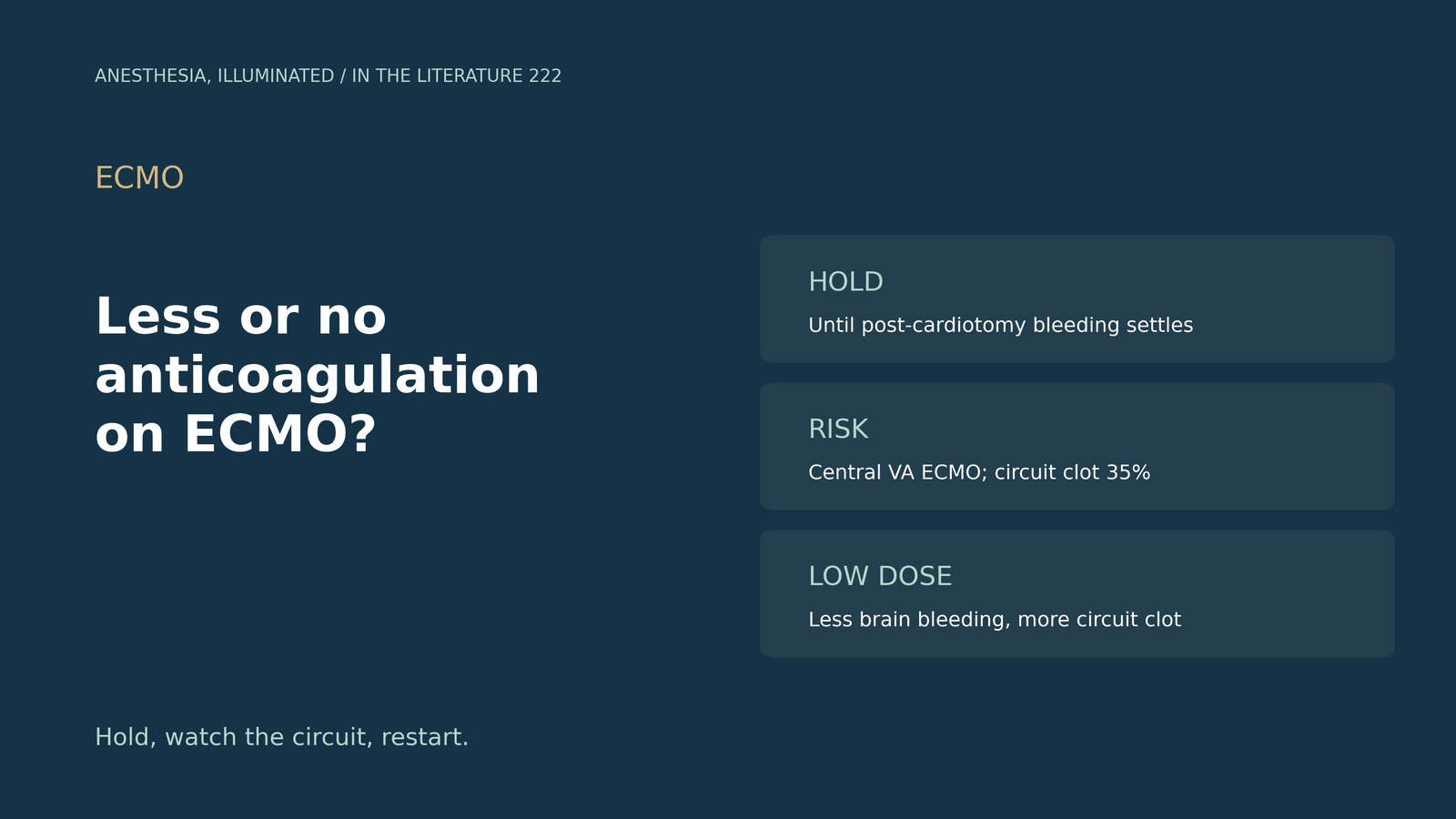
- Allowed while bleeding. After cardiac surgery, anticoagulation should be withheld until bleeding has diminished to acceptable levels.[1]
- Restart when drains settle. Anticoagulation can resume when chest drainage is acceptable, for example under 100 mL/h, within 24 to 48 h.[1]
- Know who is at risk. Holding is reasonable for several days on VA ECMO with adequate flow, but the risk is greatest on central VA ECMO.[2]
- There is a price. Withholding anticoagulation is associated with a circuit thrombosis rate of 35%.[3]
- Low-dose signal. Pooled observational data link low-dose heparin to less intracranial hemorrhage (RR 0.29), but circuit thrombosis is more frequent.[4]
After a redo valve operation, a patient on VA ECMO has 300 mL/h of chest drainage. Can you stop heparin, and for how long?[1], [2]
What guidelines and consensus allow
The 2020 EACTS/ELSO/STS/AATS consensus (Lorusso et al., J Thorac Cardiovasc Surg 2021) suggests that starting post-cardiotomy ECLS without heparin should be considered until bleeding is minimal (Class IIb), and recommends withholding anticoagulation until bleeding has diminished to acceptable levels (Class I, Level C). Anticoagulation can resume, without a bolus, when chest drainage is acceptable, for example under 100 mL/h, within 24 to 48 h. Reports suggest withdrawal for up to 3 days during bleeding may be safe, but the decision is a balance of competing bleeding and clotting risks.[1] The SCA consensus Part II (Mazzeffi et al., J Cardiothorac Vasc Anesth 2021) states that systemic anticoagulation can be safely held on VA ECMO for several days, that the risk is greatest on central VA ECMO, and that with severe airway hemorrhage anticoagulation should be held and coagulopathy treated.[2]
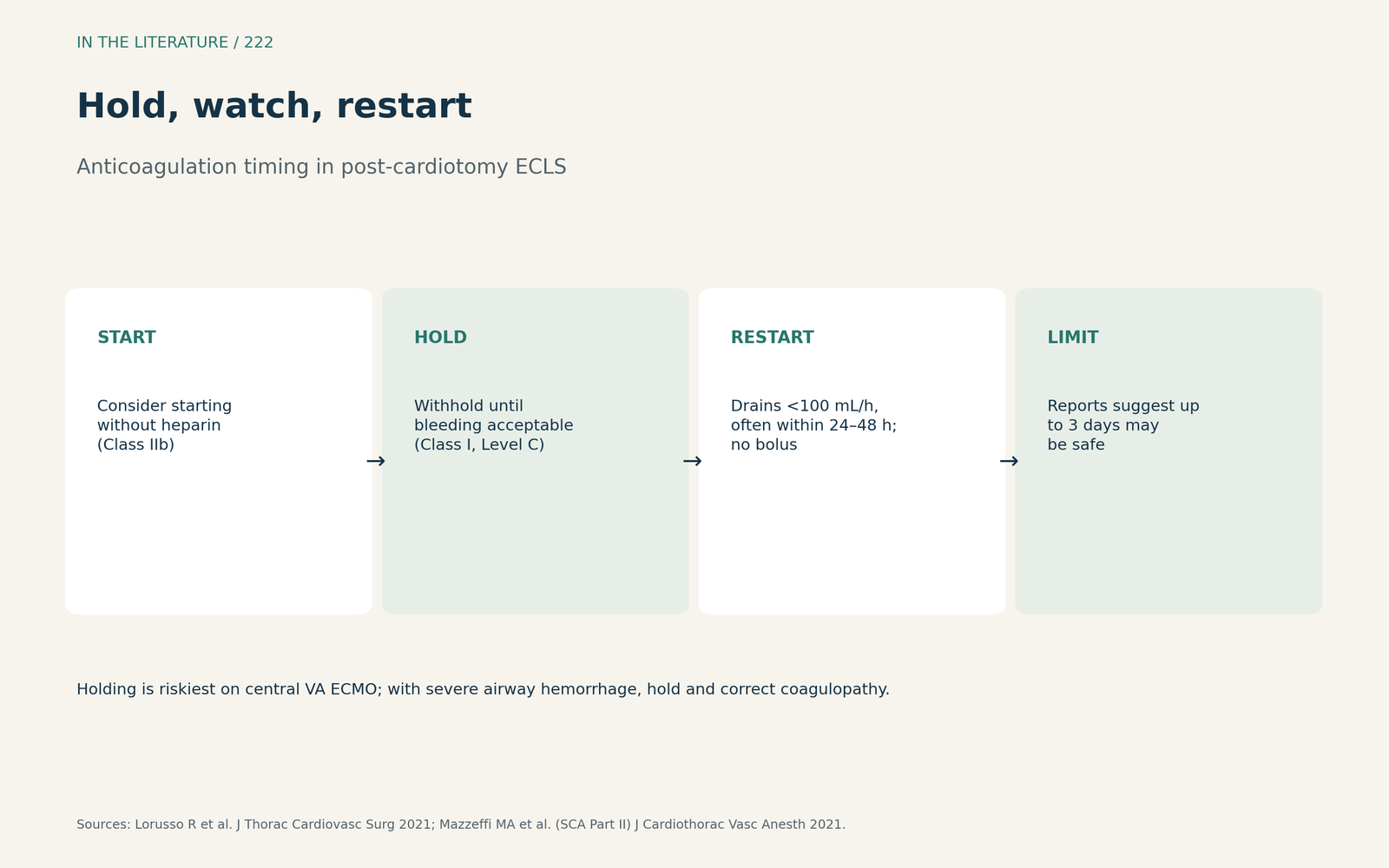
Figure 1. Hold, watch, restart. Synthesized from Lorusso et al. and Mazzeffi et al. (Part II).[1], [2] View larger.

The cost of holding
Mazzeffi et al. (Part I) note a trend toward less anticoagulation but report a circuit thrombosis rate of 35% when it is withheld; ELSO still recommends anticoagulation in patients without major bleeding or high bleeding risk.[3] Ng et al. (Res Pract Thromb Haemost 2026) pooled 619 patients: low-dose heparin was associated with lower mortality (RR 0.69) and lower intracranial hemorrhage (RR 0.29); major bleeding (RR 0.78) and oxygenator changes (RR 1.54) did not differ significantly, but circuit thrombosis was more frequent, and guidelines recommend against routine no-anticoagulation.[4] Zhang et al. (Front Med 2026) found low or no heparin associated with fewer bleeding complications (OR 0.49), without a significant difference in thrombotic events (OR 1.00) or mortality (OR 0.90); included studies were mostly observational.[5] After moving to lower-dose heparin, one centre saw its intracerebral hemorrhage rate fall.[6]
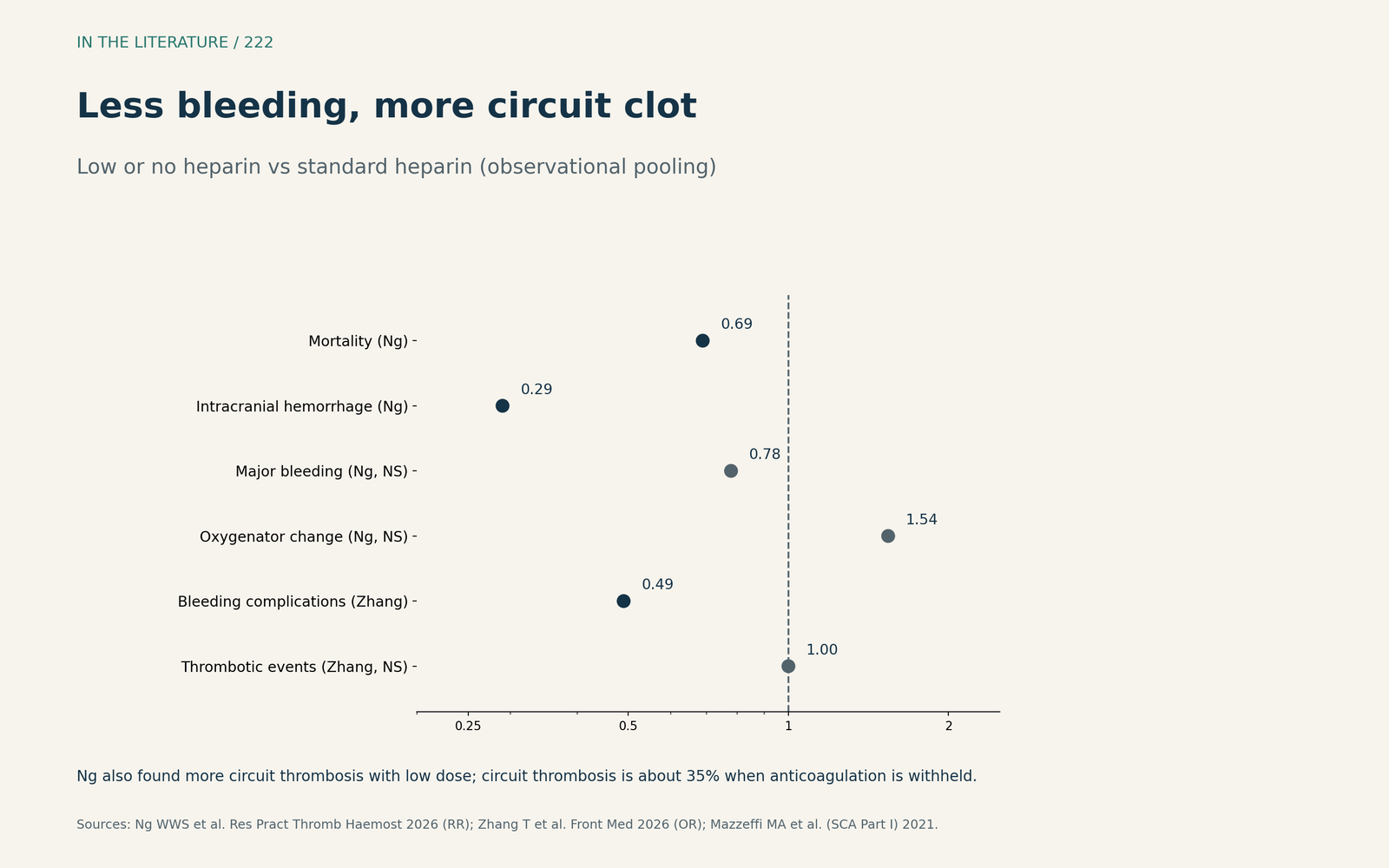
Figure 2. Less bleeding, more circuit clot. Redrawn from Ng et al. and Zhang et al.[4], [5] View larger.

What remains unknown
Whether anticoagulation is needed in all ECMO scenarios remains unclear, and a Cochrane review is still in progress.[7] The evidence is expert consensus and observational studies; no randomized trial defines a safe target or duration.
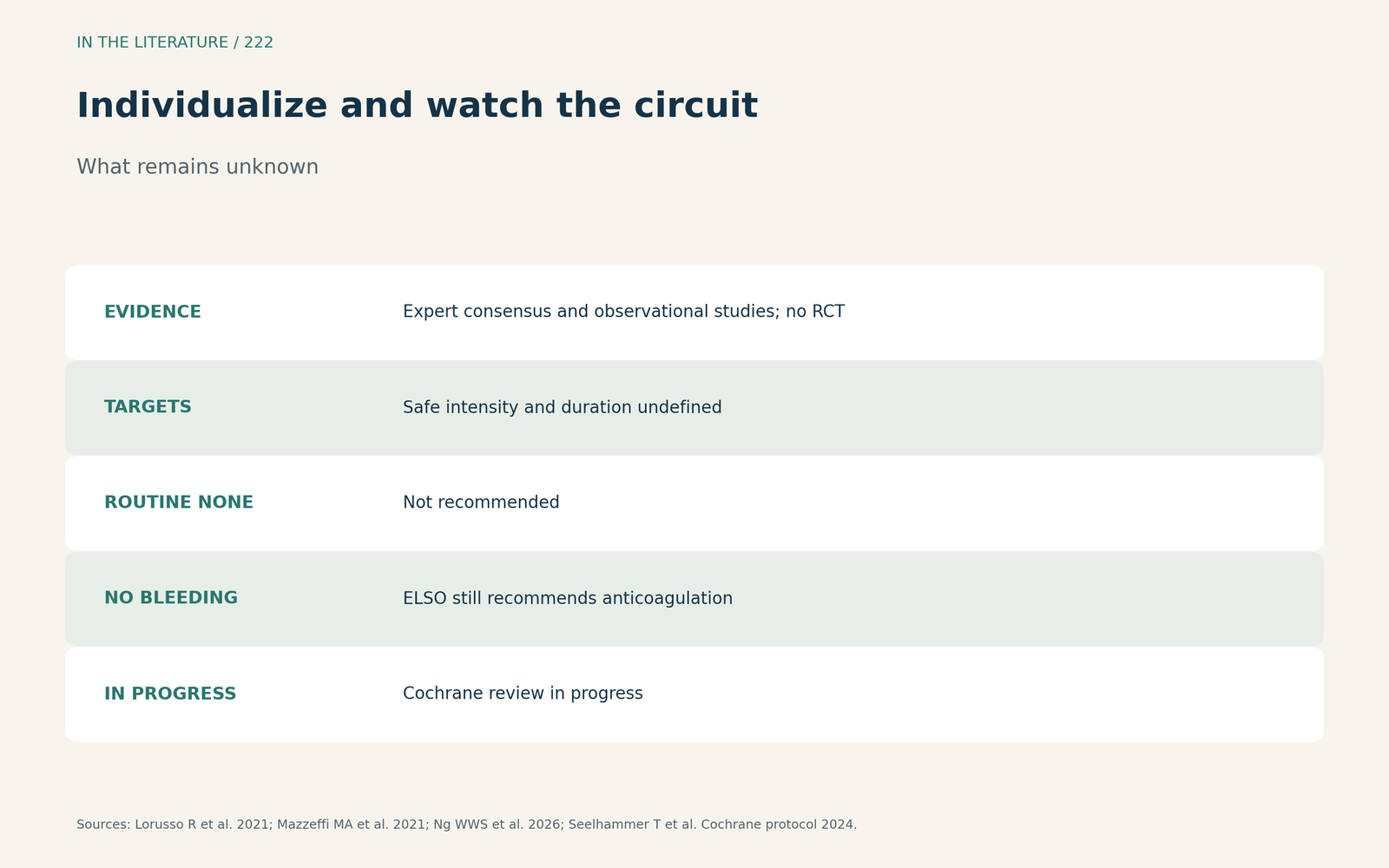
Figure 3. Individualize and watch the circuit. Synthesized from Lorusso et al., Mazzeffi et al., Ng et al. and Seelhammer et al.[1], [3], [4], [7] View larger.

Three takeaways
- Withhold anticoagulation while post-cardiotomy bleeding settles, then restart without a bolus when drains fall.[1]
- Hold only with adequate flow and close circuit surveillance, and be most cautious with central VA ECMO.[2], [3]
- Lower-dose heparin may reduce intracranial bleeding, but expect more circuit thrombosis; routine no-anticoagulation is not recommended.[4]
References
- Lorusso R, Whitman G, Milojevic M, et al. 2020 EACTS/ELSO/STS/AATS expert consensus on post-cardiotomy extracorporeal life support in adult patients. J Thorac Cardiovasc Surg. 2021;161(4):1287–1331. doi:10.1016/j.jtcvs.2020.09.045
- Mazzeffi MA, Rao VK, Dodd-o J, et al. Intraoperative management of adult patients on extracorporeal membrane oxygenation: an expert consensus statement from the Society of Cardiovascular Anesthesiologists—Part II, intraoperative management and troubleshooting. J Cardiothorac Vasc Anesth. 2021;35(12):3513–3527. doi:10.1053/j.jvca.2021.07.047
- Mazzeffi MA, Rao VK, Dodd-o J, et al. Intraoperative management of adult patients on extracorporeal membrane oxygenation: an expert consensus statement from the Society of Cardiovascular Anesthesiologists—Part I, technical aspects of extracorporeal membrane oxygenation. J Cardiothorac Vasc Anesth. 2021;35(12):3496–3512. doi:10.1053/j.jvca.2021.07.046
- Ng WWS, Hui RWH, Leung KC, et al. Mortality and complications in low-dose vs standard-dose unfractionated heparin anticoagulation for extracorporeal membrane oxygenation: a systematic review and meta-analysis. Res Pract Thromb Haemost. 2026;10(1):102732. doi:10.1016/j.rpth.2025.102732
- Zhang T, Cheng L, Cheng Z, et al. Efficacy of reduced-intensity or no heparin versus standard heparin anticoagulation in patients on extracorporeal membrane oxygenation: a systematic review and meta-analysis. Front Med (Lausanne). 2026;13:1767978. doi:10.3389/fmed.2026.1767978
- Kelly A, Head L, Garcia M, et al. Anticoagulation strategies and determining the rate of fatal intracerebral hemorrhage associated with venovenous extracorporeal membrane oxygenation in patients with coronavirus disease 2019. J Cardiothorac Vasc Anesth. 2021;35(5):1554–1555. doi:10.1053/j.jvca.2020.10.039
- Seelhammer T, Ninan J, Nei S, et al. Anticoagulation during extracorporeal membrane oxygenation (protocol). Cochrane Database Syst Rev. 2024;6:CD015685. doi:10.1002/14651858.CD015685