ITL-ad2e9887506b
Juan Li, MD · 更新于2026年11月18日
核心要点
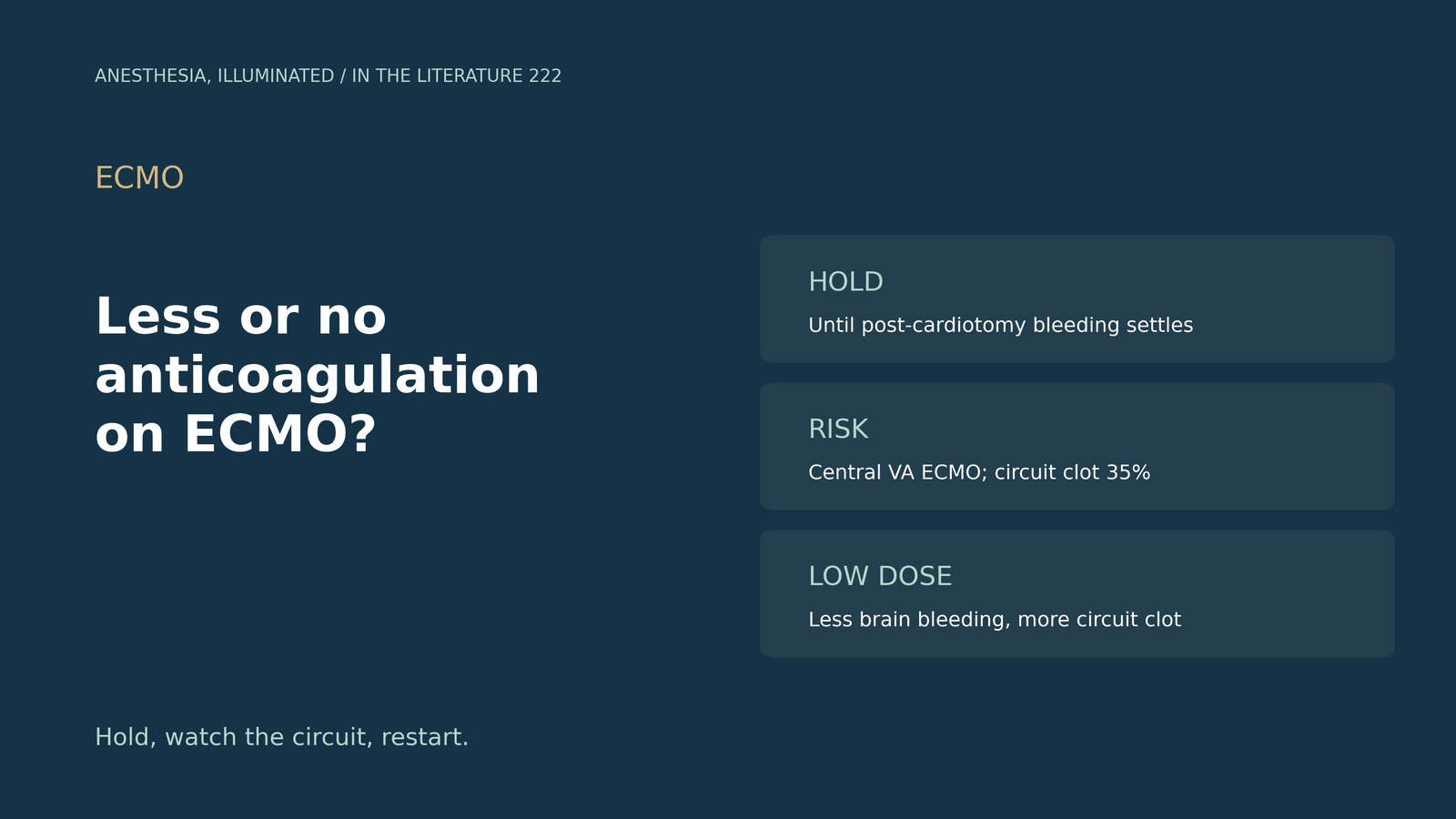
- 出血时可以暂停。心脏术后应暂停抗凝,直到出血减少到可接受的水平。[1]
- 引流稳定后恢复。胸腔引流可接受时(例如低于 100 mL/h,通常在 24 至 48 小时内)可恢复抗凝。[1]
- 了解谁风险高。流量充足时,VA ECMO 可暂停抗凝数天,但中心 VA ECMO 风险最大。[2]
- 存在代价。暂停抗凝与 35% 的环路血栓发生率相关。[3]
- 低剂量信号。观察性数据汇总显示,低剂量肝素与更少颅内出血相关(RR 0.29),但环路血栓更常见。[4]
一名再次瓣膜手术后接受 VA ECMO 的患者,胸腔引流达 300 mL/h。能停肝素吗?能停多久?[1], [2]
指南与共识允许什么
2020 年 EACTS/ELSO/STS/AATS 共识(Lorusso 等,J Thorac Cardiovasc Surg 2021)建议,可考虑在出血减少前不使用肝素启动心脏术后 ECLS(IIb 类),并推荐在出血降至可接受水平前暂停抗凝(I 类,C 级)。胸腔引流可接受时(例如低于 100 mL/h,通常在 24 至 48 小时内),可不推注而恢复抗凝。有报告提示出血时暂停抗凝长达 3 天可能是安全的,但这一决定需要权衡出血与血栓的相互竞争的风险。[1] SCA 共识第二部分(Mazzeffi 等,J Cardiothorac Vasc Anesth 2021)指出,VA ECMO 可安全暂停全身抗凝数天,中心 VA ECMO 风险最大;严重气道出血时应暂停抗凝并纠正凝血障碍。[2]
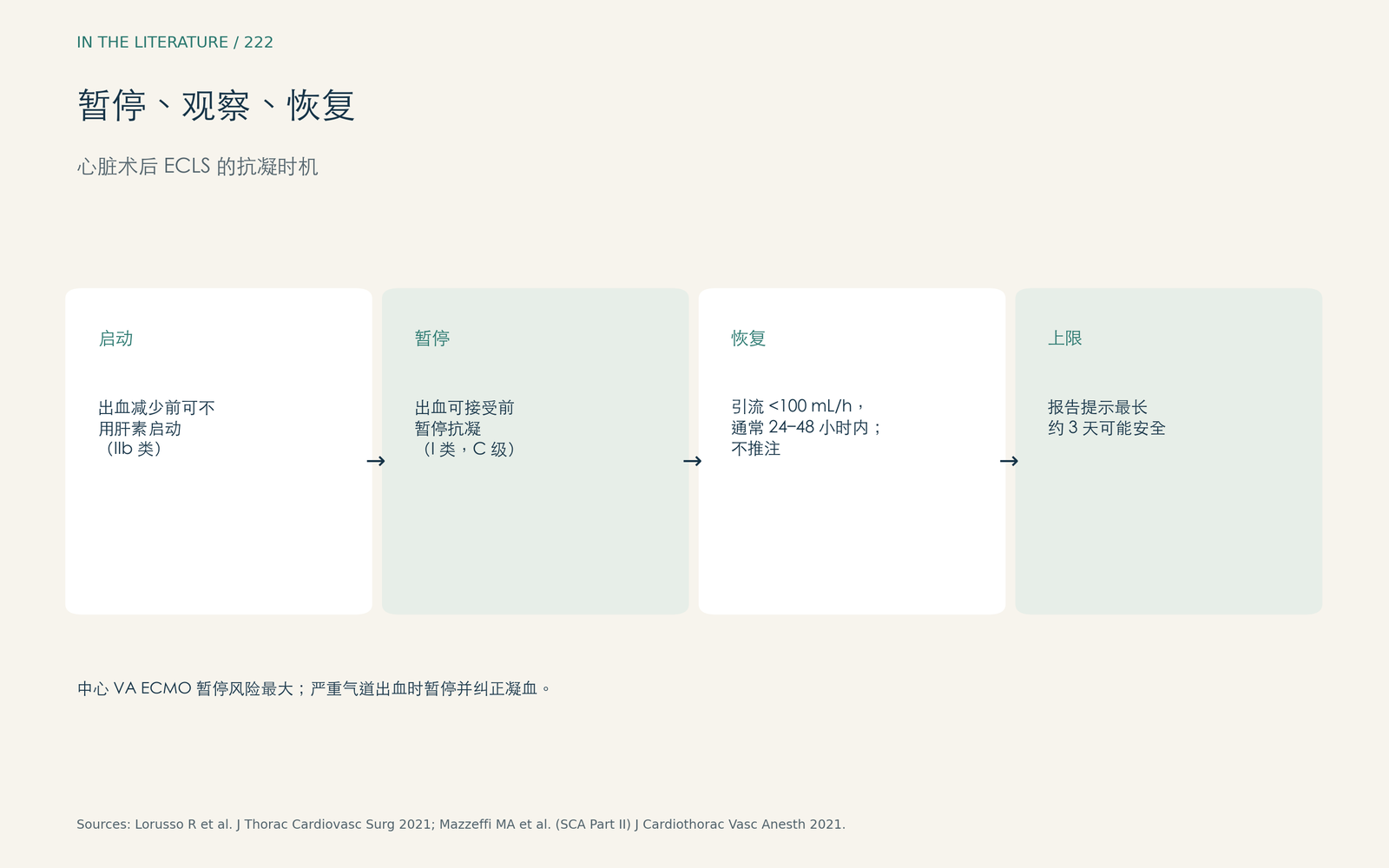
图 1. 暂停、观察、恢复。综合自 Lorusso 等和 Mazzeffi 等(第二部分)。[1], [2] 查看大图。

暂停的代价
Mazzeffi 等(第一部分)指出抗凝有减少的趋势,但暂停抗凝时环路血栓发生率为 35%;ELSO 仍建议对没有大出血或高出血风险的患者进行抗凝。[3] Ng 等(Res Pract Thromb Haemost 2026)汇总了 619 例患者:低剂量肝素与更低死亡率(RR 0.69)和更少颅内出血(RR 0.29)相关;大出血(RR 0.78)和更换氧合器(RR 1.54)无显著差异,但环路血栓更常见,指南不推荐常规无抗凝。[4] Zhang 等(Front Med 2026)发现低剂量或无肝素与更少出血并发症相关(OR 0.49),血栓事件(OR 1.00)和死亡率(OR 0.90)无显著差异;纳入研究以观察性为主。[5] 一个中心改用低剂量肝素后,脑出血率下降。[6]
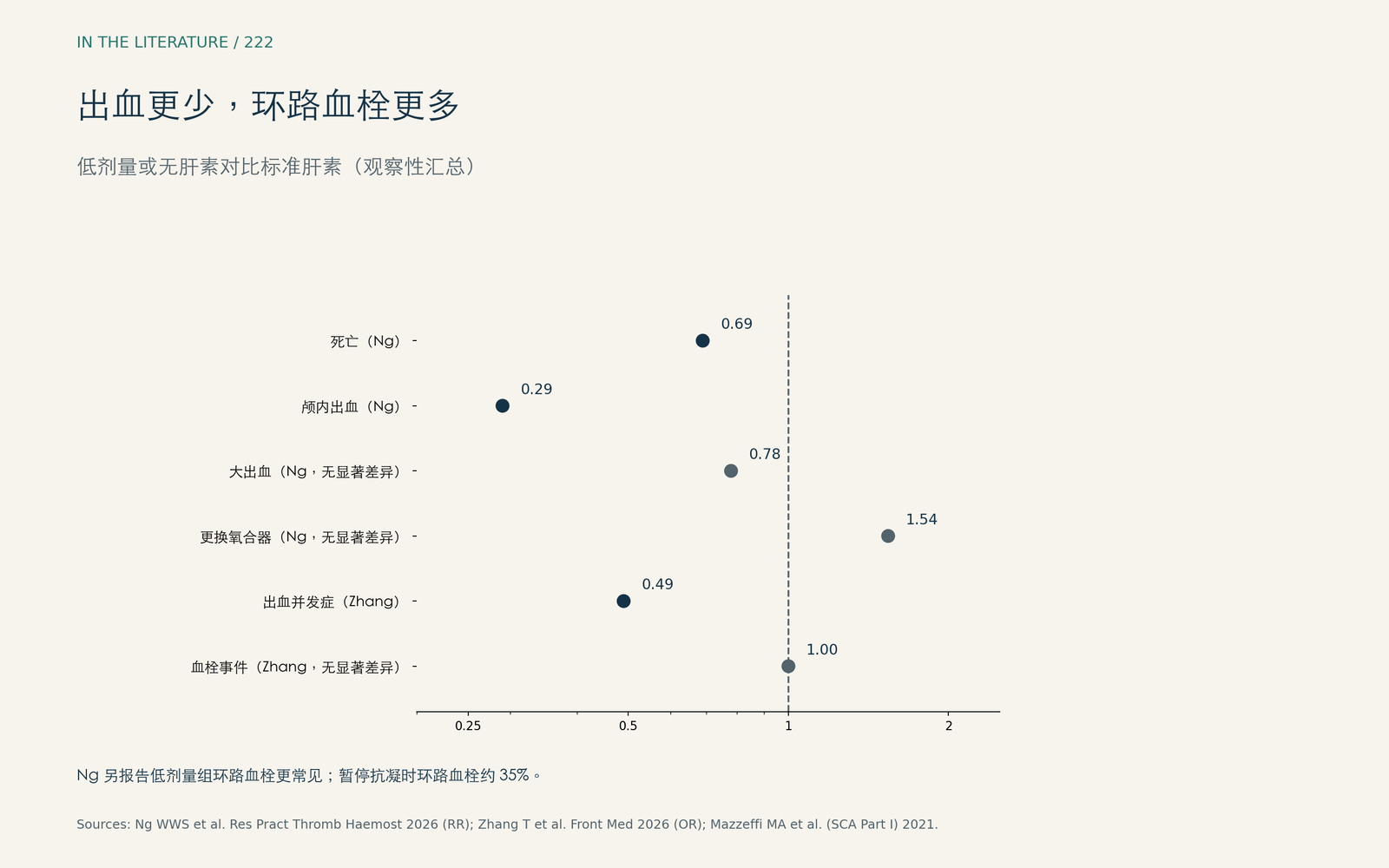
图 2. 出血更少,环路血栓更多。改绘自 Ng 等和 Zhang 等。[4], [5] 查看大图。

仍不清楚的问题
是否所有 ECMO 情况都需要抗凝仍不明确,相关 Cochrane 系统评价尚在进行中。[7] 现有证据为专家共识和观察性研究,没有随机试验确定安全的目标或时长。
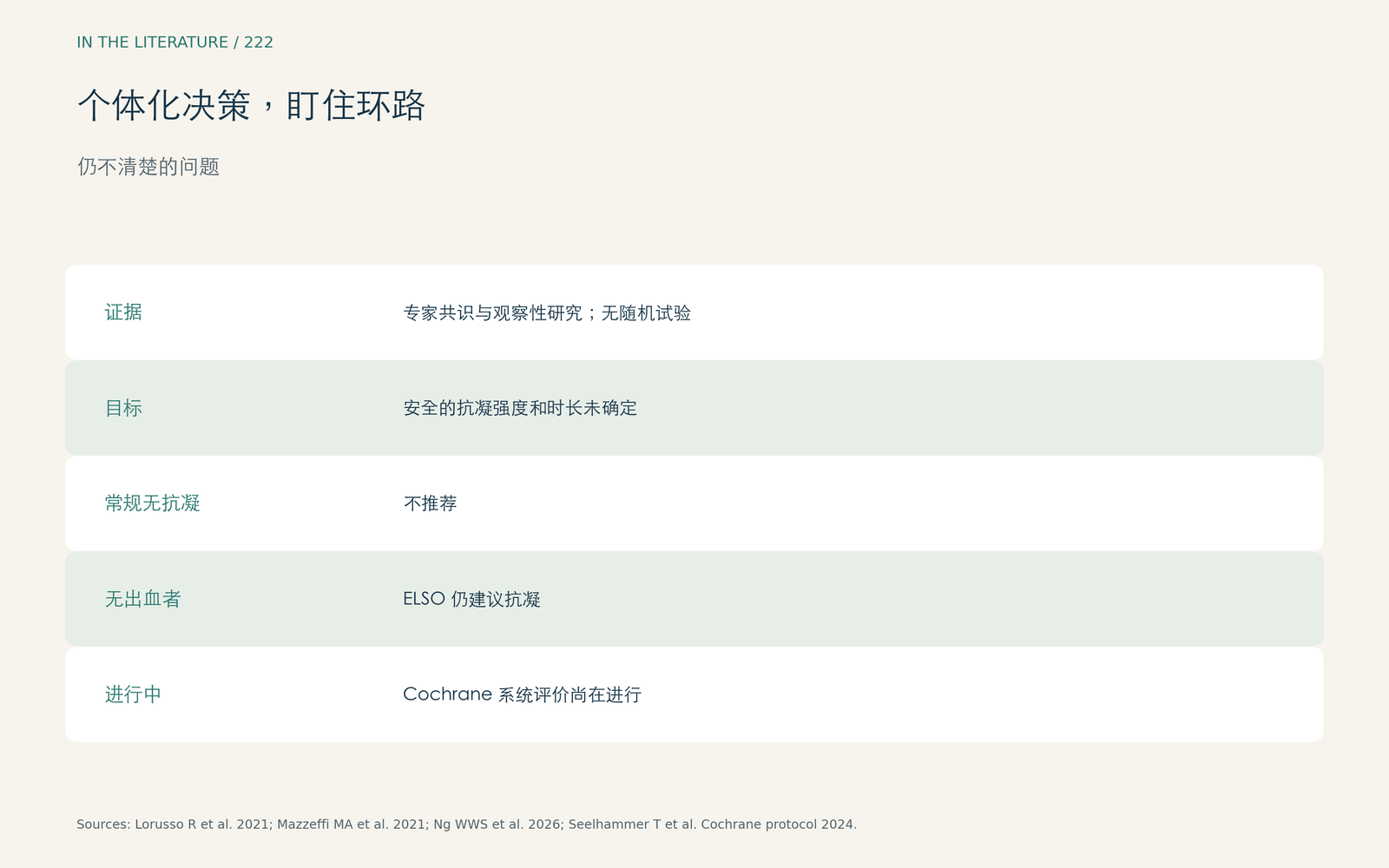
图 3. 个体化决策,盯住环路。综合自 Lorusso 等、Mazzeffi 等、Ng 等和 Seelhammer 等。[1], [3], [4], [7] 查看大图。

临床带走的三点
- 心脏术后出血稳定前暂停抗凝,引流减少后不推注而恢复。[1]
- 只在流量充足且密切监测环路时暂停,对中心 VA ECMO 尤其谨慎。[2], [3]
- 低剂量肝素可能减少颅内出血,但环路血栓会增加;不推荐常规无抗凝。[4]
参考文献
- Lorusso R, Whitman G, Milojevic M, et al. 2020 EACTS/ELSO/STS/AATS expert consensus on post-cardiotomy extracorporeal life support in adult patients. J Thorac Cardiovasc Surg. 2021;161(4):1287–1331. doi:10.1016/j.jtcvs.2020.09.045
- Mazzeffi MA, Rao VK, Dodd-o J, et al. Intraoperative management of adult patients on extracorporeal membrane oxygenation: an expert consensus statement from the Society of Cardiovascular Anesthesiologists—Part II, intraoperative management and troubleshooting. J Cardiothorac Vasc Anesth. 2021;35(12):3513–3527. doi:10.1053/j.jvca.2021.07.047
- Mazzeffi MA, Rao VK, Dodd-o J, et al. Intraoperative management of adult patients on extracorporeal membrane oxygenation: an expert consensus statement from the Society of Cardiovascular Anesthesiologists—Part I, technical aspects of extracorporeal membrane oxygenation. J Cardiothorac Vasc Anesth. 2021;35(12):3496–3512. doi:10.1053/j.jvca.2021.07.046
- Ng WWS, Hui RWH, Leung KC, et al. Mortality and complications in low-dose vs standard-dose unfractionated heparin anticoagulation for extracorporeal membrane oxygenation: a systematic review and meta-analysis. Res Pract Thromb Haemost. 2026;10(1):102732. doi:10.1016/j.rpth.2025.102732
- Zhang T, Cheng L, Cheng Z, et al. Efficacy of reduced-intensity or no heparin versus standard heparin anticoagulation in patients on extracorporeal membrane oxygenation: a systematic review and meta-analysis. Front Med (Lausanne). 2026;13:1767978. doi:10.3389/fmed.2026.1767978
- Kelly A, Head L, Garcia M, et al. Anticoagulation strategies and determining the rate of fatal intracerebral hemorrhage associated with venovenous extracorporeal membrane oxygenation in patients with coronavirus disease 2019. J Cardiothorac Vasc Anesth. 2021;35(5):1554–1555. doi:10.1053/j.jvca.2020.10.039
- Seelhammer T, Ninan J, Nei S, et al. Anticoagulation during extracorporeal membrane oxygenation (protocol). Cochrane Database Syst Rev. 2024;6:CD015685. doi:10.1002/14651858.CD015685