ITL-17ea2528016a
Watch the video
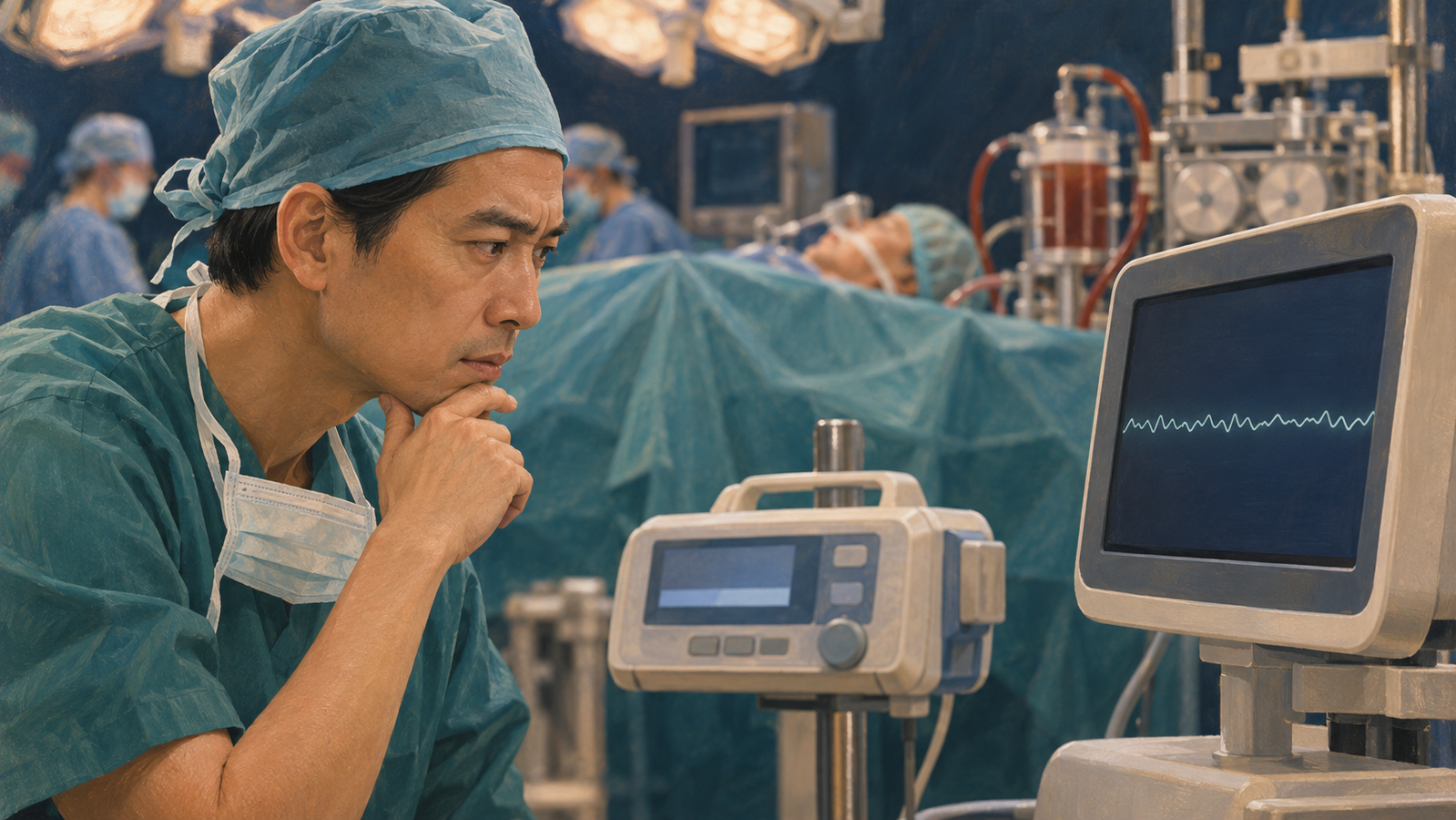
Figure 1. An unchanged monitor value does not necessarily mean an unchanged free drug concentration. Editorial illustration; the displayed trace is not patient data.
Key points
- During cardiopulmonary bypass (CPB), total and free remimazolam concentrations can move differently. A fall in total concentration does not necessarily mean less pharmacologically active drug.
- In a 2026 randomized dose-comparison trial, free concentrations rose over time with a constant 1 mg/kg/h infusion. Reducing the rate to 0.7 mg/kg/h at CPB initiation maintained a relatively stable free concentration under the study conditions.
- BIS did not show a significant linear association with free or total remimazolam concentration. It was not a plasma drug concentration monitor.
- The study establishes a pharmacokinetic signal, not a universal 30% dose-reduction rule or proof of equivalent hypnosis, faster awakening, or fewer complications. [1]
The remimazolam pump has been running at a constant rate. Bypass begins, the patient cools, and the BIS remains within its recent range. It is tempting to conclude that the anesthetic exposure is stable too.
A new JCVA study makes that inference less comfortable. The useful bedside lesson is to distinguish three things: what the pump delivers, how much free drug is present, and what the EEG-derived index shows.
Total concentration is not the same as free concentration
Total plasma concentration includes both protein-bound and unbound drug. The free fraction is the proportion that is unbound; free concentration equals total concentration multiplied by the free fraction. When protein binding changes, the total concentration alone can therefore give an incomplete picture of pharmacologically active drug.
In the randomized trial by Ohno and colleagues, protein binding decreased after CPB began. Under the constant infusion regimen, total remimazolam concentration initially fell and later recovered, while free concentrations increased at the later measurements. The two trajectories should not be treated as interchangeable. [1]
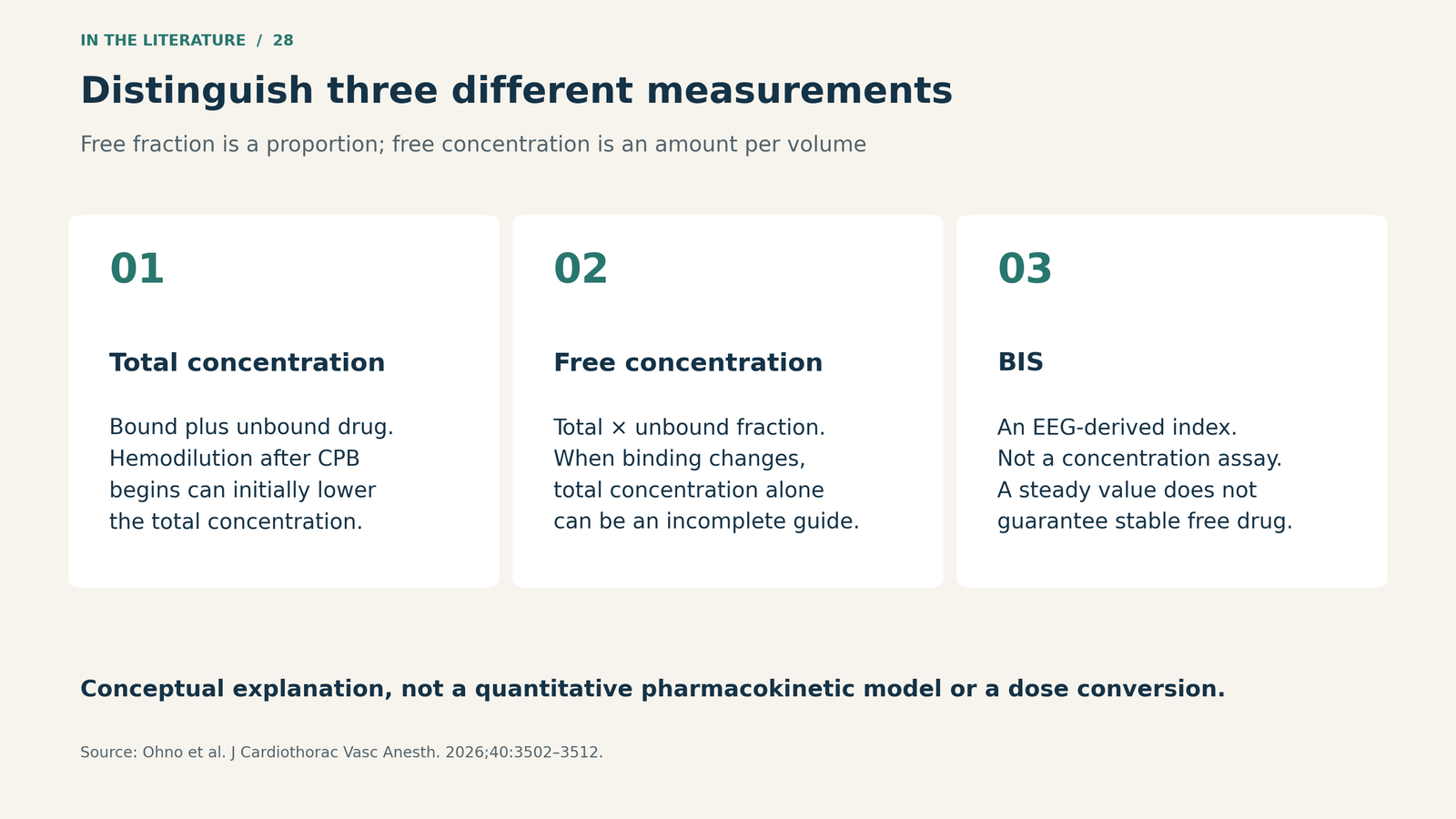
Figure 2. Three distinct measurements. The free fraction is a proportion, whereas free concentration is an amount per volume; BIS measures neither directly. Conceptual diagram based on Ohno et al., not a quantitative pharmacokinetic model.

An earlier observational study also reported lower total but higher unbound concentrations at CPB initiation. Only its abstract was available for this review; it supports the direction of the concern, but not a head-to-head comparison of concentrations between studies. [2]
What did the randomized dose comparison show?
Ohno et al. randomized 36 adults having elective cardiac surgery with CPB. After one exclusion in each group, 34 patients were analyzed. Both groups initially received a maintenance infusion of 1 mg/kg/h. At CPB initiation, one group continued that rate, while the other reduced it to 0.7 mg/kg/h and remained at that rate for the rest of the study period, including the post-CPB sampling window. [1]
Samples were taken before heparin administration, 10 and 60 minutes after CPB initiation, and 30 minutes after CPB ended. Free concentrations differed at baseline, so the primary analysis adjusted for the baseline value. The adjusted difference between the constant-rate and reduced-rate groups was 69 ng/mL at 60 minutes on CPB and 89 ng/mL at 30 minutes after CPB ended. Free concentration rose over time in the constant-rate group and remained relatively stable in the reduced-rate group. [1]
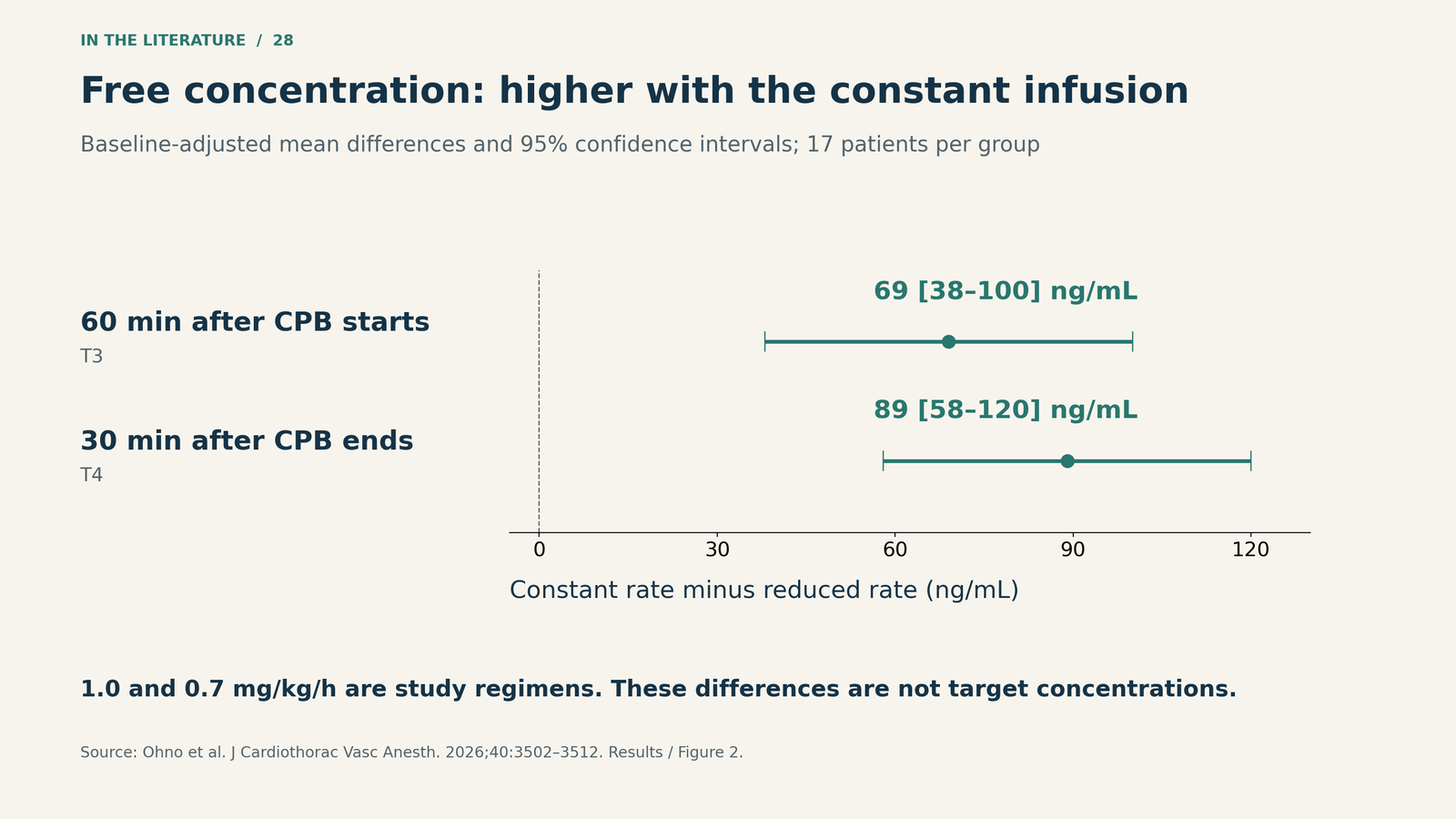
Figure 3. Mean differences in free concentration: constant rate minus reduced rate, with 95% confidence intervals. Positive values indicate a higher concentration with the constant rate. These are between-group differences, not absolute concentrations or therapeutic targets. Source: Ohno et al., Results and Figure 2.

This was a useful dosing experiment, but its primary outcome was a laboratory concentration. It was not powered to determine whether either strategy reduced hypotension, accelerated emergence, or improved postoperative recovery.
Why a steady BIS does not settle the question
Across the sampled measurements, the investigators found no significant linear association between BIS and either free or total remimazolam concentration. That does not prove that remimazolam has no concentration-dependent hypnotic effect. It means that, in this setting, the observed BIS values did not provide a reliable linear readout of measured drug concentrations. [1]
The trial did not record raw EEG, and it did not establish pharmacodynamic equivalence between the two regimens. A similar-looking BIS cannot be used to claim that the patients had identical hypnosis, nor can a higher free concentration alone prove harmful anesthetic depth.
The practical response is to interpret EEG monitoring in context. The 2024 EACTS/EACTAIC/EBCP CPB guideline, published in 2025, supports considering processed EEG to help reduce awareness and excessive anesthetic depth, while discussing the effect of temperature on these indices. The remimazolam study adds a drug-specific reason to avoid treating one index as a concentration assay. [3]
Should every infusion be reduced by 30% at bypass?
Not on this evidence alone. The reduced regimen was studied under specific CPB conditions, including mild hypothermia with a target bladder temperature of 34–35°C. The trial excluded emergency surgery, deep hypothermic circulatory arrest, substantial hepatic or renal dysfunction, and BMI of 35 or greater. The result does not establish the same adjustment for those settings. [1]
Nor was 0.7 mg/kg/h identified as an optimum across a range of doses: the investigators compared only two strategies. Their finding supports reassessing dosing when CPB changes the physiological setting. It does not supply a universally validated concentration target or an automatic pump instruction.
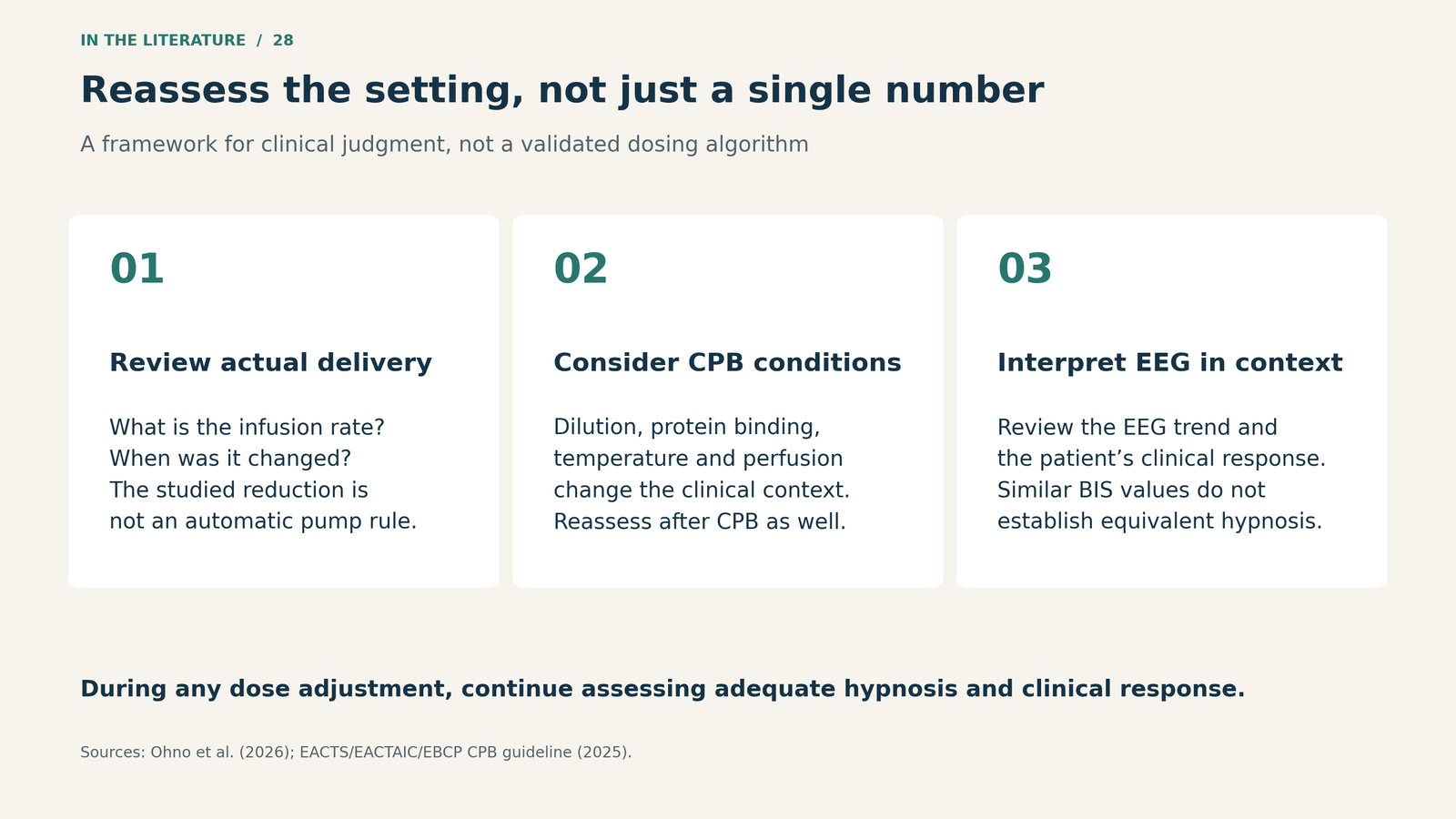
Figure 4. A framework for reassessing remimazolam during CPB. These questions organize clinical judgment; they do not constitute a validated dosing algorithm. Sources: Ohno et al. and the EACTS/EACTAIC/EBCP CPB guideline.

At CPB initiation and during subsequent temperature changes, review the actual infusion regimen, the changing physiological conditions, and the EEG trend together. If considering a dose change, continue to assess adequate hypnosis and the patient’s clinical response. Neither an unchanged pump rate nor an unchanged BIS is, by itself, evidence that free drug exposure has stayed constant.
Three takeaways
- Separate total from free. Hemodilution and altered protein binding can make total concentration an incomplete guide to active drug exposure.
- Use BIS with context. A stable index does not establish a stable free remimazolam concentration or identical hypnotic effect.
- Treat the 30% reduction as a studied strategy. It warrants clinical investigation and individualized reassessment; it has not become a universal CPB dosing rule.
References
- Ohno S, Yoshikawa Y, Kurihara D, Sato Y, Kunigo T, Takahashi K, et al. Changes in free and total remimazolam concentrations during cardiopulmonary bypass: a randomized dose-comparison trial. J Cardiothorac Vasc Anesth. 2026;40(11):3502–3512. doi:10.1053/j.jvca.2026.06.047.
- Inoue M, Ueshima S, Kakumoto M, Katsura T, Iwashita N, Suzuki T, et al. Alterations in total and unbound remimazolam concentrations during cardiac surgery requiring cardiopulmonary bypass: a single-center observational study. J Cardiothorac Vasc Anesth. 2026;40(4):1138–1146. doi:10.1053/j.jvca.2025.12.025. Abstract only.
- Wahba A, Kunst G, De Somer F, Agerup Kildahl H, Milne B, Kjellberg G, et al. 2024 EACTS/EACTAIC/EBCP Guidelines on cardiopulmonary bypass in adult cardiac surgery. Eur J Cardiothorac Surg. 2025;67(2):ezae354. doi:10.1093/ejcts/ezae354.