ITL-7d362d870046
Juan Li, MD · Updated November 17, 2026
Watch the video
Key points
- For ventricular secondary mitral regurgitation (SMR), optimize heart-failure therapy and indicated cardiac resynchronization, then reassess persistent symptoms and severe MR.1
- COAPT supports long-term benefit in a selected population; its results should travel with its clinical and ventricular eligibility criteria.2
- RESHAPE-HF2 strengthens the evidence for fewer heart-failure hospitalizations and better health status, without establishing a mortality reduction.3
- MATTERHORN compared TEER with surgery in patients eligible for either approach; its noninferiority result does not make the two treatments interchangeable for every patient.4
- A right-heart marker that predicts poor prognosis after TEER does not, by itself, identify patients who derive no benefit from TEER.5
A patient remains breathless and returns with congestion despite treatment. Echocardiography shows substantial secondary MR. The referral decision requires more than confirming a large jet: is important MR persisting after appropriate heart-failure treatment, can the valve be treated effectively, and is the expected benefit meaningful for this patient?
This discussion concerns chronic ventricular SMR. Acute mechanical MR with shock and predominantly atrial SMR require their own assessment; favorable results in one setting should not be assumed in another.12
Treat the ventricle, then reassess the valve
The 2025 ESC/EACTS guideline places guideline-directed medical therapy (GDMT), with cardiac resynchronization therapy when indicated, before an intervention for ventricular SMR. A prescription list alone does not establish that treatment has been optimized. The Heart Team needs to understand what the patient actually tolerates and whether important symptoms and severe MR persist after optimization.1
The same assessment must identify coronary disease that requires revascularization and other valve disease that changes the treatment plan. A patient already needing coronary bypass surgery follows a different decision pathway from one being considered for isolated TEER. For advanced heart failure, the discussion may need to include ventricular assist support or transplantation rather than focusing exclusively on a mitral procedure.1
The practical consequence is a coordinated heart-failure and valve assessment. A technically accessible valve is only one part of eligibility. Persistent MR, clinical trajectory, ventricular function, right-heart status, coronary disease and anatomical suitability must be considered together.1
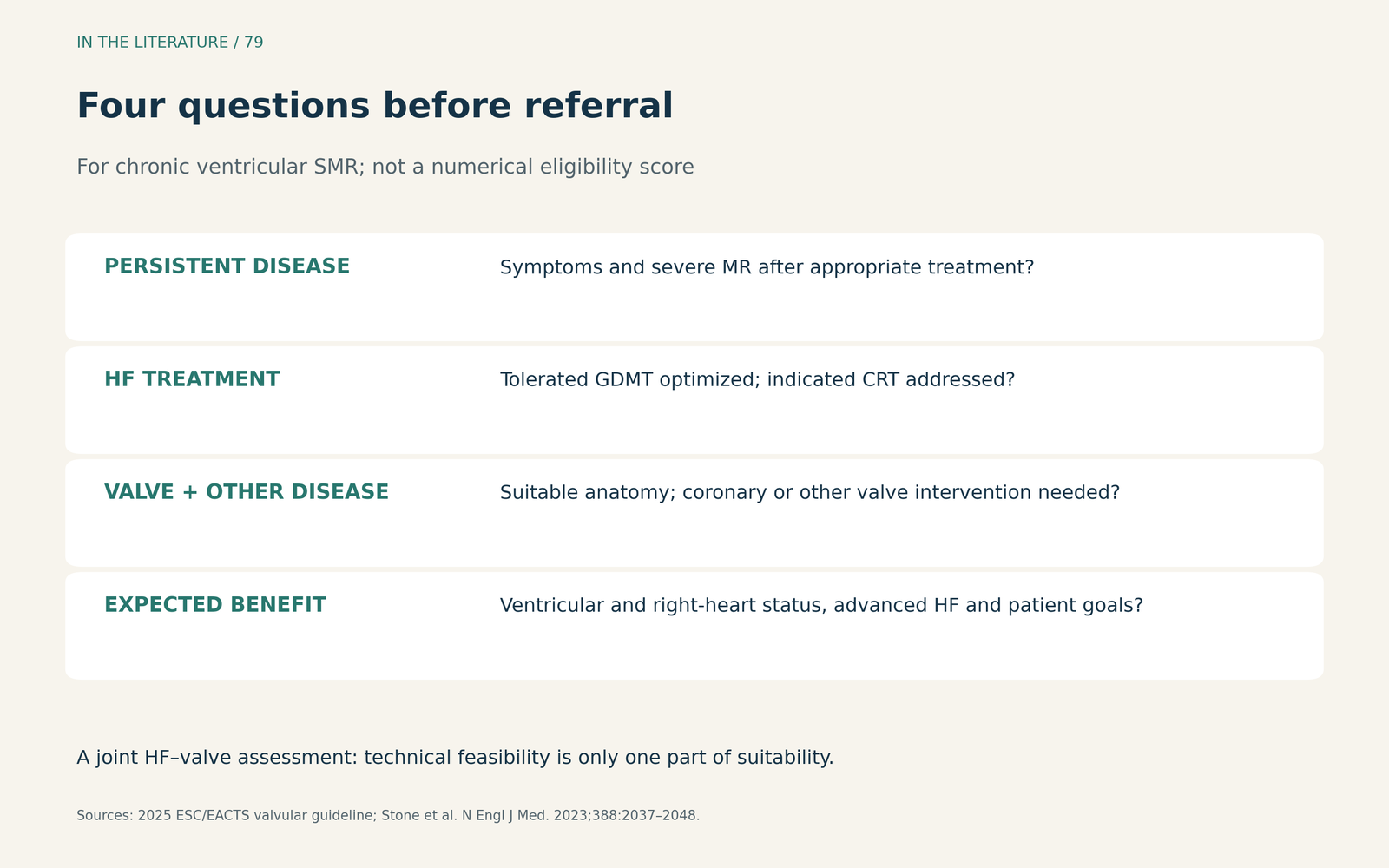
Figure 1. A structure for the referral discussion, not a numerical eligibility score. The Heart Team applies the guideline's clinical and anatomical criteria to the individual patient.1,2 View larger

Bring the trial population into the consultation
COAPT randomized 614 patients with symptomatic heart failure and grade 3+ or 4+ secondary MR despite maximally tolerated GDMT. LVEF was 20–50%; the trial excluded an LV end-systolic dimension above 7 cm, severe pulmonary hypertension, and moderate or severe symptomatic right ventricular failure. Indicated revascularization and resynchronization had been addressed before enrollment.2
At five years, annualized heart-failure hospitalization rates were 33.1 versus 57.2 per 100 patient-years with TEER plus GDMT versus GDMT alone (HR 0.53; 95% CI 0.41–0.68). Estimated all-cause mortality was 57.3% versus 67.2% (HR 0.72; 95% CI 0.58–0.89). These were long-term follow-up results from the same trial; crossover was permitted after two years, and the five-year confidence intervals were not adjusted for multiple comparisons.2
The message is sustained benefit in selected patients, alongside substantial residual risk. TEER does not cure the underlying cardiomyopathy. Background therapy also evolved during COAPT, with little use of SGLT2 inhibitors; contemporary optimization remains essential.2
RESHAPE-HF2 randomized 505 patients to TEER plus medical therapy or medical therapy alone. Over 24 months, first or recurrent heart-failure hospitalization or cardiovascular death occurred at 37.0 versus 58.9 events per 100 patient-years (rate ratio 0.64; 95% CI 0.48–0.85). The adjusted between-group improvement in KCCQ overall-summary score at 12 months was 10.9 points (95% CI 6.8–15.0).3
The trial enrolled patients with grade 3+ or 4+ functional MR, although mean effective regurgitant orifice area was lower than in COAPT. Its results broaden the evidence for hospitalization and health-status benefit; they do not establish a mortality reduction or justify treating every patient labeled as having moderate MR. Selecting by a single EROA value—or by a “proportionate/disproportionate” label alone—would discard much of the actual trial selection process.23
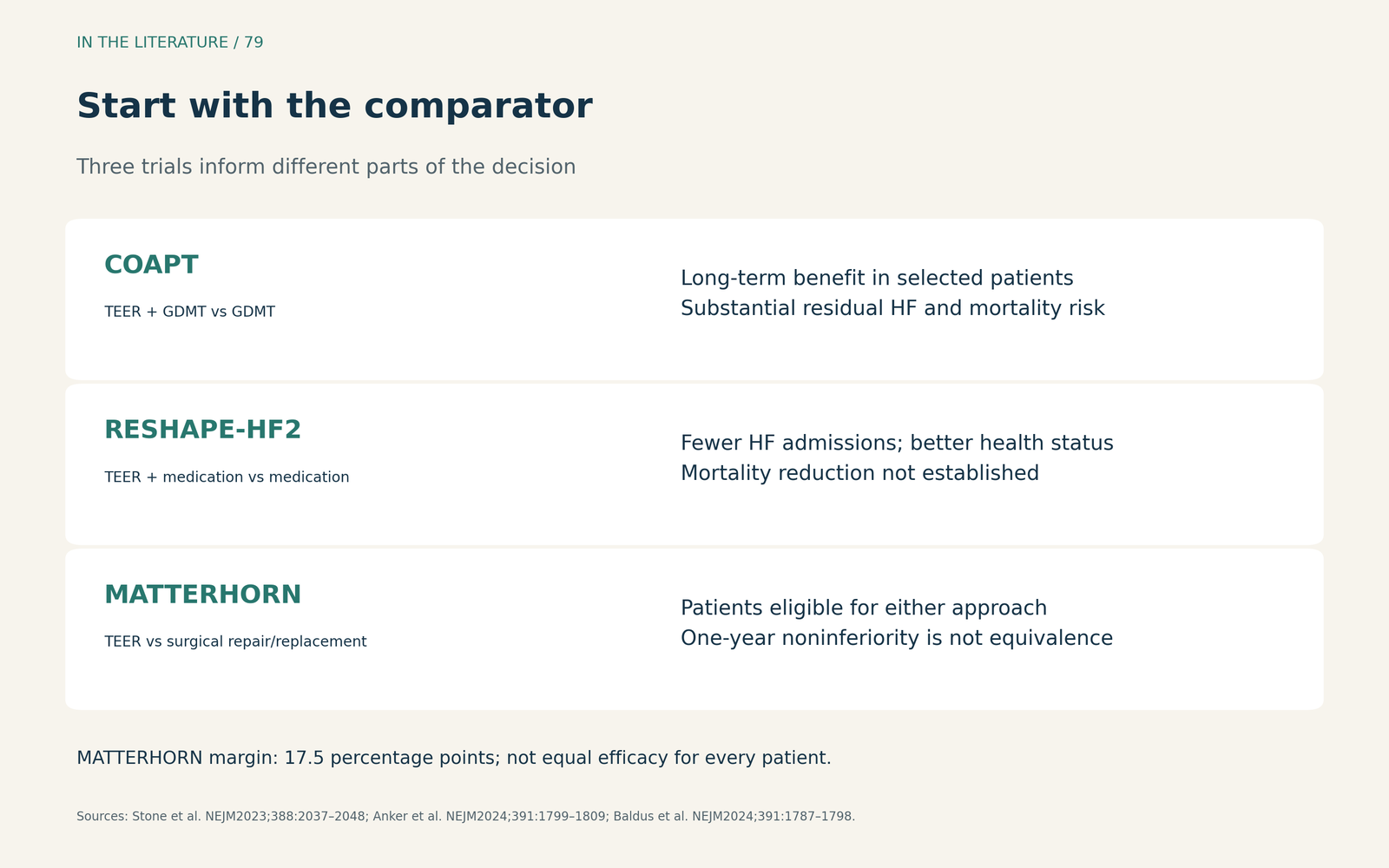
Figure 2. Different comparators answer different questions. These studies should not be pooled informally into one universal TEER indication.2–4 View larger

If surgery is feasible, discuss what MATTERHORN established
MATTERHORN enrolled patients with symptomatic secondary MR who were considered eligible for both TEER and surgery. It randomized 210 patients; two subsequently requested deletion of their data. The one-year composite of death, heart-failure hospitalization, mitral reintervention, LVAD implantation or stroke occurred in 16 of 96 patients (16.7%) with available endpoint data after assignment to TEER and 20 of 89 (22.5%) after assignment to surgery. The trial met its prespecified noninferiority criterion, using a 17.5-percentage-point margin.4
The comparator included surgical repair or replacement. This was not another comparison against GDMT alone, and the relatively wide noninferiority margin matters when interpreting “no worse.” The result supports a Heart Team discussion of alternatives in patients resembling those enrolled; it does not prove equivalent outcomes for all anatomies, risk levels or longer follow-up.4
Use right-heart risk to improve the decision
Right ventricular dysfunction and pulmonary hypertension matter, but prognosis and treatment benefit are different questions. In a single-center retrospective cohort of 707 mitral TEER patients, Shechter and colleagues examined baseline TAPSE/PASP. Among the 383 patients with functional MR, a ratio at or below the overall cohort's median threshold was associated with higher one-year risk of death or heart-failure hospitalization.5
All patients in that cohort received TEER. Without an untreated comparison, the study cannot show that a low ratio identifies absence of treatment benefit. Available follow-up also showed NYHA improvement in both ratio groups, although missing follow-up and the observational design prevent causal or equivalence conclusions.5
For referral, this means documenting right-heart function and pulmonary pressure, discussing competing risks and the patient's goals, and checking the full clinical eligibility framework. It does not mean ignoring advanced RV disease: COAPT excluded important symptomatic RV failure, and guideline criteria remain relevant. It means avoiding a new absolute veto derived from a treated-only prognostic study.125
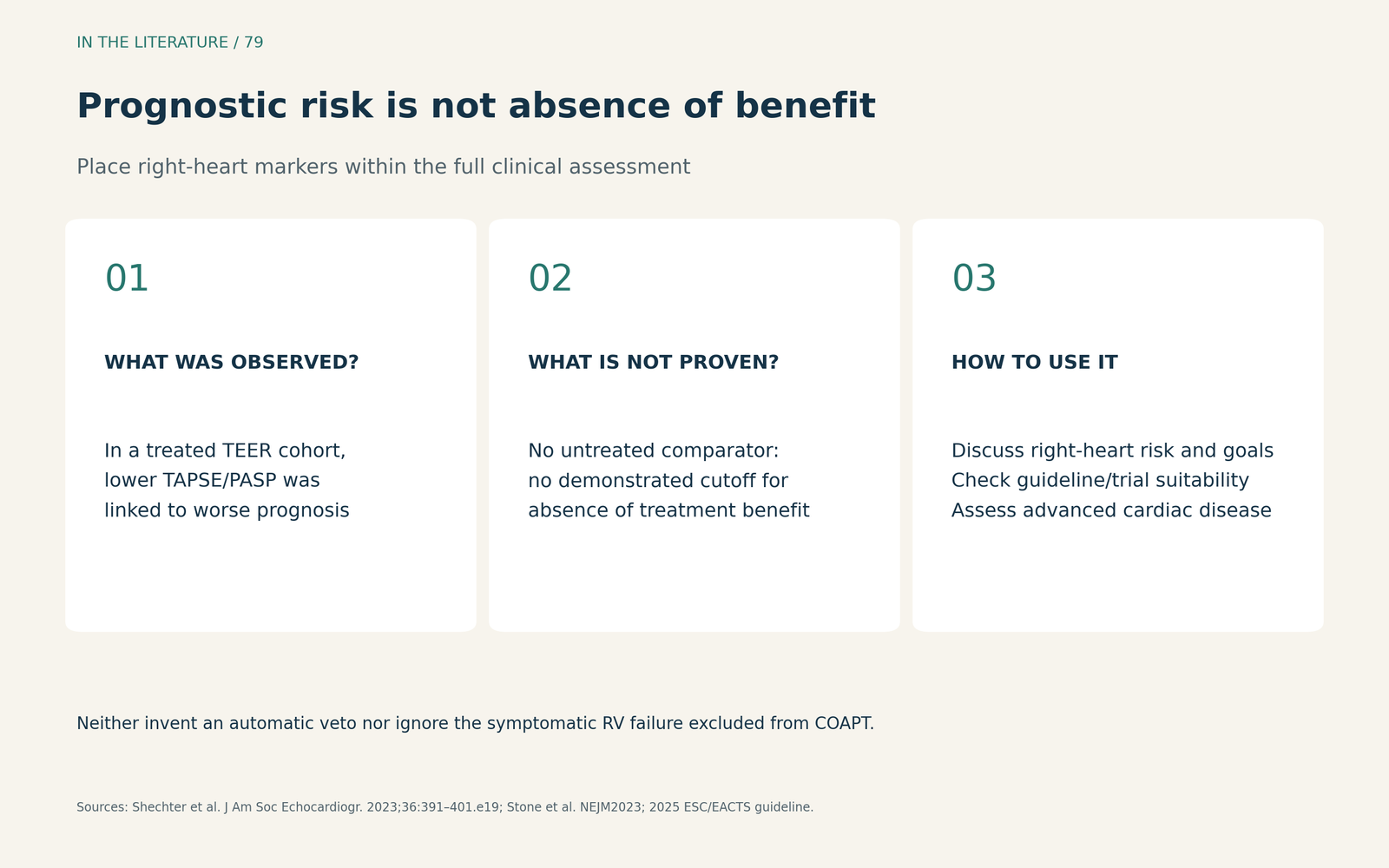
Figure 3. Prognostic association, trial eligibility and expected treatment benefit are related but distinct. No TAPSE/PASP cutoff is presented here as an automatic refusal rule.1,2,5 View larger

Three takeaways
- Refer a clinical problem, not just an MR grade: persistent symptoms and severe ventricular SMR after appropriate heart-failure treatment deserve a joint heart-failure and valve-team assessment.
- Match the patient and the comparator to the evidence: COAPT, RESHAPE-HF2 and MATTERHORN support different parts of the decision.
- Keep risk and benefit separate: evaluate anatomy and advanced heart disease carefully, but do not convert an observational risk marker into an unsupported treatment-exclusion rule.
References
- Praz F, Borger MA, Lanz J, et al. 2025 ESC/EACTS Guidelines for the management of valvular heart disease. Eur J Cardiothorac Surg. 2025;67(8):ezaf276. doi:10.1093/ejcts/ezaf276 Corrections: EJCTS; EHJ.
- Stone GW, Abraham WT, Lindenfeld J, et al. Five-Year Follow-up after Transcatheter Repair of Secondary Mitral Regurgitation. N Engl J Med. 2023;388(22):2037-2048. doi:10.1056/NEJMoa2300213
- Anker SD, Friede T, von Bardeleben RS, et al. Transcatheter Valve Repair in Heart Failure with Moderate to Severe Mitral Regurgitation. N Engl J Med. 2024;391(19):1799-1809. doi:10.1056/NEJMoa2314328
- Baldus S, Doenst T, Pfister R, et al. Transcatheter Repair versus Mitral-Valve Surgery for Secondary Mitral Regurgitation. N Engl J Med. 2024;391(19):1787-1798. doi:10.1056/NEJMoa2408739
- Shechter A, Vaturi M, Kaewkes D, et al. Prognostic Value of Baseline Tricuspid Annular Plane Systolic Excursion to Pulmonary Artery Systolic Pressure Ratio in Mitral Transcatheter Edge-to-Edge Repair. J Am Soc Echocardiogr. 2023;36(4):391–401.e19. doi:10.1016/j.echo.2022.12.026