
ITL-2d62125edeeb
Juan Li, MD · Updated November 18, 2026
Key points
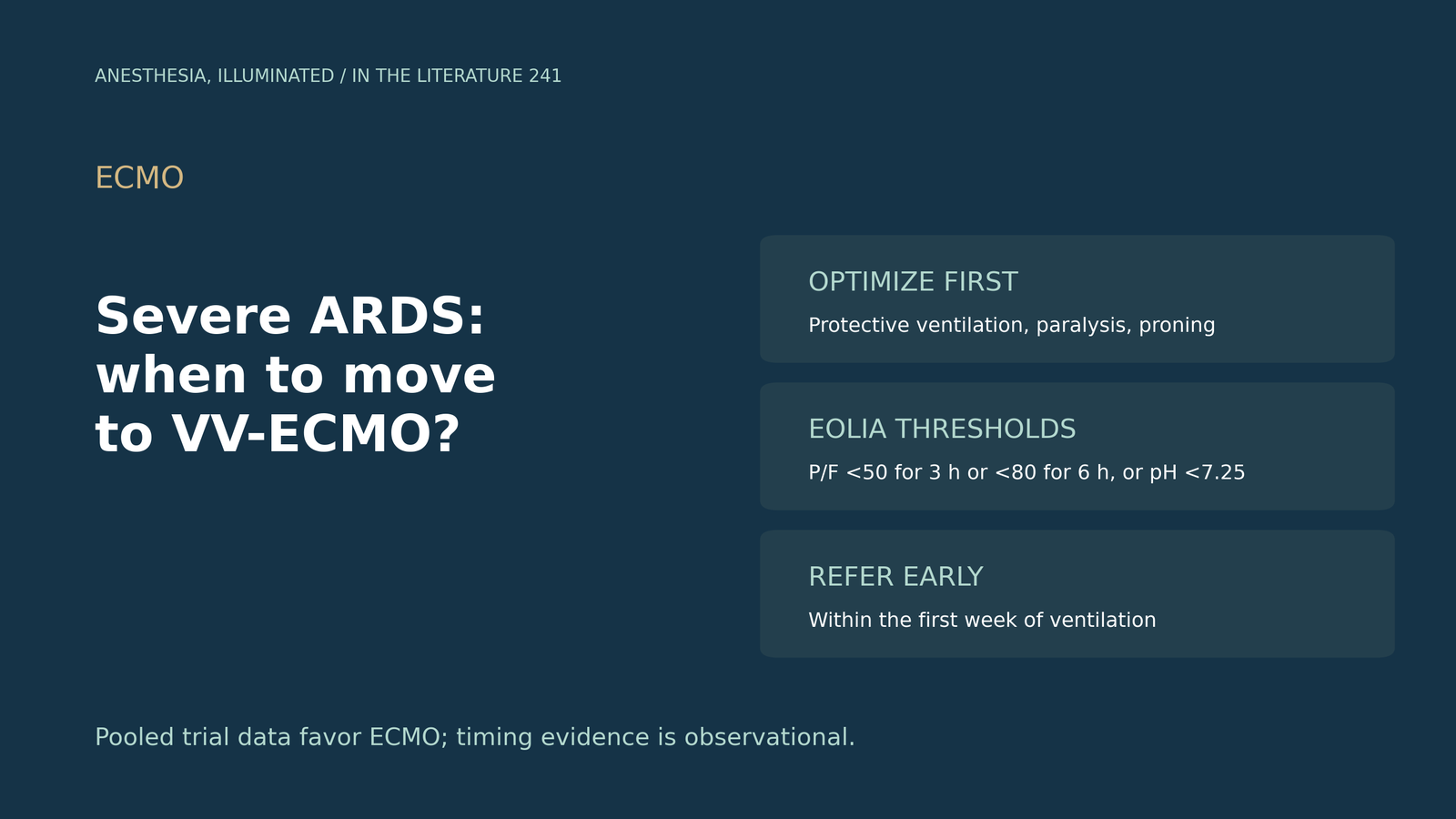
- The working thresholds come from EOLIA: PaO2/FiO2 below 50 mmHg for more than 3 hours, below 80 mmHg for more than 6 hours, or pH below 7.25 with PaCO2 of at least 60 mmHg.[1]
- Optimize first. Neuromuscular blockers and prone positioning were encouraged before randomization, and proning should start within 36 h of meeting criteria.[1], [2]
- Trial evidence is mixed. EOLIA was not significant (35% vs 46% at 60 days), but pooled CESAR and EOLIA data showed 36% vs 48% at 90 days.[1], [3]
- Earlier looks better. Delays beyond about 5 to 7 days of ventilation are linked to worse survival, but causality is unproven.[4], [5]
- Refer early. Centers without ECMO should plan early transfer.[6]
A patient with severe ARDS has been ventilated for three days, is paralysed and has been proned twice, but PaO2/FiO2 stays near 70 mmHg. Is it time to call the ECMO center?[1], [2]
The thresholds
The EOLIA trial (Combes et al., N Engl J Med 2018) enrolled patients with PaO2/FiO2 below 50 mmHg for more than 3 hours, or below 80 mmHg for more than 6 hours, or pH below 7.25 with PaCO2 of at least 60 mmHg for more than 6 hours, who had been ventilated for less than 7 days; neuromuscular blockers and prone positioning were encouraged first.[1] Gorman et al. (Lancet 2022) note that prone ventilation should start early, ideally within 36 h, that a cited guideline recommends ECMO when PaO2/FiO2 is below 80 mmHg or lung-protective ventilation is not possible, and that ECMO candidates should be managed with an EOLIA-like strategy.[2]
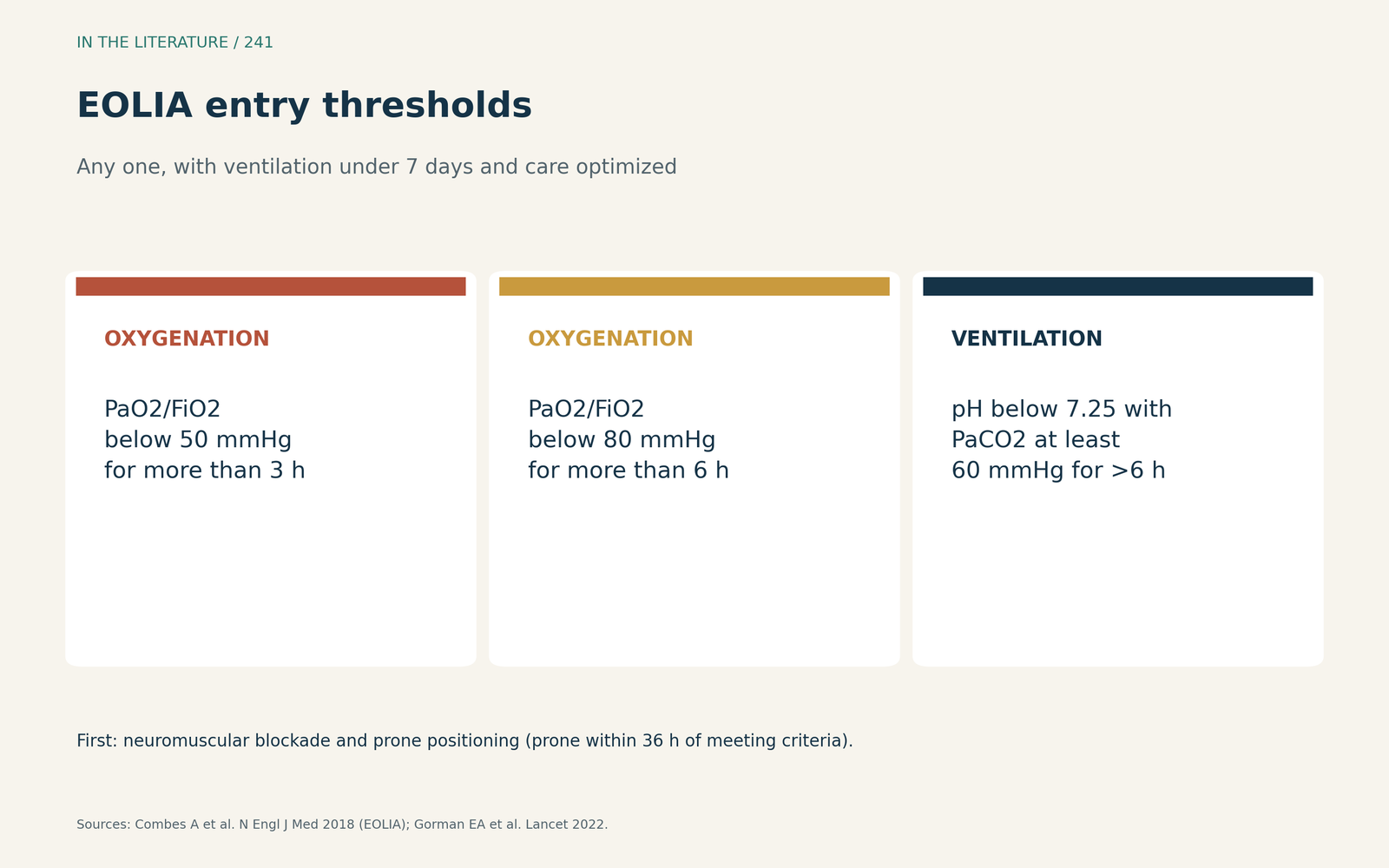
Figure 1. EOLIA thresholds, applied after optimized care. Redrawn from Combes et al. (EOLIA) and Gorman et al.[1], [2] View larger.

What the trials show
In EOLIA, 60-day mortality was 35% with ECMO and 46% with conventional care, which was not significantly lower; 28% of controls crossed over to ECMO.[1] In the individual patient data meta-analysis of CESAR and EOLIA (Combes et al., Intensive Care Med 2020), 90-day mortality was 36% with ECMO and 48% in controls, with lower mortality in patients with two or fewer failing organs; ECMO should follow failed proven conventional care unless hypoxemia is immediately life-threatening or proning is unsafe.[3]
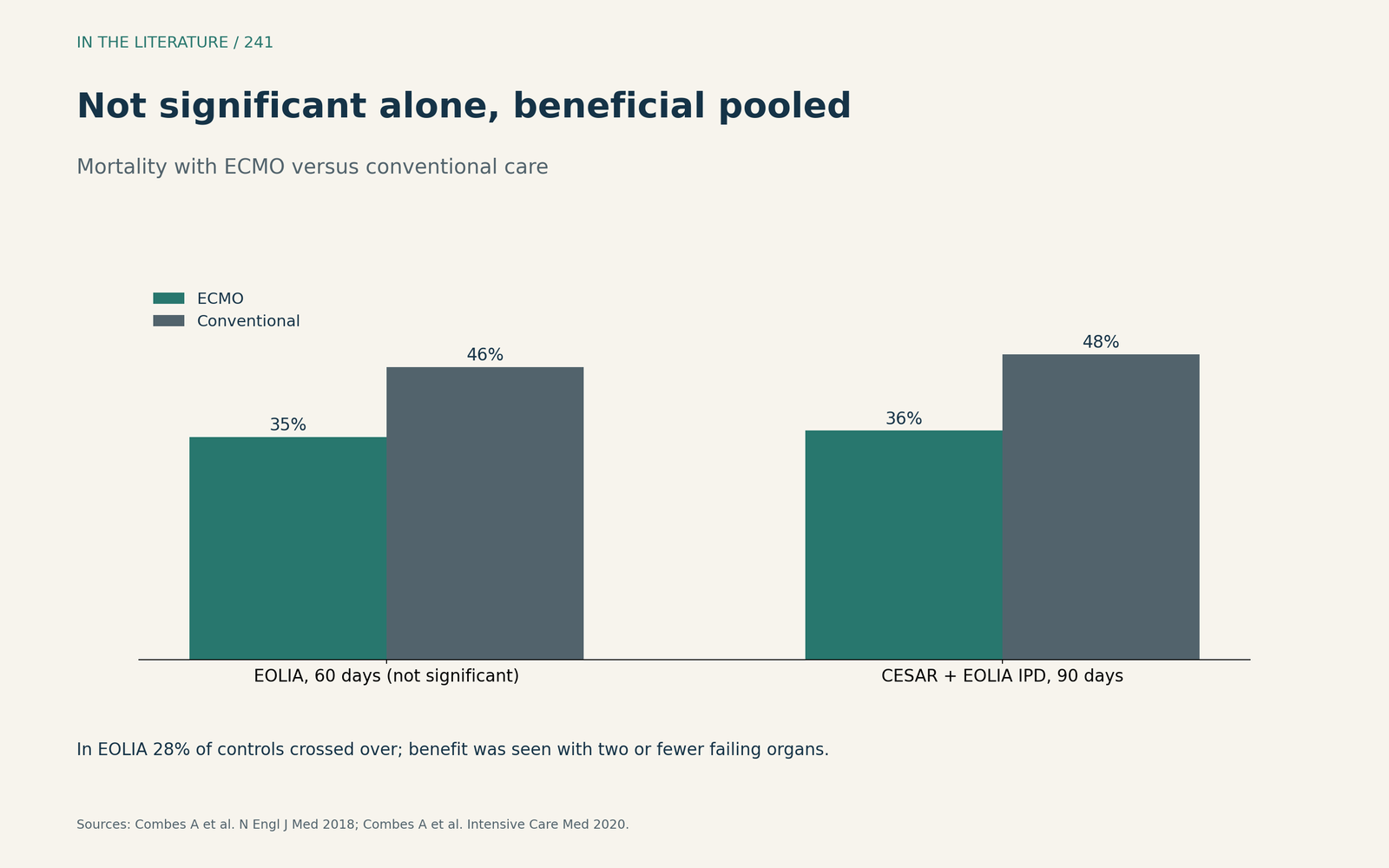
Figure 2. Not significant alone, beneficial when pooled. Data from Combes et al. (2018 and 2020).[1], [3] View larger.

Timing and referral
Observational evidence links delays beyond about 5 to 7 days of ventilation before VV-ECMO with worse survival, but for ventilation-based timing the pooled effect was not statistically significant, and the results are exploratory (Zhang et al., BMC Cardiovasc Disord 2026).[4] In COVID cohorts, non-survivors had a longer time from intubation to ECMO, yet evidence is insufficient to conclude that longer pre-ECMO time causes reduced survival, and causality cannot be deduced (Tan et al., J Clin Med 2024).[5] Trauma guidance advises early transfer planning in centers without ECMO,[6] and in a national referral center, where referral was urged to be expeditious, ICU survival among 100 referred patients was 55% (Pieri et al., 2022).[7]
Beyond gas exchange
Guidelines consider only ventilatory parameters and gas exchange for the VV-ECMO indication, yet two hours after implantation 61% of patients showed hemodynamic improvement (Labanca et al., J Cardiothorac Vasc Anesth 2025).[8]
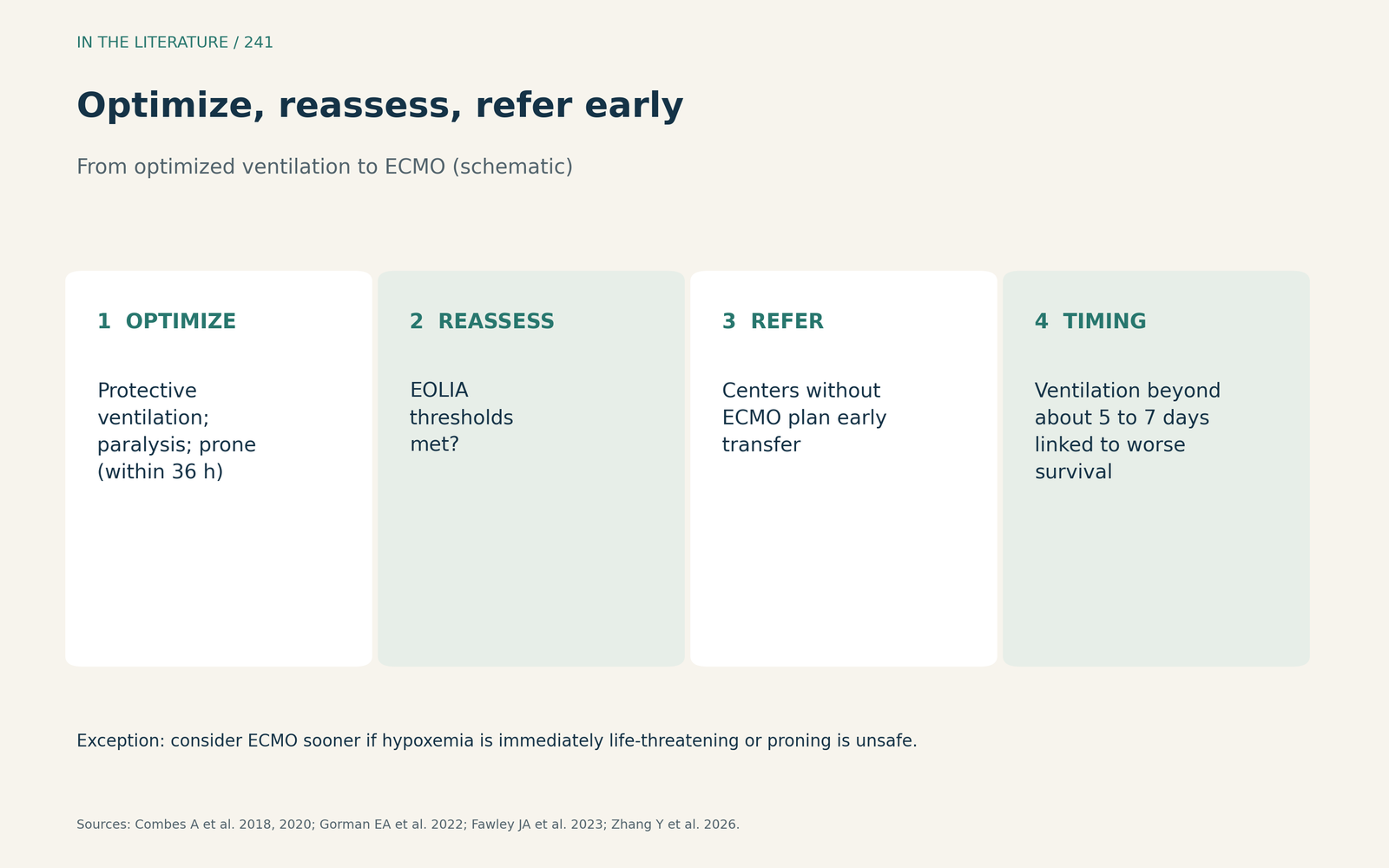
Figure 3. Optimize, reassess, refer early. Synthesized from Combes et al., Gorman et al., Fawley et al. and Zhang et al.[1], [2], [6], [4] View larger.

Three takeaways
- Apply EOLIA thresholds after lung-protective ventilation, paralysis and proning.[1], [2]
- Call the ECMO center early, ideally well within the first week of ventilation.[4], [6]
- Expect benefit mainly before multiorgan failure; the trial evidence is supportive but not conclusive.[1], [3]
References
- Combes A, Hajage D, Capellier G, et al. Extracorporeal membrane oxygenation for severe acute respiratory distress syndrome. N Engl J Med. 2018;378(21):1965–1975. doi:10.1056/NEJMoa1800385
- Gorman EA, O'Kane CM, McAuley DF. Acute respiratory distress syndrome in adults: diagnosis, outcomes, long-term sequelae, and management. Lancet. 2022;400(10358):1157–1170. doi:10.1016/S0140-6736(22)01439-8
- Combes A, Peek GJ, Hajage D, et al. ECMO for severe ARDS: systematic review and individual patient data meta-analysis. Intensive Care Med. 2020;46(11):2048–2057. doi:10.1007/s00134-020-06248-3
- Zhang Y, Li Z, Song Q, et al. Extracorporeal membrane oxygenation initiation timing and prognosis: a systematic review and meta-analysis. BMC Cardiovasc Disord. 2026;26(1):879. doi:10.1186/s12872-026-06256-z
- Tan Z, Su L, Chen X, et al. Relationship between the pre-ECMO and ECMO time and survival of severe COVID-19 patients: a systematic review and meta-analysis. J Clin Med. 2024;13(3):868. doi:10.3390/jcm13030868
- Fawley JA, Tignanelli CJ, Werner NL, et al. American Association for the Surgery of Trauma/American College of Surgeons Committee on Trauma clinical protocol for management of acute respiratory distress syndrome and severe hypoxemia. J Trauma Acute Care Surg. 2023;95(4):592–602. doi:10.1097/TA.0000000000004046
- Pieri M, Vettorello F, Calabrò MG, et al. Trend and pattern of 100 acute respiratory distress syndrome patients referred for venovenous extracorporeal membrane oxygenation treatment in a national referral center in North Italy during the last decade. J Cardiothorac Vasc Anesth. 2022;36(2):529–533. doi:10.1053/j.jvca.2021.04.037
- Labanca R, Pieri M, Monti G, et al. Hemodynamic improvement in acute respiratory distress syndrome patients after venovenous extracorporeal membrane oxygenation implantation. J Cardiothorac Vasc Anesth. 2025;39(5):1221–1228. doi:10.1053/j.jvca.2025.01.011