
ITL-ac238824ef97
Watch the video

Key points
- A planned hold remains supported by major guidance. EACTS advises considering at least 72 hours before open-heart surgery; ADA 2026 recommends 3–4 days before elective surgery. These intervals do not guarantee freedom from ketoacidosis. [1] [2]
- There is a real disagreement in guidance. SPAQI 2026 recommends continuation for selected patients under defined dietary and monitoring conditions, while retaining a hold for cardiac surgery in patients with type 2 diabetes without heart failure or chronic kidney disease. [3]
- Read the treatment schedule before applying a renal trial. MERCURI-2 tested new perioperative dapagliflozin; POST-CABGDM tested months of empagliflozin followed by a 72-hour hold. Neither randomized chronic users to continue versus stop. [4] [5]
- Normal glucose does not exclude ketoacidosis. Recent exposure plus unexplained acidosis warrants ketone and acid–base assessment. [1] [2]
- Write the restart plan when writing the hold. Recovery of oral intake and hemodynamic stability matter; the UK inpatient pathway also specifies capillary ketones below 0.6 mmol/L. [1] [6]
A patient taking an SGLT2 inhibitor for diabetes, heart failure, or kidney disease is scheduled for cardiac surgery. The clinician has seen a trial reporting less postoperative acute kidney injury and asks whether withholding the drug might remove a useful protective treatment.
The renal findings deserve attention. They do not, however, answer the medication-reconciliation question on their own. The crucial distinction is between starting a drug before surgery, receiving it for months and then holding it, and continuing an established prescription through the operation.
Start with the pathway your patient actually fits
The 2024 EACTS cardiac-surgery guideline recommends considering discontinuation at least 72 hours before open-heart surgery to reduce euglycemic ketoacidosis risk: Class IIa, level B. Its footnote applies the recommendation to all approved indications, including heart failure and chronic kidney disease. The ADA 2026 hospital-care chapter recommends a 3–4-day hold before elective surgery and close postoperative assessment for ketoacidosis after nonelective surgery. [1] [2]
SPAQI 2026 takes a different approach. Under its specified conditions—no anticipated preoperative carbohydrate fast longer than 12 hours and no prolonged very-low-carbohydrate diet—it recommends continuation before major or cardiac surgery in patients without type 2 diabetes, or those with type 2 diabetes plus heart failure or chronic kidney disease. For cardiac surgery in type 2 diabetes without heart failure or chronic kidney disease, it recommends stopping for three days, or four days for ertugliflozin. Its cardiac pathway includes metabolic surveillance and, for recently exposed patients with type 2 diabetes, prophylactic dextrose and/or insulin infusions. [3]
The UK multidisciplinary elective-surgery consensus recommends omitting the drug on the day before and the day of the procedure. That is another specified care pathway, not evidence that one interruption interval is optimal for every cardiac operation. [6]
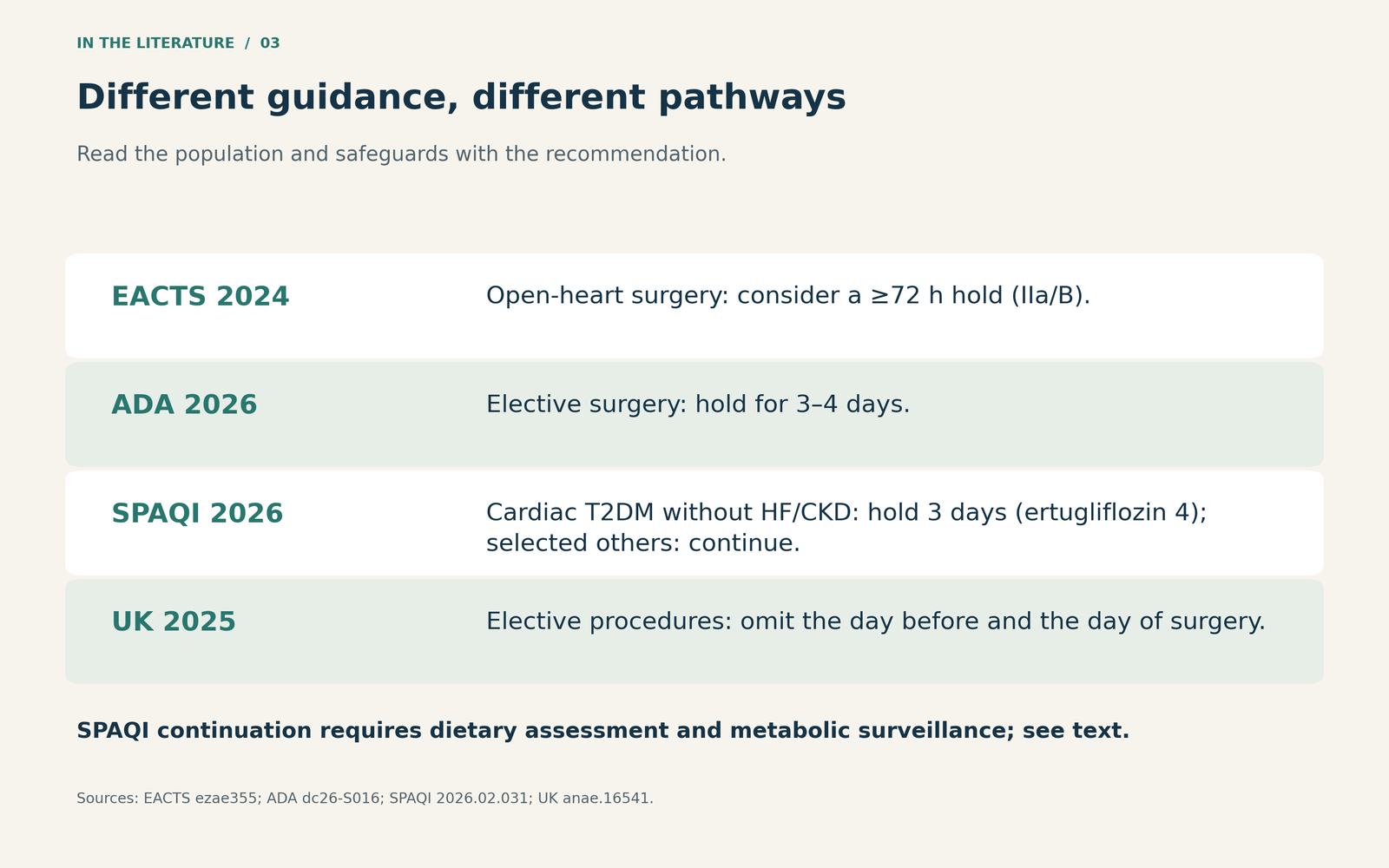
Figure 1. Guidance differs in scope and assumptions. EACTS directly addresses open-heart surgery; the other documents cover broader perioperative settings. SPAQI continuation must be read with its dietary, comorbidity and surveillance conditions. [1–3,6]
For an elective cardiac patient, a practical response is to establish the institution's agreed pathway before admission and document the indication, agent, last dose, expected fasting and monitoring plan. A continuation decision based on SPAQI should include its safeguards. It should not be justified solely by a renal-trial headline.
MERCURI-2 reduced an AKI endpoint—but studied initiation
MERCURI-2 randomized 784 adults having elective cardiac surgery at seven Dutch centers to dapagliflozin 10 mg or placebo. Treatment began the day before surgery, followed by doses on the day of surgery and postoperative days 1 and 2. Current SGLT2-inhibitor users were excluded. This was a four-dose initiation strategy. [4]
The seven-day primary endpoint used KDIGO creatinine or urine-output criteria. AKI occurred in 111/392 patients (28%) versus 205/392 (52%), relative risk 0.54 (95% CI 0.45–0.65). The component analyses, which were post hoc, changed the interpretation: creatinine-defined AKI was 53/392 (14%) versus 57/392 (15%), relative risk 0.93 (95% CI 0.66–1.32); urine-output-defined AKI was 82/392 (21%) versus 188/392 (48%). [4]
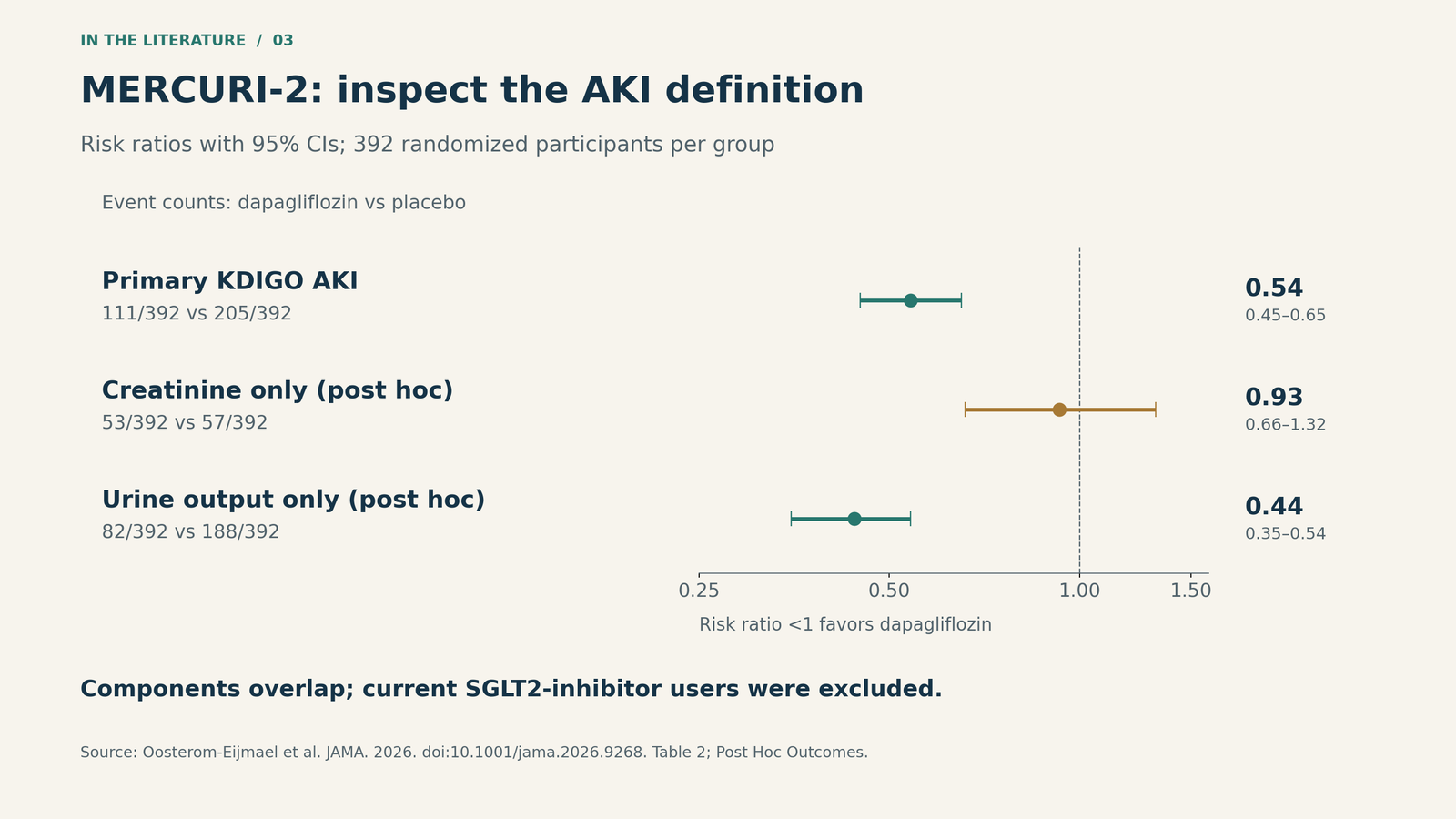
Figure 2. The primary composite and its components tell different stories. Each group contained 392 randomized participants. The component groups overlap and must not be added together. The trial did not compare continuation with withholding in chronic users. [4]
This is a positive trial for its prespecified AKI endpoint. It does not establish a reduction in creatinine-defined injury or in severe kidney outcomes. There were three stage-3 AKI events with dapagliflozin and one with placebo; the trial lacked power for that outcome. Ketoacidosis occurred in one dapagliflozin recipient and none receiving placebo, which is too little information to establish equivalent safety. The population also excluded several higher-risk groups, including patients with prior ketoacidosis. [4]
A renal benefit can coexist with a preoperative hold
POST-CABGDM asked a different question. Patients with type 2 diabetes scheduled for CABG received empagliflozin 25 mg daily plus usual care, or usual care alone. Empagliflozin was prescribed for approximately three months before surgery and stopped 72 hours before the operation. The trial was single-center and open-label, with blinded outcome adjudication. [5]
Of 154 randomized patients, 145 underwent surgery and entered the modified intention-to-treat analysis. Creatinine-based AKI within seven days occurred in 16/71 (22.5%) versus 29/74 (39.1%), relative risk 0.57 (95% CI 0.34–0.96). Most events were mild. No ketoacidosis was reported in either group, but the small study cannot establish that the hold eliminated risk. [5]
The clinically useful inference is limited and specific: this study observed a renal benefit in a regimen that included withholding. It therefore cannot support the claim that taking the drug right up to surgery is necessary to preserve that benefit. Nor does it prove that holding is better than continuing; it did not randomize that comparison.
If recent exposure is discovered, look beyond glucose
In emergency open-heart surgery, EACTS emphasizes ketones, pH, bicarbonate and anion gap alongside clinical assessment. Euglycemic ketoacidosis can be overlooked if postoperative acidosis is attributed to other causes or if a reassuring glucose value ends the evaluation. The presence of ketones must also be interpreted with acid–base findings: mild ketonemia alone is not synonymous with ketoacidosis. [1] [3]
Urgency determines how much time exists to interrupt treatment. If a full elective hold is not possible, the team needs an explicit metabolic-monitoring and treatment plan. The UK consensus also notes cases occurring after holds longer than 72 hours; a calendar interval is a risk-reduction measure, not a metabolic clearance test. [6]
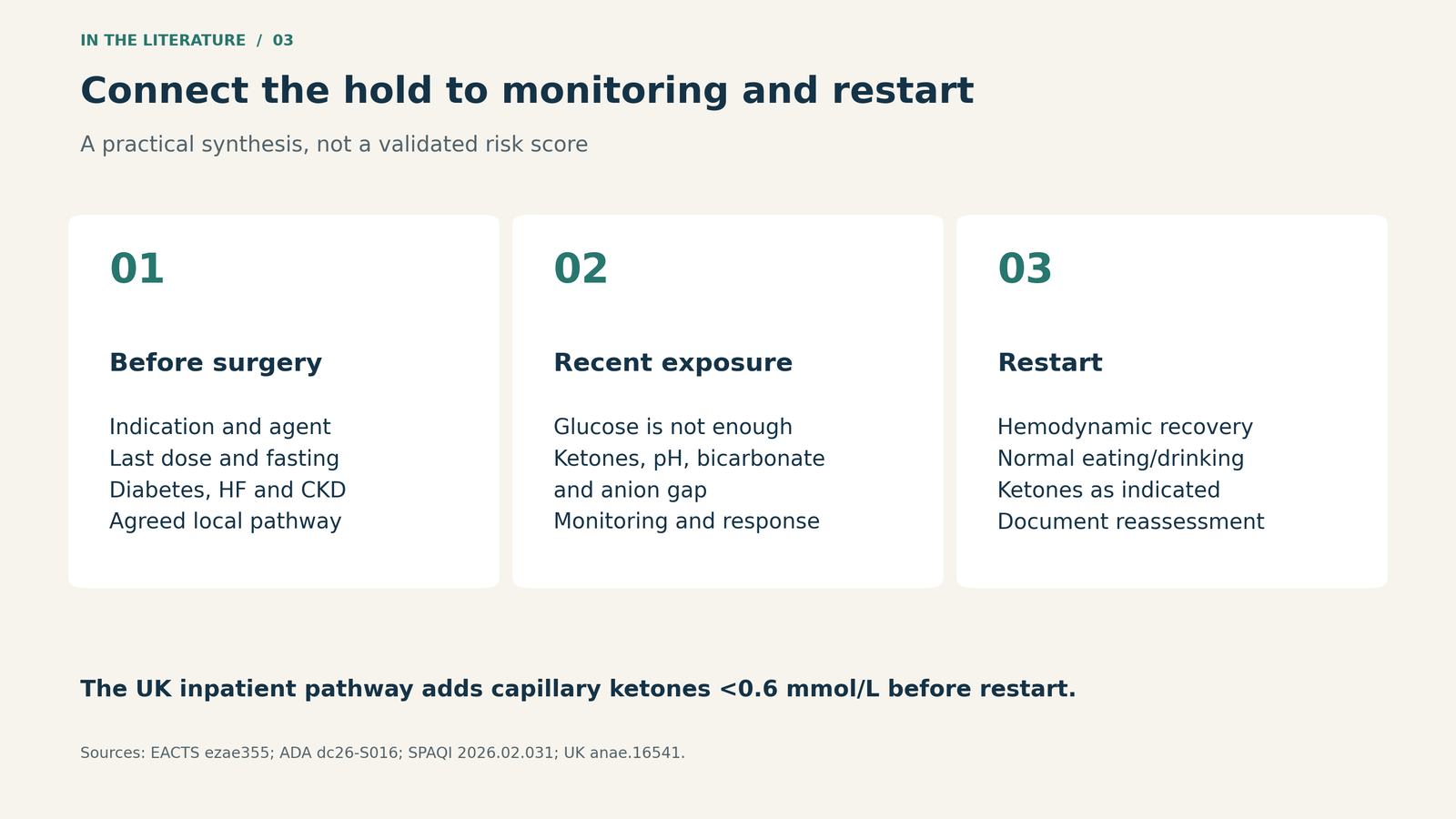
Figure 3. A practical synthesis of the guidance, organized around the medication decision. It is not a validated risk score. Monitoring frequency and insulin/dextrose treatment follow the clinical situation and the institution's protocol. [1–3,6]
Restart should be an active decision. EACTS specifies hemodynamic stability; SPAQI requires normal oral intake. The UK inpatient recommendation adds capillary ketones below 0.6 mmol/L to eating and drinking normally. Record who will reassess the patient, what conditions must be met and whether the drug remains appropriate for its original indication. [1] [3] [6]
Three takeaways
- Match the evidence to the exposure. Starting treatment, holding after months of treatment and continuing a chronic prescription are different clinical questions.
- Use a complete perioperative pathway. The hold or continuation decision belongs with nutrition, ketone/acid–base surveillance and a response to deterioration.
- Close the loop on restart. Confirm clinical recovery and oral intake, assess ketosis as indicated, and document resumption rather than leaving an indefinite interruption.
References
- Jeppsson A, Rocca B, Hansson EC, Gudbjartsson T, James S, Kaski JC, et al. 2024 EACTS Guidelines on perioperative medication in adult cardiac surgery. Eur J Cardiothorac Surg. 2025;67(1):ezae355. doi:10.1093/ejcts/ezae355.
- American Diabetes Association Professional Practice Committee for Diabetes. 16. Diabetes care in the hospital: Standards of Care in Diabetes—2026. Diabetes Care. 2026;49(Suppl 1):S339–S355. doi:10.2337/dc26-S016.
- Oprea AD, Mohamed B, Hepner DL, Auron M, Richman DC, Umpierrez GE, et al. Perioperative management of patients taking sodium-glucose cotransporter 2 inhibitors: Society for Perioperative Assessment and Quality Improvement (SPAQI) multidisciplinary consensus statement. Br J Anaesth. 2026;136(6):1776–1799. doi:10.1016/j.bja.2026.02.031.
- Oosterom-Eijmael MJP, Hulst AH, Monteiro de Oliveira NP, Niesten ED, Wietsma NE, Gerritse BM, et al. Dapagliflozin and acute kidney injury following cardiac surgery: a randomized clinical trial. JAMA. 2026;336(9):765–773. doi:10.1001/jama.2026.9268.
- Pitta FG, Lima EG, Tavares CAM, Martins EB, Rached FH, Moreira EM, et al. Empagliflozin in patients with type 2 diabetes undergoing on-pump CABG: the POST-CABGDM randomized clinical trial. Diabetes Care. 2025;48(6):988–995. doi:10.2337/dc24-2807.
- El-Boghdadly K, Dhesi J, Fabb P, Levy N, Lobo DN, McKechnie A, et al. Elective peri-operative management of adults taking glucagon-like peptide-1 receptor agonists, glucose-dependent insulinotropic peptide agonists and sodium-glucose cotransporter-2 inhibitors: a multidisciplinary consensus statement. Anaesthesia. 2025;80:412–424. doi:10.1111/anae.16541.