ITL-6ba3136afeae
Juan Li · In the Literature · Updated November 16, 2026
Watch the video
Key points
- Absence of a previous sternotomy does not make removal of an implanted transcatheter valve a routine surgical AVR.
- Establish the mechanism of valve failure and why another transcatheter intervention would or would not address it.
- Anticipate the possible extent of surgery, including the aortic root, ascending aorta and other valves.
- Registry mortality describes selected populations; it should not become one fixed risk estimate for every explant patient.
- A dedicated SAVR-after-TAVR risk model was published in 2026, adding an important update to older risk assessments.
The valve may already be incorporated into surrounding tissue
For an anesthesiologist assessing a patient scheduled for surgical TAVR explantation, “no previous sternotomy” answers only one part of the risk assessment. The implanted frame may have become incorporated into the aortic root and adjacent structures. Removing it can require extensive dissection and additional reconstruction. Fischer and colleagues' JCVA editorial draws attention to this distinction: the technical problem lies partly around the prosthesis, even when chest entry is new. [1]
The useful preoperative question is therefore: What operation might this patient actually need once the transcatheter valve is removed?
Confirm what has failed before choosing how to replace it
Degeneration, thrombosis, endocarditis, paravalvular leak and prosthesis–patient mismatch are different problems. A rising gradient alone does not establish irreversible degeneration or a need for explantation. The 2025 ESC/EACTS guideline supports defining the mechanism with appropriate imaging and selecting reintervention through the Heart Team. Clinically relevant bioprosthetic thrombosis, for example, may be treated with anticoagulation; progressive acute heart failure or hemodynamic instability changes the urgency. [2]
Redo-TAVR also has anatomical limits. A second valve can leave an unfavorable residual orifice or create a neoskirt that compromises coronary flow. Even preserved flow does not guarantee later coronary access. ESC/EACTS guidance states that redo surgery may be preferable when severe mismatch or coronary obstruction is anticipated, despite greater surgical risk. This is a conditional anatomical judgment, not a claim that surgery is preferable for every failed TAVR. [2]
Before induction, the team should be able to explain the failure mechanism, the intended operation and the patient-specific reason for choosing it.
Map the possible extent of dissection
The concern extends beyond removing the valve leaflets. Frame incorporation into the aortic wall or adjacent subvalvular structures can complicate removal. Aortic reconstruction, mitral intervention or coronary bypass may be needed alongside replacement of the aortic valve. Fischer and colleagues emphasize thorough TEE assessment of the aorta and other valves to identify these additional requirements. [1]
Myocardial protection deserves an explicit discussion. The frame can hinder direct coronary-ostial cardioplegia delivery, and significant regurgitation or paravalvular leak may complicate the chosen strategy. The practical implication is to agree on myocardial protection with the surgeon and perfusionist; the editorial does not establish a universal cardioplegia route for every explant. More extensive surgery can also mean longer bypass and greater support needs during separation. [1]
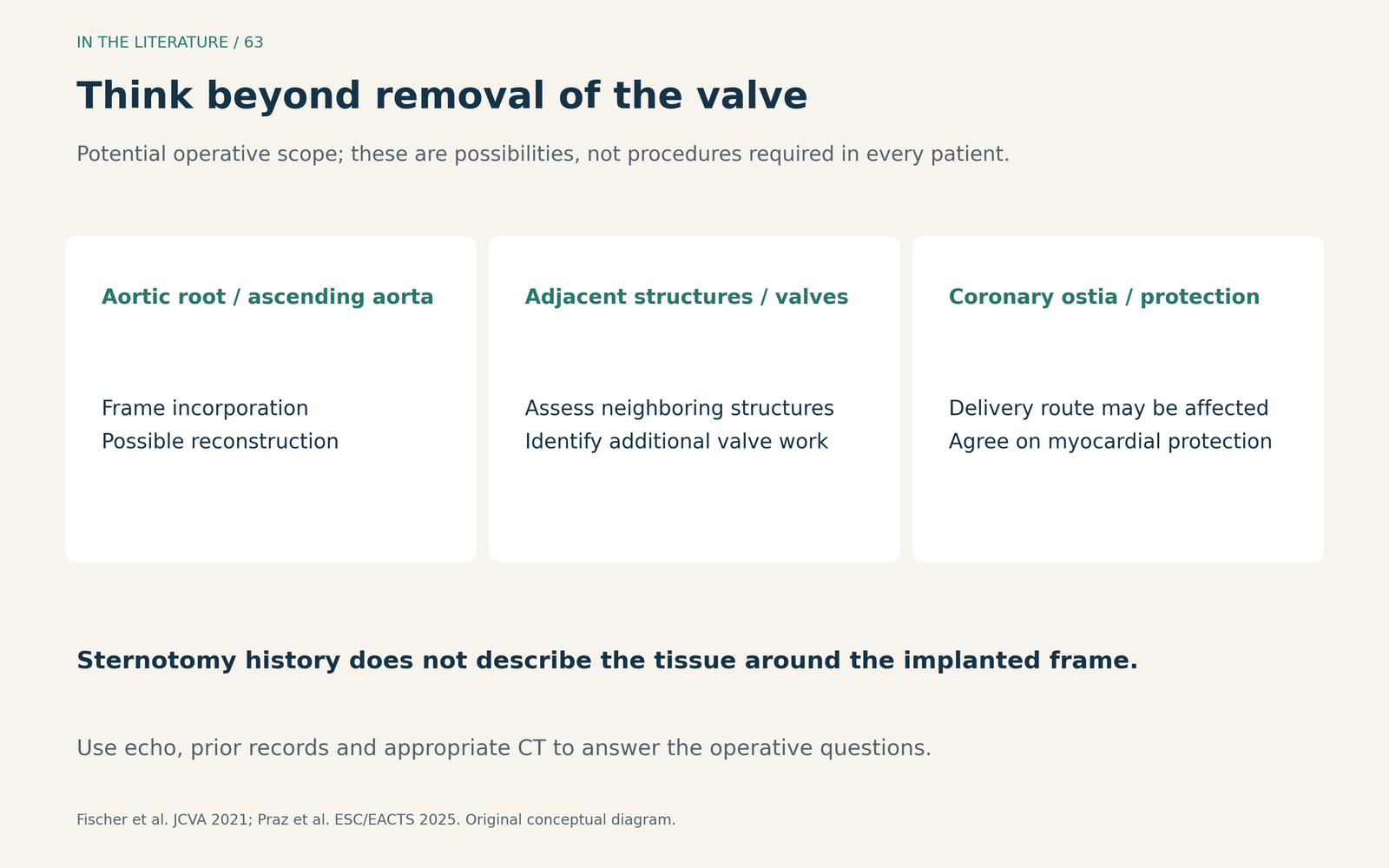
Figure 1. Original conceptual diagram of structures and planning questions relevant to explantation. It is not a prediction that every patient will need each additional procedure. [1, 2] View figure

Read the mortality figures with their selection criteria
The EXPLANTORREDO-TAVR registry, reported by Tang and colleagues in 2023, compared 181 explants with 215 redo-TAVR procedures across 29 centers. It excluded explantation for endocarditis and reinterventions during the original TAVR admission. In the explant group, 101 patients—55.8%—underwent concomitant procedures. Reported 30-day mortality was 13.6% after explantation and 3.4% after redo-TAVR. [3]
Those figures establish a substantial early hazard in the studied explant population. They do not estimate the causal effect of choosing surgery for a patient equally eligible for both approaches. Treatment was selected by local Heart Teams, the groups differed, and follow-up was incomplete. The authors found no significant mortality difference beyond 30 days in a landmark analysis; that result does not prove equivalent long-term survival. [3]
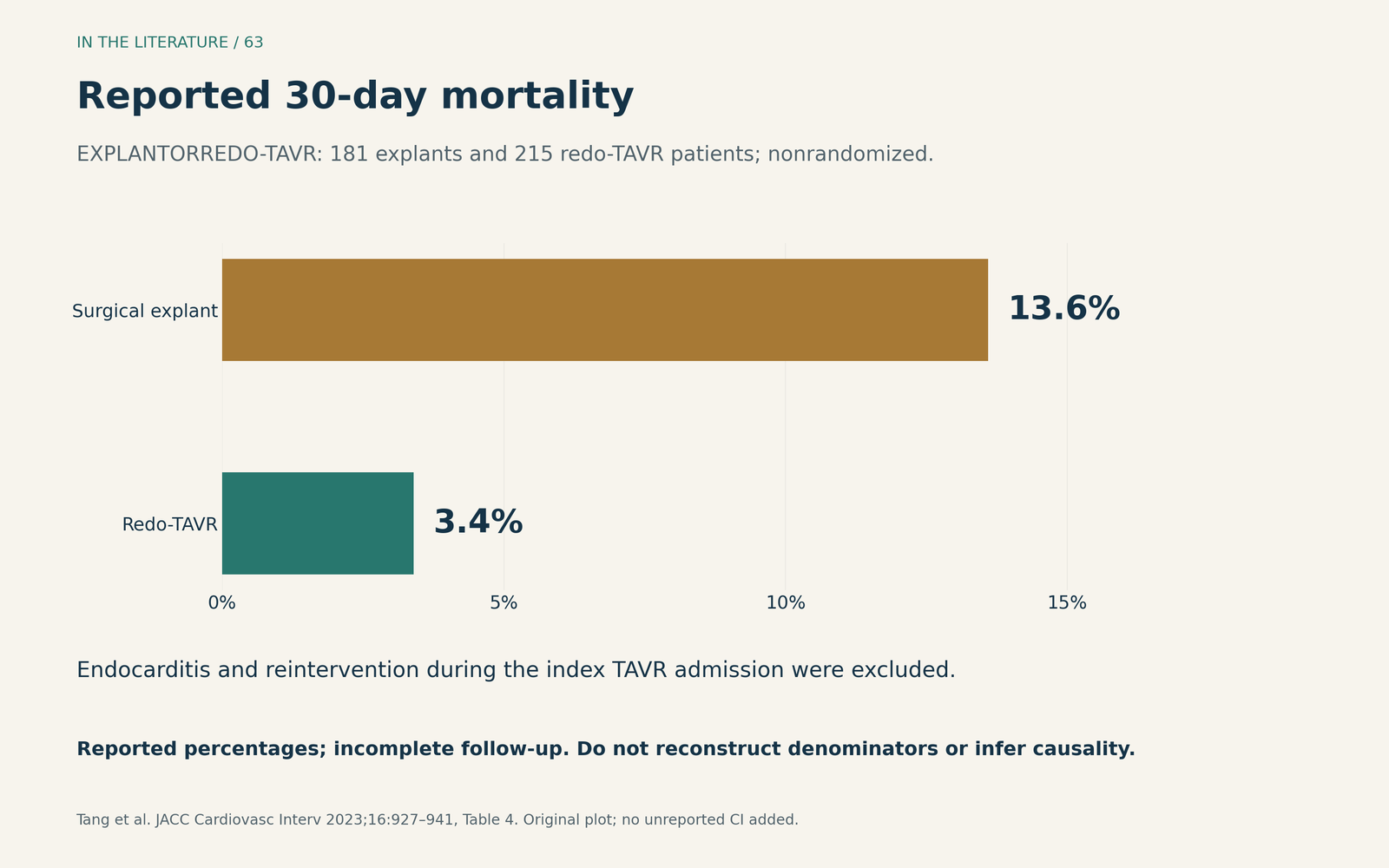
Figure 2. Original plot of the reported 30-day percentages. Group sizes describe the enrolled cohorts, not reconstructed denominators for the mortality percentages. Endocarditis and same-admission reinterventions were excluded; the comparison is nonrandomized. [3] View figure

A 2026 nationwide Medicare analysis by Faggion Vinholo and colleagues adds a reason to avoid extrapolating early results indefinitely. Based on the formal abstract only, its propensity-matched comparison reported higher early mortality after explantation but lower estimated cumulative mortality at three and five years, with curves crossing at approximately nine months. This observational finding cannot establish a long-term treatment advantage; it shows why early procedural risk and later prognosis need separate discussion. [4]
Update the risk estimate for the patient in front of you
Contemporary results vary. Razavi and colleagues' 2026 single-center study included 54 selected explant patients: 14 underwent isolated SAVR and 40 had concomitant procedures. There were four deaths within 30 days, or 7.4%, and the combined 30-day morbidity-or-mortality rate was 25.9%. Two emergency operations for TAVR embolization were excluded, and patients judged nonoperative were not captured. The study therefore does not prove that additional procedures are harmless or that institutional volume caused the lower observed mortality. [5]
Risk prediction has also changed. Hawkins and colleagues published a dedicated STS SAVR-after-TAVR model in 2026. Based on its formal abstract only, the study included 5,708 patients, with 2,298 isolated procedures and 3,410 involving concomitant surgery. Reported discrimination was AUC 0.82 for operative mortality and 0.73 for morbidity or mortality. These are discrimination statistics, not mortality probabilities. [6]
The model included proximal aortic and other valve operations but excluded concomitant arch or descending-aortic procedures and other major surgery. Its abstract identifies patients with low predicted risk, so a blanket “all explants are high risk” label is no longer adequate. Check that the planned operation fits the model's population, then integrate the estimate with anatomy, urgency and the patient's condition. A prognostic model cannot determine which treatment would cause a better outcome for that individual. [2, 6]
Make the preoperative discussion specific
A useful briefing connects the findings to the operation: the failure mechanism and reason for explant; the frame's relationship to the root and other valves; the anticipated additional procedures; and the myocardial-protection and bypass-separation plan. These questions translate the anatomical and technical concerns into shared preparation. They are a clinical planning aid, not a validated score or a fixed anesthetic protocol. [1, 2]
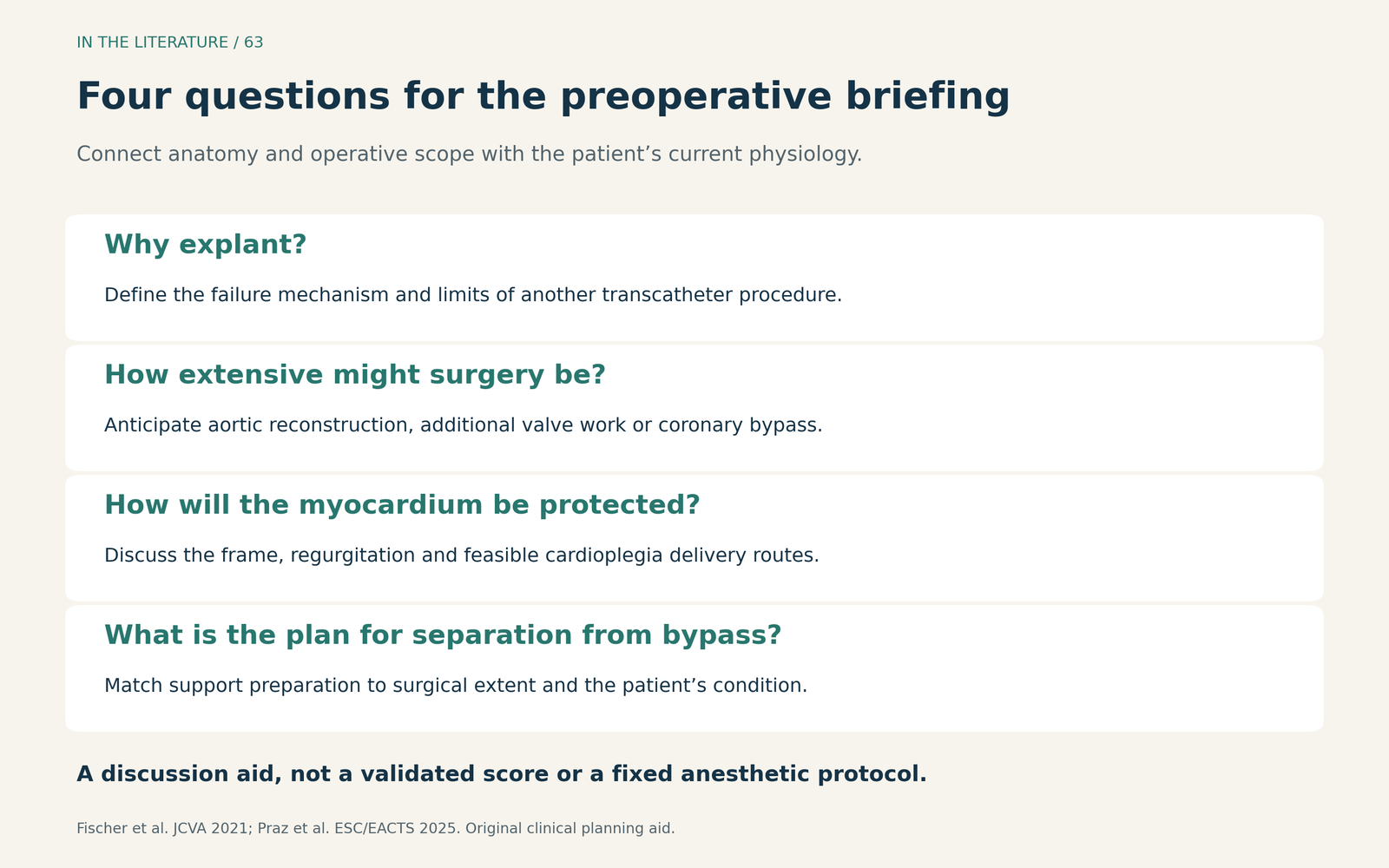
Figure 3. Original preoperative discussion aid. The expected extent of surgery and the patient's physiology determine the plan. [1, 2] View figure

Three takeaways
- Assess the implanted valve and its surroundings, not just the sternotomy history. Frame incorporation and concomitant disease can expand the operation.
- Individualize the risk estimate. Use the relevant contemporary model and the intended procedure; interpret registry averages within their populations.
- Agree on the likely surgical extent and myocardial-protection plan before induction. A shared understanding of the technical problem makes the preparation clinically useful.
References
- Fischer MA, Williams TM, Harvey R, et al. TAVR Explantation: Re-Do Risk Without the Re-Do Sternotomy. J Cardiothorac Vasc Anesth. 2021;35(8):2256–2259. doi:10.1053/j.jvca.2021.03.024.
- Praz F, Borger MA, Lanz J, et al. 2025 ESC/EACTS Guidelines for the management of valvular heart disease. Eur J Cardiothorac Surg. 2025;67(8):ezaf276. doi:10.1093/ejcts/ezaf276.
- Tang GHL, Zaid S, Kleiman NS, et al. Explant vs Redo-TAVR After Transcatheter Valve Failure: Mid-Term Outcomes From the EXPLANTORREDO-TAVR International Registry. JACC Cardiovasc Interv. 2023;16(8):927–941. doi:10.1016/j.jcin.2023.01.376.
- Faggion Vinholo T, Awtry J, Cho M, et al. Long-Term Outcomes of Repeated Transcatheter Aortic Valve Replacement vs Transcatheter Aortic Valve Replacement Explantation: A Nationwide Analysis. Ann Thorac Surg. 2026;121(6):1425–1433. doi:10.1016/j.athoracsur.2025.12.034. Abstract only.
- Razavi AA, Tam DY, Krishnan A, et al. Transcatheter Aortic Valve Explant Experience From a High-Volume Structural Heart Center. Ann Thorac Surg Short Rep. 2026;4(2):601–606. doi:10.1016/j.atssr.2025.12.009.
- Hawkins RB, Bonnell L, Mehaffey JH, et al. The Society of Thoracic Surgeons Risk Model for Surgical Aortic Valve Replacement After Transcatheter Aortic Valve Replacement. Ann Thorac Surg. Published online July 20, 2026. doi:10.1016/j.athoracsur.2026.07.001. Abstract only.