ITL-fe985fa6ed13
Juan Li, MD · Updated November 17, 2026
Watch the video
Key points
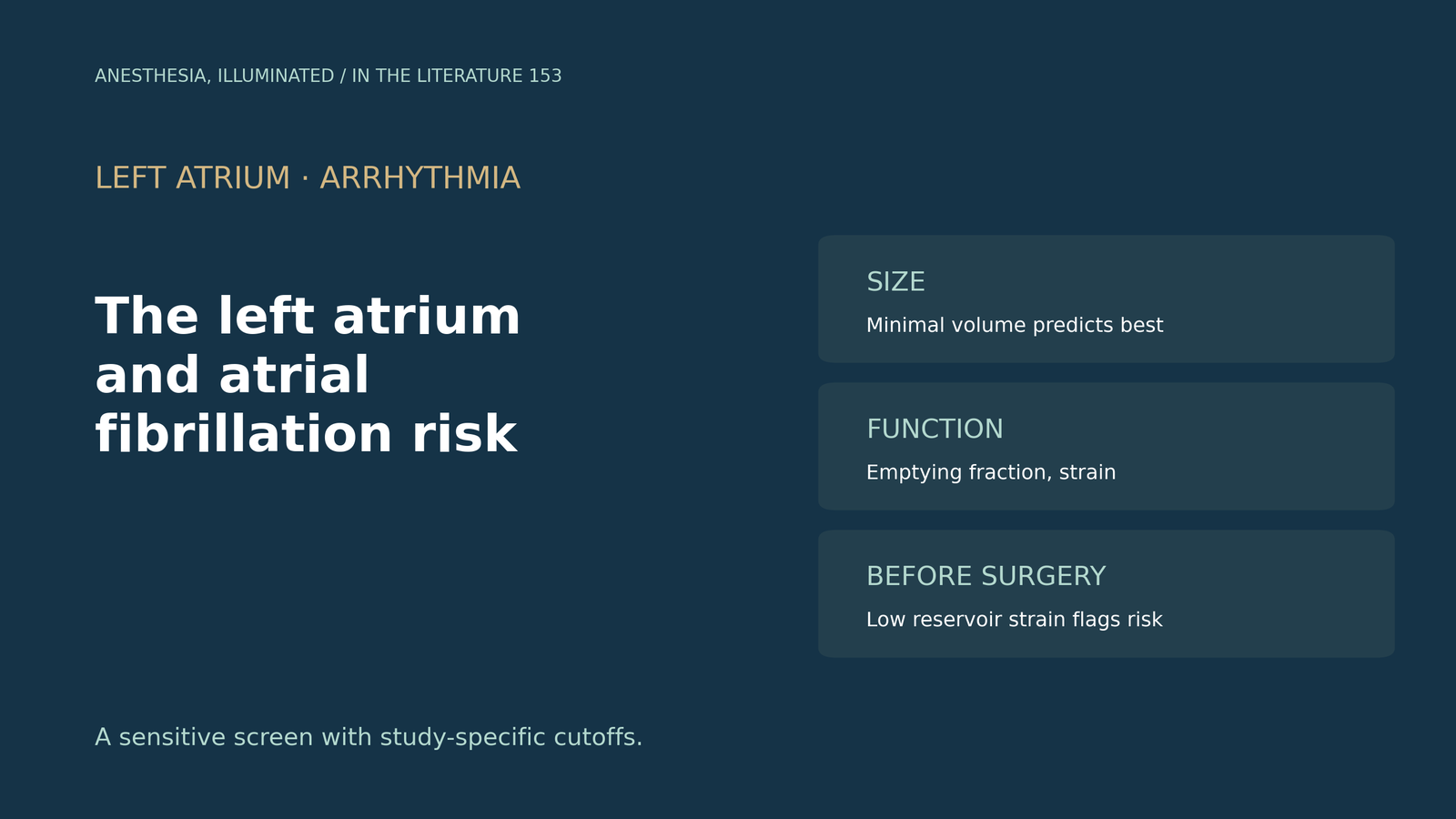
- Minimal volume matters more than maximal. In a population cohort, abnormal minimal left atrial volume carried a hazard ratio of 6.33 for atrial fibrillation, and only minimal volume improved established risk models.[1]
- Function adds to size. Left atrial emptying fraction independently predicted rehospitalization for atrial fibrillation, and the authors emphasize that function is more sensitive than size.[2], [3]
- Strain flags occult arrhythmia. After cryptogenic stroke, reservoir strain and booster strain rate predicted atrial fibrillation with areas under the curve of 0.74 and 0.77.[4]
- It applies to surgery. Before off-pump coronary surgery, a reservoir strain cutoff of 23% had 95.8% sensitivity but only 49.4% specificity for postoperative atrial fibrillation.[5]
- Pooled data support cutoffs of 22% to 25%, but accuracy is modest and certainty low.[6]
Before coronary artery bypass surgery, a patient in sinus rhythm has a normal left atrial volume index but a reduced reservoir strain on the preoperative echo. Does the left atrium predict who will develop atrial fibrillation, and which measure should be trusted?[5], [6]
Size: which volume to measure
Olsen and colleagues indexed left atrial volumes to height in the Copenhagen City Heart Study; in the validation cohort, 41 participants (8%) developed atrial fibrillation over a median of 14.7 years. Abnormal maximal volume carried a hazard ratio of 4.65, abnormal minimal volume a higher hazard ratio of 6.33, and only minimal volume improved established risk models.[1]
Function: emptying fraction, coupling and strain
In 594 patients after a hospitalization for atrial fibrillation, Bhat and colleagues found that rehospitalization occurred in 250 (42%); left atrial emptying fraction, a marker of reservoir function, independently predicted it (hazard ratio 0.967 per unit), and the authors emphasize the greater sensitivity of function over size.[2] In the same population cohort as Olsen, Benfari and colleagues found that 8.9% developed atrial fibrillation over 16.1 years and that a volume-to-mechanics coupling index predicted it independently, suggesting function may be a more sensitive indicator of risk.[3]
After cryptogenic stroke, Deferm and colleagues found occult atrial fibrillation in 15% (28 of 191). Reservoir strain and booster strain rate had areas under the curve of 0.74 and 0.77, and impaired booster strain rate was an independent predictor, although rhythm follow-up lasted only 30 days.[4]
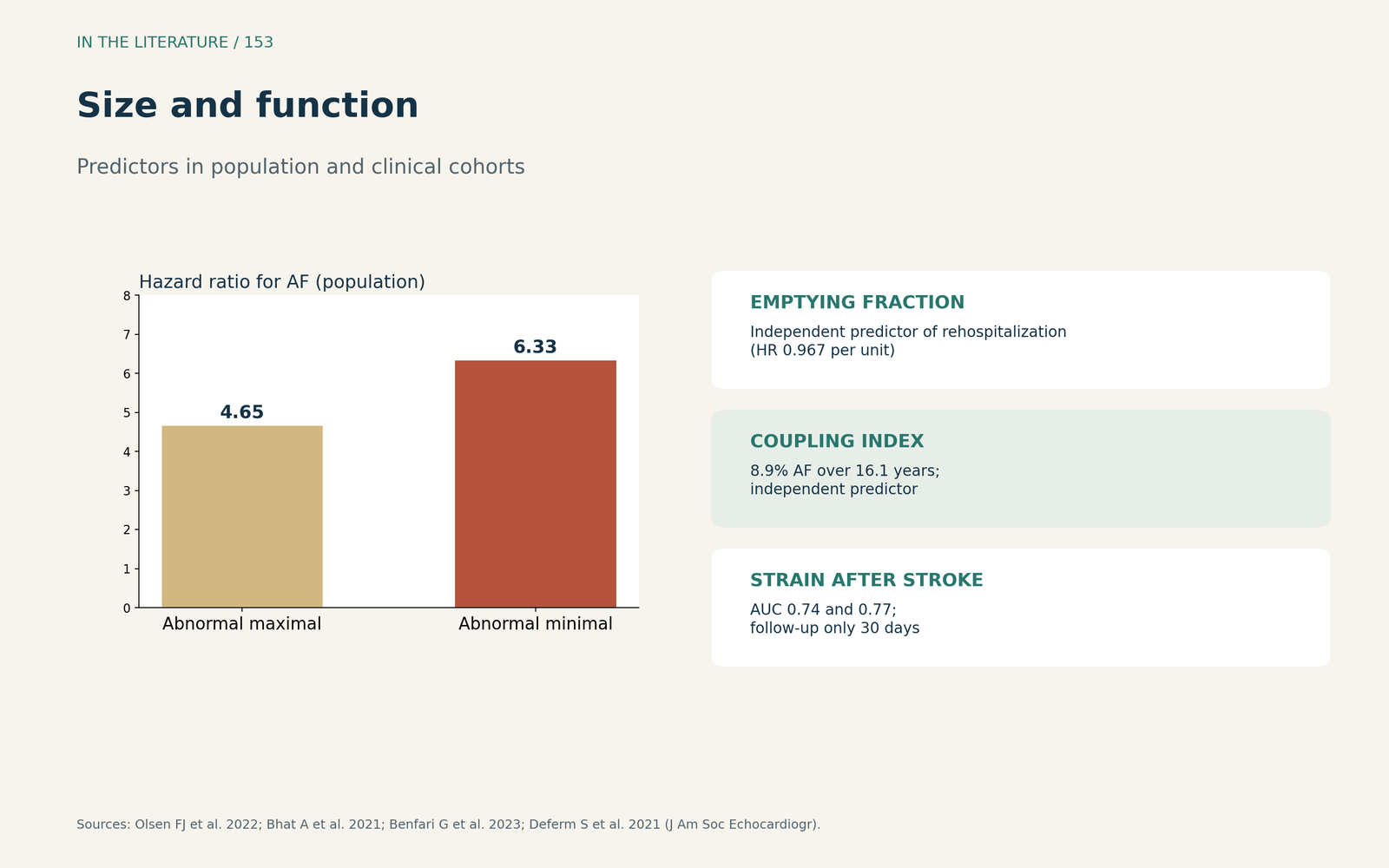
Figure 1. Size and function. Redrawn from Olsen et al., Bhat et al., Benfari et al. and Deferm et al.[1], [2], [3], [4] View larger.

Before cardiac surgery
Borde and colleagues measured preoperative reservoir strain in 103 patients having off-pump coronary surgery: postoperative atrial fibrillation occurred in 24 (23.3%), most often on day 2. A 23% cutoff had a sensitivity of 95.8% and specificity of 49.4%, and atrial fibrillation occurred in 36.5% of patients below it.[5] A meta-analysis of 2242 patients found postoperative atrial fibrillation in 33.05%, with reservoir strain cutoffs of 22% to 25%; sensitivity and specificity were modest, and certainty was downgraded to low.[6]
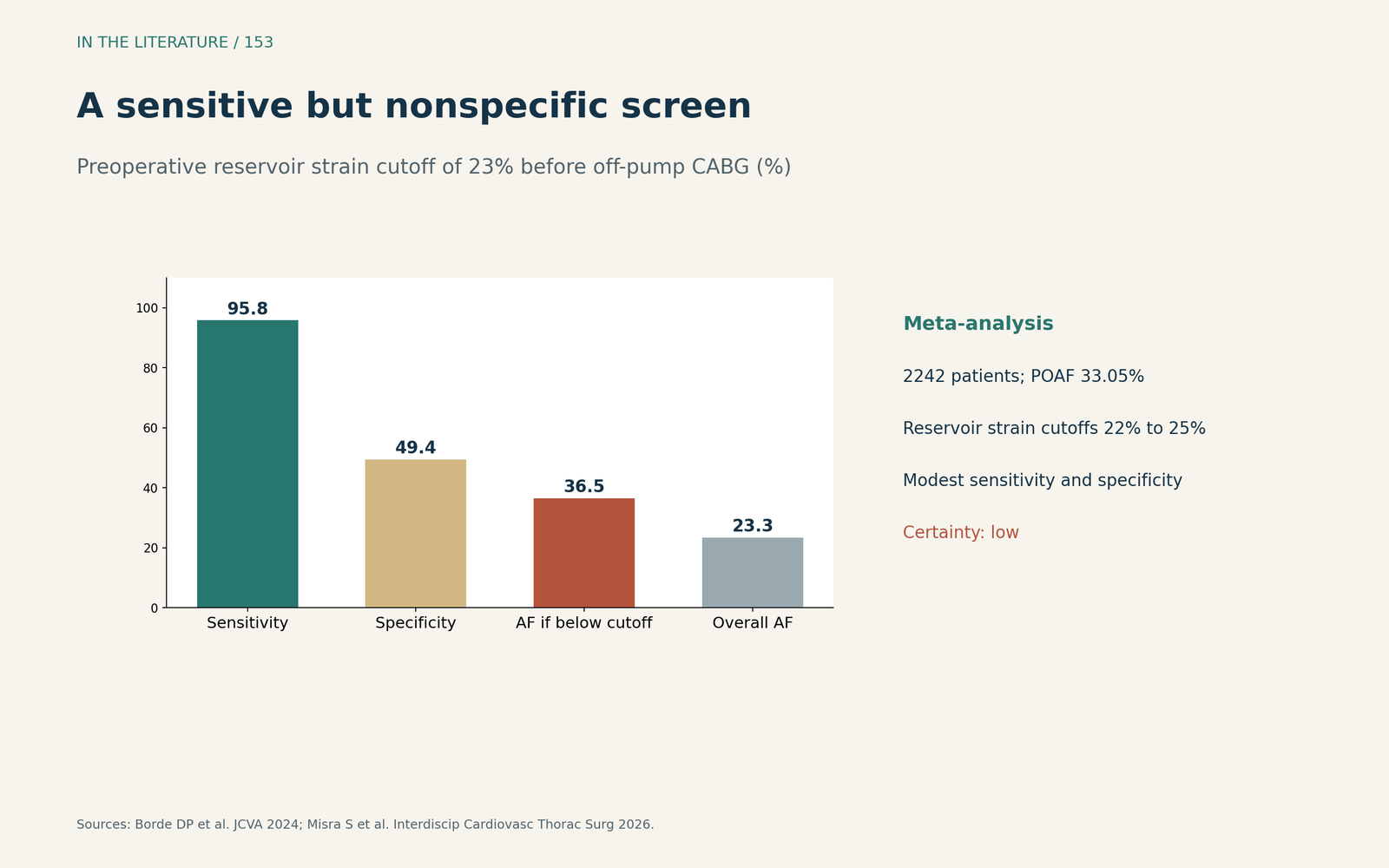
Figure 2. A sensitive but nonspecific screen. Redrawn from Borde et al. and Misra et al.[5], [6] View larger.

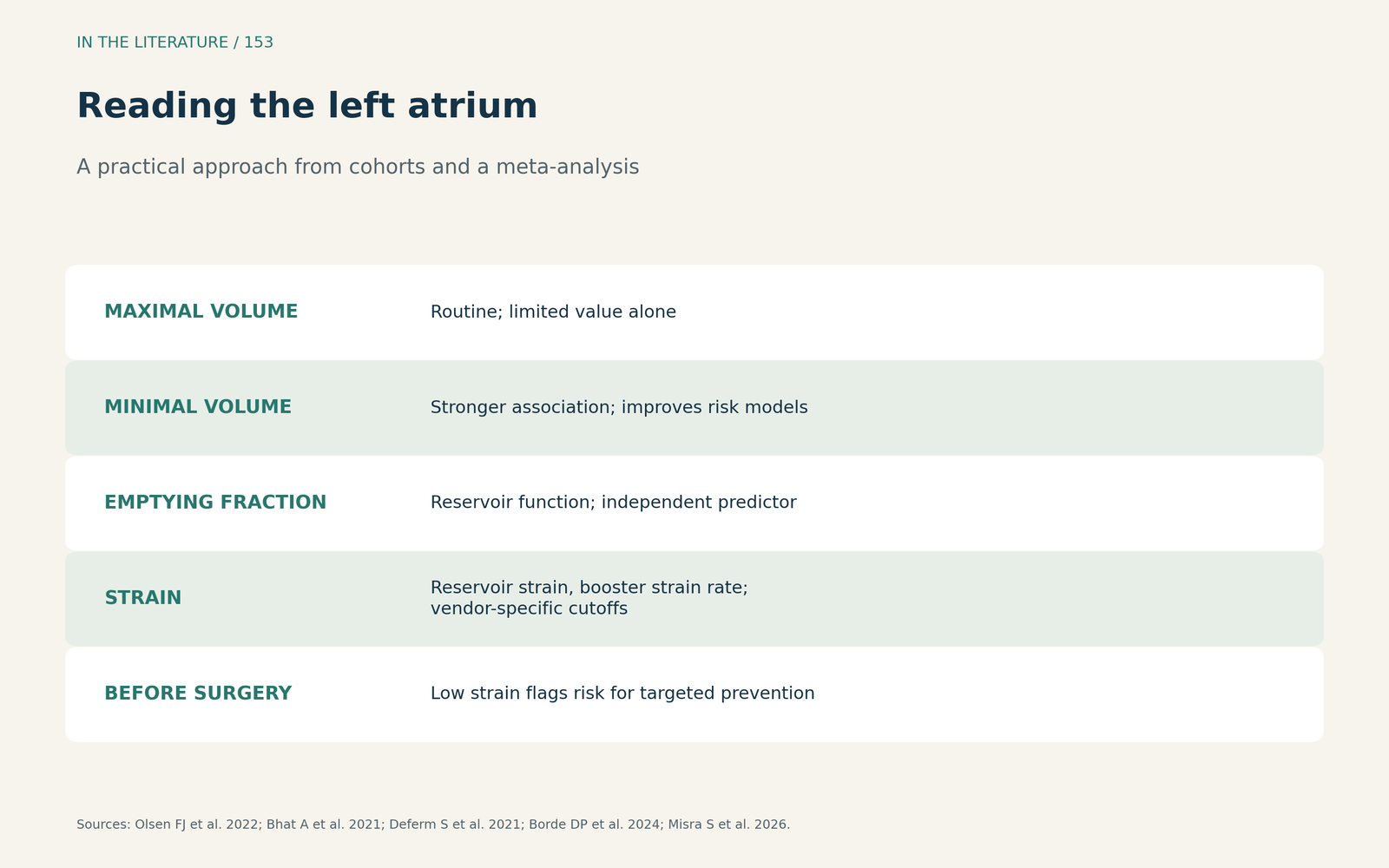
Figure 3. Reading the left atrium. Synthesized from Olsen et al., Bhat et al., Deferm et al., Borde et al. and Misra et al.[1], [2], [4], [5], [6] View larger.

Three takeaways
- Measure minimal volume, not just maximal. It carried the strongest association and improved risk models.[1]
- Add function. Emptying fraction and strain identify risk that size misses.[2], [4]
- Use strain as a screen before surgery. A low reservoir strain flags risk, but a normal value does not settle it and cutoffs vary.[5], [6]
References
- Olsen FJ, Møgelvang R, Modin D, et al. Association between isometric and allometric height-indexed left atrial size and atrial fibrillation. J Am Soc Echocardiogr. 2022;35(2):141–150.e4. doi:10.1016/j.echo.2021.10.010
- Bhat A, Gan GCH, Chen HHL, et al. Association of left atrial metrics with atrial fibrillation rehospitalization and adverse cardiovascular outcomes in patients with nonvalvular atrial fibrillation following index hospitalization. J Am Soc Echocardiogr. 2021;34(10):1046–1055.e3. doi:10.1016/j.echo.2021.06.015
- Benfari G, Skaarup KG, Johansen ND, et al. Left atrial volumetric/mechanical coupling index in the general population: distribution and prediction of incident atrial fibrillation: from the Copenhagen City Heart Study. J Am Soc Echocardiogr. 2023;36(3):339–341. doi:10.1016/j.echo.2022.11.013
- Deferm S, Bertrand PB, Churchill TW, et al. Left atrial mechanics assessed early during hospitalization for cryptogenic stroke are associated with occult atrial fibrillation: a speckle-tracking strain echocardiography study. J Am Soc Echocardiogr. 2021;34(2):156–165. doi:10.1016/j.echo.2020.09.009
- Borde DP, Joshi S, Agrawal A, et al. Left atrial strain to predict postoperative atrial fibrillation in patients undergoing off-pump coronary artery bypass graft. J Cardiothorac Vasc Anesth. 2024;38(11):2582–2591. doi:10.1053/j.jvca.2024.07.047
- Misra S, Das D, Patra TK, Borde DP, Srinivasan A. Predictive value of preoperative left atrial strain parameters on postoperative atrial fibrillation in adults undergoing cardiac surgery: a systematic review and meta-analysis. Interdiscip Cardiovasc Thorac Surg. 2026;41(2):ivag035. doi:10.1093/icvts/ivag035