
ITL-d1a6777b1688
Watch the video

Figure 1. Choosing TXA exposure requires attention to bleeding benefit, neurologic risk and renal clearance. Conceptual illustration.
Key points
- Tranexamic acid (TXA) reduces bleeding and transfusion in cardiac surgery; ATACAS also identified a postoperative seizure signal.[1]
- OPTIMAL found a modest additional reduction in red-cell transfusion with its high-dose infusion regimen compared with its low-dose regimen.[2]
- Noninferiority for a composite safety outcome does not establish equal seizure risk. Review the individual outcomes and the margin used.
- Compare complete regimens—loading dose, infusion, pump prime and duration—not the labels “high” and “low” alone.
- Renal function and cumulative exposure should inform the dosing discussion. The available evidence does not establish one optimal regimen for every patient.
Separate the decision to use TXA from the decision to give more
Before bypass, the team agrees that an antifibrinolytic is indicated. The remaining question is whether the higher TXA regimen offers enough additional benefit to justify the greater exposure in this patient.
ATACAS established a useful starting point. Among 4,631 coronary-surgery patients with available operative outcomes, TXA reduced reoperation for major hemorrhage or tamponade from 2.8% to 1.4%. Postoperative seizures occurred in 15 TXA recipients and two placebo recipients, approximately 0.7% versus 0.1%.[1] The benefit and the neurologic signal therefore belong in the same conversation.
ATACAS used a single intravenous dose, initially 100 mg/kg and subsequently 50 mg/kg after a protocol amendment. Those doses were used in different periods; patients were not randomized between 100 and 50 mg/kg. The study should not be treated as a definitive randomized comparison of those two doses.[1]
OPTIMAL directly compared two infusion strategies in adults undergoing cardiac surgery with bypass. Figure 2 shows the complete regimens. It is a description of the study, not a dosing instruction for patients with impaired clearance or other contraindications.[2]
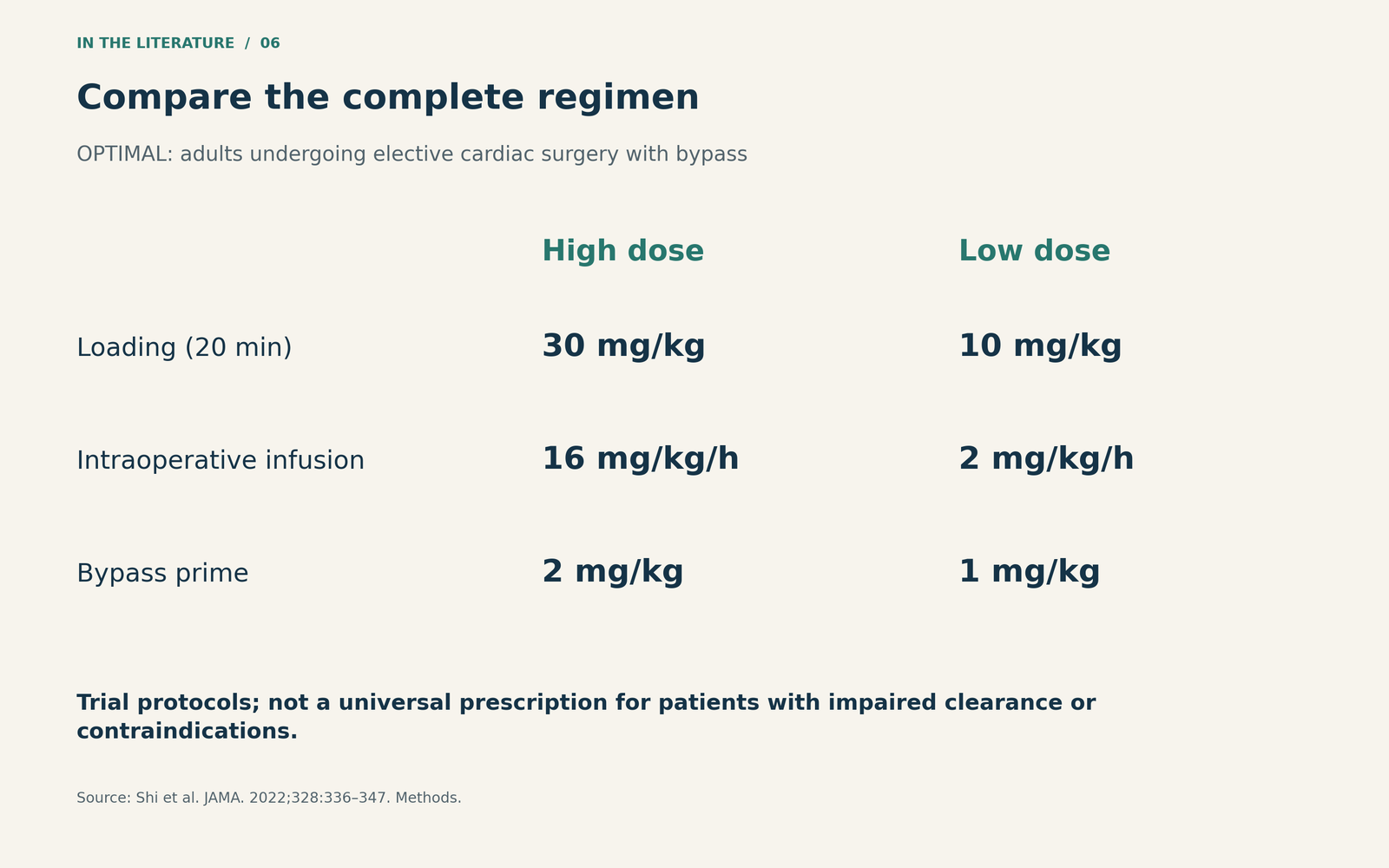
Figure 2. “High” and “low” refer to these specific protocols. Both included a loading dose, an intraoperative infusion and a bypass-prime dose; the loading dose was infused over 20 minutes.[2]

What did the additional exposure buy?
OPTIMAL randomized 3,079 patients aged 18–70 years undergoing elective surgery at four Chinese centers; 3,031 completed the intervention without the protocol violations excluded from the efficacy analysis. Red-cell transfusion from operation start to discharge occurred in 333/1,525 high-dose patients (21.8%) and 391/1,506 low-dose patients (26.0%). The reported absolute reduction was 4.1 percentage points.[2]
The 30-day safety composite included seizures, stage 2–3 kidney dysfunction, thrombotic events and death. It occurred in 265/1,502 patients (17.6%) versus 249/1,481 (16.8%). High-dose treatment met the prespecified noninferiority criterion: the upper one-sided 97.55% confidence bound for excess risk was 3.9 percentage points, below the five-point margin. This result concerns the composite, not each component.[2]
Clinical seizures occurred in 15 versus six patients, 1.0% versus 0.4%; the relative risk was 2.47 (95% CI, 0.96–6.35; P=.05). The uncertainty includes clinically important harm. “No statistically significant difference” is therefore an inadequate shorthand for choosing a dose.[2]
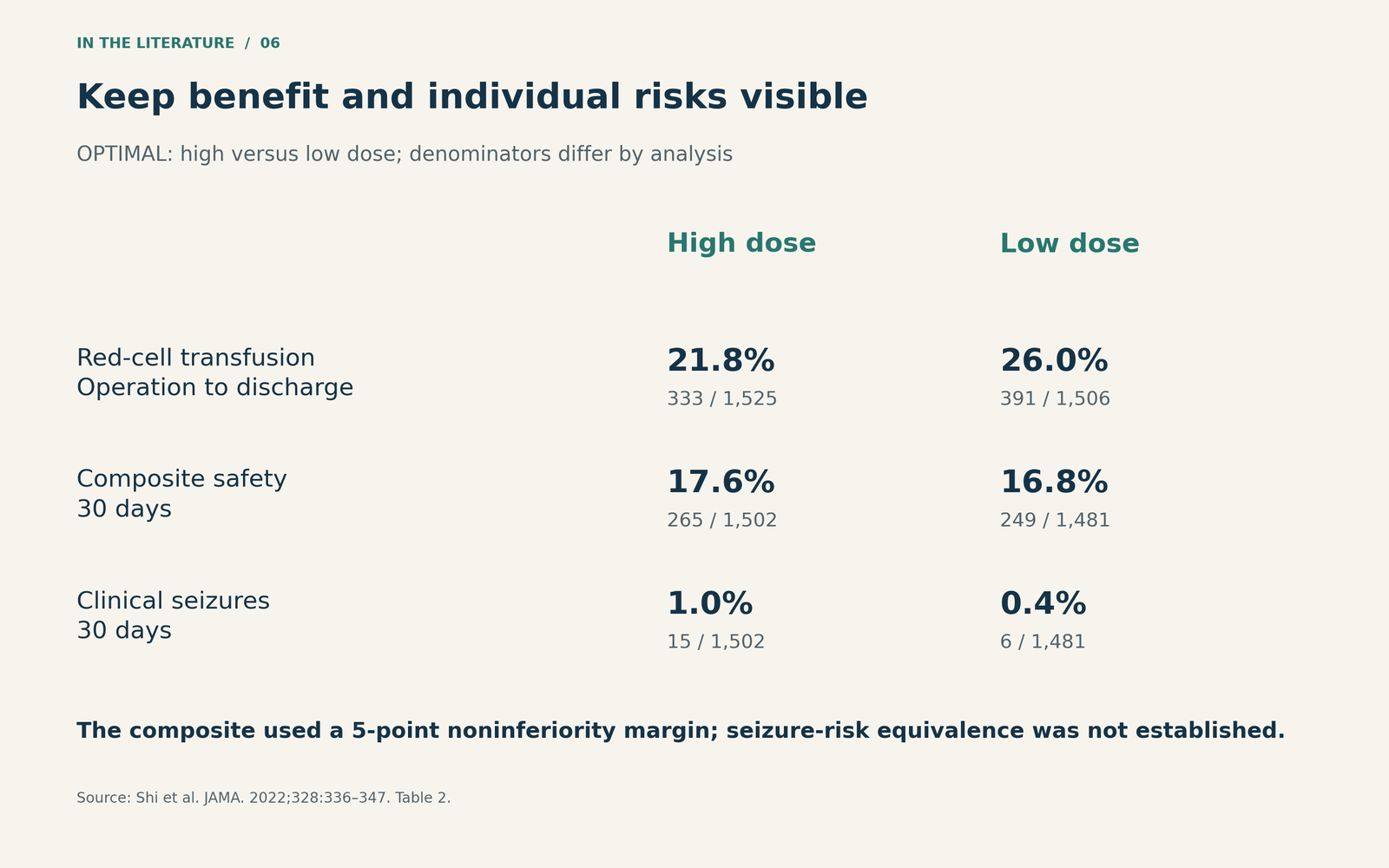
Figure 3. The efficacy analysis and 30-day safety analysis used different denominators. The composite met a five-percentage-point noninferiority margin; this does not establish seizure-risk equivalence.[2]

Let the patient change the dosing discussion
The EACTS/EACTAIC blood-management guideline recommends antifibrinolytic therapy to reduce bleeding, transfusion and reoperation in cardiac surgery. It also states that optimal TXA dosing and adjustments for reduced renal function remain incompletely defined.[3] These two positions are compatible: a treatment can be useful while its best dose remains uncertain.
Renal function matters because TXA is predominantly eliminated in urine. In a 2025 prospective pharmacokinetic study, Nakai and colleagues analyzed 453 samples from 77 patients undergoing surgery with bypass. Body weight and creatinine clearance helped explain the variation in TXA concentrations. Patients receiving hemodialysis were excluded.[4]
That study supports attention to exposure and renal clearance. It does not prove that its model-derived dosing approach reduces seizures or improves clinical outcomes. Likewise, a pharmacokinetic target is not automatically the concentration that best balances bleeding and adverse effects for an individual patient.
The practical response is to make renal adjustment explicit in the institutional protocol, with pharmacy input where needed. Confirm the renal estimate used, whether it is stable, which part of the regimen is adjusted, and how cumulative dosing is tracked. Avoid silently converting a trial regimen into a universal prescription.
Review the whole exposure before adding another dose
An infusion accumulates over time. A long procedure, a repeat bypass run or an additional bolus changes total exposure even when the prescribed hourly rate is unchanged. A useful handoff therefore communicates what was actually administered: loading dose, pump-prime contribution, infusion duration and any extra doses.
If bleeding continues, revisit the mechanism. TXA addresses fibrinolysis; it does not replace surgical hemostasis or correct every fibrinogen, platelet or coagulation-factor deficit. The guideline places antifibrinolysis within a broader blood-management strategy.[3] More bleeding is not, by itself, proof that more TXA is the missing treatment.
For a patient with substantial expected bleeding risk, the incremental transfusion benefit may matter. For a patient in whom accumulation or neurologic risk is a particular concern, minimizing avoidable exposure may matter more. This is an individualized clinical judgment within a protocol, not a subgroup treatment rule proven by these trials.
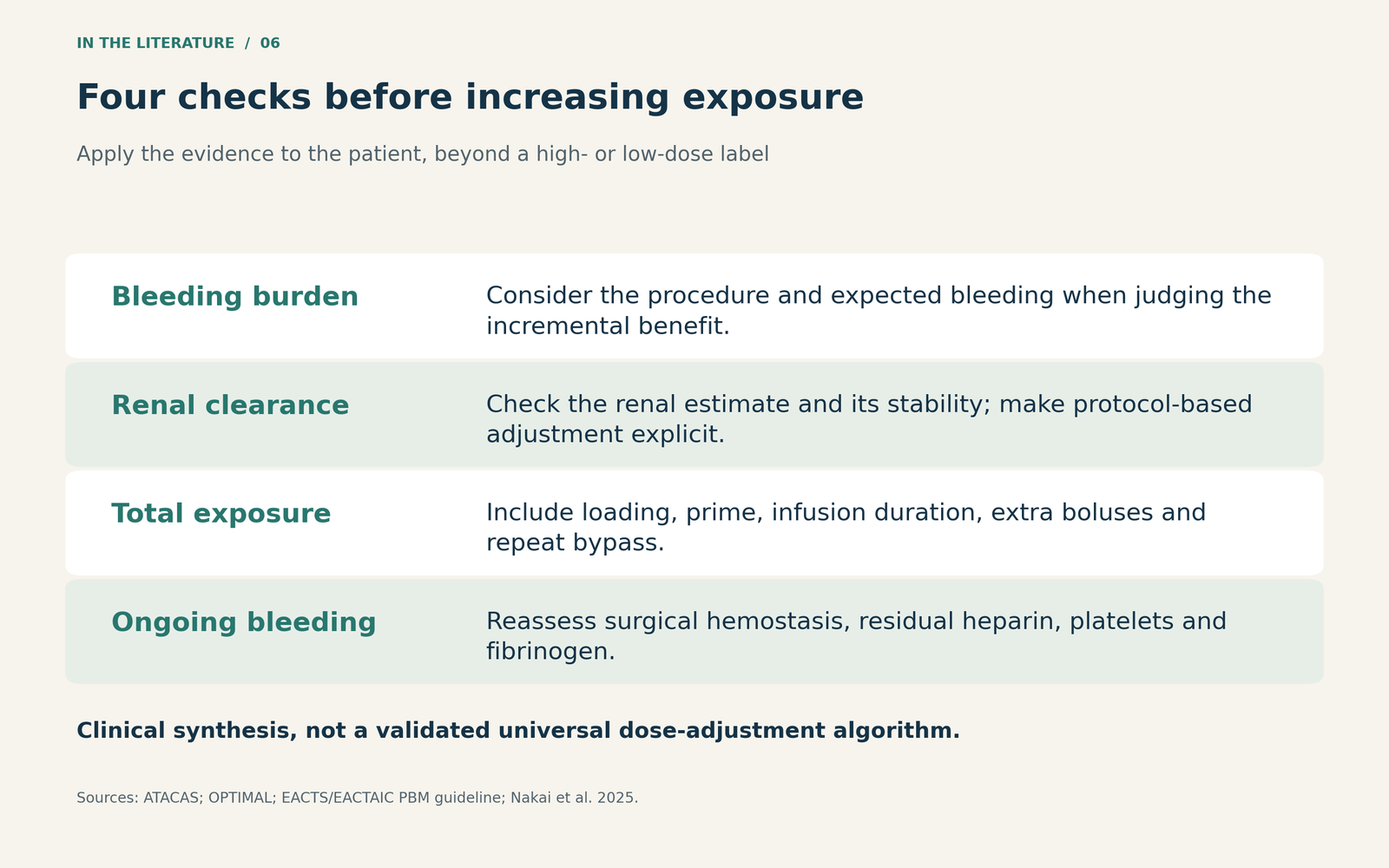
Figure 4. A dosing discussion that stays connected to the patient. Clinical synthesis of the trial, guideline and pharmacokinetic evidence; no universal dose-adjustment formula is implied.[1, 2, 3, 4]

Three takeaways
- Use the correct comparison. Evidence favoring TXA over placebo does not establish that a higher TXA dose is always preferable.
- Keep the safety components visible. Composite noninferiority cannot dismiss uncertainty about seizures.
- Manage exposure deliberately. Review renal function, the complete regimen and cumulative dose, and reassess the cause of persistent bleeding before escalating therapy.
References
- Myles PS, Smith JA, Forbes A, et al. Tranexamic acid in patients undergoing coronary-artery surgery. N Engl J Med. 2017;376(2):136–148. doi:10.1056/NEJMoa1606424.
- Shi J, Zhou C, Pan W, et al. Effect of high- vs low-dose tranexamic acid infusion on need for red blood cell transfusion and adverse events in patients undergoing cardiac surgery: the OPTIMAL randomized clinical trial. JAMA. 2022;328(4):336–347. doi:10.1001/jama.2022.10725.
- Casselman FPA, Lance MD, Ahmed A, et al. 2024 EACTS/EACTAIC Guidelines on patient blood management in adult cardiac surgery in collaboration with EBCP. Eur J Cardiothorac Surg. 2025;67(5):ezae352. doi:10.1093/ejcts/ezae352.
- Nakai T, Tamura T, Miyagawa Y, et al. Population pharmacokinetic model of tranexamic acid in patients who undergo cardiac surgery with cardiopulmonary bypass. Eur J Clin Pharmacol. 2025;81:441–449. doi:10.1007/s00228-025-03802-0.