ITL-45882a9b48f6
Watch the video
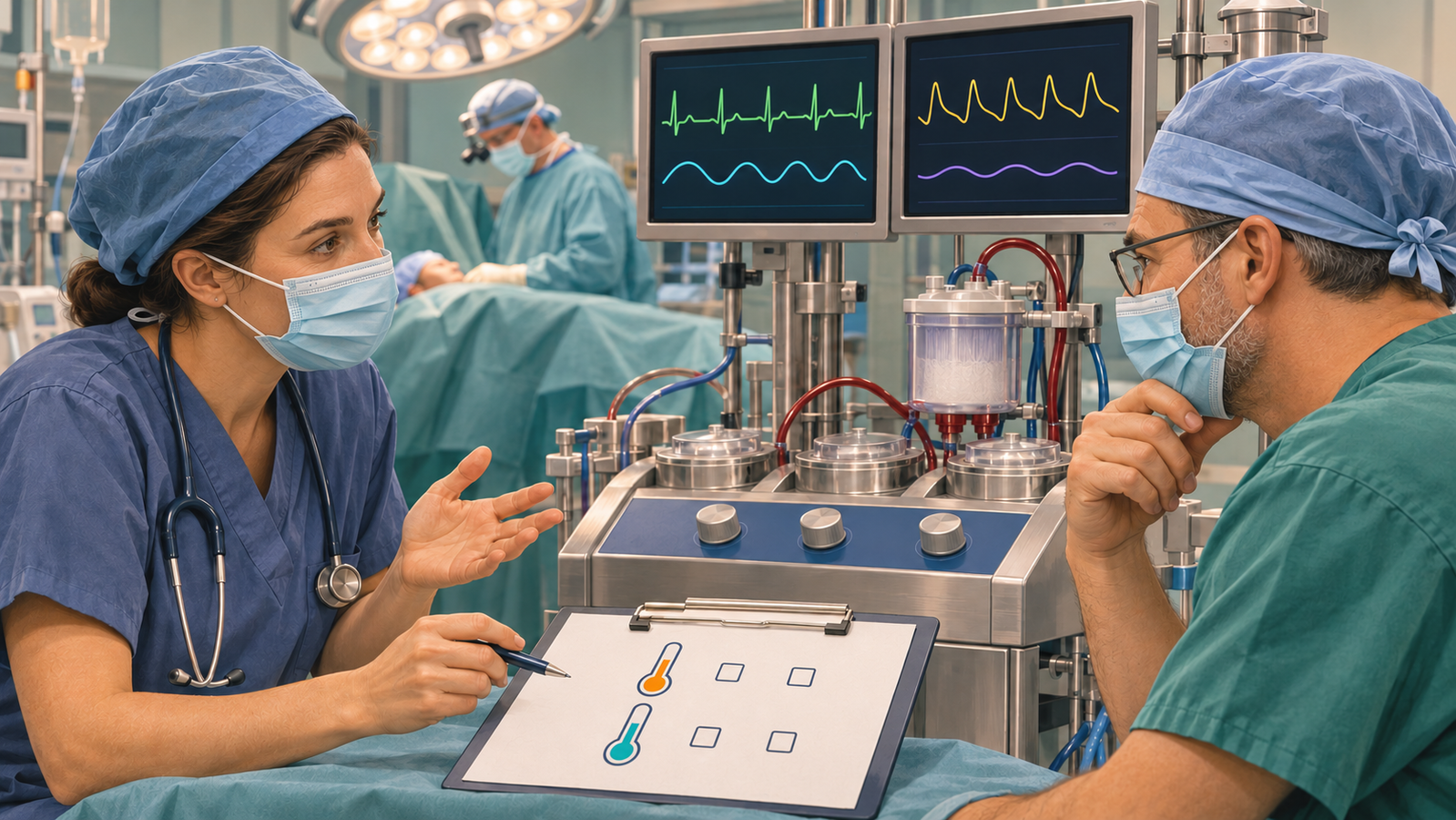
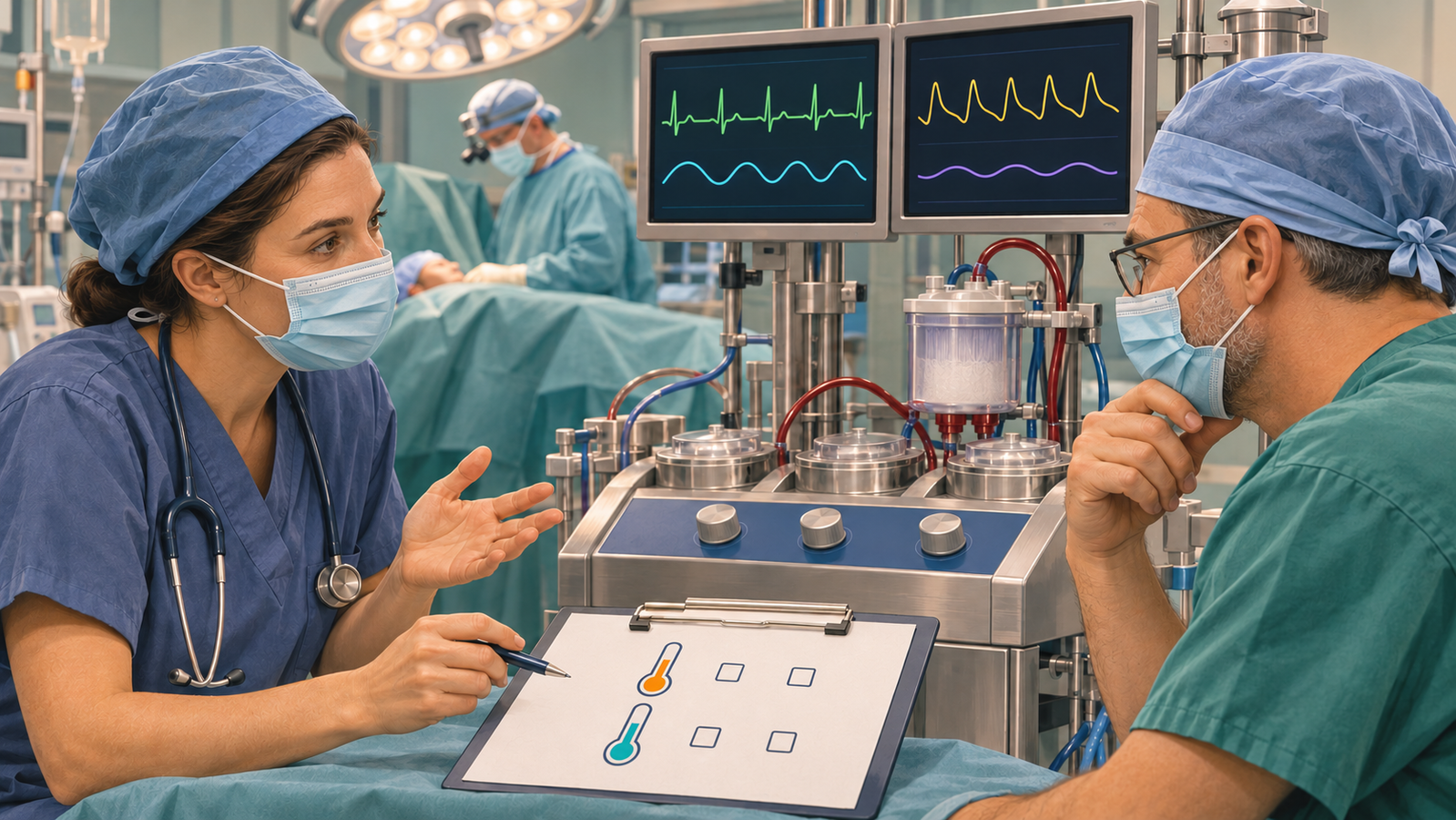
Figure 1. Temperature selection is a team decision about perfusion, repair complexity, and time. Conceptual illustration.
Key points
- GOT ICE supports low-moderate hypothermia with antegrade cerebral perfusion for preserving the primary four-week global cognitive outcome compared with deep hypothermia.
- High-moderate versus deep hypothermia was tested with a different hypothesis; failure to show superiority is not proof of noninferiority.
- The trial mainly involved elective hemiarch repair with relatively short lower-body arrest. Its reassurance is less direct for prolonged or emergency reconstruction.
- The 2024 EACTS/STS guideline supports high-moderate hypothermia with cerebral perfusion for hemiarch replacement, while requiring an individualized temperature and protection plan.
- The brain receiving antegrade perfusion does not mean the spinal cord, kidneys, and viscera are receiving equivalent protection.
The surgeon anticipates a short hemiarch reconstruction with antegrade cerebral perfusion (ACP). Should the patient still be cooled to 18°C, or is a moderate temperature reasonable? A useful answer must specify the perfusion strategy and expected duration of lower-body ischemia.
GOT ICE provides the most direct randomized evidence for this discussion. It supports moving beyond the assumption that every elective arch repair requires deep cooling, but it does not establish a single temperature for every operation.[1]
What did GOT ICE actually compare?
Four US referral centers randomized 282 adults scheduled for elective arch surgery; 273 underwent surgery. All three temperature strategies used cold unilateral ACP, with conversion to bilateral perfusion allowed when monitoring suggested a need. The groups were deep (≤20.0°C), low-moderate (20.1–24.0°C), and high-moderate (24.1–28.0°C). This was not a comparison of moderate hypothermia plus ACP against deep hypothermia without cerebral perfusion.[1]
The operation matters. Of the 273 treated patients, 251 underwent hemiarch and 22 total arch repair. Median lower-body arrest was 16 minutes for hemiarch versus 65 minutes for total arch repair. A result dominated by short elective hemiarch procedures should not be turned into permission for an indefinitely prolonged warm arrest.[1]
The EACTS/STS guideline uses these temperature categories with rectal or bladder core temperature as the reference for lower-body hypothermia and recommends monitoring nasopharyngeal temperature as well. When communicating a target, name the measurement site; “26 degrees” alone is incomplete.[2]
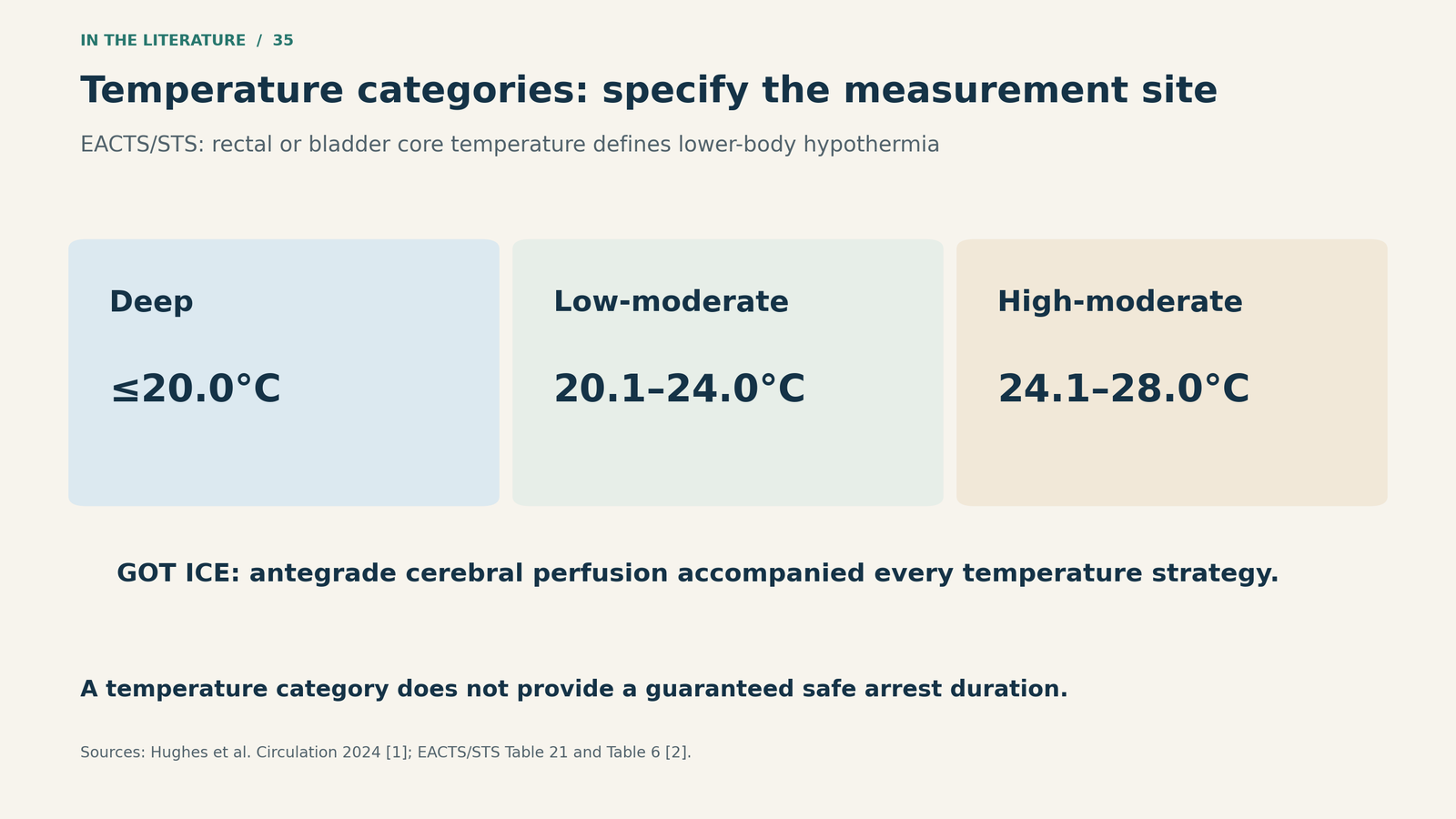
Figure 2. Current EACTS/STS temperature categories use core temperature for lower-body arrest. GOT ICE studied the same numerical ranges with ACP in every group; the ranges should not be interpreted independently of perfusion and time.[1, 2]

Two primary comparisons, two different conclusions
The primary endpoint was the change in a composite global cognitive score from baseline to four weeks. For low-moderate versus deep hypothermia, the trial asked a noninferiority question. The lower confidence bound was −0.15, above the prespecified −0.20 margin, so noninferiority was established for that endpoint.[1]
For deep versus high-moderate hypothermia, the trial instead asked whether deep cooling was superior. The mean difference was 0.06 (97.5% CI, −0.07 to 0.19; P=.32). Superiority was not demonstrated. That is a different result from proving that high-moderate cooling is noninferior.
The secondary results also deserve attention. Structured verbal memory was better preserved with deep than high-moderate cooling, and low-moderate noninferiority was not established for that domain. These findings do not overturn the primary result, but they prevent the shorthand “all cognitive outcomes were equivalent.” Mortality and major morbidity did not differ significantly; the trial was not designed to prove equivalence for uncommon clinical events.[1]
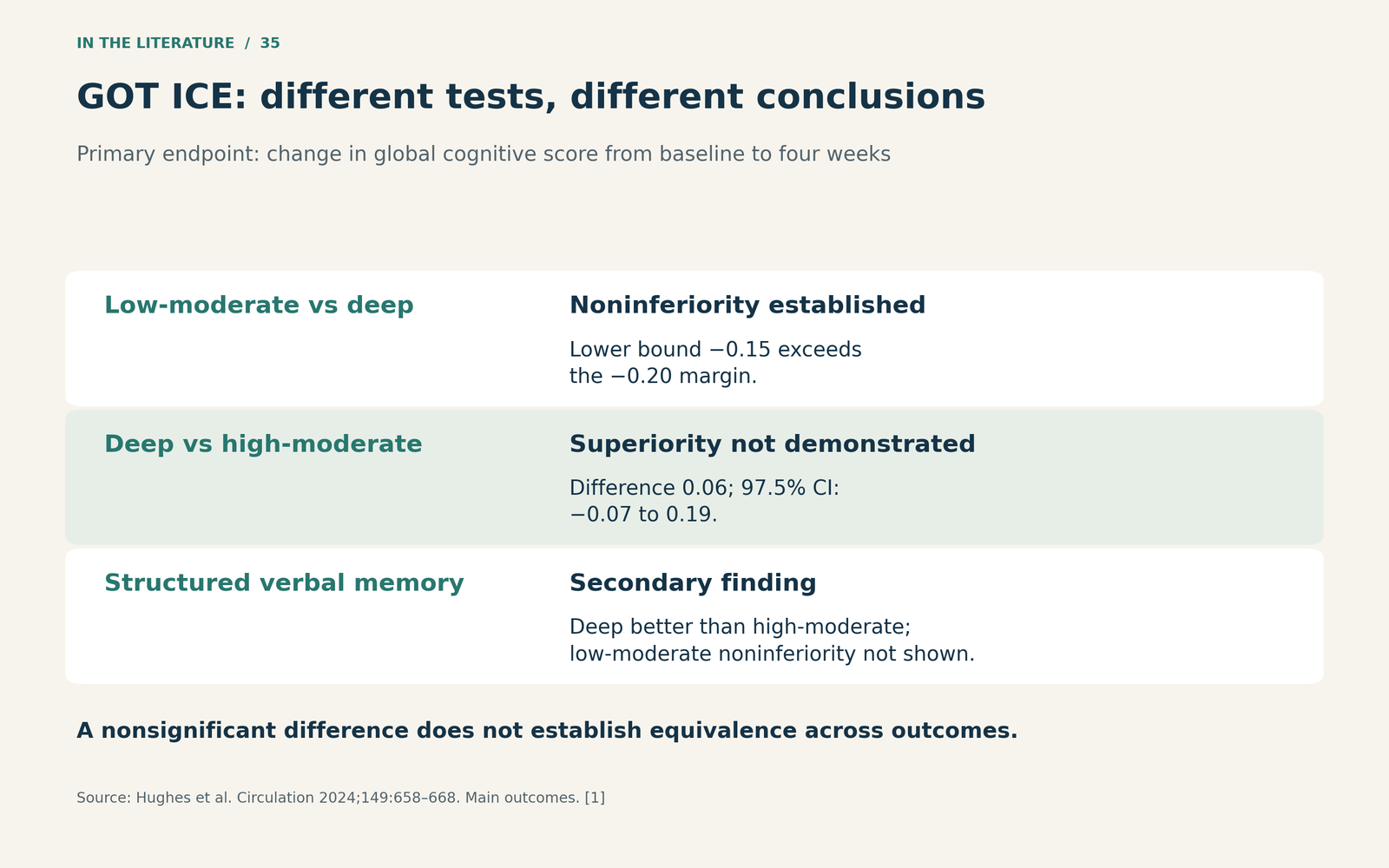
Figure 3. Read the hypothesis before interpreting the P value. The successful low-moderate noninferiority comparison cannot be reassigned to the high-moderate group.[1]

Deep cooling took longer in the trial. Total transfused blood-product volume was also greater in that group, but this did not translate into demonstrated differences in re-exploration for bleeding or major clinical outcomes. Total bypass and rewarming times were not significantly different. Thus, less cooling does not automatically mean every aspect of the case will be faster or clinically better.[1]
Use the guideline without losing the individual patient
The 2024 EACTS/STS guideline recommends high-moderate lower-body arrest with cerebral perfusion for hemiarch replacement (Class I, Level C). For complex arch procedures, high-moderate arrest with selective ACP should be considered (Class IIa, Level B). The same table says to determine the target temperature and cerebral-protection method from repair extent, expected lower-body arrest duration, and preoperative malperfusion.[2]
This is a practical starting point, not an instruction to use 28°C regardless of what develops. Before arrest, the team should agree on the likely repair duration, the adequacy and monitoring of cerebral perfusion, and what will change if the repair becomes more extensive or perfusion is unsatisfactory. Cerebral flow does not restore ordinary systemic flow to every unperfused organ. Longer lower-body ischemia therefore requires its own protection discussion.
During the case, use both core and nasopharyngeal temperature measurements and bilateral cerebral oximetry within a defined response plan. For rewarming, the guideline recommends keeping the arterial bypass outlet temperature below 37°C to avoid hyperthermic perfusion.[2]
A warmer strategy still needs neurological follow-up
The October 2026 GOT ICE delirium analysis adds a useful reminder. Its abstract, the accessible report for this update, describes delirium in 34.6% of 269 patients with complete assessments, without a significant difference between temperature groups. Delirium was associated with worse subsequent cognitive outcomes. This is an association within the trial cohort, not evidence that delirium itself caused the later changes.[3]
The clinical implication is to avoid treating a completed operation without obvious stroke as the whole neurological outcome. Temperature choice belongs alongside postoperative delirium assessment and attention to cognitive recovery.
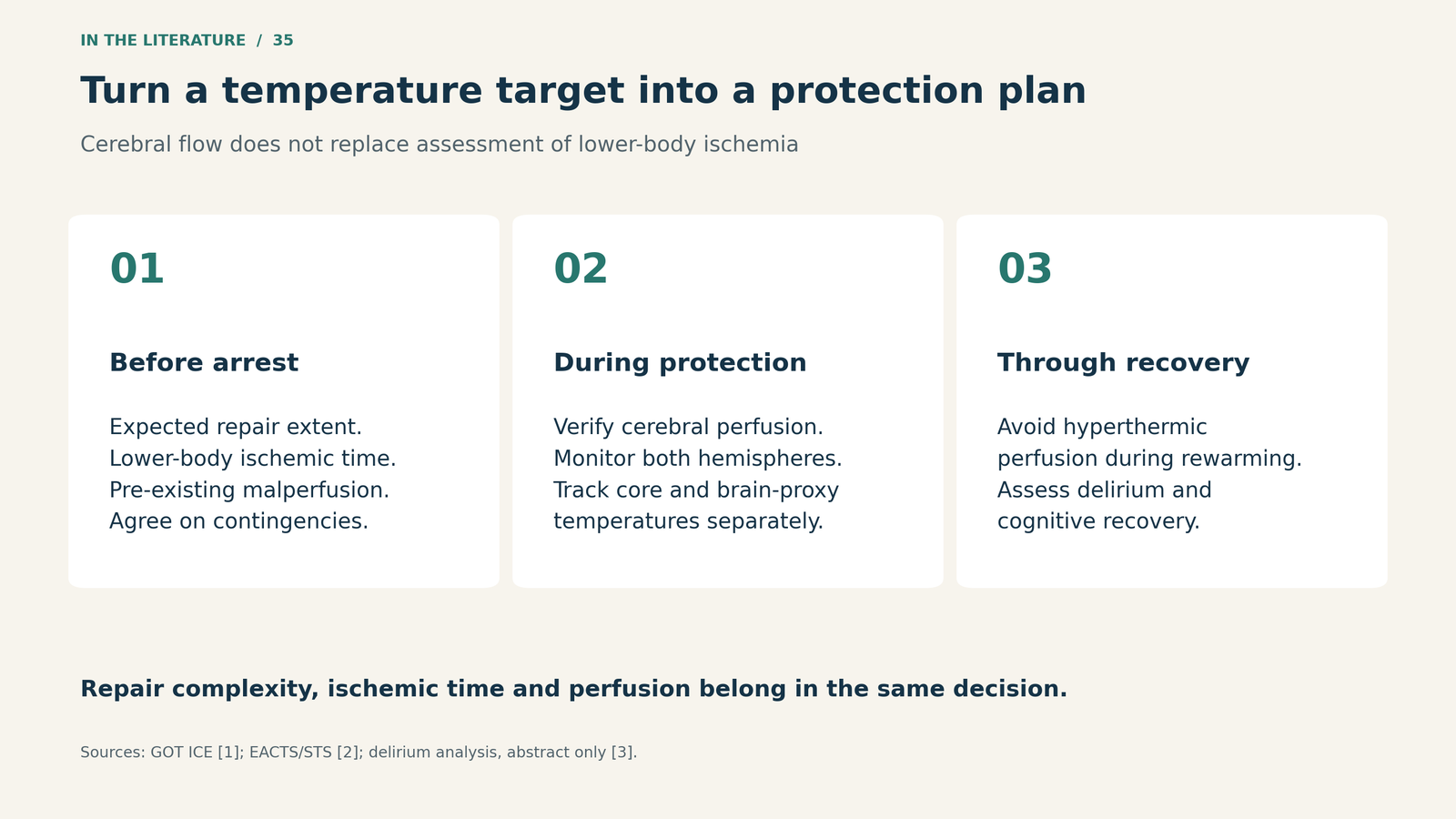
Figure 4. Translate a temperature choice into an organ-protection plan. These are discussion priorities, not a validated score or a guaranteed safe arrest duration.[1, 2, 3]

Three takeaways
- Moderate cooling with ACP is supported for appropriate elective arch cases. Know which temperature range and endpoint the randomized evidence actually supports.
- Let repair extent, ischemic time, and perfusion determine the plan. A guideline temperature band does not replace whole-body protection.
- Keep cognitive outcomes visible. A null stroke comparison does not establish equivalent cognition or eliminate the need to assess delirium and recovery.
References
- Hughes GC, Chen EP, Browndyke JN, Szeto WY, DiMaio JM, Brinkman WT, et al. Cognitive effects of body temperature during hypothermic circulatory arrest trial (GOT ICE): a randomized clinical trial comparing outcomes after aortic arch surgery. Circulation. 2024;149(9):658–668. doi:10.1161/CIRCULATIONAHA.123.067022.
- Czerny M, Grabenwöger M, Berger T, Aboyans V, Della Corte A, Chen EP, et al. EACTS/STS Guidelines for diagnosing and treating acute and chronic syndromes of the aortic organ. Eur J Cardiothorac Surg. 2024;65(2):ezad426. doi:10.1093/ejcts/ezad426.
- Hughes GC, Browndyke JN, Chen EP, Szeto WY, DiMaio JM, Brinkman WT, et al. Delirium after aortic arch surgery with hypothermic circulatory arrest: clinical and neuroimaging insights from the GOT ICE randomized trial. Ann Thorac Surg. Published online October 8, 2026. doi:10.1016/j.athoracsur.2026.09.046. Abstract only.