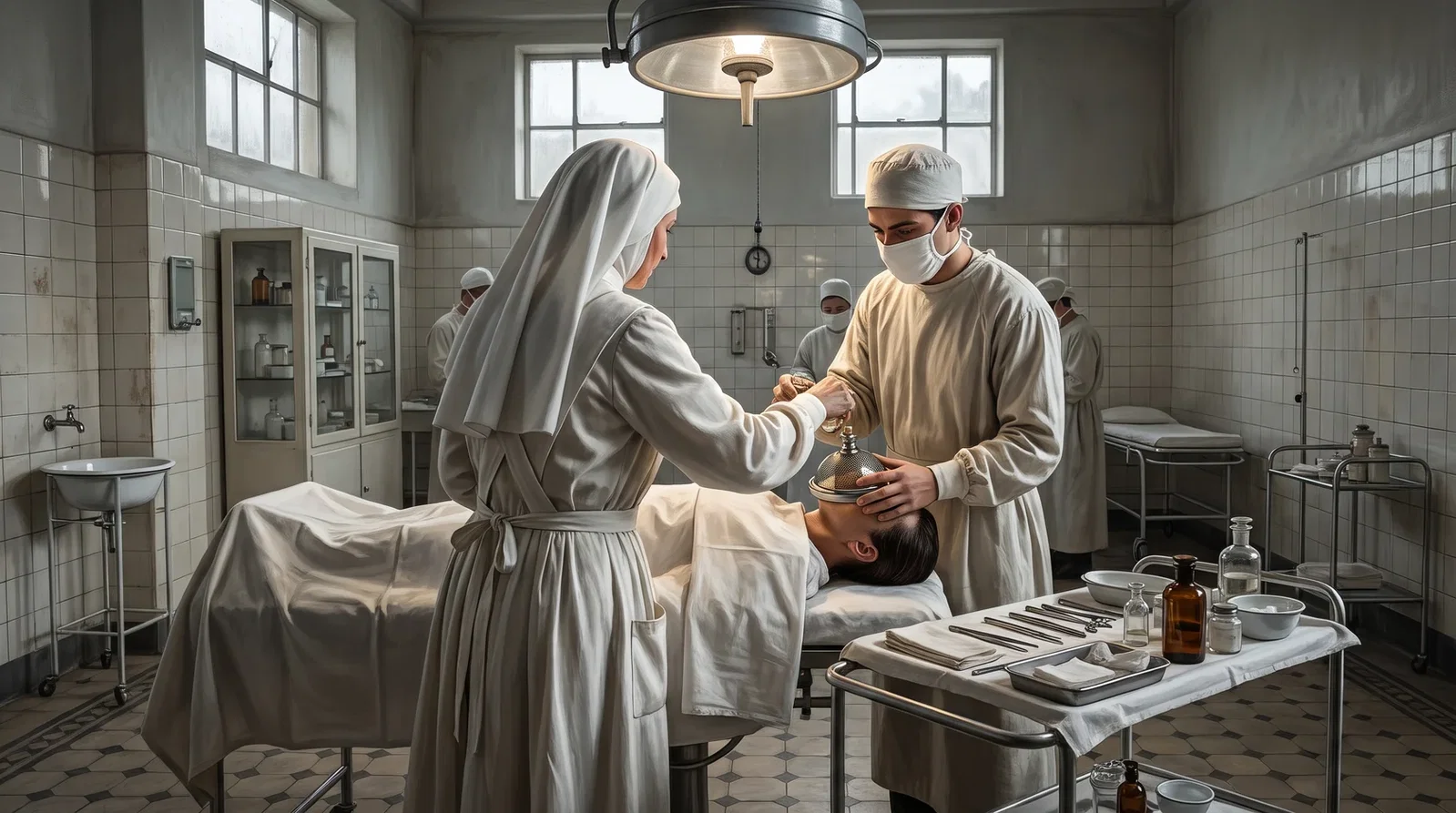
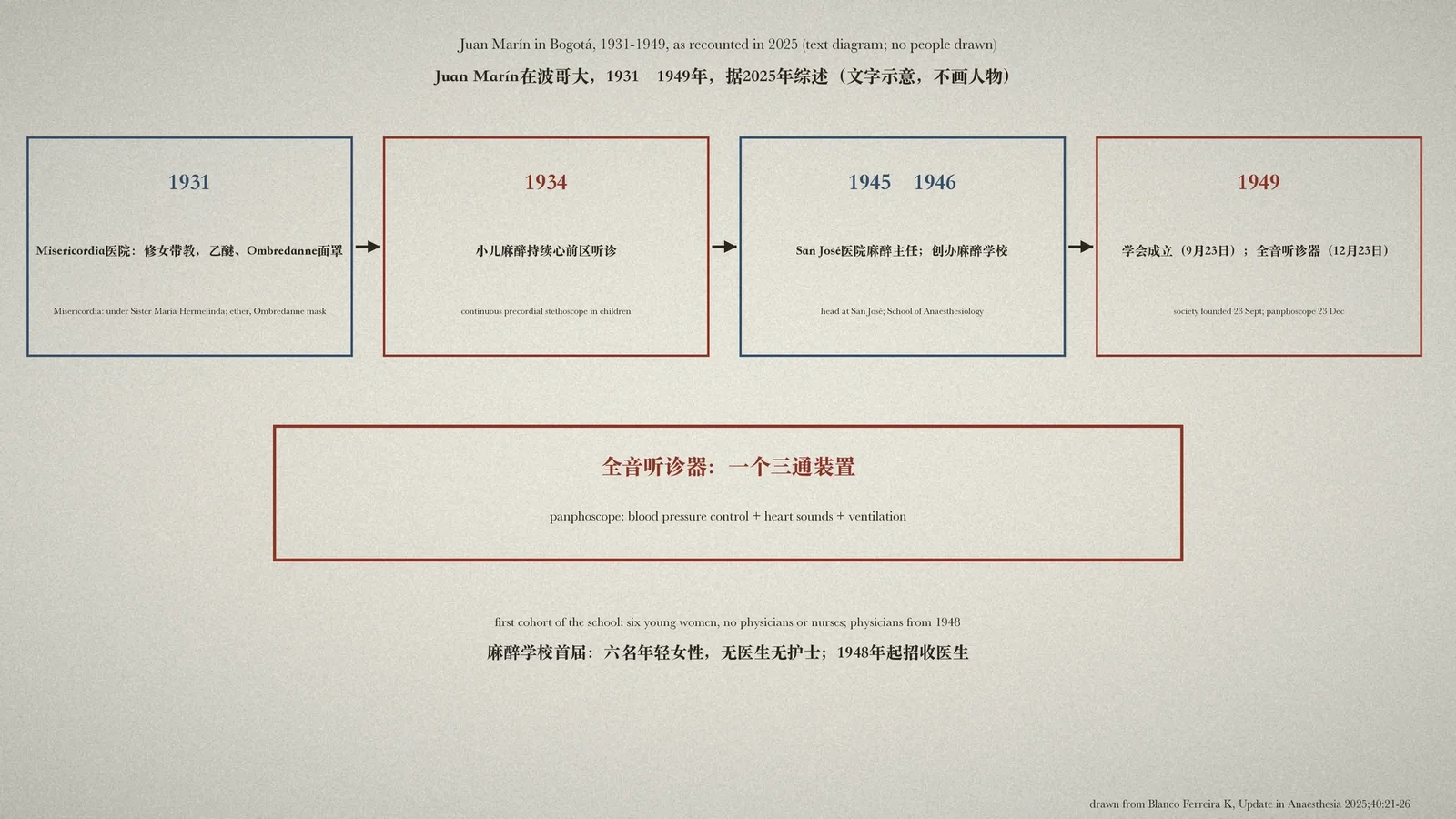
Karolyna Blanco Ferreira's review 'History of anaesthesiology in Colombia' in the WFSA's Update in Anaesthesia vol. 40 (October 2025) records that in the early twentieth century anaesthesia in Colombia was often left to empirically trained staff, most often nuns; that in 1931 Juan Marín Osorio, later called the father of Colombian anaesthesia, gave his first anaesthetic, ether by Ombredanne mask for an appendectomy at the Hospital de la Misericordia in Bogotá, under the tutelage of Sister María Hermelinda, a nun and staff chloroformist; that from 1934 he used a precordial stethoscope continuously in children; that as head of anaesthesia at Hospital San José from 1945 he founded a school of anaesthesiology the following year; and that after the Colombian Society of Anaesthesia was founded on 23 September 1949 he presented on 23 December the panphoscope, a three-way device for blood pressure and monitoring of heart sounds and ventilation.
Reading Library · Anesthesia Epochs · 中文版
Watch the education video (for clinicians)
1931: Juan Marín in Bogotá — Precordial Listening and a School · Anesthesia Epochs Education Series
In many countries the modern specialty of anaesthesia began with a doctor learning from someone who was not a doctor. In Colombia that someone was a hospital nun. The 2025 history issue of Update in Anaesthesia, published by the World Federation of Societies of Anaesthesiologists (WFSA), includes a review of the history of anaesthesiology in Colombia that tells the story of Juan Marín Osorio, called the father of Colombian anaesthesia. This article reads that review. [1, p. 21][1, p. 23]
A review
The author, Karolyna Blanco Ferreira, is a Colombian anaesthesiologist involved in residency teaching. The review divides Colombian anaesthesia history into six periods and rests mainly on Herrera Pontón's 1999 history of anaesthesia in Colombia and Ocampo and Peña's 2012 book on pioneers and notable figures. [1, p. 21][1, p. 26]
After an early period of growth, the review says, anaesthesia was for a time no longer given by physicians but by empirically trained personnel, most often nuns and not infrequently non-medical technicians, such as the hospital electrician, or surgical trainees. [1, p. 23]
Taught by a nun
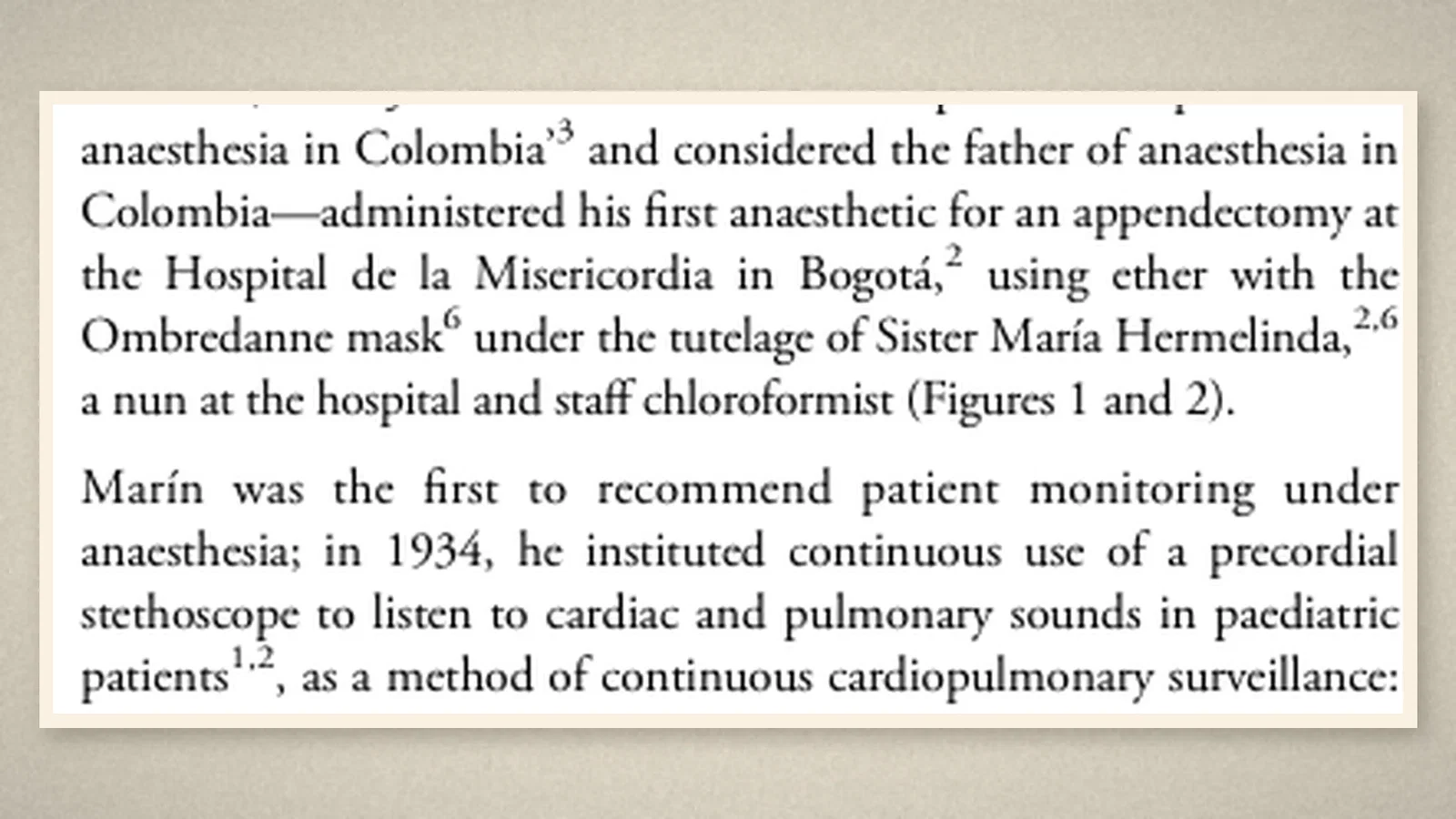
In 1931 Juan Marín Osorio, later called the "pioneer of pioneers of anaesthesia in Colombia", gave the first anaesthetic of a long career, for an appendectomy at the Hospital de la Misericordia in Bogotá, using ether with the Ombredanne mask under the tutelage of Sister María Hermelinda, a nun at the hospital and its staff chloroformist. [1, p. 23]
Marín, the review says, advocated monitoring patients under anaesthesia: from 1934 Marín used a precordial stethoscope continuously to listen to heart and lung sounds in children, as continuous cardiopulmonary surveillance, so that "arrhythmias and cardiac arrest can be identified when they occur". [1, p. 23]
A school
In 1945 Marín became head of anaesthesia at Hospital San José, beginning, as Ocampo and Peña put it, the era of teaching and formal training in the specialty. Convinced that some physicians should be dedicated exclusively to anaesthesia, Marín founded the School of Anaesthesiology at Hospital San José the following year, 1946. Its first cohort included neither physicians nor nurses, only six young women, daughters of physicians, and hospital leaders; physicians were admitted from 1948, and Marín went on teaching both physicians and women students. [1, pp. 23-24]
A society and an instrument
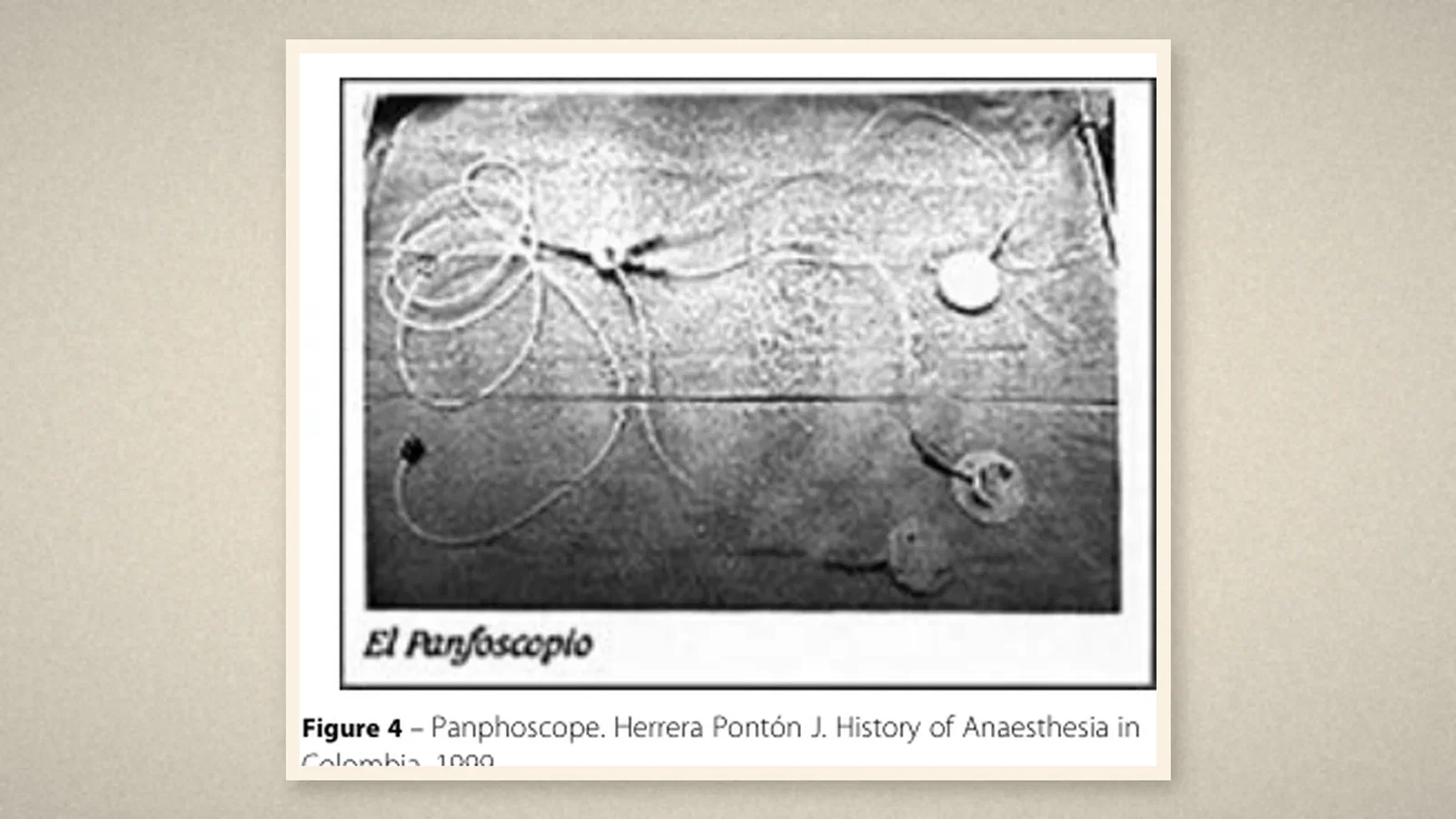
On 23 September 1949, in the session hall of Hospital San José, Bogotá's anaesthetists founded the Colombian Society of Anaesthesia, and departmental societies followed. Elected president unanimously, Marín declined and asked to serve as secretary. At the society's next meeting, on 23 December, Marín presented the panphoscope, a three-way device that allowed blood pressure control and monitoring of heart sounds and ventilation. [1, p. 24]
Prompted by a student's suggestion in 1947, Marín also designed a crest for anaesthesiologists, completed in 1948, with its legend changed in 1950 to "Anaesthesia Deorum Ars". According to the review, the crest was later adopted by the Latin American Confederation of Anaesthesiology, and in 1971 the WFSA asked Marín's permission to turn it into the presidential medallion worn on ceremonial occasions. In 1983 the Colombian Society of Anaesthesiology and Resuscitation created the Gold Ombredanne award and gave it to Marín. [1, pp. 24-26]
What the record shows
Marín's story shows how plain a specialty's beginnings can be: a nun's instruction, a precordial stethoscope, a school of six students. It also shows that continuous listening to the patient's heart and lungs was recognised early as a basic duty of the anaesthetist.
Sources and reading limits
Read: Karolyna Blanco Ferreira, "History of anaesthesiology in Colombia", Update in Anaesthesia vol. 40 (October 2025), pp. 21-26, in full, with the issue's front matter. Page images of pp. 21, 23 and 24 checked; the review's photographs of Marín, Sister María Hermelinda and an operating theatre (Figures 1-3) are not used.
Not covered: Herrera Pontón's 1999 history and Ocampo and Peña's 2012 book; any document from 1931-1949.
Limits: this article rests on a 2025 secondary review; wording such as "first to recommend monitoring" or "the country's first" school is the review's own.
Three illustrations are taken from the issue of Update in Anaesthesia (p. 21, p. 23, Figure 4 on p. 24). One is a text diagram drawn from the review, with no people drawn.
- Blanco Ferreira K. History of anaesthesiology in Colombia. Update in Anaesthesia. 2025;40:21-26. PDF
Continue exploring
Related reading connects shared questions and contexts; it does not by itself establish historical influence.
Anesthesia Epochs · The Source Room · About & Editorial Method
Published November 4, 2026. Sources and reading limits are stated above. Illustrations are labelled as original source images or AI-made. Historical accounts are educational; they are not current treatment instructions.