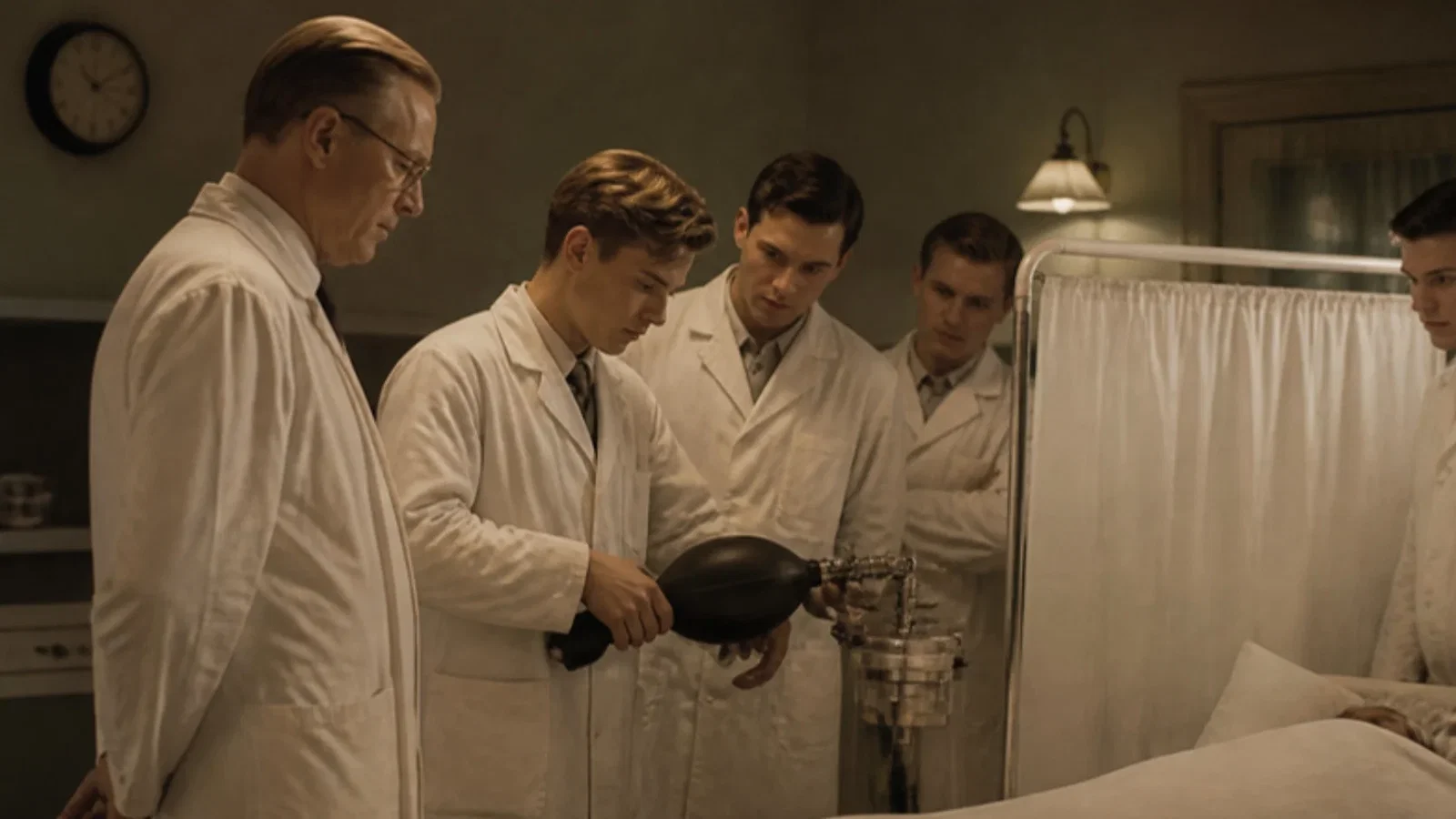
The 1952 poliomyelitis epidemic in Copenhagen had shown that tracheotomy and positive-pressure ventilation could save patients with bulbar paralysis. In May 1953 Mogens Bjørneboe, the anaesthetist Bjørn Ibsen and Steen Johnsen of the Blegdam Hospital applied the same method to a moribund ten-year-old boy with tetanus: under nitrous oxide-oxygen anaesthesia and complete curarisation with d-tubocurarine, the boy was ventilated by hand with intermittent positive pressure through a cuffed tracheotomy tube and a to-and-fro absorber for seventeen days, and three months later was a 'perfectly normal boy'. The case appeared in Danish in 1953 and in English in the Danish Medical Bulletin and The Lancet in 1954.
Reading Library · Anesthesia Epochs · 中文版
Watch the education video (for clinicians)
1953: Seventeen Days of Breathing by Hand — Copenhagen · Anesthesia Epochs Education Series
The Copenhagen poliomyelitis epidemic of 1952 is remembered as the moment when an anaesthetist's methods, a tracheotomy and a bag squeezed by hand, kept paralysed patients alive for weeks. Less remembered is what the same team did next. In May 1953, at the Blegdam Hospital, they used those methods on a different disease: a child dying of tetanus. [1][2]
The case
The English account appeared in the Danish Medical Bulletin in October 1954, under the title "Tetanus: a case treated with artificial respiration during 17 days", by Mogens Bjørneboe, Bjørn Ibsen and Steen Johnsen, from the Blegdam Hospital, whose chief was H. C. A. Lassen. Several recent reports, they noted, had described excellent results in severe tetanus with "tracheotomy, barbiturates, avertin, curarising drugs, and artificial ventilation" in different combinations; each new case was worth reporting until more was known. [1, p. 129]
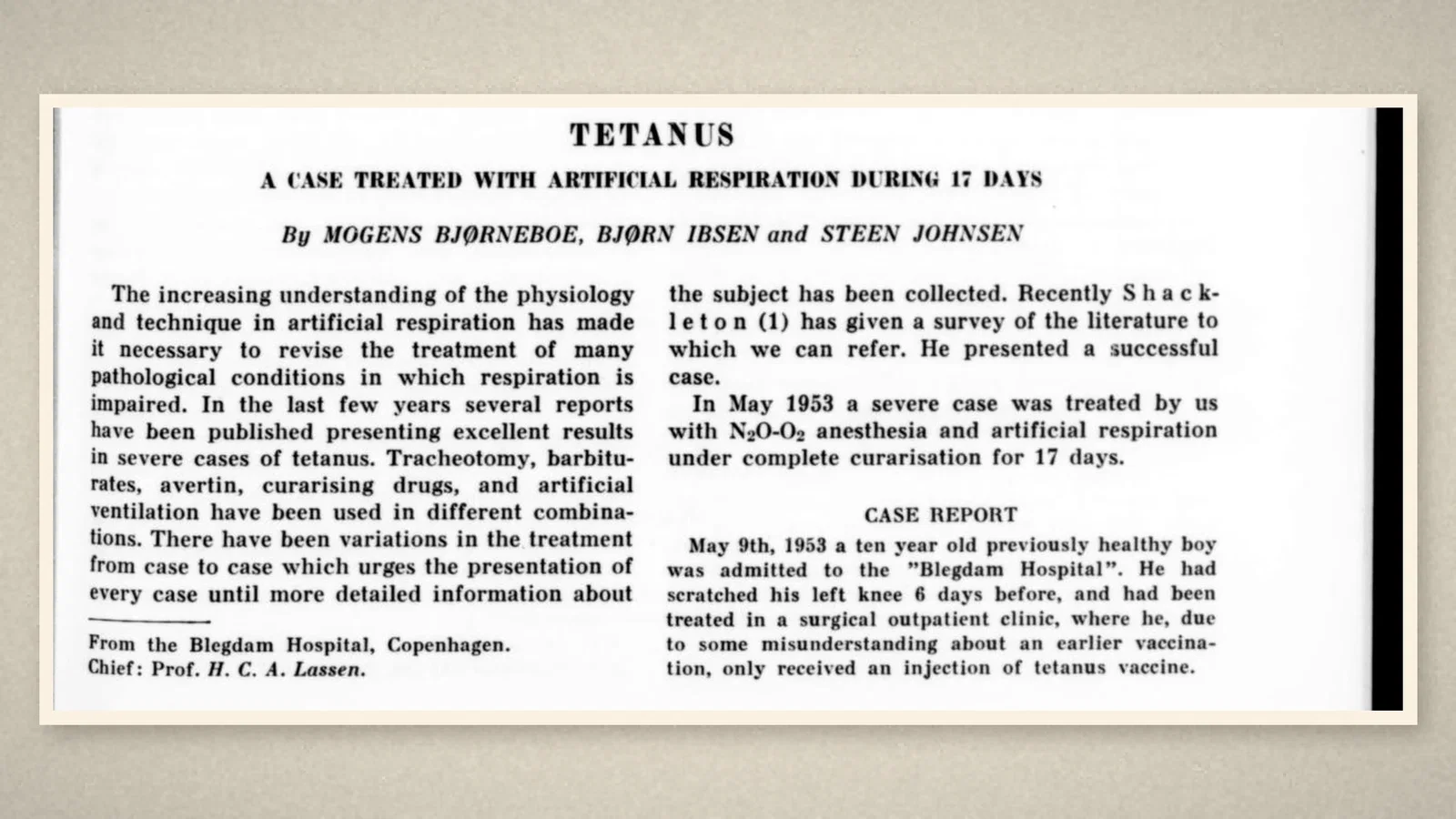
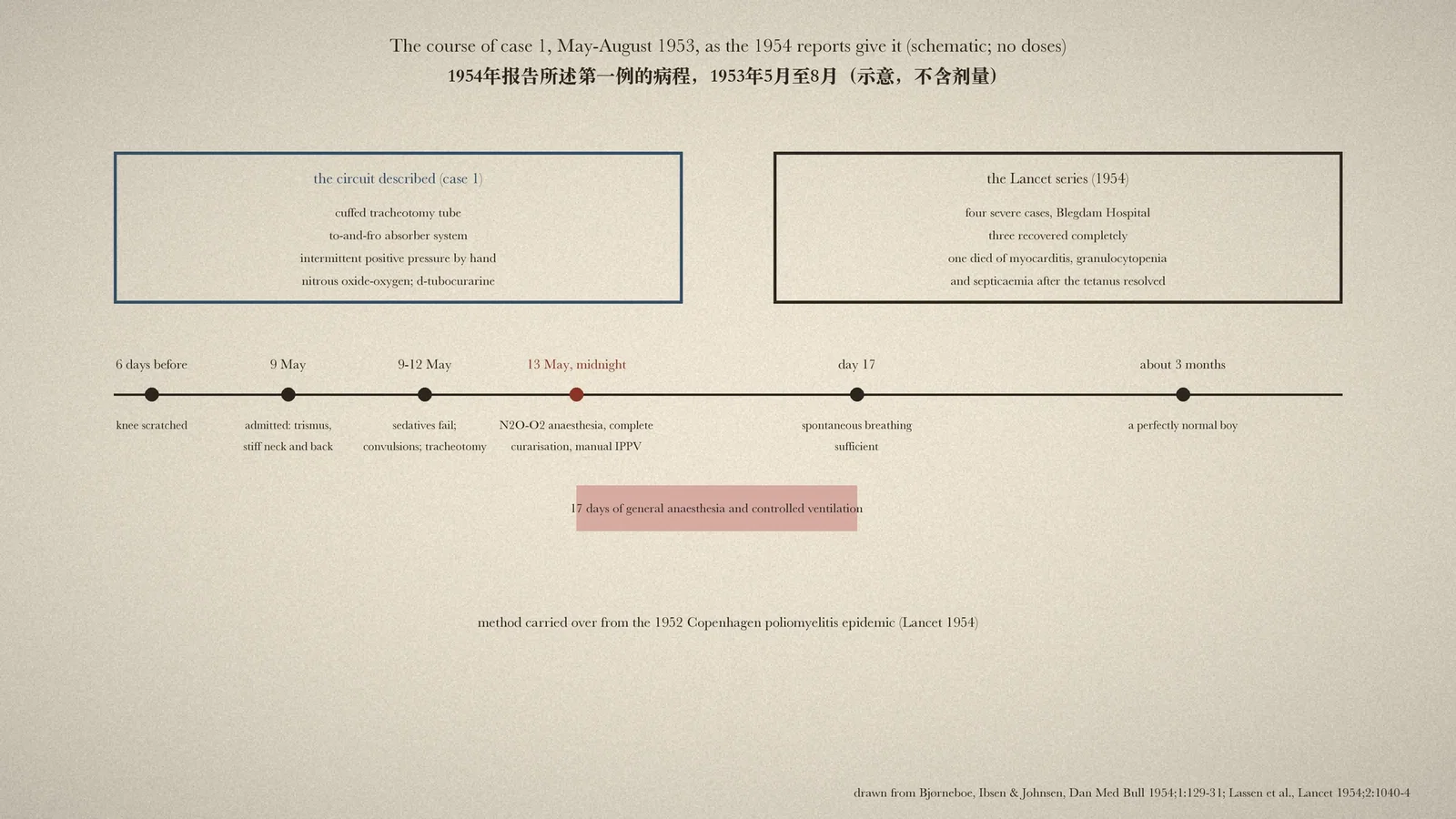
"May 9th, 1953 a ten year old previously healthy boy was admitted to the 'Blegdam Hospital'." Six days before, the boy had scratched a knee; at an outpatient clinic, because of a misunderstanding about earlier vaccination, only an injection of tetanus vaccine had been given. On admission there was trismus, slight risus sardonicus, increased tone in the legs and marked stiffness of the neck and back. The wound was excised and antitoxin and penicillin given, but over the next two days the child grew worse despite sedatives; "convulsions developed and became frequent and severe", and secretions collected in the airway. A tracheotomy was done under cyclopropane anaesthesia and intubation. By the fourth day the boy was cyanosed, in opisthotonus with continuous convulsions, deeply comatose and febrile: "At this point it was felt that a radical change of treatment was urgently necessary since the boy obviously was moribund." [1, pp. 129-30]
Midnight, 13 May
At midnight on 13 May the boy was given nitrous oxide-oxygen anaesthesia and completely curarised with d-tubocurarine. "Manual artificial ventilation with intermittent positive pressure was easily performed through a to and fro absorber system connected to the cuffed tracheotomy tube." During the first night the temperature and pulse rate fell, "the state of shock was treated successfully and the convulsions stopped". [1, p. 130]
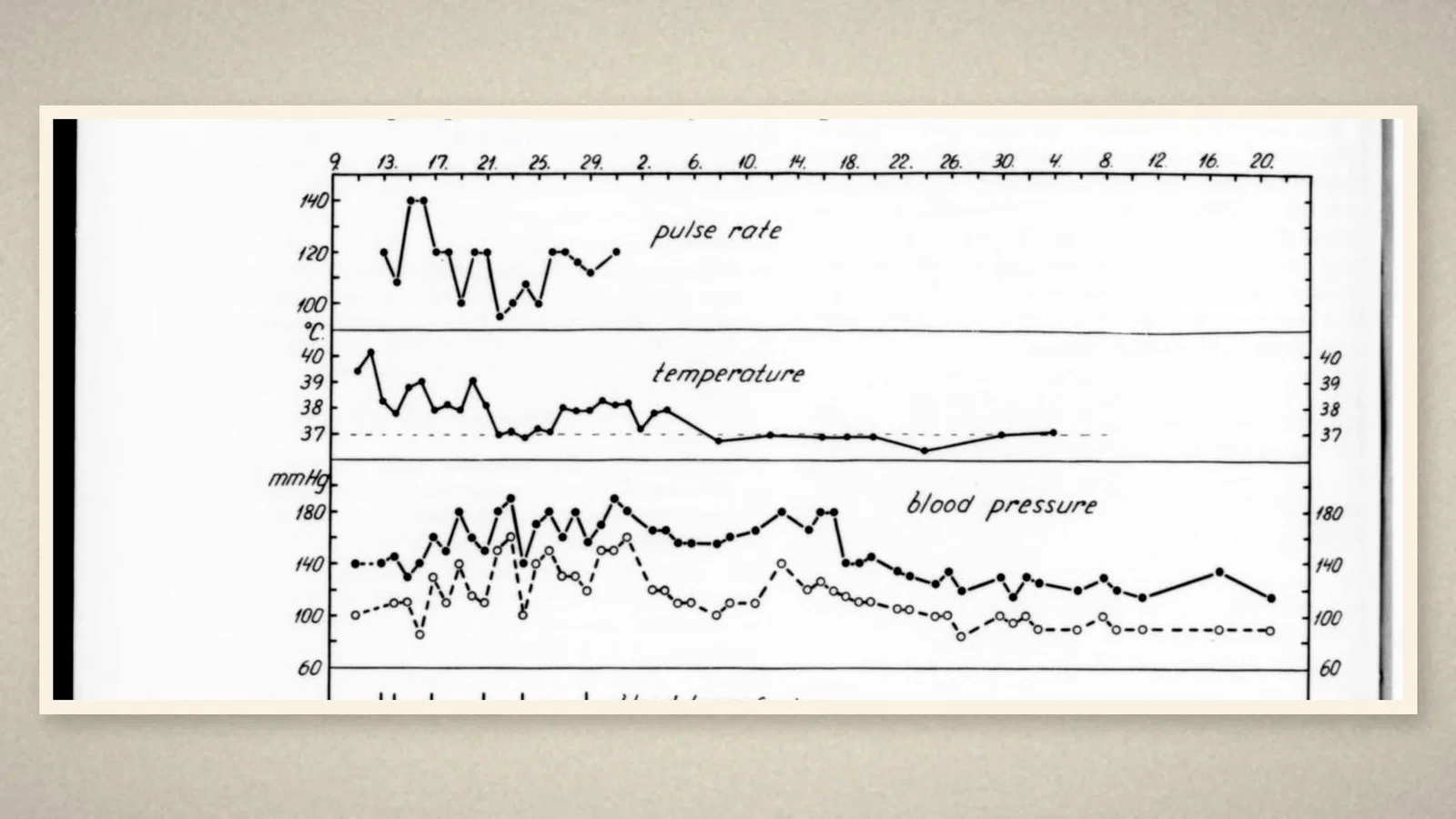
The boy was kept in that state for seventeen days, with a continuous intravenous drip, feeding by stomach tube, correction of water and electrolyte deficits, and several blood transfusions. The team tried "again and again" to bring back spontaneous breathing and reduce the sedation, but "sufficient spontaneous ventilation was not established until the 17th day". The report lists what went wrong along the way: raised blood pressure with retinal changes, atelectasis confirmed at least eight times by X-ray, transient haematuria, bed sores, a swollen parotid gland, and a right-sided drop-hand from compression of the radial nerve during the anaesthesia, which recovered with physical treatment. "Reexamination of the patient 3 months after the onset of the tetanus showed a perfectly normal boy with no sequelae of the disease or the treatment." [1, pp. 130-1]
The series
A month later, on 20 November 1954, The Lancet printed four cases from the Blegdam Hospital by Lassen, Bjørneboe, Ibsen, then "chief anaesthetist, Kommunehospitalet", and Frits Neukirch. They explained the reasoning: "During the poliomyelitis epidemic in Copenhagen in 1952 we learned that tracheotomy and positive-pressure ventilation can be life-saving in many cases of brain-stem poliomyelitis", and "naturally we felt that this treatment should be applicable to severe cases of tetanus in which complete curarisation is the only means of preventing convulsions". The boy was case 1, kept under general anaesthesia for seventeen days, "the longest of which we are aware". [2, p. 1040]
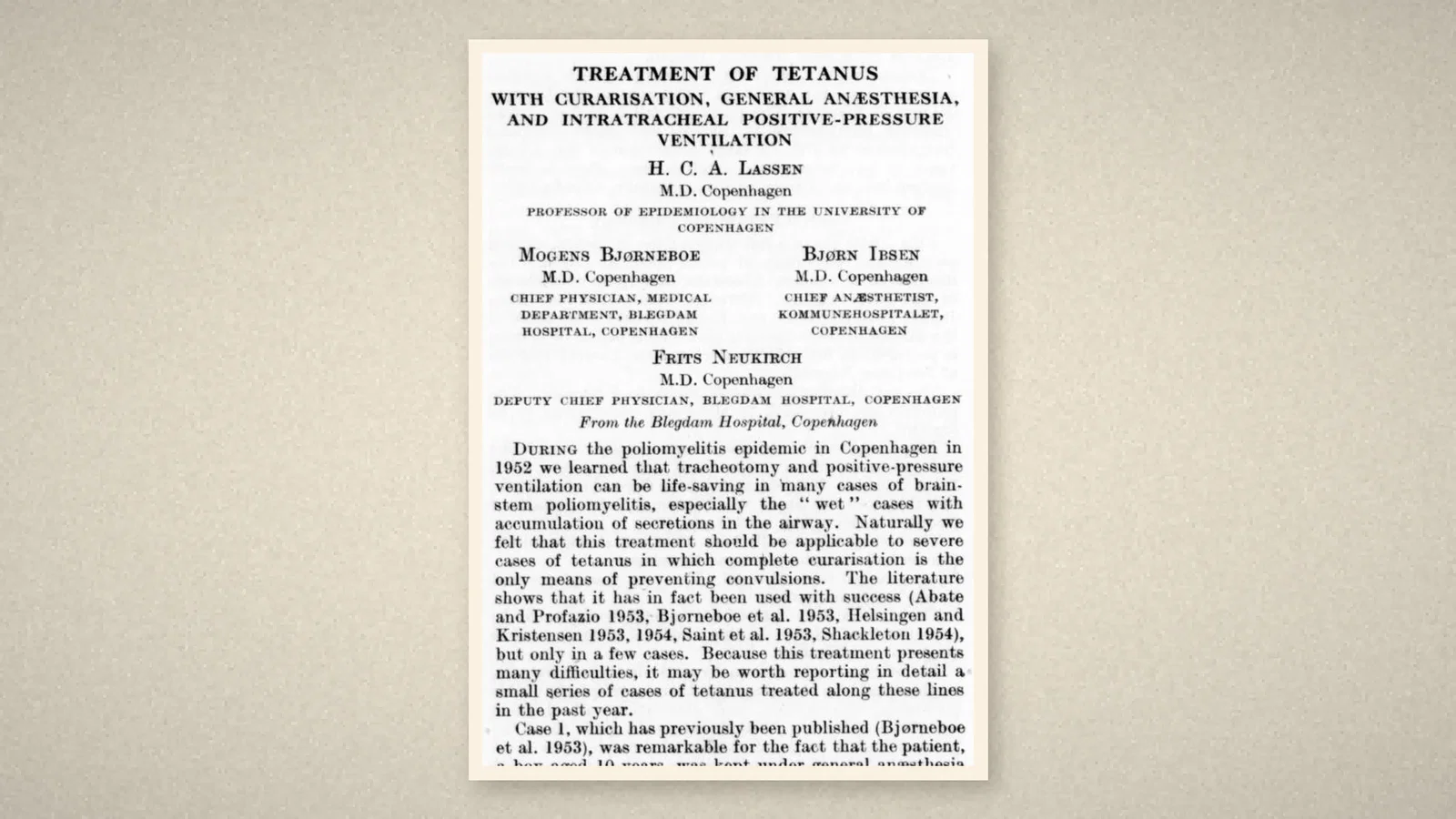
The series also recorded the limits. Three patients recovered completely; the third patient died of myocarditis, granulocytopenia and septicaemia after the tetanus itself had cleared. "But the third case showed that we had been too confident", the authors wrote: the late complications of protracted tetanus were little known, because such patients had formerly died before they appeared. [2, pp. 1043-4]
What the record shows
The moment when controlled ventilation moved from one emergency to another. A method improvised for paralysed polio patients was used to keep a convulsing child completely paralysed and anaesthetised, by hand, for seventeen days, and the child walked out normal. The same reports show what that cost and what it could not prevent.
Sources and reading limits
Read: Bjørneboe, Ibsen and Johnsen, Danish Medical Bulletin 1954;1:129-31, in full; Lassen, Bjørneboe, Ibsen and Neukirch, The Lancet 1954;2:1040-4, the introduction, case 1, the comments and the summary.
Not covered: the original Danish report in Ugeskrift for Læger 1953; a 2026 CSA Bulletin article, which could not be accessed; Ibsen's own papers on the 1952 epidemic, which belong to another article.
Limits: the case is known only from the treating team's reports. "The longest of which we are aware" is the Lancet authors' statement, not this article's claim. The reports do not say which author did what at the bedside. Doses, gas proportions and flows given in the reports are not repeated, and the dose curves of the diagram are left out of the crop. Quotations are from the English originals.
Three illustrations are crops of the Danish Medical Bulletin (pp. 129-30) and The Lancet (p. 1040); one is drawn from them.
- Bjørneboe M, Ibsen B, Johnsen S. Tetanus: a case treated with artificial respiration during 17 days. Dan Med Bull. 1954;1(5):129-31. Internet Archive
- Lassen HCA, Bjørneboe M, Ibsen B, Neukirch F. Treatment of tetanus with curarisation, general anaesthesia, and intratracheal positive-pressure ventilation. Lancet. 1954;2:1040-4. Internet Archive
Continue exploring
Related reading connects shared questions and contexts; it does not by itself establish historical influence.
Anesthesia Epochs · The Source Room · About & Editorial Method
Published November 3, 2026. Sources and reading limits are stated above. Illustrations are labelled as original source images or AI-made. Historical accounts are educational; they are not current treatment instructions.