In 1809 Vauquelin looked in belladonna for the acrid principle he had found in tobacco, a plant of the same family; he did not find it, and turned instead to the material behind its narcotic action, calling his results very rough.
Reading Library · Anesthesia Epochs · 中文版
Watch the education video (for clinicians)
1809: Vauquelin on Belladonna — Named and Unnamed · Anesthesia Epochs Education Series

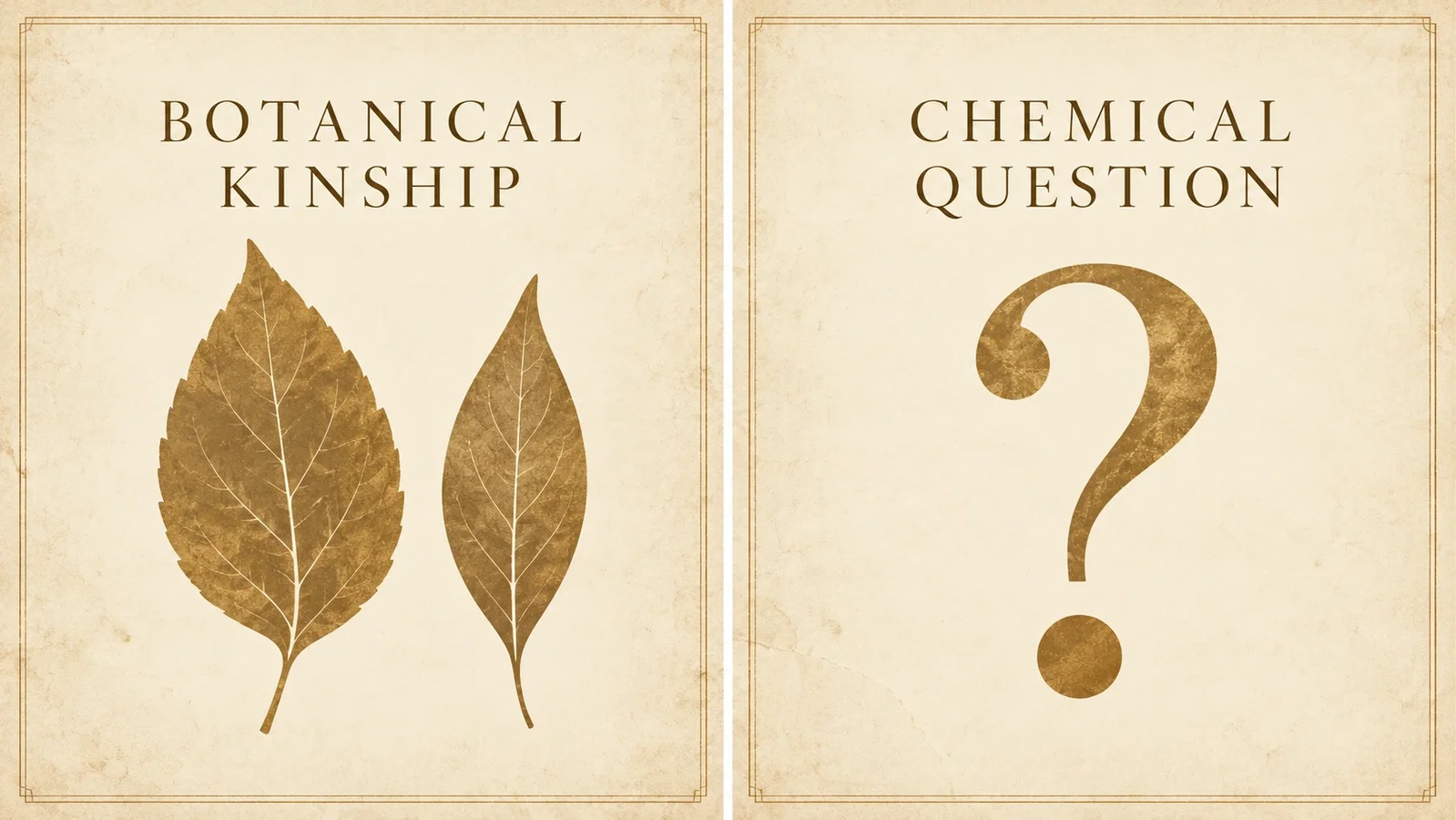
Vauquelin began his investigation of belladonna with a question about tobacco. Since the plants belonged to the same family, might belladonna contain the acrid principle he had found in tobacco? His report, published in the Annales de chimie in 1809, tells readers at the outset that he had not found it. The expectation failed, but the investigation continued. He turned to the material responsible for what physicians described as belladonna’s “narcotic” action.[1, p. 53]
That word needs its historical setting. The memoir uses narcotique. It describes no operation and establishes no safe, painless surgical state in a patient. Reading the word as a ready-made modern category would obscure the questions the author was actually trying to answer.
When crystals appear, read their names
The paper moves through juice, coagulated material, an alcohol-soluble portion and an alcohol-insoluble portion. Vauquelin separated materials for observation, comparing their appearances, tastes and reactions. Separation in this account does not automatically establish a pure compound with a settled identity.[1, pp. 54–56, 61–64]
A consequential detail appears on page 54. The author does report crystals, but names them as potassium nitrate and mentions a little muriate of the same base. His subsequent investigation includes a residue accompanied by other constituents. The appearance of crystals cannot simply be rewritten as the isolation of pure crystalline atropine. This article keeps to the 1809 analysis and does not adopt that stronger claim.[1, pp. 54–56]
Testing an explanation produced by the method
Products of thermal decomposition led Vauquelin to consider the material’s nitrogen content. He then raised an alternative: could nitrate remaining in the sample have contributed to those products? A separate comparison experiment addressed that possibility. The report records an objection to the interpretation as well as observations that seemed to support it.[1, pp. 59–60]

Vauquelin still thought the analysis informative, while explicitly calling its results very rough. He went on to consider whether the relative abundance of carbon, hydrogen, nitrogen and oxygen might explain the plant’s effects. He also acknowledged that other plant products rich in some of those constituents did not have the same powers. These are steps in a historical argument, not an established modern mechanism or a determination of pure atropine’s molecular identity.[1, pp. 60–61]
The uncertainty is present in the source itself. Earlier, he asks how the same constituent principles can belong both to foods and to dangerous poisons. Chemistry, he writes, has yet to cross some of these barriers. The memoir is valuable partly because it preserves those unresolved questions alongside its experimental observations.[1, p. 57]
An effect leaves other questions open
The closing pages turn to one dog. Three administrations of the material are followed by accounts of apparent sleepiness, altered movement and, later, more serious illness. The descriptions include difficult breathing, tremor, vomiting and changes in responses to sensory stimuli. The animal subsequently recovered. At the close, the author judged that it might have died had it not vomited much of the material. That is his interpretation, not a causal conclusion newly established here.[1, pp. 65–68]
These are three episodes involving the same animal, not three independent cases. They indicate marked physiological effects of the investigated material. On their own they establish neither a pure chemical identity nor reproducible therapeutic benefit or surgical anesthesia. This article does not reproduce extraction instructions, quantities or the attempted historical treatment; it follows what the observations could and could not answer.

A specific comparison with Derosne’s 1803 memoir helps keep the authors’ terms in view. Derosne used “salt” provisionally for material he could not yet name properly; Vauquelin tried to connect composition with action. Reading the passages together does not establish influence or collaboration between the authors.[1, pp. 57–61; 2, p. 280]
The year 1809 marks publication of this report. Its enduring episode is a change in the inquiry: a question suggested by botanical kinship gave way to the problems encountered in analysis. Later isolation and clinical applications of atropine still require their own sources and dates.
Sources and reading limits
- Vauquelin. Analyse de la Belladone, Atropa belladona · Library copy. Annales de chimie. 1809;72:53–68. Read in full (16 pages). The title bears 31 October 1809; only the publication year is used here, not an asserted experiment date.
- Derosne. Mémoire sur l’Opium · Library copy. Annales de chimie. 1803;45:257–285. Page 280 is cited.
This article covers the 1809 report. Material dated 1831, 1867, 1872 and 1901 is outside its scope. All four images are original historical imaginings or modern editorial illustrations.
Continue exploring
Related reading connects shared questions and contexts; it does not by itself establish historical influence.
Anesthesia Epochs · The Source Room · About & Editorial Method
Updated October 30, 2026. Sources and reading limits are stated above. Illustrations are labelled as original source images or AI-made. Historical accounts are educational; they are not current treatment instructions.