In his 1803 memoir on opium, the Paris pharmacist Derosne described crystals he provisionally called a ‘salt’, reported that the material made dogs ill, and said more comparison was needed before its medicinal action could be judged.
Reading Library · Anesthesia Epochs · 中文版
Watch the education video (for clinicians)
1803: Derosne's Opium Memoir — For Now, Call It Salt · Anesthesia Epochs Education Series

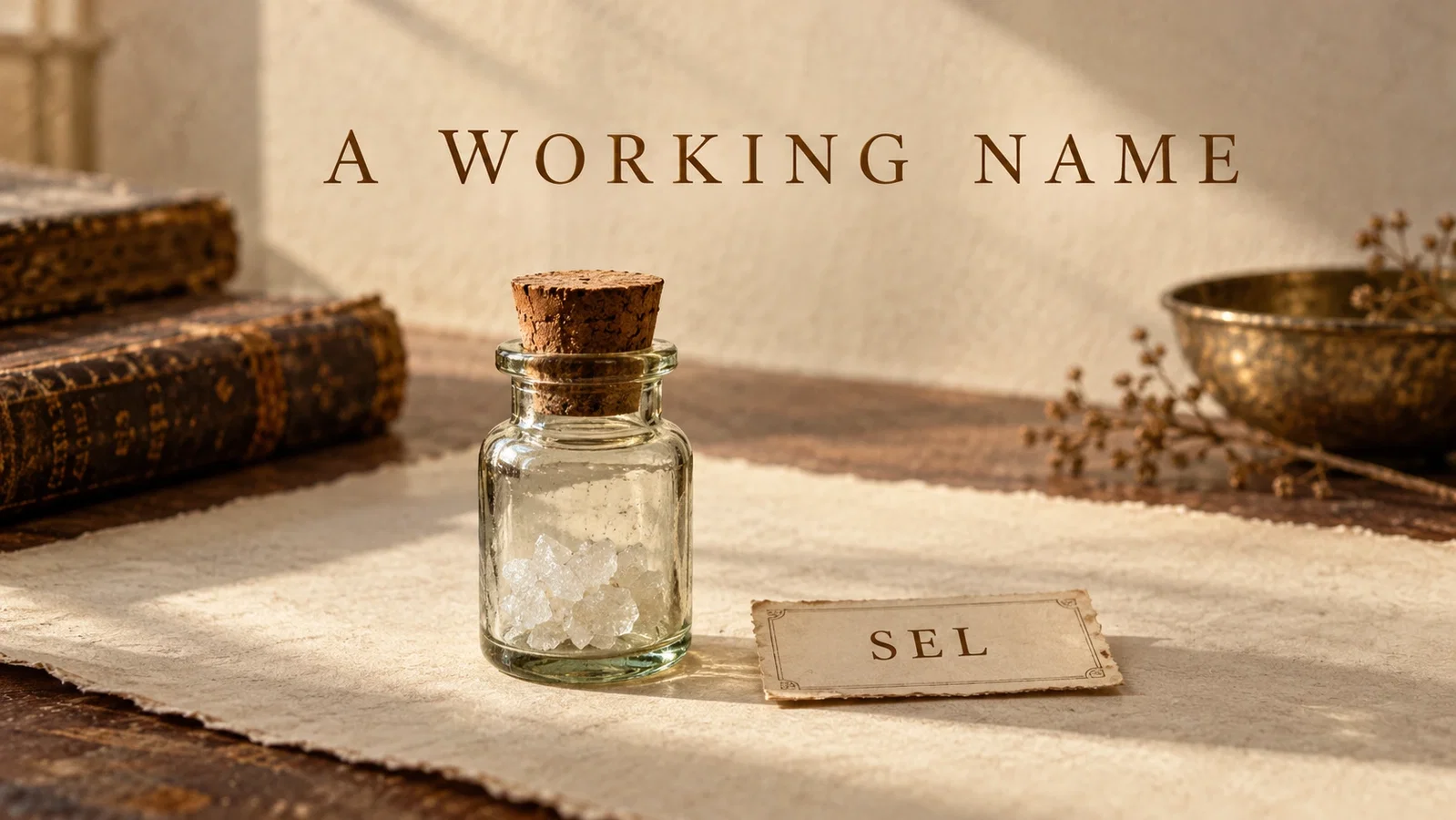
The crystals had appeared. A satisfactory name had not.
On page 280 of his 1803 memoir on opium, the Paris pharmacist Derosne explained why he continued to call a material “salt.” The word spared him circumlocution, and he did not know the proper name to assign it: “faute de savoir le nom propre à lui assigner.” The uncertainty was part of his account.[1, p.280]
His provisional word does not mean table salt. Nor does it allow us to assign every material he obtained to a single modern chemical identity. The report is worth reading for what he observed, how he interpreted it and what he still needed to establish.
A familiar medicine with an unsettled composition
Derosne began with a discrepancy. The medicinal effects of some plant substances were well known, while their chemical analysis remained much less advanced. Opium was his example. Different investigators had described different constituents; their disagreements prompted him to examine it again.[1, pp.257–260]
He did not present an empty field awaiting its first investigator. He discussed work by Baumé, Josse and Proust, sometimes accepting observations and sometimes questioning the materials or interpretations. He also declined to call his own analysis complete. He did not supply exact proportions for every constituent and noted that commercial opium samples were not perfectly alike.[1, pp.258–260]
A milestone saying merely that an active ingredient was first discovered in 1803 would lose that earlier work and those qualifications. The date used here belongs to the published memoir, not to a demonstrated date for every experiment it describes.
An expectation that failed
Among dark material, Derosne noticed many small, shining crystals. He expected a subsequent treatment to separate what he called salt from other constituents. It did not yield what he expected. He recorded the disappointment and returned to examine material left behind earlier.[1, pp.263–264]
The passage preserves a sequence of observation, inference and correction. It is not a straight road from a mixture to a pure medicine. Elsewhere, he explicitly described the processed opium extract as still highly complex.[1, p.265]
He went on to describe color, crystallization and solubility, comparing materials obtained by different routes. He attributed some differences to a combination with potash. That explanation belongs to his historical reasoning. The observations and the proposed explanation can be read together without silently converting all his preparations into one modern substance.[1, pp.274–279]
A bodily response is not yet a treatment
Later in the memoir, Derosne turned from chemical properties to animal effects. He reported illness in dogs that received the described material, including vomiting and convulsions. He inferred that much of opium’s activity might reside in it. Yet he also recognized a difficulty: the harmful effects of the material alone could not simply be equated with those of an extract containing it.[1, pp.281–282]
These were not successful pain-treatment cases. The account does not establish a dependable human analgesic method or report an operation under anesthesia. Calling the animal responses the birth of a more effective pain medicine would answer a question the evidence had left open.
Derosne left it open too. He said the experiments were insufficient to determine the material’s medicinal action. Further comparisons were needed before deciding whether it should remain in the extract or be removed. He called for investigation of separate constituents and differently prepared extracts, including whether the remainder retained a calming effect after certain components were taken away.[1, pp.282–284]
This was a historical research proposal, not evidence that a modern clinical trial had been completed. Preparation details, animal doses and proposed remedies in the original are not presented here as instructions.
Two questions still open
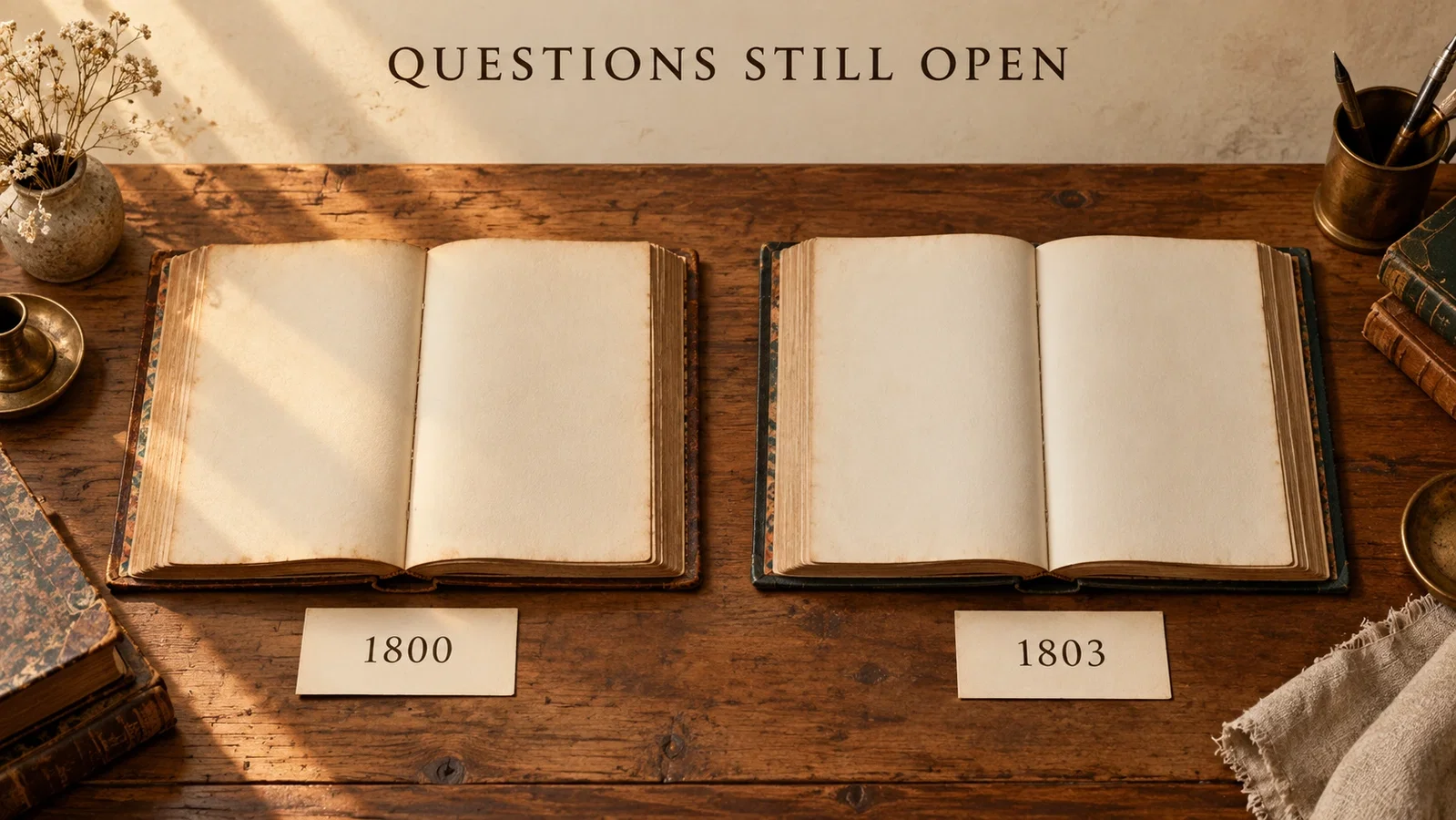
This memoir can be read alongside Davy’s 1800 book. Davy suggested a possible surgical use for nitrous oxide under a stated limitation on blood loss. Derosne’s 1803 report asked for further comparison of opium’s constituents. One passage proposed a use; the other asked where a medicine’s activity lay. Both left further investigation to be done.[3, p.556; 1, pp.282–284]
That is an editorial comparison of two documented passages. It does not establish contact, influence or a developmental chain between the investigators.
In 1949, Louis Irissou was still discussing priority between Derosne and Sertürner. Later accounts of who discovered what have their own history of argument; they cannot replace the experimental record of 1803.[2]
The memoir’s lasting interest lies partly in its reservations after the crystals appeared: analysis unfinished, terminology provisional, medicinal action still requiring comparison. Keeping those reservations gives the work its historical shape.
Sources and reading limits
- Derosne. Mémoire sur l’Opium, lu à la Société de Pharmacie · Library copy. Annales de chimie. 1803;45:257–285. Read in full (29 pages, French). The original byline supplies only Derosne; disputed given-name attribution, modern identities of all preparations and first-alkaloid priority are not settled here.
- Irissou L. Derosne ou Sertürner. Revue d’histoire de la pharmacie. 1949;37(124):484–485. Read in full as Persée’s web text. Used only to establish the later priority discussion, not as a definitive modern chemical identification.
- Davy H. Researches, Chemical and Philosophical. 1800:556. Page 556 read.
1803 is the memoir’s publication year. This article covers Derosne’s memoir; the 1832 codeine report is outside its scope. All four illustrations are original historical imaginings or modern editorial interpretations.
Continue exploring
Related reading connects shared questions and contexts; it does not by itself establish historical influence.
Anesthesia Epochs · The Source Room · About & Editorial Method
Updated October 30, 2026. Sources and reading limits are stated above. Illustrations are labelled as original source images or AI-made. Historical accounts are educational; they are not current treatment instructions.