In a letter read to the Royal Society in 1763, Edward Stone reported giving willow bark to about fifty people with agues, noting the stubborn cases in which he added Peruvian bark.
Reading Library · Anesthesia Epochs · 中文版
Watch the education video (for clinicians)
1763: Edward Stone's Willow Bark Letter · Anesthesia Epochs Education Series

Edward Stone made two arguments from the abundance of willow. If intermittent illness was common, perhaps its remedy should be common too. But if the bark possessed remarkable powers, why had something so plentiful not already become a familiar medicine? Both thoughts appear in the letter he sent from Chipping Norton in 1763.[1, pp. 195–196]
That hesitation is easily lost when the letter becomes a single step on a timeline leading to aspirin. Stone was discussing a local bark, the illnesses he called agues, and his experience of giving it to people. His account had observations to report, exceptions to explain and questions for other readers to try.
Two dates, two acts
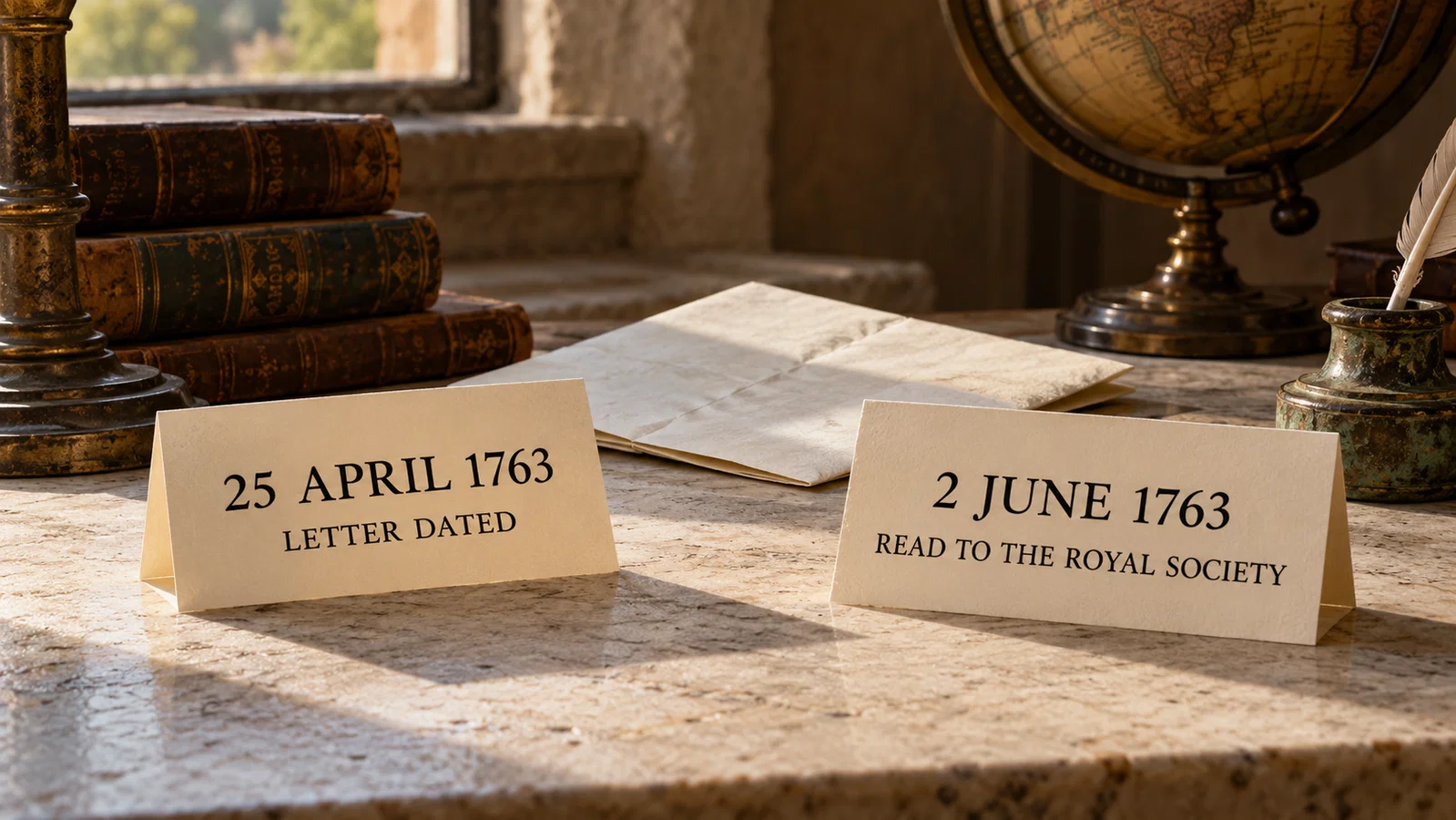
The letter closes with the date 25 April 1763. The opening page records that it was read on 2 June 1763. The first dates the letter; the second marks its presentation to the Royal Society. Neither is the date of his first experiment.[1, pp. 195, 200]
Stone recalled tasting the bark about six years earlier and being struck by its bitterness. That suggested a comparison with Peruvian bark. His further thought—that remedies might grow near the conditions associated with illness—belonged to his reasoning about nature and providence. It was not a chemical identification.[1, p. 195]
He described consulting botanical books and dispensatories without finding the properties he suspected. That is evidence of his reported search, not proof that every earlier medical tradition had overlooked willow. The letter lets us follow his inquiry without turning it into a claim of discovery for all places and periods.
Approximately fifty, with exceptions
By the time of writing, Stone said he had used the bark over five successive years. He believed it had been given to fifty people. The qualification matters: this is an approximate retrospective count, not an enumerated series of fifty complete case records.[1, p. 197]
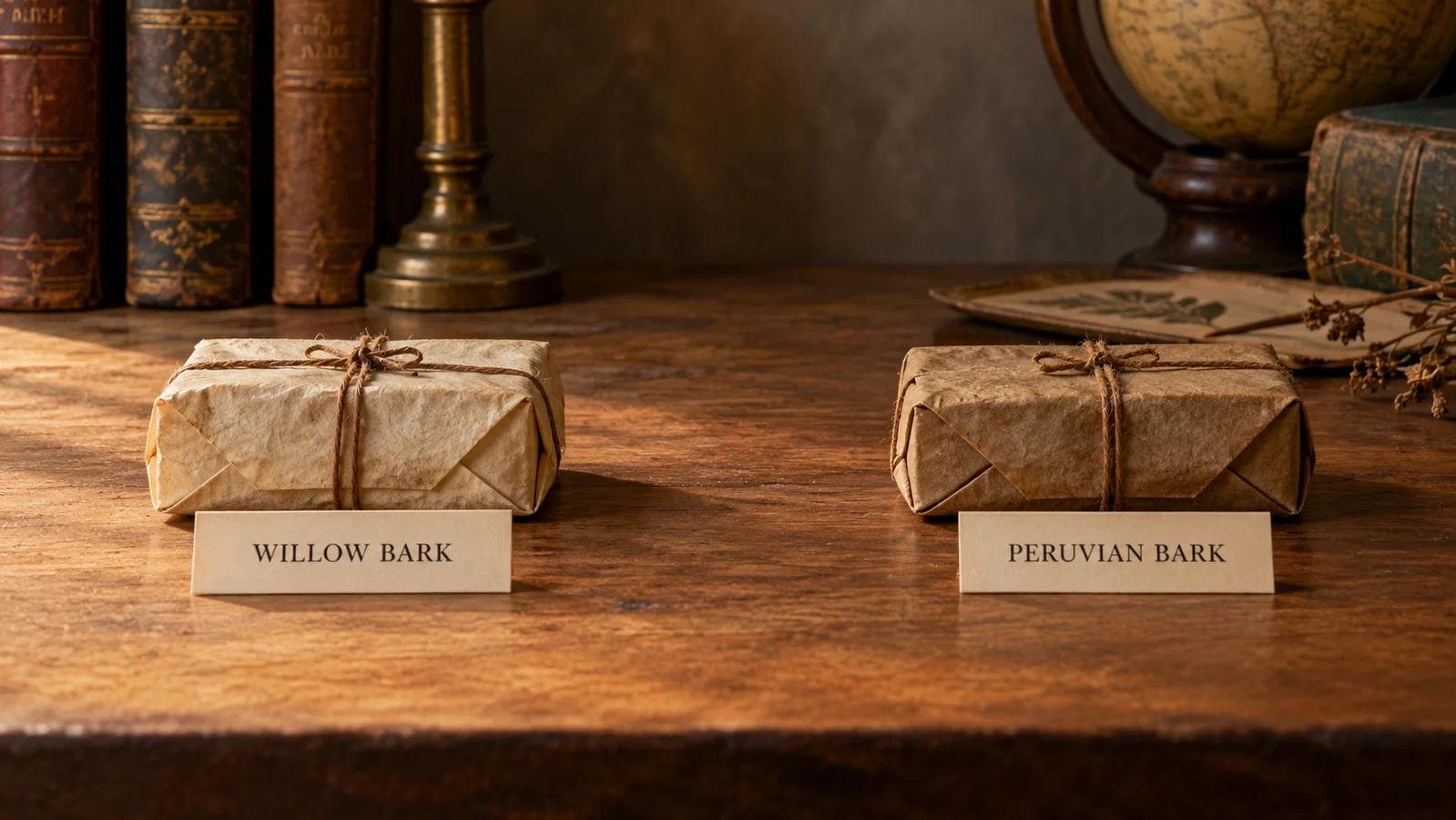
He also described limitations. In some longstanding autumnal and quartan agues, symptoms diminished without disappearing. He then added Peruvian bark, and reported success with the combination. He used that addition in a small number of other stubborn cases as well.[1, p. 197] A sentence claiming that willow alone cured all fifty people would remove the exceptions from the source.
The historical term ague should remain visible. This letter does not establish a modern diagnosis for each person, and it supplies neither a comparison group nor patient-level follow-up adequate for calculating a cure rate.
An effort to separate effects
Stone said he had generally avoided preliminary vomiting, bleeding or purging so that changes in patients could be attributed more clearly to the bark. This shows an explicit concern with explanation. It does not make the account a controlled trial; the additional bark in difficult cases further complicates attribution.[1, pp. 197–198]
He wrote that he had perceived no ill effects and regarded the remedy as safe. Those are his observations and judgment. Without a systematic account of adverse events or follow-up, they cannot establish safety for every preparation or patient.[1, p. 198]
His discussion of the material itself remained open. He identified the tree by a name taken from Ray, described collecting bark in northern Oxfordshire, and wondered whether trees from other soils or older growth might yield something stronger. He acknowledged not having made the necessary experiments.[1, pp. 198–199] These are proposed comparisons, not measurements of chemical content.
Inviting other observers
The letter ends by asking for a fuller trial under varied circumstances. Publication carried the claim beyond Stone’s own experience and gave readers something they could question, compare and investigate.[1, p. 200]
There is a useful comparison with the sleeping-drink instruction in Jackson’s book dated 1642. That entry promises sleep and awakening without recording a patient’s outcome. Stone’s letter instead describes what its author said he had observed, including occasions when he changed the treatment.[1, p. 197; 2] These are different kinds of evidence. The comparison does not imply that Jackson’s book influenced him.

Stone’s letter belongs in the longer history of willow remedies and later drug development, but it deserves to be read at its own scale. It records a question moving from local experience into a public scientific forum. The bark was still bark; the later chemistry and manufacture of aspirin require their own sources.
Material and image limits: All six original printed pages were read. The handwritten letter and the botanical works Stone consulted were not independently read. Claims about antiquity and later salicin or aspirin milestones are not verified by this article. Historical doses and preparation steps are omitted. All four images are AI editorial illustrations: a generic landscape and print workshop, and modern comparisons—not a portrait of Stone, authenticated specimens, original correspondence or a documented meeting.
Sources and reading limits
[1] Stone E. An Account of the Success of the Bark of the Willow in the Cure of Agues… Philosophical Transactions. 53 (1763):195–200. DOI:10.1098/rstl.1763.0033. Original six-page scan. Read in full. The pages conventionally cited as 198 and 199 are visibly misnumbered 188 and 189 in this scan. The heading names “Edmund Stone”; the closing signature reads “Edward Stone.” Both readings are preserved here without inventing an explanation for the difference. The closing date is 25 April; the recorded reading date is 2 June 1763.
[2] Jane Jackson’s medical recipe book, Wellcome Collection MS 373. Digital manuscript, scans 100–101, ff. 99r–v (also numbered 90r–v). The same pages are read in the article on the 1642 recipe book (see Continue exploring). Comparison is limited to the recipe’s promise and lack of a recorded individual outcome.
Continue exploring
Related reading connects shared questions and contexts; it does not by itself establish historical influence.
Anesthesia Epochs · The Source Room · About & Editorial Method
Updated October 30, 2026. Sources and reading limits are stated above. Illustrations are labelled as original source images or AI-made. Historical accounts are educational; they are not current treatment instructions.