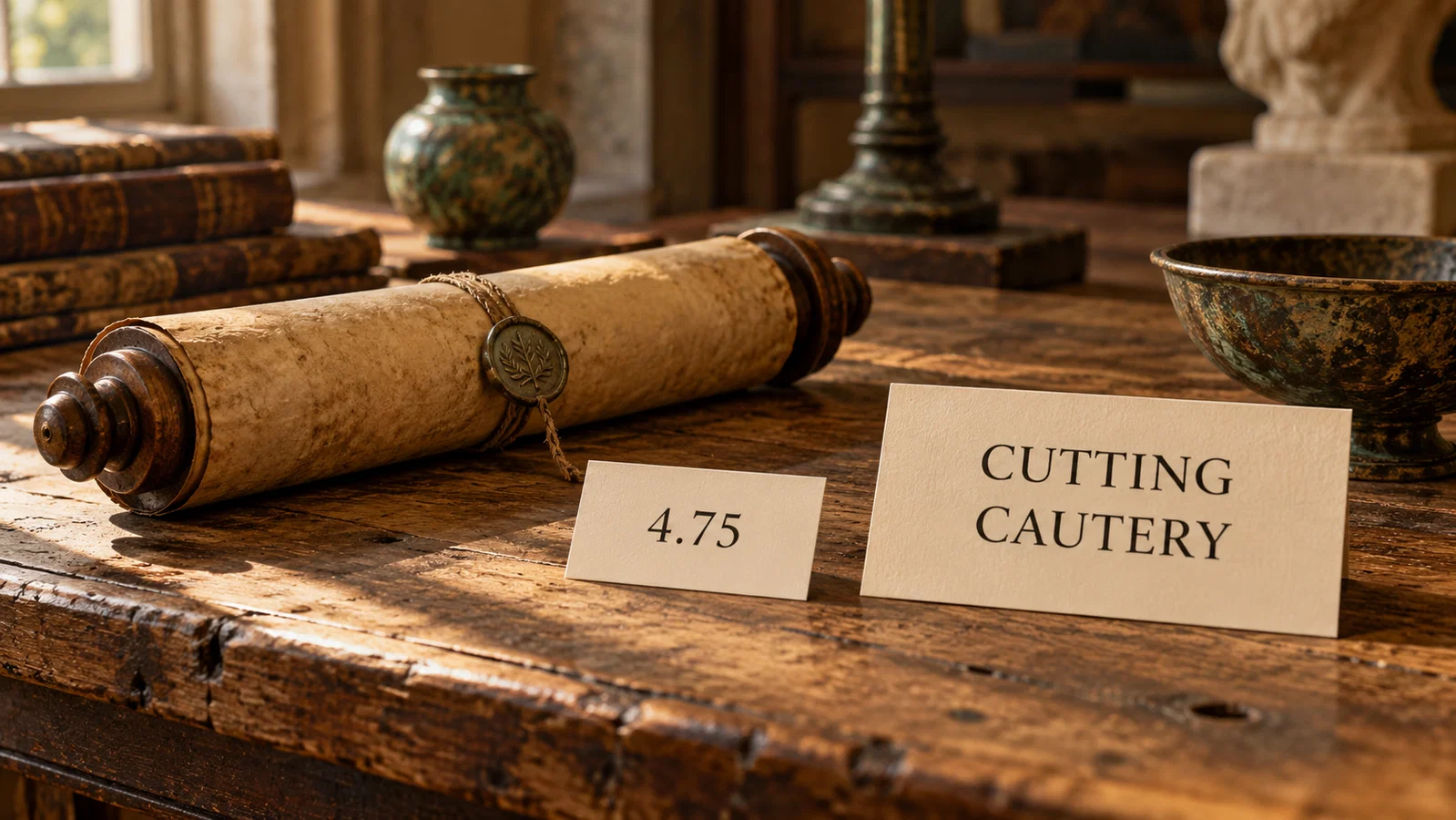
In De materia medica 4.75, Dioscorides reports that some people prepare mandragora root in wine for those about to be cut or cauterized, while warning that a larger amount of the juice can kill.
Reading Library · Anesthesia Epochs · 中文版
Watch the education video (for clinicians)
1st Century CE: Mandragora in Dioscorides — Before Cutting or Cautery · Anesthesia Epochs Education Series
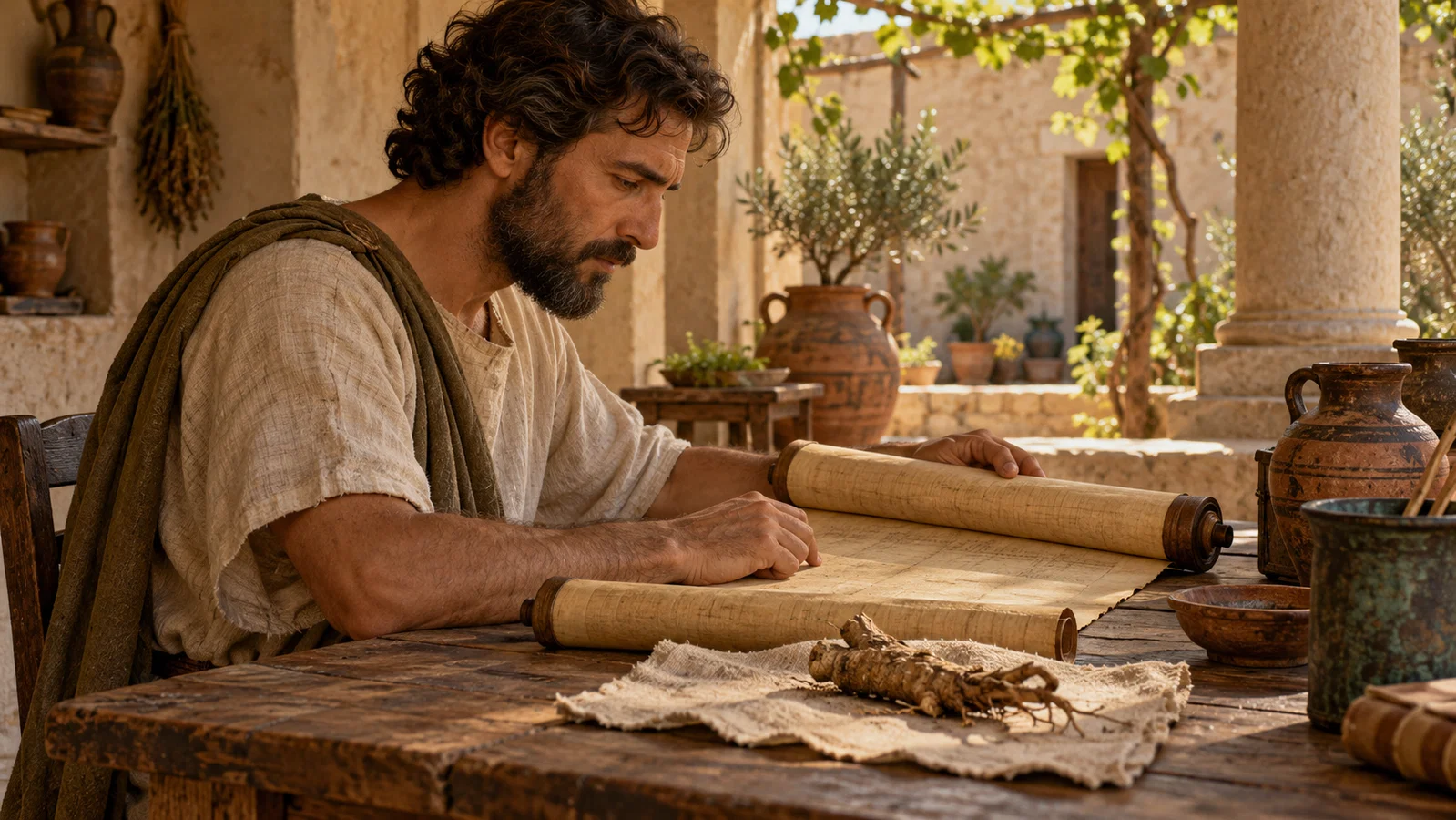
In the mandragora entry of De materia medica, a sentence about roots and wine reaches an unmistakably procedural setting: people who are to undergo cutting or cautery. The Greek uses ἀναισθησίαν, an inflected form of the noun anaisthēsia. Here the word appears beside an intended change in sensation during a painful intervention.[1, 4.75.3]
That sentence is worth reading closely. It gives more precise evidence than a timeline label announcing that someone “invented anesthesia” in a particular year.
Inside the botanical entry
The chapter begins with names and descriptions of forms of mandragora, then moves through preparations and uses. The relevant sentence is part of that larger entry, not an individually dated surgical case. In the numbering of Max Wellmann’s edition, it is Book IV, chapter 75.[1, 4.75.1–7]
At 4.75.3, the text reports that some people prepare the roots in wine. It connects that preparation with sleeplessness, severe pain and the wish to produce insensibility in those being cut or cauterized. This is a limited paraphrase of the Greek read for this article; it does not reproduce an English translation that was unavailable to us.[1, p.235]
“Some people” matters. It describes a reported practice without identifying a patient, naming an operator or establishing that Dioscorides personally performed a particular operation. Thomas Keys’s later history summarizes the episode as Dioscorides administering mandragora before surgery. Returning to the ancient entry lets us distinguish that historical retelling from the grammatical claim actually before us.[2, p.6]
Preparations should not collapse into one recipe
The entry does not discuss only one preparation. At 4.75.5 it returns to root bark and wine, again mentioning people about to be cut or cauterized and attributing their failure to perceive pain to the resulting state of stupor. The repetition makes the intended surgical setting clear. It still supplies no independently checkable measure of anesthetic depth or success.[1, p.236]
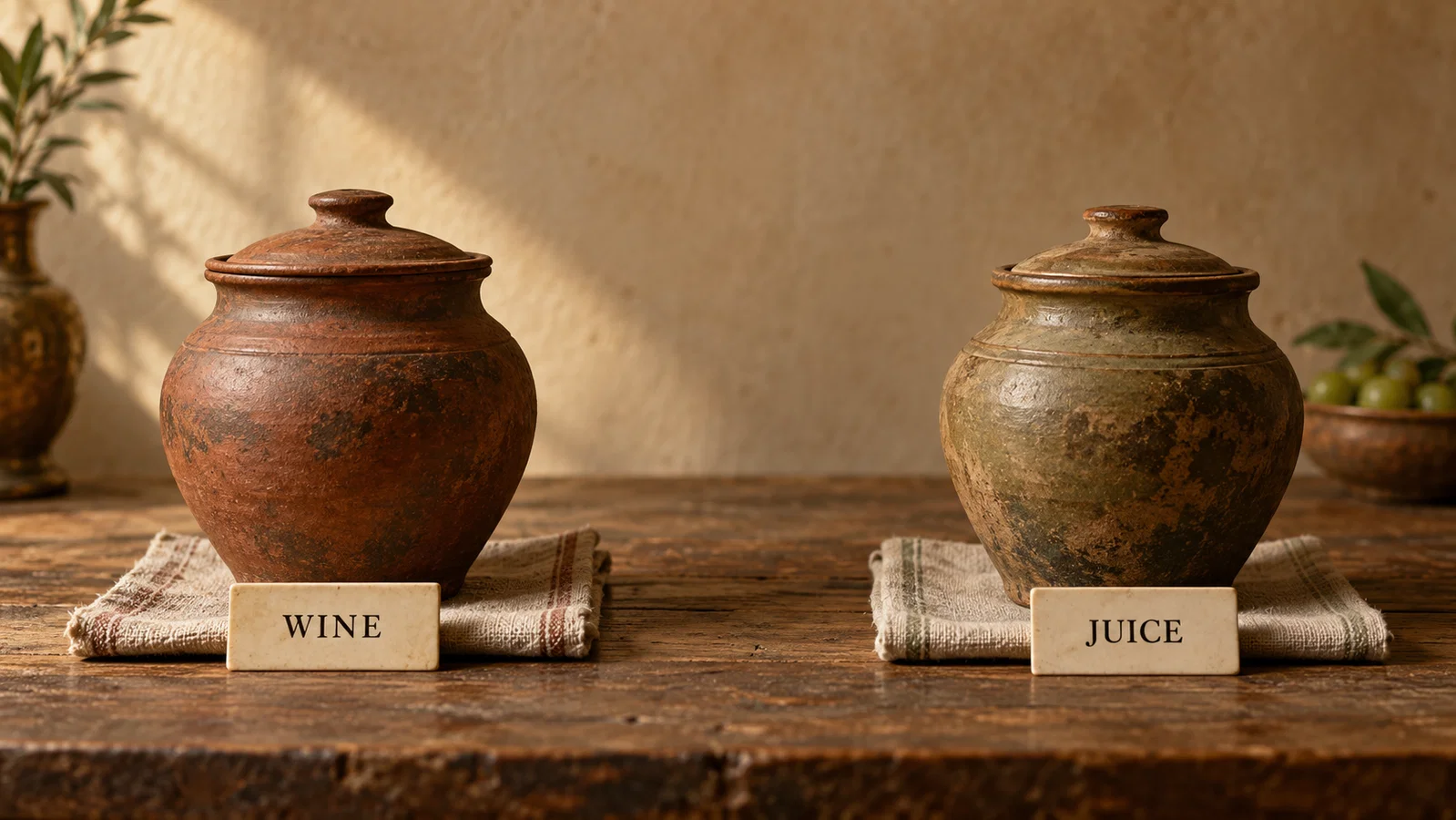
The adjacent discussion at 4.75.3 also contains a warning: when speaking of juice, the text says that a greater amount can end life. That warning belongs to its particular passage. It should neither disappear from a celebratory account nor be blended with the wine preparation into an apparently standardized protocol.[1, p.235]
This article does not convert ancient quantities into modern doses or identify the entry’s forms with a single securely established modern species. The historical question is what the text describes. A modern pharmacological explanation would require different evidence.
An ancient word with a different task
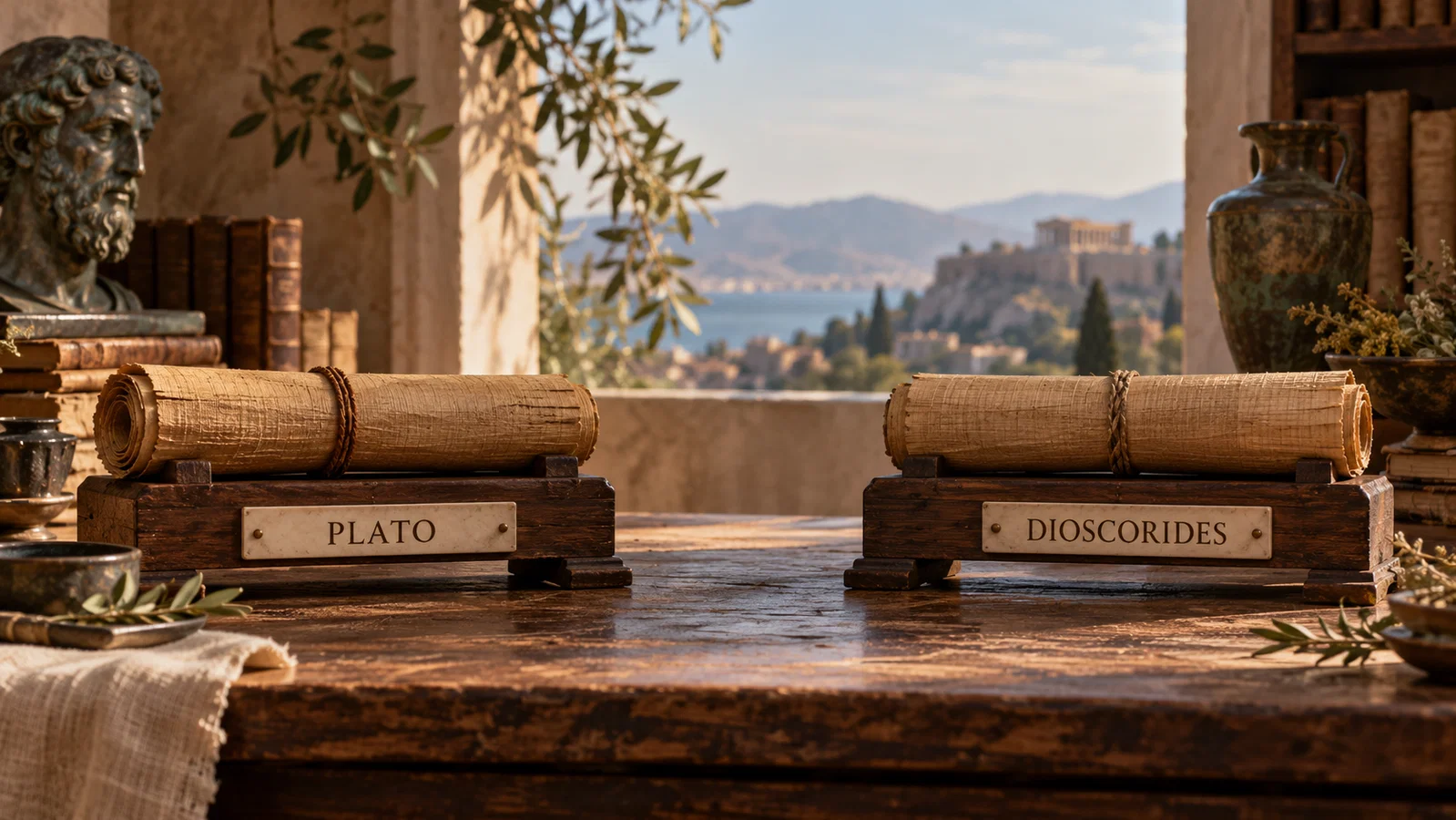
The comparison with Plato is illuminating because the noun is recognizable while its surroundings change. In the Timaeus, 52b concerns apprehension without sensation; 74e uses the word within an account of bodily construction and insensitivity. Neither passage describes administering a preparation before an operation.[3]
Dioscorides’ mandragora entry places the word beside roots, wine and cutting or cautery. This establishes a difference between textual settings. It does not establish that Dioscorides borrowed the passage from Plato, or that an uninterrupted chain leads from either author to modern anesthesia. The two articles are connected for comparison, without a claim of direct transmission.
Dates belong to their evidence
This article places Dioscorides in the first-century CE setting used by Keys. The year 50 is only the midpoint used for browsing that century.[2, p.6]
There is also a much later date to keep straight. The Greek edition actually inspected is Wellmann’s volume II, published in 1906, containing Books III and IV. Its title page reads MCMVI. A digital catalogue’s shorthand for the multivolume publication should not replace the date visible on this volume’s title page.[1]
What survives the narrower reading is substantial: a traceable passage that links a preparation to intended insensibility during cutting or cautery, within an entry that also describes serious danger. Its place in anesthesia history rests on those words and their setting, not on a reconstructed first patient.
Image note: all four images are AI-generated editorial illustrations. The reader is anonymous, the root is an unverified illustrative object, and the scrolls are not facsimiles. The three labelled displays are modern reading aids. No image documents an ancient operation, formula or proven route of transmission.
Sources and reading limits
[1] Dioscorides. De materia medica. Wellmann M, ed. Vol.II, Books III–IV. Berlin: Weidmann; 1906. BIUSante original-edition scan; OpenGreekAndLatin digital transcription. The main text of 4.75.1–7 was read digitally; the title page and printed pp.235–236, PDF pp.263–264, were visually inspected. The opening of 4.76 was checked to distinguish numbering. Neither all five books nor the complete critical apparatus was read. No ancient manuscript was independently collated. The short English and Chinese explanations here are our bounded paraphrases of the inspected Greek.
[2] Keys TE. The History of Surgical Anesthesia. Wood Library-Museum; 1996 reprint:6, 10, 30. Library scan · Archived copy. Edition information and relevant historical passages read; not the complete book. The article uses p.6 for context and distinguishes its personal attribution from the wording of the ancient entry.
[3] Plato. Timaeus. Burnet J, ed. Platonis Opera. Vol.4; 1905. Perseus Greek digital transcription, 52b and 74e within the previously read ranges 52a–52d and 74b–75c. These passages support the comparison developed in the companion Plato article, not a transmission claim.
Continue exploring
Related reading connects shared questions and contexts; it does not by itself establish historical influence.
Anesthesia Epochs · The Source Room · About & Editorial Method
Updated October 30, 2026. Sources and reading limits are stated above. Illustrations are labelled as original source images or AI-made. Historical accounts are educational; they are not current treatment instructions.