Compound identity, documentary dates and the limits of a chemistry report.
Reading Library · Anesthesia Epochs · 中文版
Watch the companion film
1957: Bupivacaine — Compound Eleven · Watch on YouTube
Historical anchor: 1957. Date details and source qualifications are explained below.
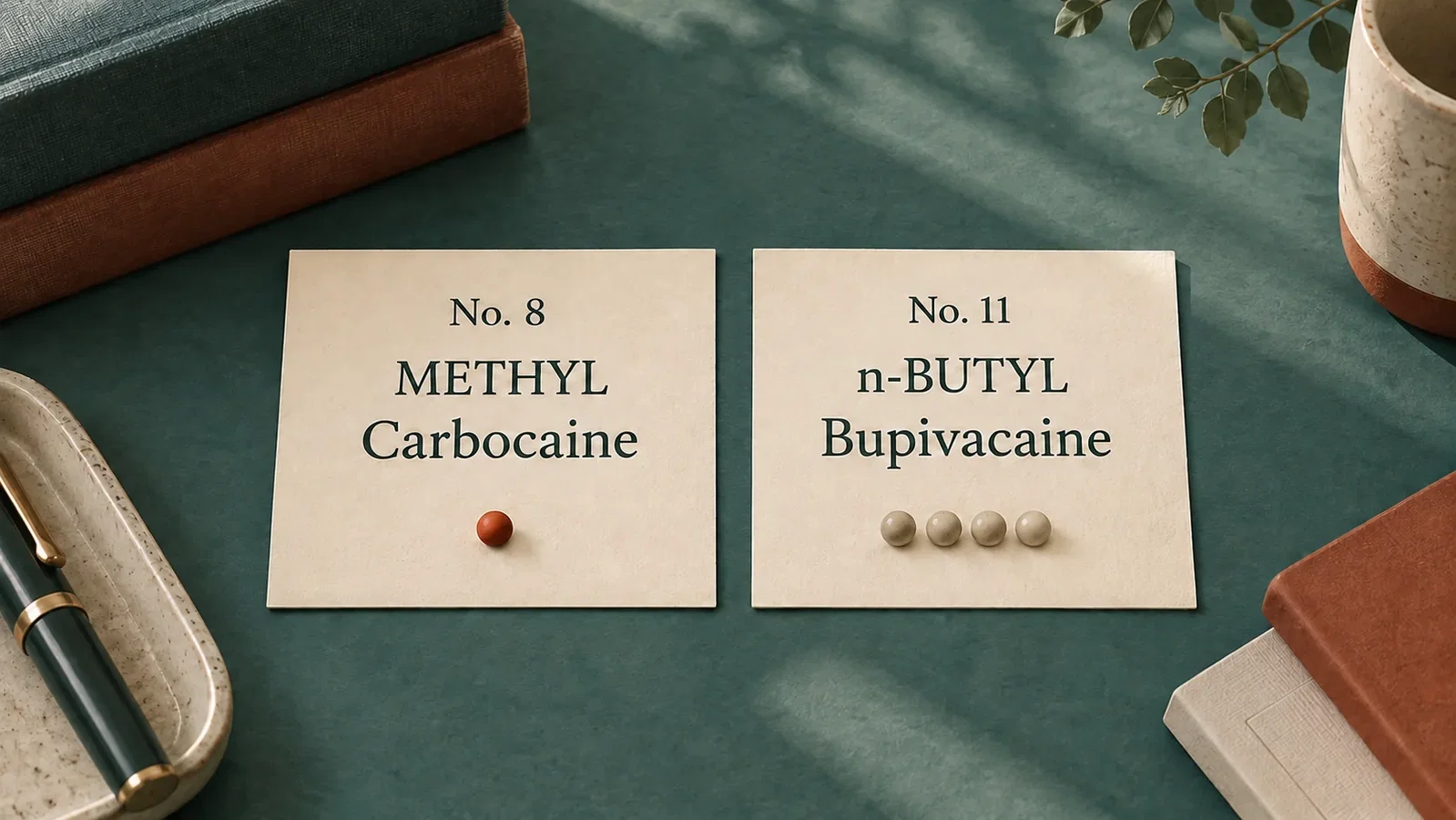
A familiar drug can occupy an unfamiliar place in its early literature. In 1957, Bo af Ekenstam, Börje Egnér and Gösta Pettersson of the research laboratory at Bofors, Sweden, reported 35 new compounds. The structure now recognized as bupivacaine appears as No. 11 in Table 1.[1, pp.1183–1184]
The paper organizes its subject through chemical names, numbered entries and measured properties. Following the entry reveals what the investigators reported, without assuming that they already saw the drug as later clinicians would.

Identifying the compound
Nos. 8 and 11 belong to the same group of piperidine carboxylic acid amides. Both have a 2,6-dimethylphenyl group. Their ring nitrogen substituents differ: methyl in No. 8 and n-butyl in No. 11.[1, Table 1]
Example 3 of a related US patent names N-n-butylpipecolyl-2,6-xylidide. Comparing that description with the chemical name and structure in a current DailyMed label identifies the n-butyl compound as bupivacaine.[2, example 3; 3, section 11] This matches an early chemical identity to a later drug name. It does not place the modern formulation in the 1957 laboratory.
The paper’s preferred clinical candidate was No. 8, named Carbocaine. The abstract and pharmacology section single it out and refer to its pharmacological and clinical investigation.[1, pp.1183,1186] Those statements belong to No. 8; they cannot be transferred to its neighbor in the table.
What the dates record
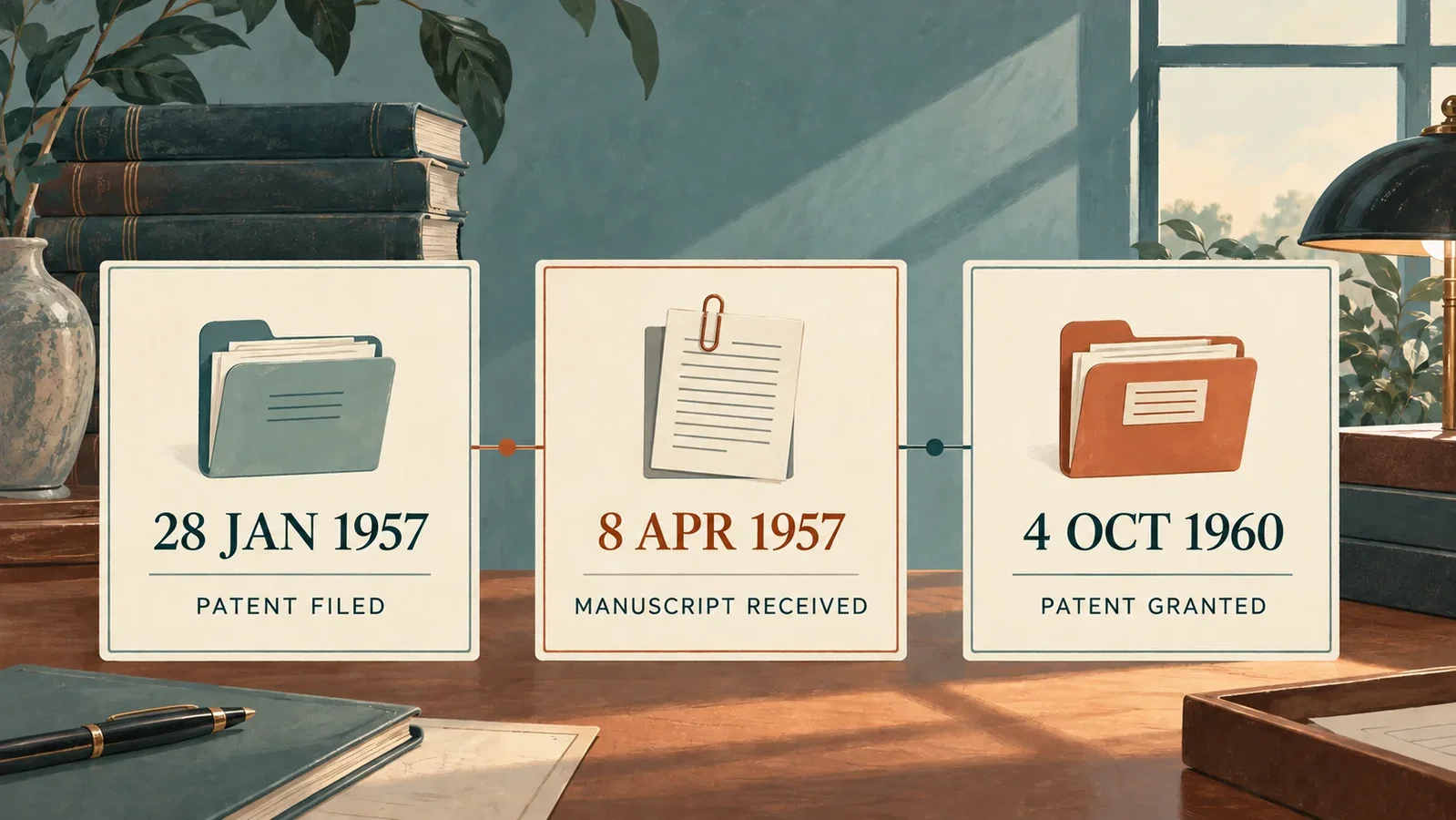
The patent was filed on 28 January 1957. The journal paper records receipt on 8 April 1957. Patent grant followed on 4 October 1960.[1, p.1190; 2, heading]
Each date concerns a different documentary event. None records the first synthesis experiment or identifies the first patient treated with bupivacaine. This article uses 1957 as the publication year of the chemistry paper. A precise laboratory priority claim would require earlier experimental records.
The patent supplies contemporary evidence that the compound and its preparation had been described. Its statements about anesthetic properties are not a clinical comparison establishing superiority.
Reading both sides of the comparison
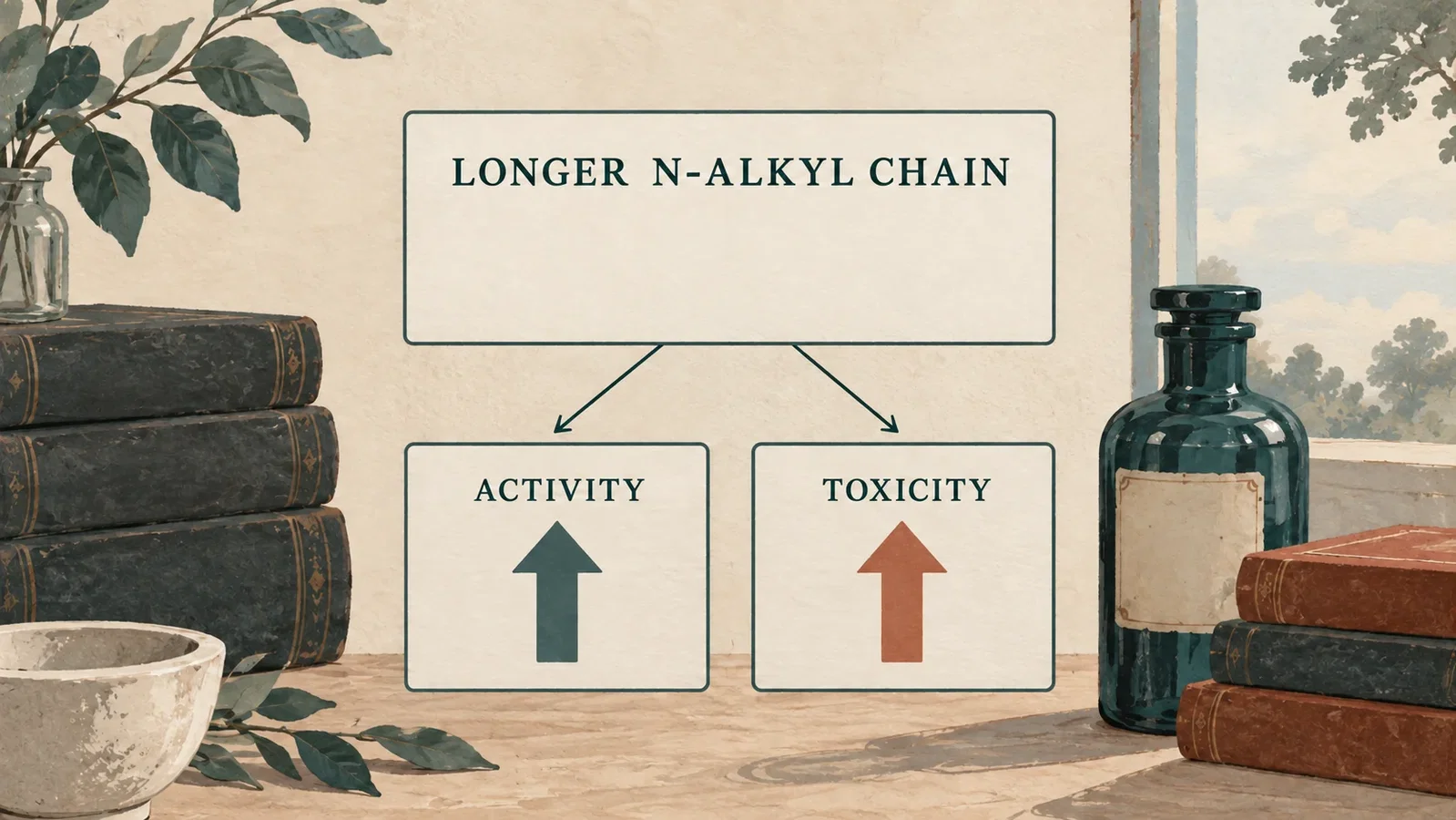
The authors offered a pharmacological overview, stating that a fuller account would appear elsewhere. One observation connected a longer nitrogen-bound hydrocarbon chain with increased anesthetic activity and increased toxicity.[1, p.1186] The structure changes therefore carried more than one consequence.
Other comparisons concerned separately numbered compounds and specified experimental settings. The paper’s block-duration comparisons and mouse toxicity table cannot be combined into a clinical trial of bupivacaine or converted into a patient complication rate.[1, pp.1186–1187]
A current label describes bupivacaine’s longer duration relative to commonly used short-acting local anesthetics and also discusses systemic toxicity.[3, section 12.2] That later pharmacological context helps explain the drug’s present identity. It does not establish what clinicians knew or used in 1957.
A specific connection to the lidocaine story
When discussing amide structure and anesthetic activity, Ekenstam and colleagues explicitly compared their observations with earlier work by Erdtman and Löfgren. Their references include a 1946 Löfgren paper.[1, pp.1186,1189] The citation has been read here; the cited 1946 original has not been obtained.
Gordh’s 1949 paper, also cited in the lidocaine article, provides another contemporary view. Its opening page recounts Löfgren and Lundqvist’s 1943 anilide research and identifies LL30 as Xylocain.[4, p.4] Read together, the papers allow a specific comparison between cyclic-derivative screening and the development of another amide anesthetic for clinical testing.
The articles are linked as related. The link rests on named research and an identifiable chemical question. It does not assert mentorship, a documented transfer between the teams, or a single necessary cause of bupivacaine’s development.
In the 1957 paper, No. 11 remained one entry in a set of compounds being compared. Keeping that position visible preserves the work accomplished by the chemistry report and the questions that clinical investigation still had to answer.
Sources and reading limits
- af Ekenstam B, Egnér B, Pettersson G. Local Anaesthetics I. N-Alkyl Pyrrolidine and N-Alkyl Piperidine Carboxylic Acid Amides. Acta Chem Scand. 1957;11:1183–1190. DOI:10.3891/acta.chem.scand.11-1183. All eight original scanned pages read; No. 11 cross-checked with sources 2 and 3.
- af Ekenstam BT, Pettersson BG. US2955111. Both original pages read. Filed 28 January 1957; granted 4 October 1960. Example 3 names the n-butyl compound. Same research team as source 1, not independent clinical replication.
- DailyMed: Bupivacaine hydrochloride injection. Page updated 4 April 2026; label revised June 2024. Section 11 and its structural image, plus relevant section 12.2 text, read selectively. Neither a claim of whole-label reading nor evidence of a 1957 formulation.
- Gordh T. Xylocain: A New Local Analgesic. Anaesthesia. 1949;4:4–9,21. Original also cited in the lidocaine article; p.4 reread for this article’s historical comparison.
Images are AI-generated editorial reconstructions, not laboratory photographs, original documents or preparation instructions.
Continue exploring
Related reading connects shared questions and contexts; it does not by itself establish historical influence.
The Source Room · About & Editorial Method
Sources and reading limits are stated above. Illustrations are labelled as original source images or AI-made. Historical accounts are educational; they are not current treatment instructions.