Organization in 1982, an inaugural meeting in 1983, and scholarship with a documentary trail.
Reading Library · Anesthesia Epochs · 中文版
Watch the companion film
1982–1983: Selma Calmes — The Anesthesia History Association · Watch on YouTube
Historical anchor: 1983. Approximate placement; see the essay for the date range and evidence.
A short letter in the September 1983 Canadian Anaesthetists’ Society Journal invited readers interested in their specialty’s history to join the Anesthesia History Association (AHA). It announced an inaugural meeting for 9 October at the Atlanta Hilton Hotel during the American Society of Anesthesiologists’ annual meeting. Selma H. Calmes appeared as co-chair and contact; Rod K. Calverley and J. R. Maltby signed below.[1, p.564] The invitation gave a developing group a place, a date and a way to get in touch.
The preparations began earlier. The AHA’s institutional history traces discussions to an international anesthesia history meeting in Rotterdam in 1982. It records a gathering of 47 people on 25 October that year, chaired by Garth Huston during the ASA meeting. The name was settled by January 1983. The same account credits Calmes and Calverley as co-founders and confirms that the inaugural meeting took place on 9 October 1983.[2] The contemporary announcement and the later account describe different stages of the event.
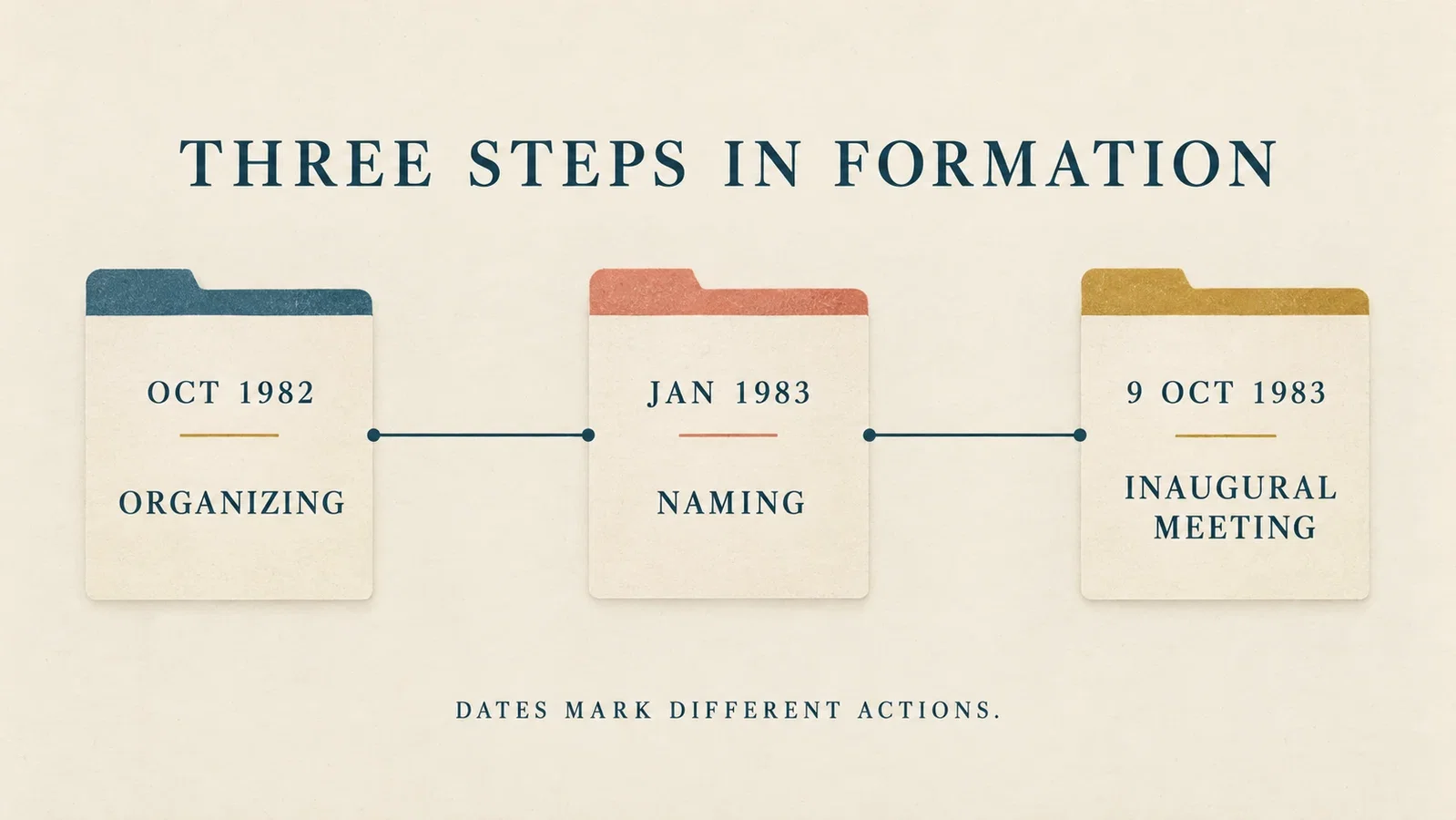
This article therefore spans 1982–1983. The National Library of Medicine’s Calmes biography places co-founding in 1982; the association’s history distinguishes organization, naming and the first meeting.[2–3] Keeping those stages visible avoids asking one date to represent the whole process. Nor does a first AHA meeting make 1983 the beginning of all anesthesia history research, or Calmes its sole founder.
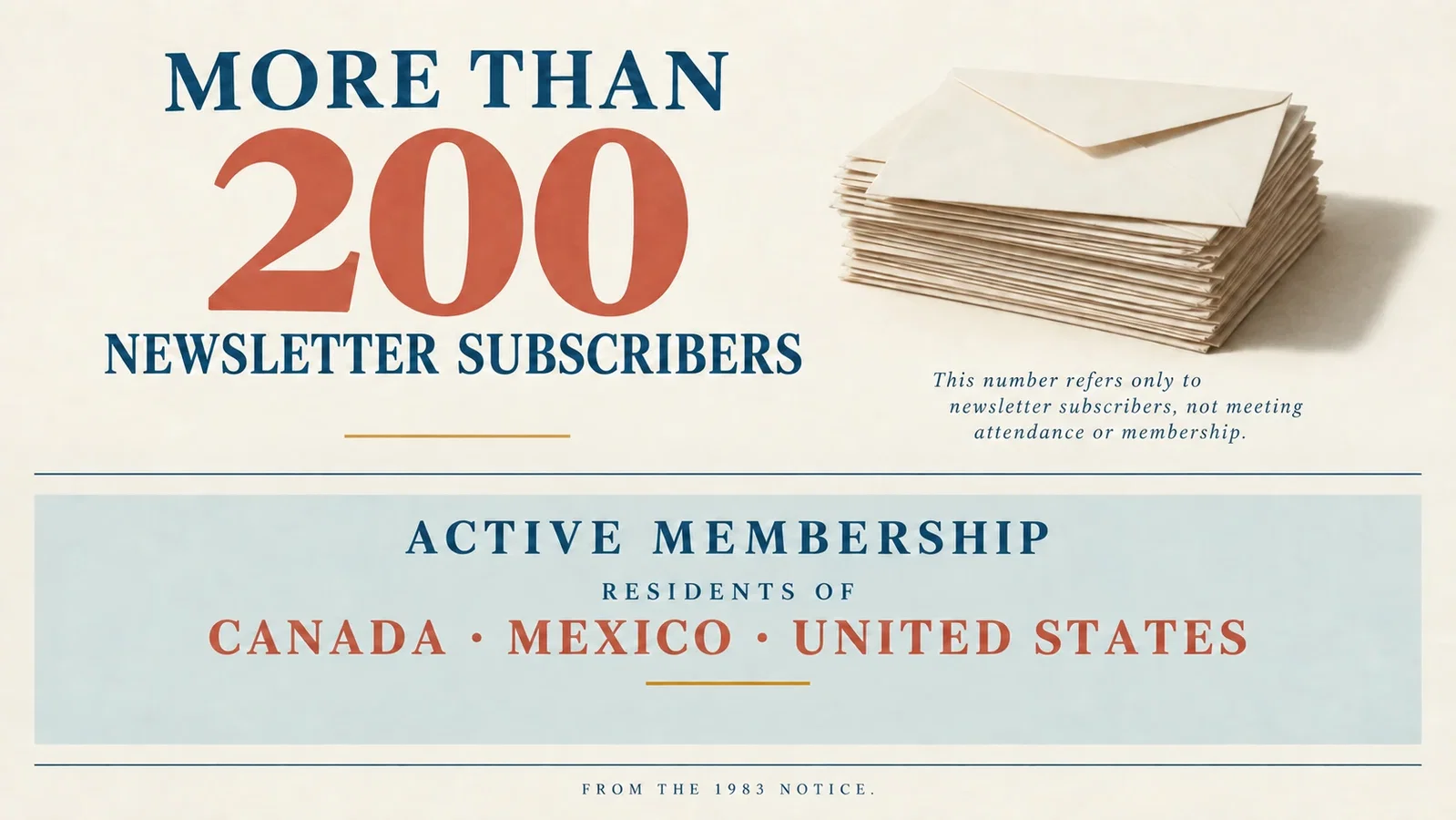
The letter describes an association intended for communication, fellowship and historical inquiry. Its quarterly newsletter already had more than 200 subscribers when the meeting was being announced. The institutional history dates the first issue to December 1982.[1–2] Subscribers are not a count of members or people in the room. The notice also offered active membership to residents of Canada, Mexico and the United States; that wording does not establish a worldwide formal membership system.[1, p.564]
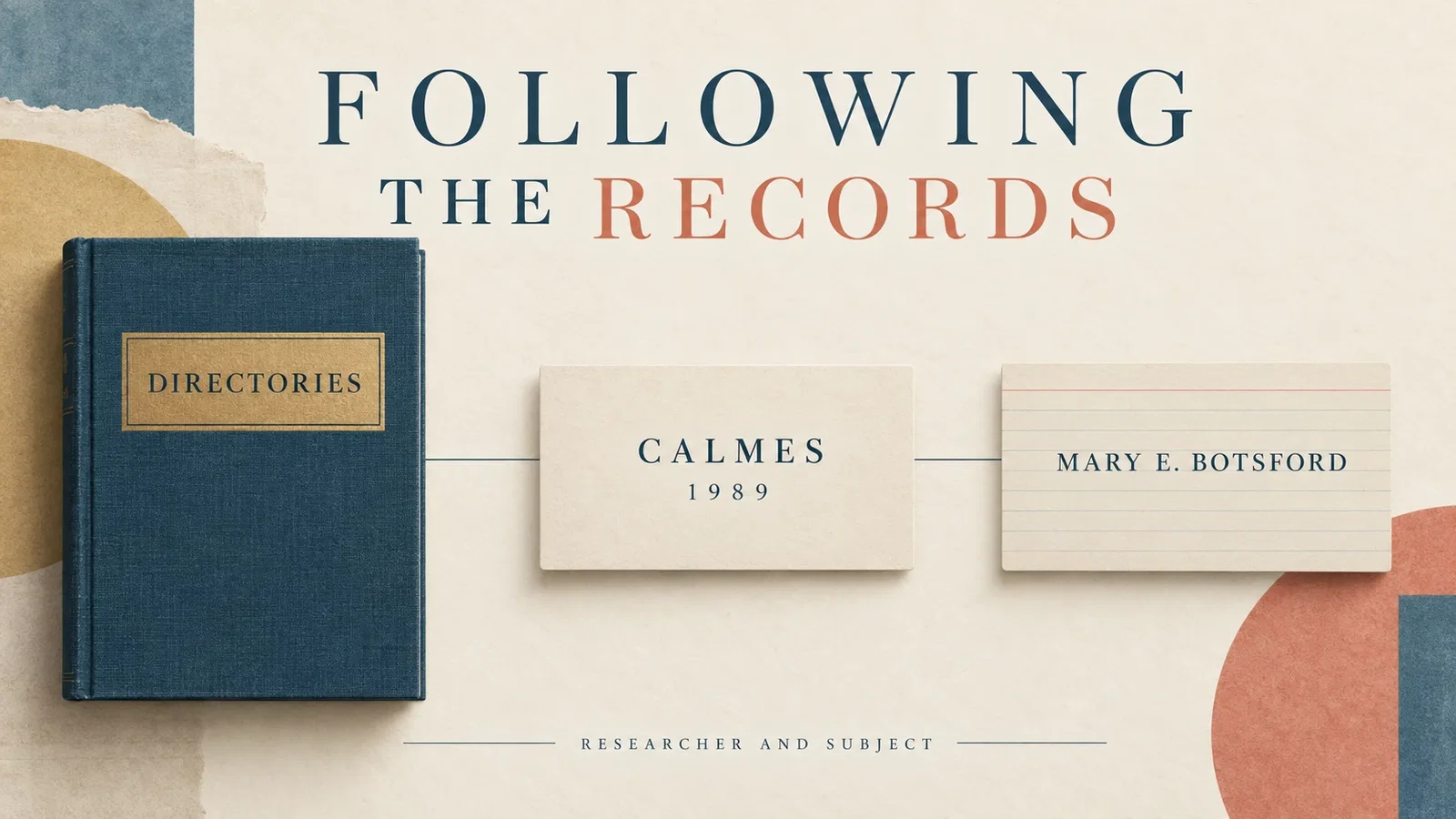
Calmes’s own work gives historical inquiry a concrete form. Her 1989 chapter examined women physician anaesthetists in San Francisco between 1897 and 1940. Professional directories supported an investigation of their distribution, followed by a study of Mary E. Botsford and the Children’s Hospital training network. Calmes described cross-checking some names against California medical directories.[4, pp.547–550] This site links this article to Botsford because the co-founder actually studied that person and professional network. The link does not imply that Botsford caused the AHA’s formation or that the association commissioned or funded the chapter.
The people studied belonged to an earlier period; the research appeared after the association formed. Both dates matter. The chapter’s tables and references offer routes for checking its interpretation, although the underlying archival materials were not all retrieved for this article.[4] A similar distinction applies to the association itself: an announcement records what organizers planned, while a later history adds an account of what took place.
The early AHA took shape through repeatable activities: circulating a newsletter, inviting colleagues, arranging a meeting and encouraging research.[1–2] It gave dispersed historical interests an organizational home. Its founding story includes the people who organized it and the correspondence and scholarship that made continued exchange possible.
Image note: all four illustrations are modern editorial concepts, not photographs of the 1982–1983 meetings, original newsletters or portraits. The timeline separates organization, naming and the inaugural meeting. Subscriber numbers do not substitute for membership counts. The research illustration refers to Calmes’s published directory study without reproducing archival documents or implying mentorship, commissioning or funding.
Sources and reading limits
- Calmes SH, Calverley RK, Maltby JR. The anesthesia history association. Can Anaesth Soc J. 1983;30(5):564. Original correspondence; publisher PDF. Entire letter on the left of page 564 read. The publisher lists three authors; the page identifies Calmes as co-chair and contact, with Calverley and Maltby signing below. The adjacent opioid letter is separate. This is a prospective meeting notice, not minutes.
- Anesthesia History Association. History of AHA. Complete history text read, 16 September 2026. Institutional retrospective: 1982 organizational meeting and newsletter, January 1983 name, 9 October 1983 inaugural meeting. Original organizational minutes and first newsletter are not covered. The webpage spells the co-founder’s name “Calverly”; the original letter and publisher use “Calverley”.
- National Library of Medicine. Biography: Dr. Selma Harrison Calmes. Exhibition biography and first-person responses read, 16 September 2026. Its founding milestone is 1982. This retrospective is used for that distinction, not for current appointments.
- Calmes SH. The women physician anaesthetists of San Francisco, 1897–1940. The legacy of Dr Mary E. Botsford (1865–1939). In: Atkinson RS, Boulton TB, eds. The History of Anaesthesia. Royal Society of Medicine Services; 1989:547–550. Original chapter scan hosted by the California Society of Anesthesiologists. All four pages, three tables and references read. The historical study is available here; the underlying directory volumes and minutes were not newly read.
Continue exploring
Related reading connects shared questions and contexts; it does not by itself establish historical influence.
The Source Room · About & Editorial Method
Sources and reading limits are stated above. Illustrations are labelled as original source images or AI-made. Historical accounts are educational; they are not current treatment instructions.