From regional congresses to a confederation.
Reading Library · Anesthesia Epochs · 中文版
Watch the companion film
1962: CLASA — After the Congress · Watch on YouTube
Historical anchor: 1962. Date details and source qualifications are explained below.
CLASA’s institutional history begins in Lima, Peru, on October 22, 1962. Its official website gives that date for the founding of the Confederación Latinoamericana de Sociedades de Anestesiología, the Latin American Confederation of Societies of Anesthesiology.[1] The event belongs to the history of professional organization: national societies were developing a structure for working across borders.

Regional congresses already had a history. Ocampo’s institutional account and Varela’s 2019 editorial trace the first Latin American congress to Buenos Aires in 1949 and describe José César Delorme’s part in promoting regional contact.[2,3] The distinction matters. Holding an international meeting and establishing a confederation are separate events, even when later histories explain them together.
Both accounts place the founding during the sixth Latin American congress in Lima. They list delegates from Argentina, Brazil, Bolivia, Colombia, Chile, Ecuador, Mexico, Peru, Uruguay and Venezuela.[2,3] This is a list of ten countries represented in the historical narrative. It does not establish that exactly ten individuals signed a document or that governments created an interstate treaty.
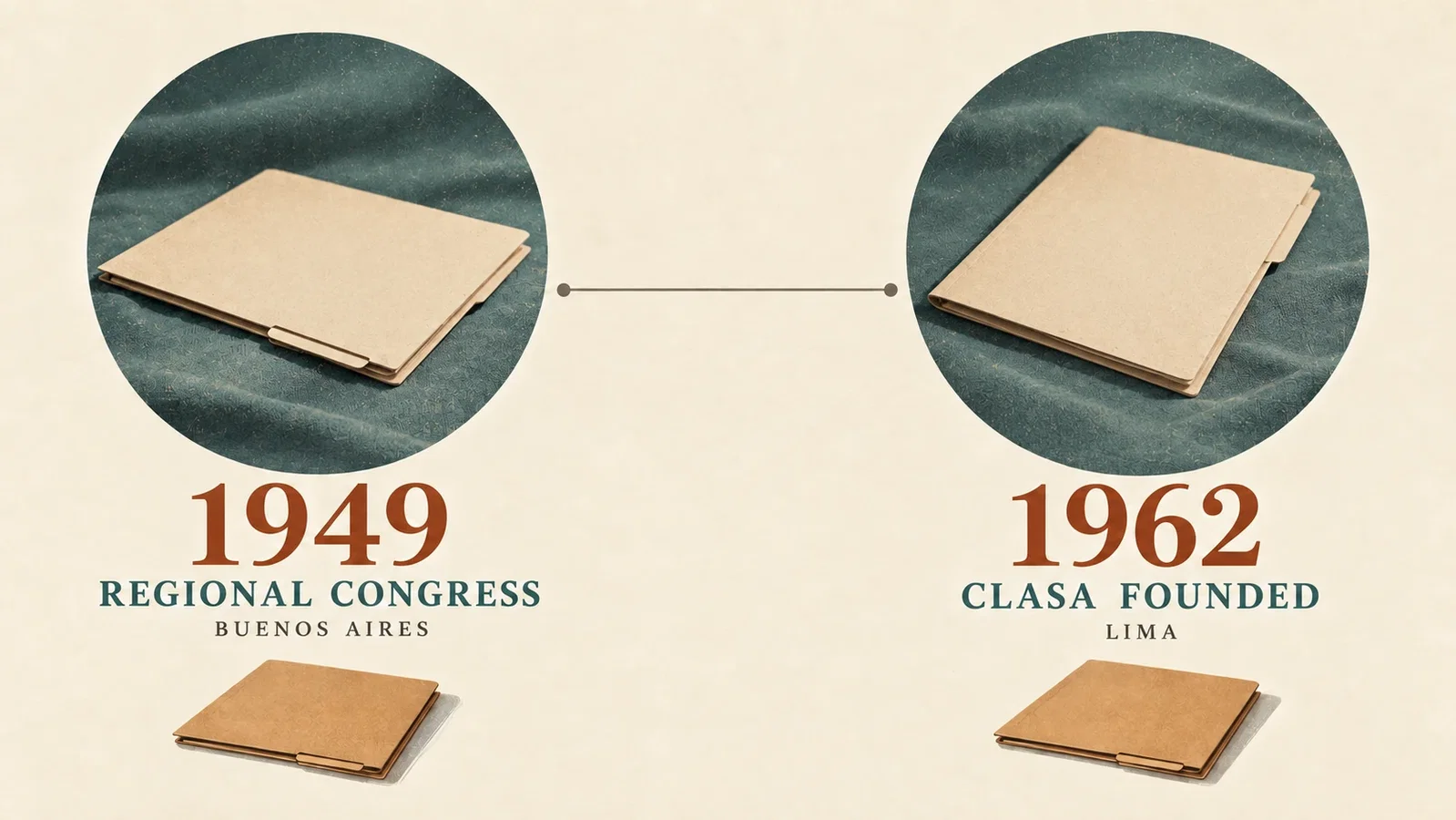
One national society offers a specific connection to an earlier article. The 2013 history by Marrón-Peña and Moreno-Alatorre identifies the Sociedad Mexicana de Anestesiología as a founding member of CLASA and gives the same date and city.[4] This recorded participation supports a relationship with the Mexican society’s 1934 article. It does not establish that the Mexican society alone brought the confederation into being.
The evidence has a chronology of its own. Ocampo’s article adapts an earlier historical manuscript; Varela was writing a congress editorial in 2019. Venturini’s South American history also cites Ocampo in the relevant section.[2,3,5] Agreement among these texts should not be mistaken for several independent eyewitness accounts. The original 1962 founding minutes and first statutes are not covered in this essay. The date and place rest on the official institutional record read alongside the published histories.

A later document makes some organizational purposes concrete. The statutes supplied by CLASA are explicitly marked as revised in 2023. Their objectives include sharing scientific information, encouraging training opportunities and faculty exchange, and supporting national organizations.[6] They describe the work envisaged by that version of the institution. Reading them does not establish which courses, budgets or voting rules were in operation on the founding day. Nor do stated aims demonstrate a measured improvement in patient outcomes.
Photographs require the same attention to dates. The early group photograph reproduced in the 2019 editorial is captioned São Paulo, 1954.[3] It documents the earlier congress setting as presented by that article; relabelling it as the Lima founding would change its historical identity. The illustrations accompanying this essay are therefore explicitly interpretive and do not attempt to manufacture a founding photograph.
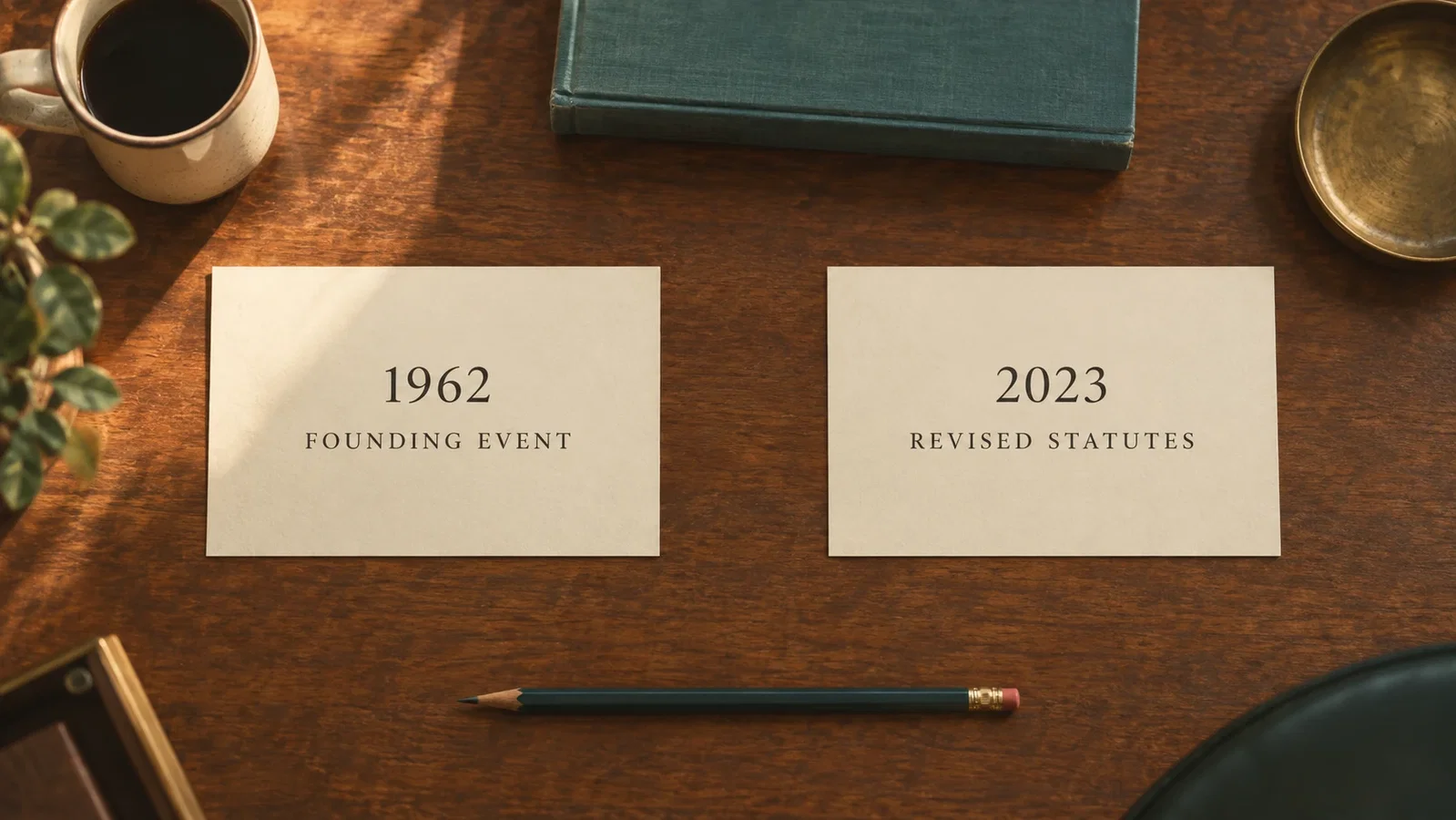
CLASA’s founding marks a step in the organization of regional professional relationships. Keeping the earlier congress, the founding event and later institutional documents distinct makes that step easier to describe. It also leaves room for what the surviving sources here do not tell us about the proceedings themselves.
Reading and image note: Ocampo’s two-page letter and Varela’s four-page editorial were read in full. Other documents were read only at the locations listed below. The two official web pages are one institutional source, not independent witnesses. All four images are modern editorial interpretations, not evidence of the actual venue, signatures, charter or membership totals.
Sources and reading limits
- CLASA. Acerca de CLASA. Official organization page and home page, accessed September 15, 2026. Founding statement and organizational description; retrospective institutional record.
- Ocampo Trujillo B. Historia de la Confederación Latinoamericana de Sociedades de Anestesiología (CLASA) durante 50 años. Rev Colomb Anestesiol. 2007;35(3):247–248. Full article. Complete letter and repository cover read; adaptation of an earlier historical account. Title retained as printed; not a calculation of elapsed years.
- Varela Maldonado I. Congreso de la Confederación Latinoamericana de Sociedades de Anestesiología CLASA 2019. Rev Chil Anest. 2019;48:93–96. DOI. Complete editorial read; founding history pp93–94 and 1954 photograph caption p94.
- Marrón-Peña M, Moreno-Alatorre C. Antecedentes históricos del Colegio Mexicano de Anestesiología, antes Sociedad Mexicana de Anestesiología: sus orígenes, evolución y trascendencia (1934–1995). Rev Mex Anestesiol. 2013;36:136–154. Original PDF. Selected pp136, 152, 154 only; founding-membership statement p152 cites Moreno 1984, not covered here.
- Venturini AH. Historia de la anestesia en Sudamérica. 2010. Institutional repository copy. Selected pp1, 33–34, 43 only; references 264, 271, 277 cite Ocampo 2007.
- CLASA. Estatutos actualizados. Modification A.G.E., September 7, 2023. Official statutes entry. Selected PDF pp1–3, cover and articles 1–3 only; this is not the original 1962 charter.
Continue exploring
Related reading connects shared questions and contexts; it does not by itself establish historical influence.
Anesthesia Epochs · The Source Room · About & Editorial Method
Sources and reading limits are stated above. Illustrations are labelled as original source images or AI-made. Historical accounts are educational; they are not current treatment instructions.