Scheele's Chemical Treatise on Air and Fire, printed in 1777, described air as two kinds of elastic fluid and a gas in which a candle burned brightly, which he called fire air, now identified with oxygen, and explained it with phlogiston.
Reading Library · Anesthesia Epochs · 中文版
Watch the education video (for clinicians)
1777: Scheele's Fire Air — The Book of 1777 · Anesthesia Epochs Education Series
A date on a title page is not necessarily the date of an experiment.
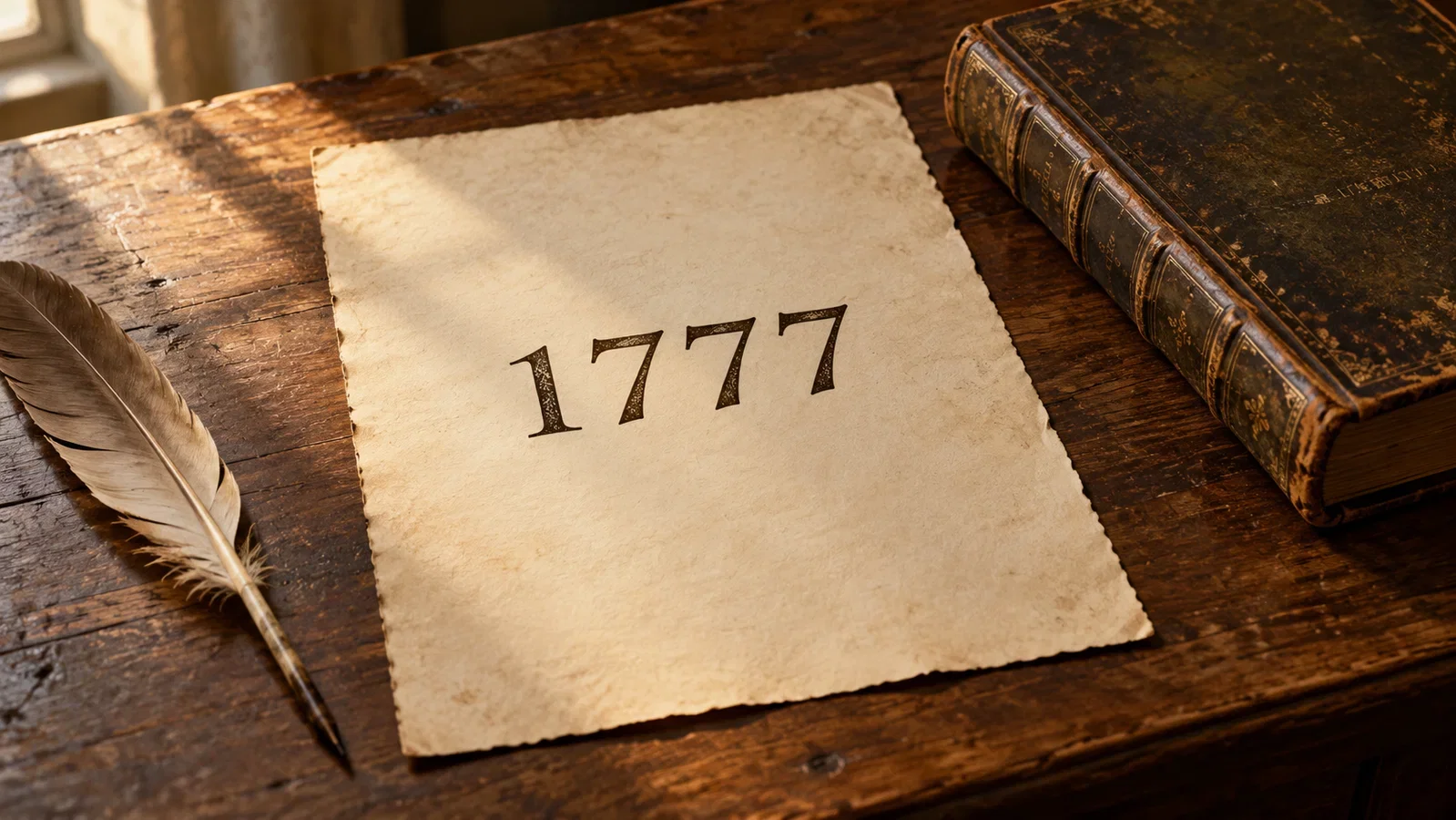
Carl Wilhelm Scheele’s Chemical Treatise on Air and Fire appeared in 1777, with Upsala and Leipzig named on its title page. At the end of his introductory essay, dated 13 July 1777, Torbern Bergman wrote that the work had been ready for nearly two years. That interval matters. The year identifies the publication; the July date belongs to the introduction. Neither dates a particular discovery experiment. [1, title page; Bergman’s introduction, p. 16]
Section 8 offers a striking proposition: air consists of two kinds of “elastic fluids.” Scheele develops it through comparisons. He confines air in vessels, exposes it to different materials, and observes changes in its volume. What remains in a bottle need not behave like ordinary air. [1, pp. 6–13, selected portions of §§8–16]
In section 29, the other side of the comparison becomes vivid. Scheele reports collecting a gas during distillation and finding that a candle placed in it burned with an intense light. He also mixes this gas with air in which a flame would not burn, then compares the resulting mixture. Its connection with combustion supplies his name: Feuer Luft, or fire air. [1, pp. 28–29, §29]
Modern historical accounts identify fire air with oxygen. [2–3] Reading Scheele’s own text, however, requires attention to the distinction between what he observed and how he explained it. A brighter flame and changes in air were observations to investigate. His explanation still employed phlogiston. In section 28 he understood heat as a combination of a constituent of air and phlogiston. Publishing a new phenomenon did not by itself take him outside that theoretical framework. [1, pp. 26–27, §28]
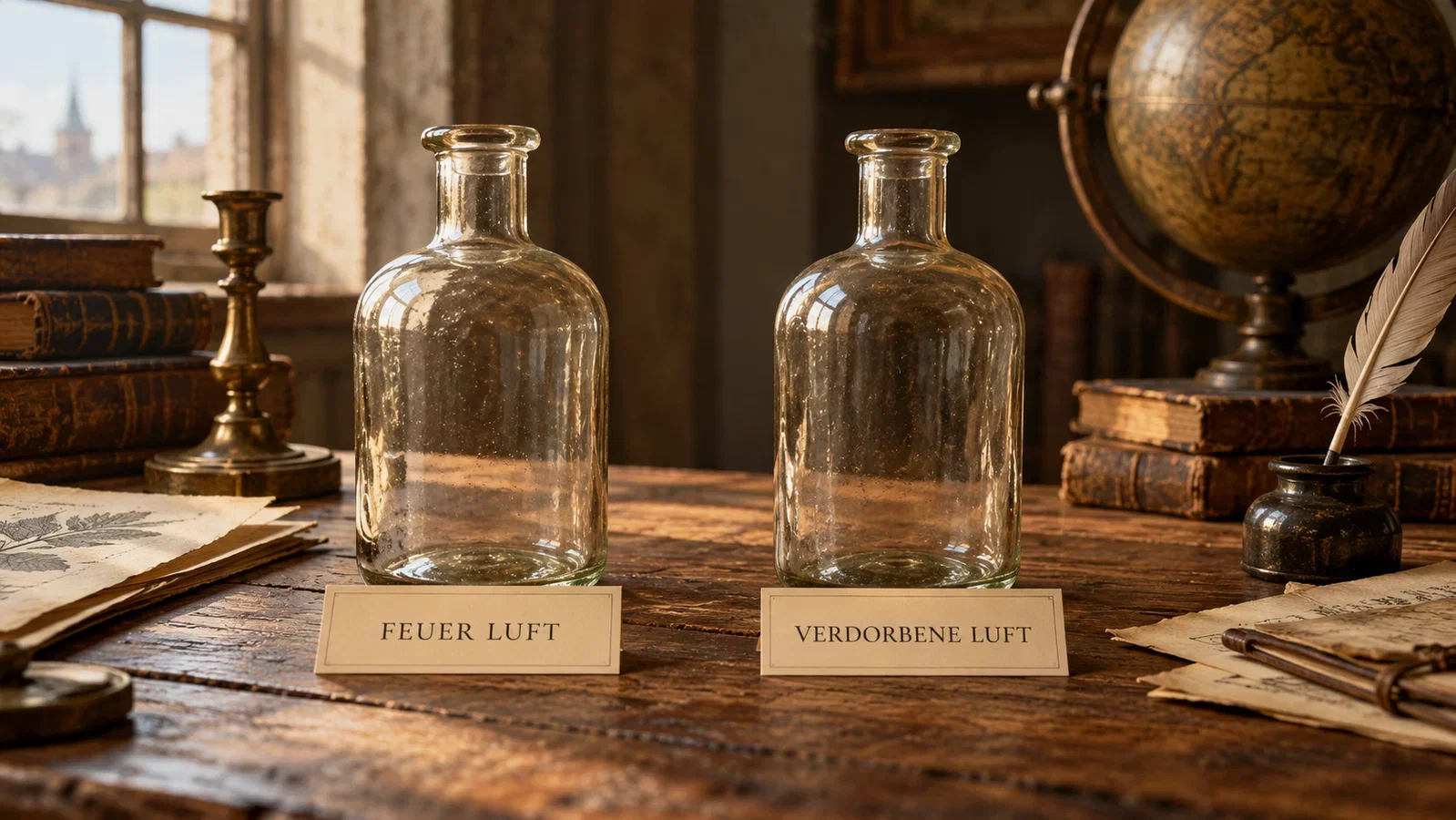
The proportions in the book belong to the same investigation. Volume changes vary across experiments, and estimates of the constituents of air retain the conditions and assumptions of those comparisons. They are not translated here into modern oxygen concentrations. Nor does a bright flame establish suitability for clinical use. The opening of section 30 lists simple vessels—flasks, retorts, bottles, glasses and ox bladders—reminding the reader that the observations depended on particular ways of collecting, containing and comparing gases. [1, pp. 6–13, 28–29]
The 1777 book leaves a report of how different airs were distinguished that we can examine page by page. Within an anesthesia history series, it provides background to the recognition of gases. The further steps between fire air and clinical oxygen supply require their own evidence.
Sources and reading limits
- Scheele CW. Chemische Abhandlung von der Luft und dem Feuer. Upsala und Leipzig: Magn. Swederus; 1777. Title page; Bergman’s introduction, p. 16; pp. 6–7; pp. 12–13; pp. 26–27; pp. 28–29. Quoted from the scanned pages.
- Project Runeberg. Preface to the electronic edition. Identifies the digital source as a printed facsimile of the original edition and provides the modern terminology correspondence.
- American Chemical Society. Joseph Priestley and the Discovery of Oxygen. Used only for the Scheele passage’s fire-air correspondence and publication year, not its inferred experiment date.
Source and reading limits. Read: the title, author’s preface, the opening and final page of Bergman’s introduction, and main-text pp. 1, 6–13 and 24–29. This was not a reading of the entire book or an inspection of a physical 1777 copy. Sections 16 and 30 were read only within those page limits. On p. 28 the scan preserves nicht (“not”) in the mixing passage; its omission in the web text reverses the meaning, so the scan controls this account. These pages do not establish global priority or clinical efficacy. Unread respiratory and animal sections are not used. All four images are AI-assisted editorial reconstructions, not historical images.
Continue exploring
Related reading connects shared questions and contexts; it does not by itself establish historical influence.
Anesthesia Epochs · The Source Room · About & Editorial Method
Updated October 30, 2026. Sources and reading limits are stated above. Illustrations are labelled as original source images or AI-made. Historical accounts are educational; they are not current treatment instructions.