On 1 August 1774 Priestley heated mercurius calcinatus with a burning lens and got an air in which a candle burned brilliantly; only after tests in March 1775 did he judge it better than common air, calling it dephlogisticated air, now known as oxygen.
Reading Library · Anesthesia Epochs · 中文版
Watch the education video (for clinicians)
1774: Priestley's New Air — The Flame Came First · Anesthesia Epochs Education Series
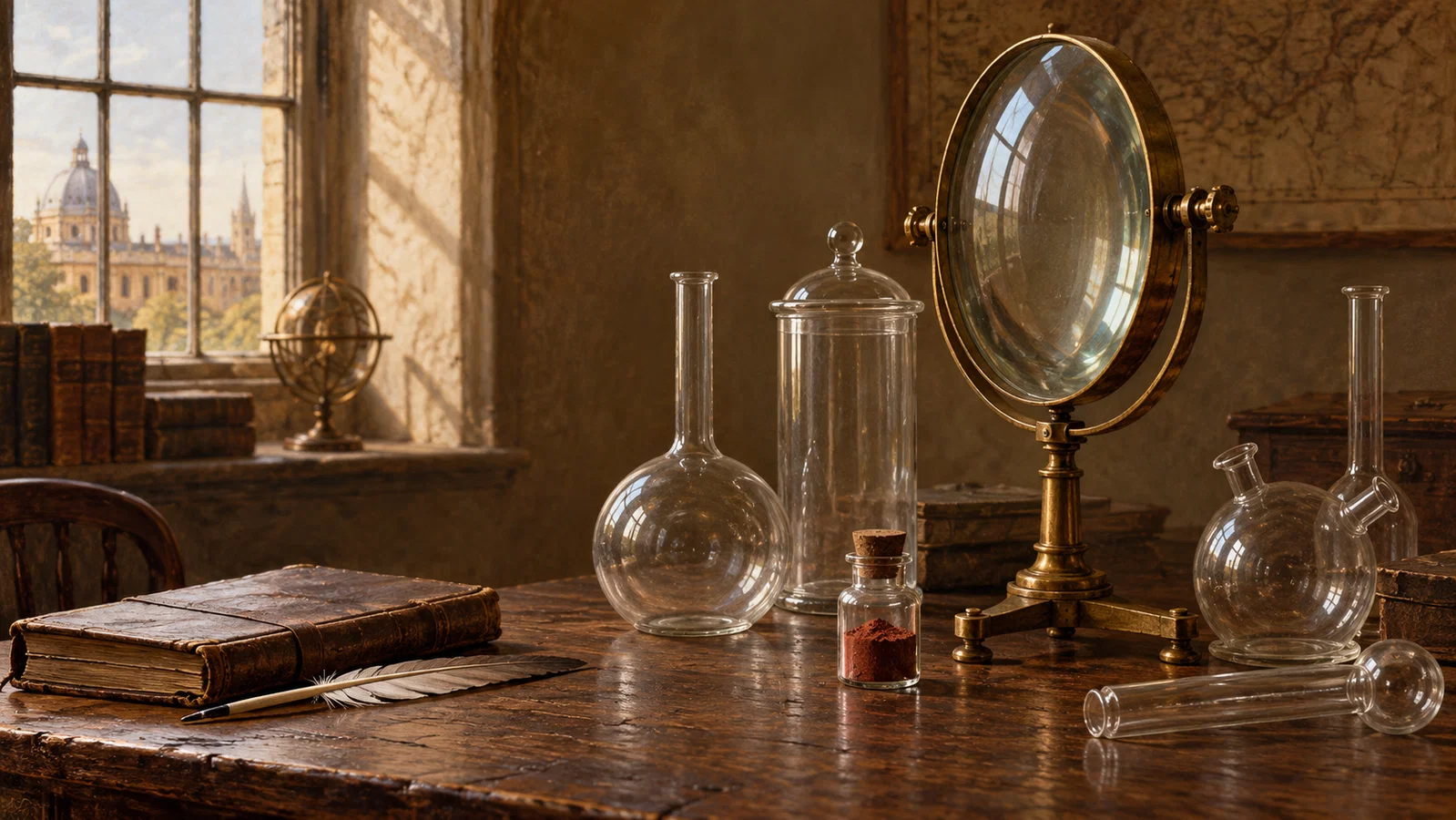
The flame burned brilliantly. An explanation did not arrive with it.
Joseph Priestley recorded that on 1 August 1774 he used a burning lens on a material called mercurius calcinatus per se and obtained a gas. A candle burned in it with unusual vigor. We now read this experiment as part of the history of oxygen. Priestley still had to work out what kind of “air” he had obtained.[1, pp.33–35; 2]
The setting was his work at Bowood.[2] This article takes 1 August 1774, the date explicitly stated in his account, as its place on the timeline. The understanding that followed over several months does not belong entirely to that day.
One experiment, three dates
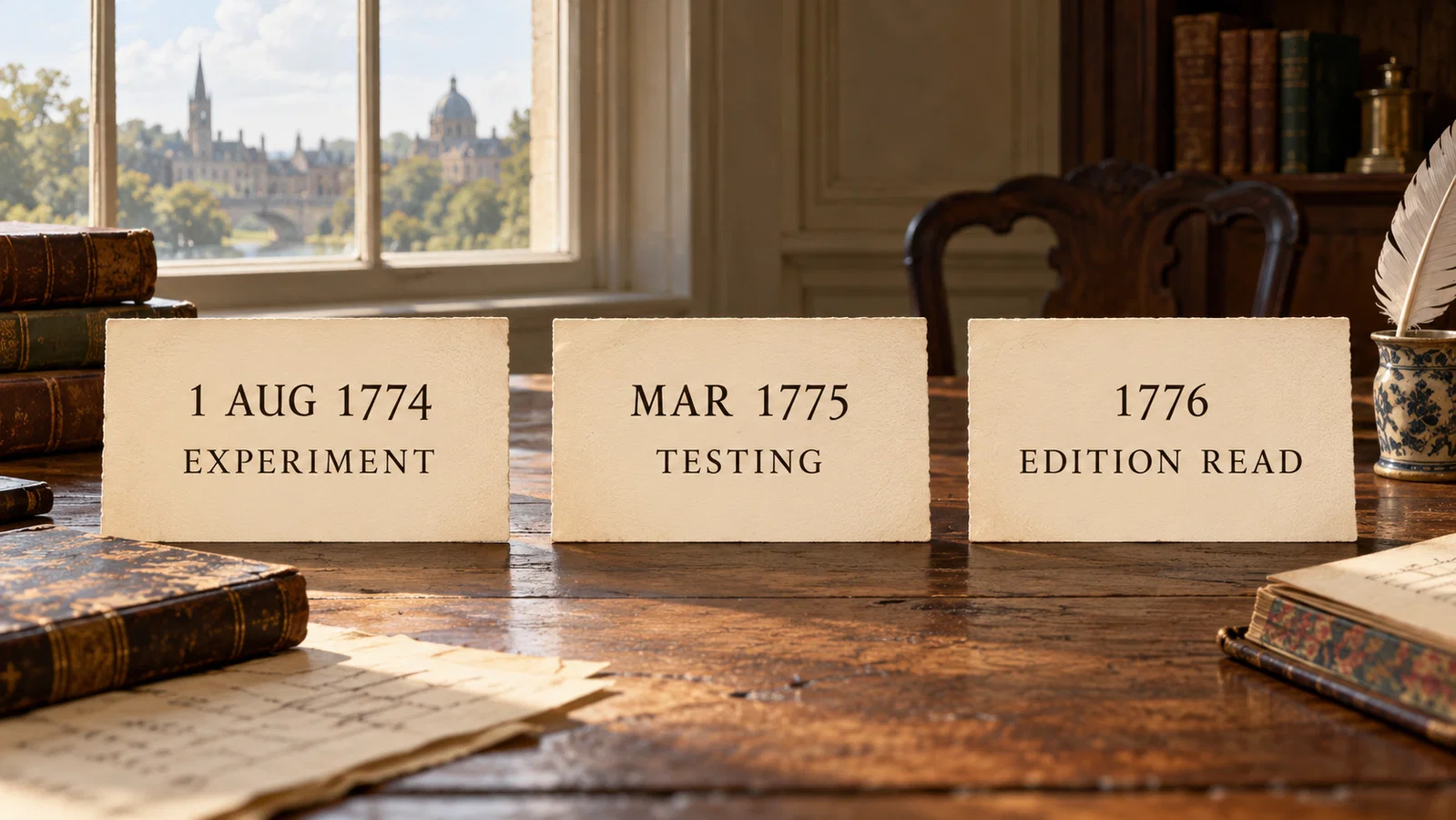
The volume read for this article is the 1776 second edition of Volume II of Experiments and Observations on Different Kinds of Air. Its title page establishes that edition and year. Section III looks back to the experiments of 1774 and continues into the tests of 1775.[1, title page and pp.29–61]
Thus 1774 marks the selected experiment, 1775 the subsequent investigation, and 1776 the publication of the edition in hand. These dates have different jobs. The printed retrospective is also distinct from an original laboratory entry made on the day.
A bright flame did not settle breathability
Priestley admitted that he initially had no thought that this air would be wholesome to breathe. Its behavior reminded him of other gases he had investigated. The purity of the starting material and the gas’s behavior in water were still questions to resolve.[1, pp.35–39]
On 1 March 1775 he began comparing it through tests with what he called nitrous air, observing changes in the volume of the mixture. At first he interpreted the result as evidence that he had obtained ordinary air. He described how his assumption that no air could be better than common air had obstructed his judgment.[1, pp.40–43]
“Better” belongs to the experimental comparisons he was making. It is not a ready-made measure of therapeutic benefit or safety.
Breathing tests left uncertainties
He recorded obtaining a mouse on 8 March. In one observation the animal remained in the gas for half an hour, compared with his previous experience of about a quarter of an hour in similar tests. On removal it seemed dead, then recovered after warming. He suspected cold and explicitly acknowledged variation between animals and the limited accuracy of this method.[1, pp.43–44]
The next day he continued chemical comparisons using mixtures and volume changes, and he made further animal observations. The account contains more than successful outcomes: another mouse died after forty-five minutes. He again suspected cold, but that explanation is his conjecture, not an established cause of death.[1, pp.45–47]
These details resist the compressed claim that the experiments immediately proved oxygen safe. They record an investigation with recovery, death and acknowledged uncertainty.

A new observation within an older theory
From his gas tests, Priestley came to estimate that this air was between four and five times as “good” as common air. He interpreted its ability to take up more phlogiston as evidence that it originally contained less.[1, pp.48–49] That was an inference within his experimental framework. It is not an oxygen concentration, a survival multiplier or a clinical effect size.
His name, dephlogisticated air, carries the explanation with it. Later in the same section he also tried to account for the atmosphere through nitrous acid, earth and phlogiston.[1, pp.55,60–61] These are historical hypotheses in the text, not modern descriptions of oxygen or atmospheric composition.
We can identify the gas by its present name, oxygen.[2] Giving Priestley that later understanding at every stage of the August experiment would conceal what his account makes visible: an observation can precede recognition, and a compelling explanation can still be mistaken.
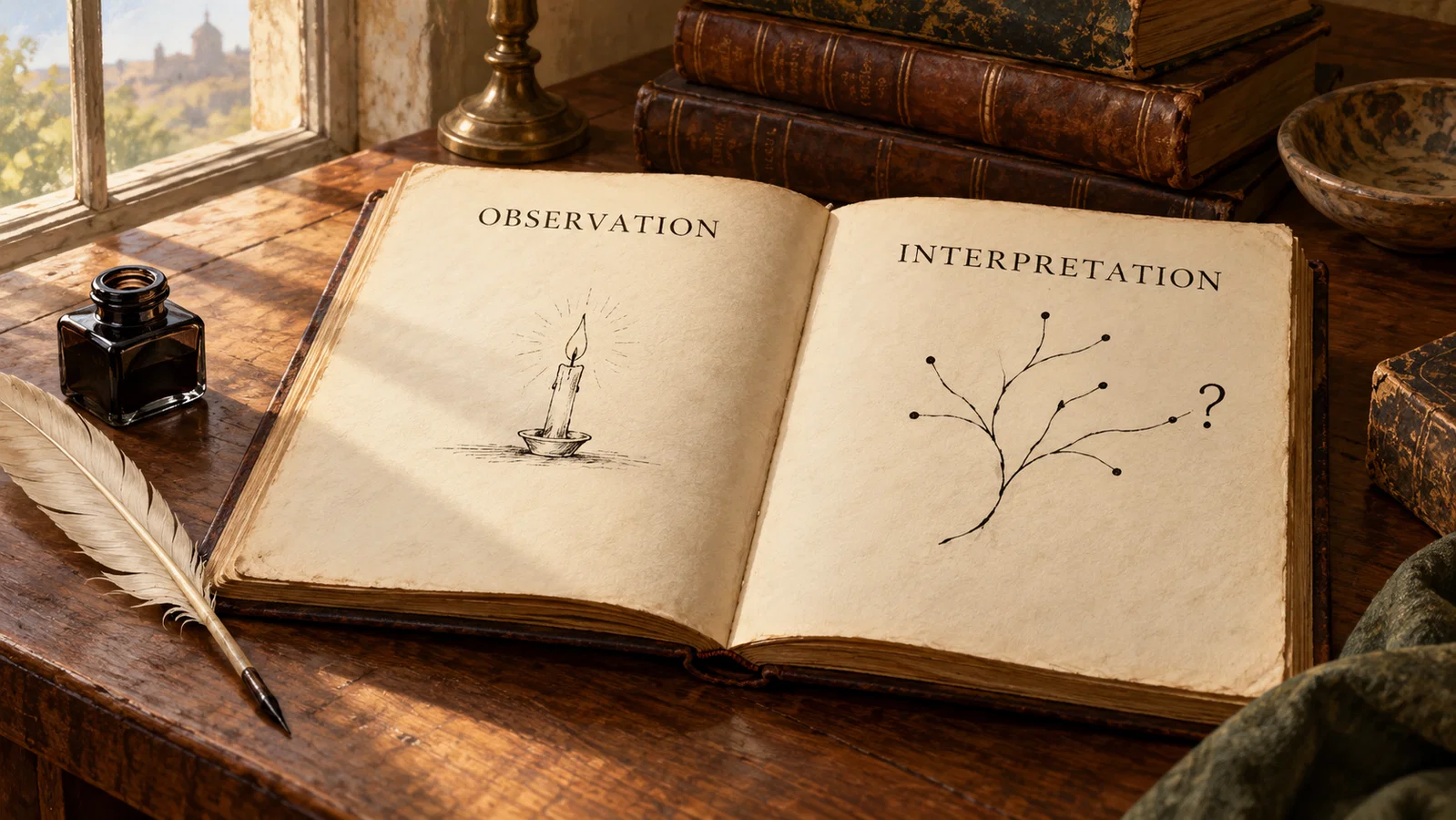
For the history of gases surrounding anesthesia, this episode shows “air” becoming something to compare and test repeatedly. This article ends with those experiments and their interpretive limits. Naming oxygen, other investigators’ contributions and later medical applications require their own sources and dates.
Material and image limits: The 1776 second-edition title page, contents and complete Section III, printed pages 29–61, were read. Neither the whole volume nor the 1775 first edition was read. The ACS institutional page supplies only the modern gas-name correspondence and Bowood context. This article does not decide worldwide priority or adopt the self-inhalation anecdote from later pages not read in the original for this article. All four images are AI editorial illustrations: an imagined still life, modern date cards, a qualitative flame comparison and an observation/interpretation notebook. They are not portraits, original experimental drawings or authenticated apparatus. This is not a laboratory or treatment procedure.
Sources and reading limits
[1] Priestley J. Experiments and Observations on Different Kinds of Air. Vol. II. Second edition. London: J. Johnson; 1776. Section III, pp.29–61. Original volume scan. Read: the title page, contents and Section III, pp.29–61. Some catalogue records date this scan to 1775; its title page reads 1776.
[2] American Chemical Society. Joseph Priestley and the Discovery of Oxygen. Used only for the modern name of the gas and the Bowood setting; dates, sequence and limits follow [1].
This article concerns the oxygen experiments described above. The 1772 nitrous-oxide account is distinct, and other oxygen-history subjects are outside this article’s scope.
Continue exploring
Related reading connects shared questions and contexts; it does not by itself establish historical influence.
Anesthesia Epochs · The Source Room · About & Editorial Method
Updated October 30, 2026. Sources and reading limits are stated above. Illustrations are labelled as original source images or AI-made. Historical accounts are educational; they are not current treatment instructions.