In experiments reported between 1772 and 1774, Priestley turned nitrous air (nitric oxide) into a new gas, later identified as nitrous oxide, that kept a candle burning but did not sustain an animal; he imagined medical uses but described no anaesthesia.
Reading Library · Anesthesia Epochs · 中文版
Watch the companion film
1772–1774: Priestley and Nitrous Oxide · Watch on YouTube
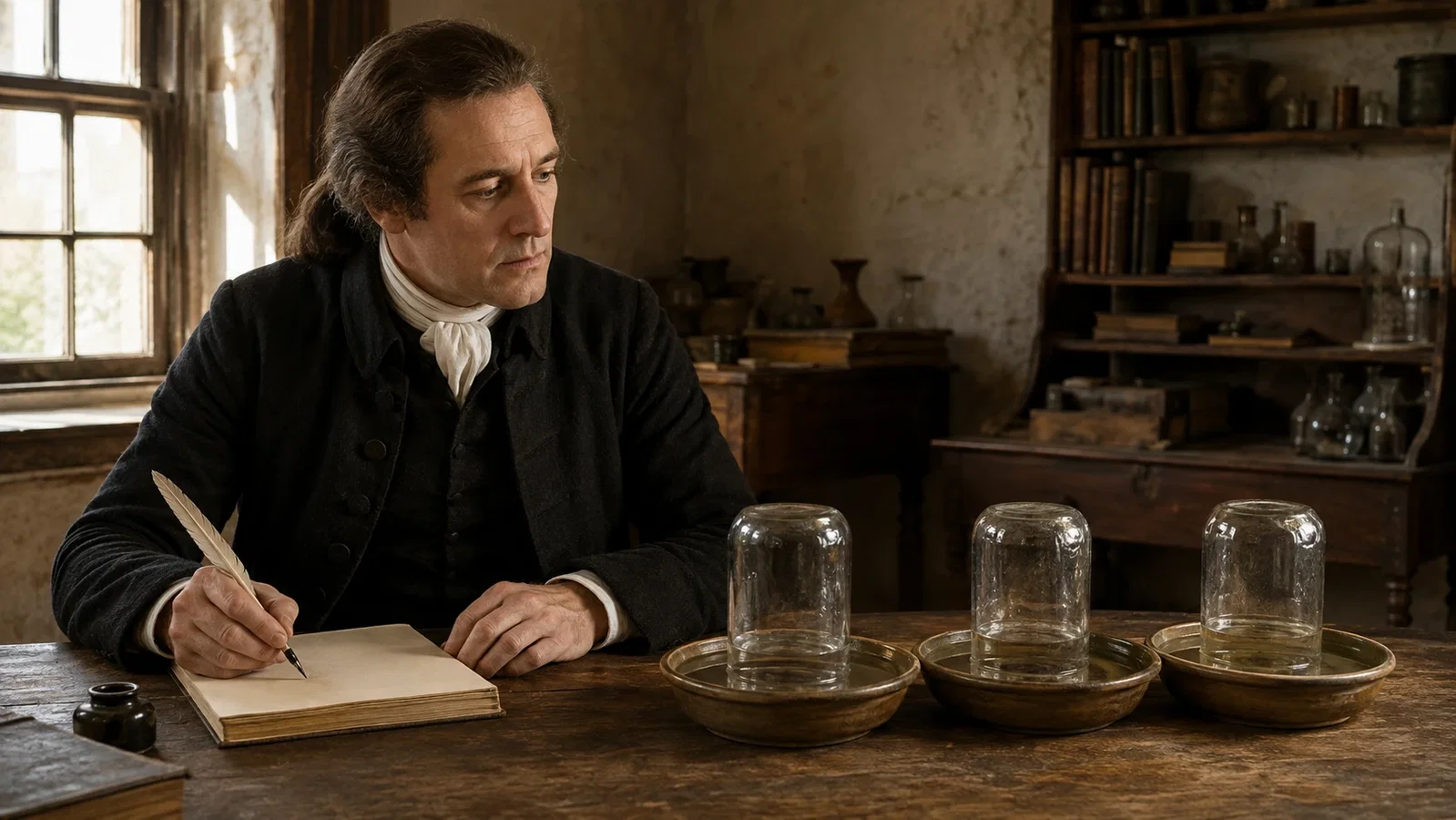
(Figure 1) Keeping an “air” available for study. An original historical reconstruction, not an authenticated portrait, room or experiment. Clear space inside a jar does not establish that its contents are pure nitrous oxide.[1,5]
A date can make a historical claim look unusually secure. Joseph Priestley's account supplies one: 4 June 1772. It also supplies a name, nitrous air. Put those details beside a modern account of laughing gas and an attractive sentence almost writes itself: Priestley first made nitrous oxide on that day.
There is a problem. In this passage, nitrous air means nitric oxide, NO—not nitrous oxide, N2O. Precision about the day cannot rescue a mistake about the substance.[2, pp.210–211; 3, pp.70–72]
That small distinction changes the story. Priestley's early investigations belong in the history of nitrous oxide, but neither an entry in an experimental notebook nor the production of an unusual gas is automatically the invention of an anesthetic method. The route from one to the other still had important questions to cross.
Read the names before fixing the date
Three terms are especially easy to confuse. Nitrous air is the historical name mapped to nitric oxide in the account discussed here. Nitrous oxide, N2O, is laughing gas. The longer historical expression dephlogisticated nitrous air also appears in its history. Remove the word nitrous, however, and dephlogisticated air points to oxygen, O2.[3, pp.70–72; 5, p.4]
These are useful modern mappings, not evidence that eighteenth-century experimenters possessed a settled dictionary or knew the composition of every sample. Priestley described substances after different treatments and compared what they did. His vocabulary, observations and explanations were still developing. We should not silently give him the molecular formula, purity measurements or chemical certainty of a later laboratory.[1, pp.215–221; 5]
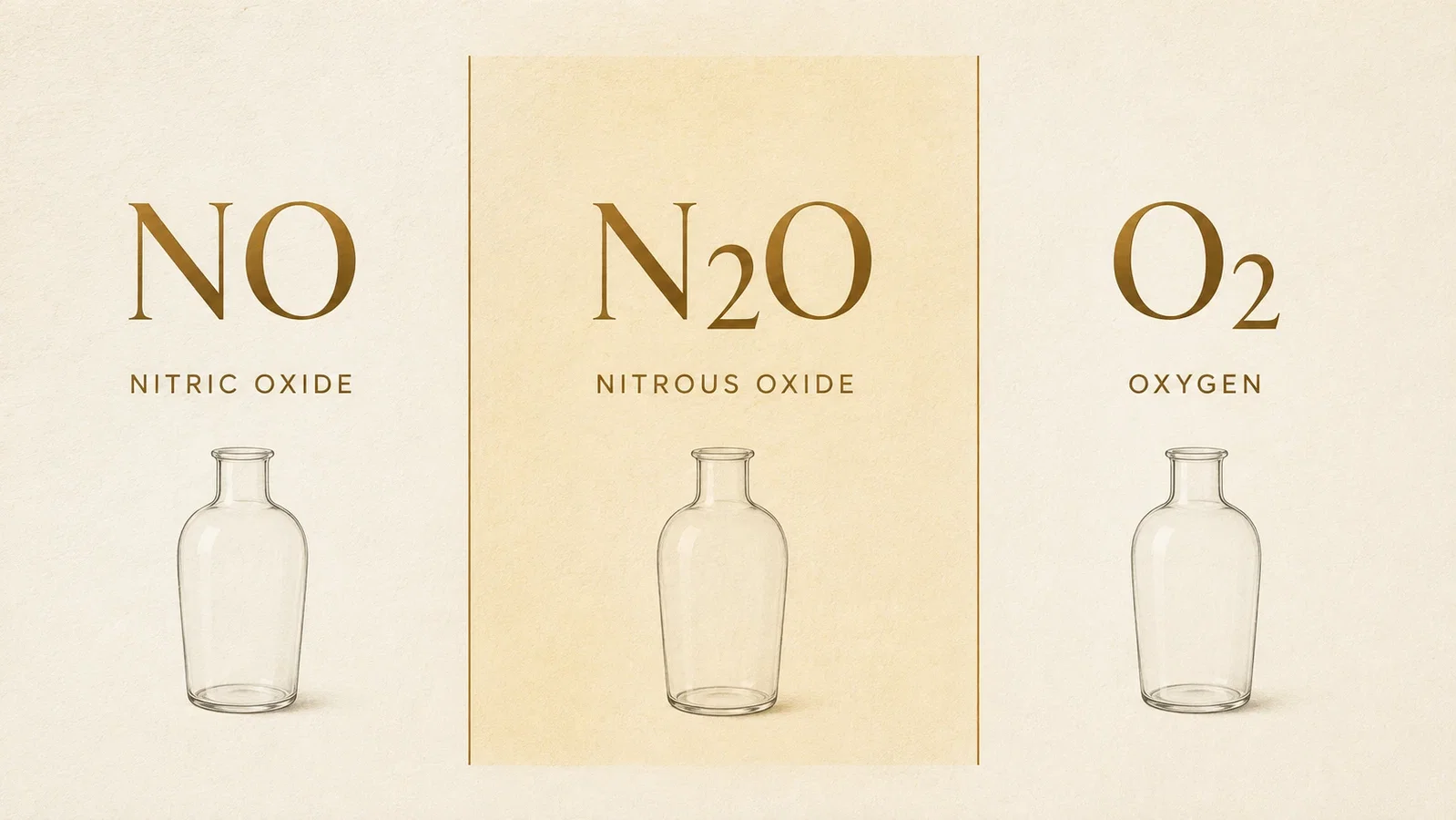
(Figure 2) Similar names, different substances. This is a modern editorial comparison, not Priestley's own chart and not a left-to-right chemical reaction.[3,5]
The original article's section on nitrous air begins by acknowledging earlier work. Priestley had read Stephen Hales, then discussed the matter with Henry Cavendish during a visit to London in spring 1772. Cavendish encouraged further inquiry. Priestley subsequently recorded his experiment on 4 June and explained his choice of name.[2, pp.210–211]
The date belongs to that account. It should not be borrowed to give N2O an exact birthday.
Nor does this require erasing 1772 from the story. The Wood Library-Museum's historical summary attributes the first production and description of nitrous oxide to Priestley in that year. The 1772-volume paper itself also discusses further changes in nitrous air. A retrospective attribution and a primary experimental account can both matter without being made to say precisely the same thing.[2, pp.216–224; 4]
This article therefore follows an early sequence spanning 1772–1774. The first year is its starting anchor, not a claim to have settled the exact day on which a chemically defined sample was first produced.
One substance called air becomes several things to compare
At the beginning of his paper, Priestley confronted a practical difficulty: what should different airs be called? Existing names sometimes referred to origins, sometimes to combustion, sometimes to harmful effects. He retained certain established terms and distinguished other kinds by their properties. Naming was part of the investigation, not a tidy exercise conducted after all the substances had been identified.[2, pp.147–148]
Their appearance offered little help. In the book's preface, he explained the shared use of air in terms of transparency and elasticity. Materials that looked alike in a vessel could behave differently when tested.[1, preface p.xxii]
Before such comparisons could mean much, the investigator needed ways to collect, hold and transfer samples. Priestley's apparatus chapter describes vessels and troughs while expressly acknowledging earlier equipment associated with Hales, Brownrigg and Cavendish. His own arrangements adapted that inheritance. The container was not merely scenery around the discovery: it helped make a sample available for examination.[1, pp.6–22]
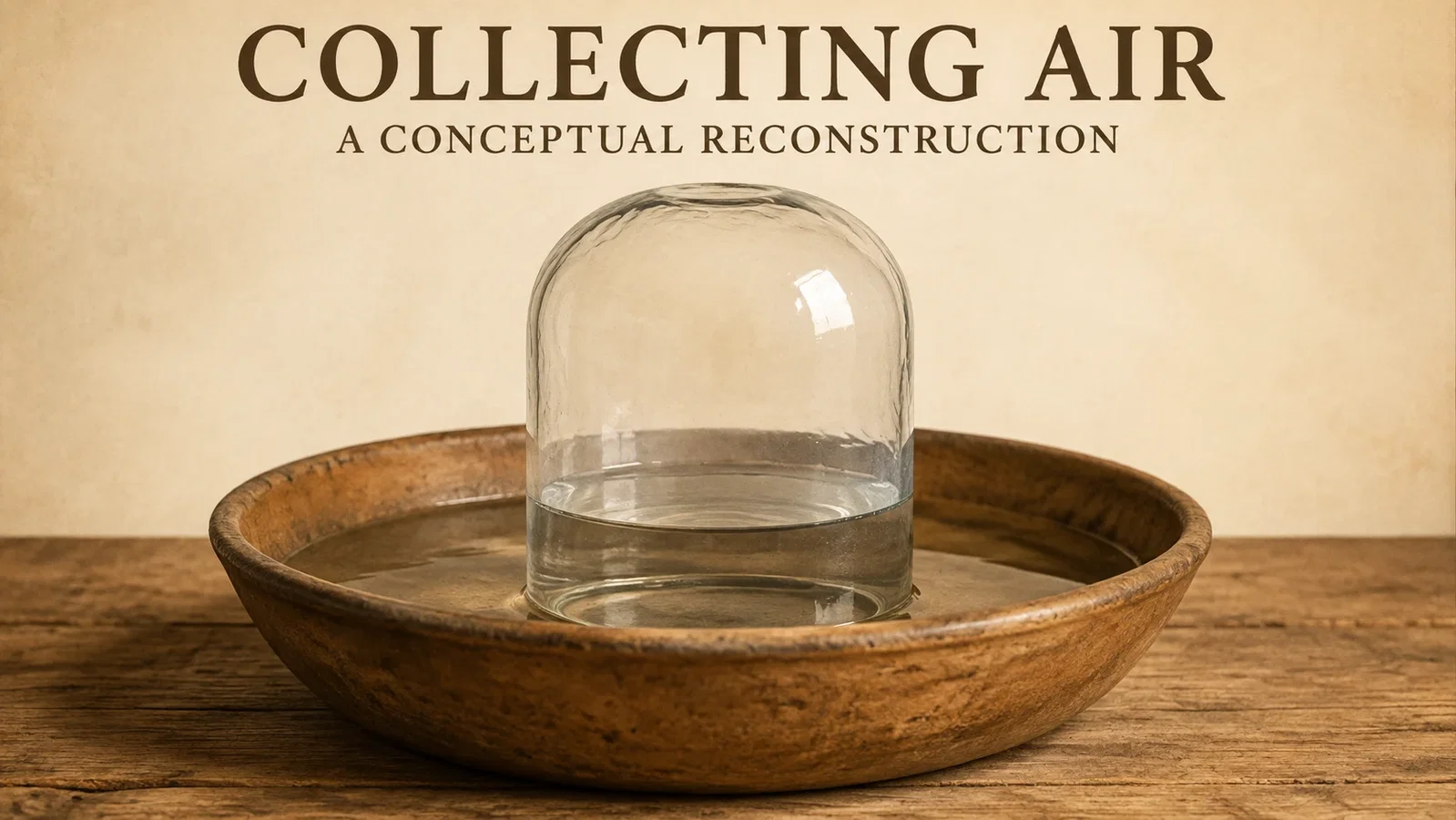
(Figure 3) A conceptual reconstruction of containment by a water seal. It does not reproduce a particular nitrous oxide preparation or provide reagents, heating instructions or an inhalation procedure.[1, pp.6–22; 5, fig.3]
The apparatus also needs its own historical boundary. The S.S. White nitrous oxide cylinder displayed on the Wood Library-Museum page dates to 1890–1900. It cannot serve as a picture of Priestley's equipment in the early 1770s simply because it now appears beside the museum's account of him.[4]
What the book's later observations actually describe
The volume read for this article is the corrected second edition of 1775. Its preface is dated February 1774. Those dates identify different things; the copy is not a scan of the first edition merely because it preserves an earlier preface.[1, title page; preface p.xxiii]
The book's internal divisions offer another important guide. Part I groups experiments made in or before 1772. Part II groups experiments from 1773 and early 1774. In that second part is a striking passage later connected with the early history of nitrous oxide.[1, preface p.xxi; pp.23, 163, 215; 3, p.72]
Priestley began with a chemical question about the interaction between nitrous air and iron. In the course of comparing samples, he encountered an unexpected change. One altered gas supported a candle's flame but, in his report, did not sustain animal life. Bergman's history of anesthesia identifies the passage with nitrous oxide and quotes this observation in its discussion of the gas's early preparation.[1, p.215; 3, p.72]
The contrast mattered because it challenged an expectation. A gas could sustain combustion without supporting an animal. But this is a report from a particular historical investigation, not a demonstration that a sample was standardized, pure or safe for a person to inhale.
Just as importantly, Priestley did not stop writing after the dramatic result. The following pages describe variable outcomes, further tests and uncertainties about why the behavior changed. His explanatory language concerned acid and phlogiston. It was an attempt to understand the results within the theory available to him, not a completed modern analysis of molecular composition.[1, pp.216–221]
Extract only the burning candle and the uncertainty disappears. Extract only the animal's death and the later clinical history can seem to have been conclusively rejected before it began. Neither reading is warranted. Supporting a flame is not a test of safe inhalation; a historical animal observation is not, by itself, a complete judgment on later controlled clinical uses.
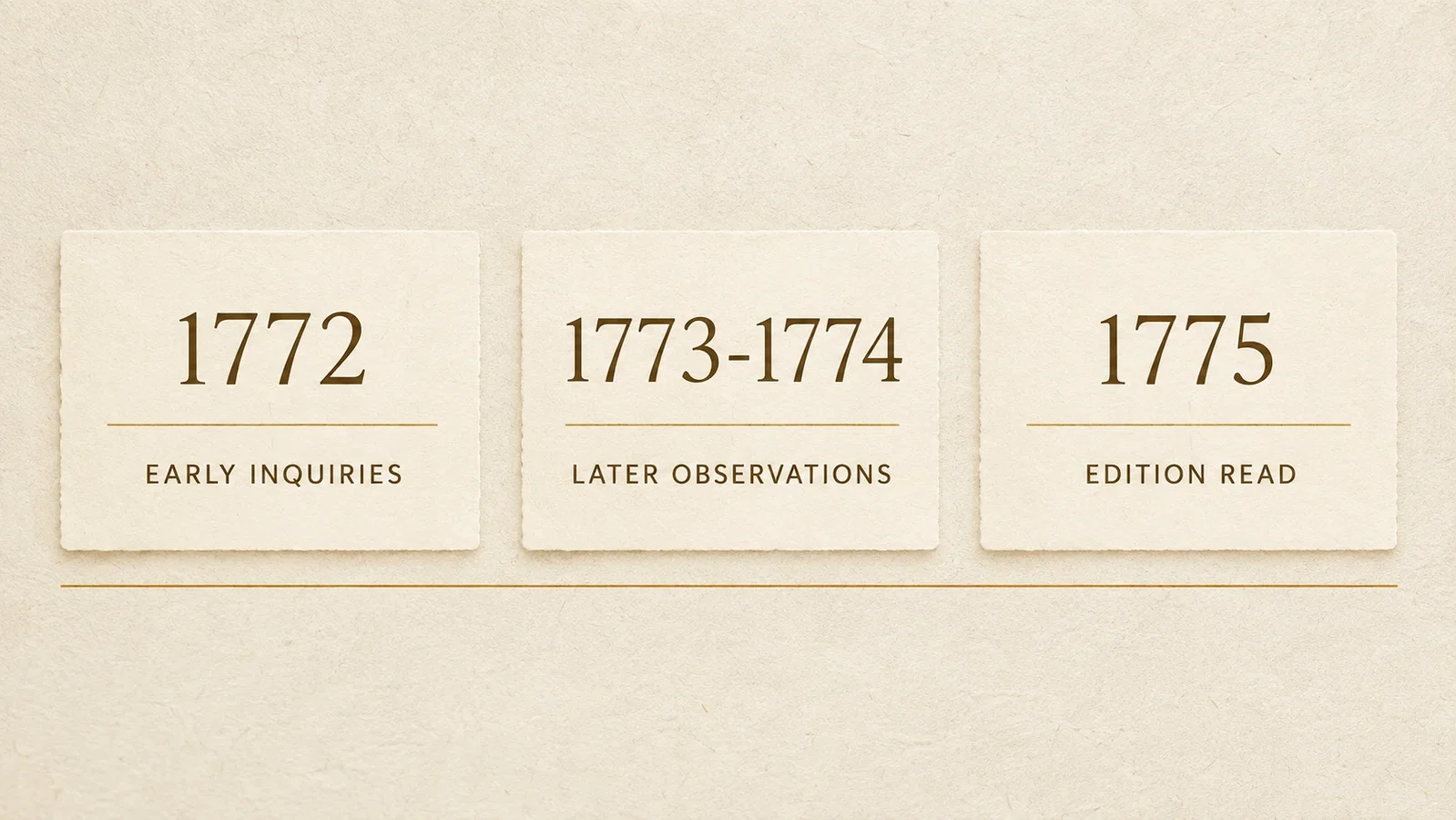
(Figure 4) Three dates doing three different jobs. The middle label follows the book's grouping of later observations; the final label identifies the edition read. None of the three cards announces an adjudicated first-production date for N2O.[1,2]
The placement of the passage is a reason for care, not an invitation to announce a newly discovered “true” birthday. It lets us describe which account we have read and where it sits, while preserving the museum's 1772 attribution as a retrospective historical statement.
Medical possibility was not yet an anesthetic method
No human demonstration of analgesia or surgical anesthesia appears in the primary sections read for this article. Their central work is the investigation of gases. That limited finding should not be inflated into a claim about everything Priestley ever wrote or did.[1, pp.108–128, 203–228; 2, pp.210–224]
It would also be wrong to say he had no medical interest. Near the end of the later section, he explicitly considered possible medical applications and invited physicians to investigate. At the same time, he worried that reckless and indiscriminate use might discredit promising work. These passages express possibilities and concerns, not established treatment effects.[1, pp.227–228]
The resulting history is more revealing than a story about a chemist simply “missing anesthesia.” Observing an unfamiliar gas, imagining a medical use, investigating human experience, proposing a surgical application and establishing dependable care are different achievements. Success at one stage cannot be used as evidence that the rest had already happened.
The Wood Library-Museum account places Davy's investigations and later dental use in subsequent stages. This site will take up Davy's work of 1800 in a later article. It does not belong retrospectively in Priestley's early-1770s study.[4]
Priestley's contribution here is a body of observations that other investigators could pursue. The candle that kept burning makes a memorable image. The more durable lesson is the distinction it exposes: what a gas can do and whether it can safely relieve a person's pain are different questions.
Sources and reading limits
- Priestley J. Experiments and Observations on Different Kinds of Air, Vol. I. London: J. Johnson; 1775. Corrected second edition. Reading covered the title, complete preface, introduction pp.1–22, Part I pp.108–128, Part II pp.203–228 and the relevant part headings, using the same-edition transcription and original scan checks. This is not a whole-book reading or direct inspection of the 1774 first edition.
- Priestley J. XIX. Observations on different kinds of air. Philosophical Transactions. 1772;62:147–264. Opening pp.147–148 and the complete Section VI, pp.210–224, read. The volume year is not treated as an exact print-distribution date.
- Bergman NA. The Genesis of Surgical Anesthesia · Archived copy. Wood Library-Museum; 1998. Printed pp.70–72 read online, particularly the identification of Priestley's observation with N2O.
- Wood Library-Museum. Nitrous Oxide · Archived copy. Historical text and object record read online. The 1772 attribution, later uses and 1890–1900 cylinder are kept distinct.
- McEvoy JG. Gases, God and the balance of nature: a commentary on Priestley (1772) ‘Observations on different kinds of air’. Phil Trans R Soc A. 2015;373:20140229. Read in full. Used for names, apparatus and intellectual context, with original chronology checked separately.
This medical-history article provides no gas-making, animal-experiment, inhalation or clinical drug-use instructions. Sources and reading limits are stated above. Illustrations are labelled as original source images or AI-made. Historical accounts are educational; they are not current treatment instructions.
Continue exploring
Related reading connects shared questions and contexts; it does not by itself establish historical influence.
- 1561: Cordus's Account of Preparing Ether Reaches Print
- 1800: Davy's Nitrous Oxide and Surgery in the Conditional
Anesthesia Epochs · The Source Room · About & Editorial Method