Mesmer's 1779 book claimed a universal fluid that could heal through the nerves; in 1784 a royal commission, testing with blindfolds and sham procedures, found no such fluid and attributed the reactions to touch, imagination and imitation.
Reading Library · Anesthesia Epochs · 中文版
Watch the education video (for clinicians)
1779: Mesmer's Animal Magnetism — From Fluid to Test · Anesthesia Epochs Education Series

A patient reacts. Does that establish the force a practitioner says produced the reaction? Mesmer’s 1779 book set out an account of animal magnetism. A commission’s report five years later tried to separate the reactions it observed from the fluid offered to explain them.[1–2]
The date attached to this article is the book’s publication year. It does not mark a verified first hypnotic operation or the beginning of every idea associated with the subject.
What twenty-seven propositions promised
At the end of his Mémoire, Mesmer proposed a mutual influence among celestial bodies, the earth and living bodies, carried by a fluid distributed throughout nature. He claimed that this agency acted within the nerves and described properties of the human body by analogy with a magnet. Yet proposition 20 distinguished the principle of animal magnetism from that of mineral magnetism.[1, pp. 74–80] His vocabulary belongs to his theory; it should not be silently replaced with the concepts of modern electromagnetism.
The therapeutic claims were extensive. Propositions 23–26 embraced nervous diseases, other illnesses, the action of medicines and treatment without dangerous consequences.[1, pp. 81–82] Their breadth tells us what Mesmer promised. It does not establish the promised effectiveness or safety.
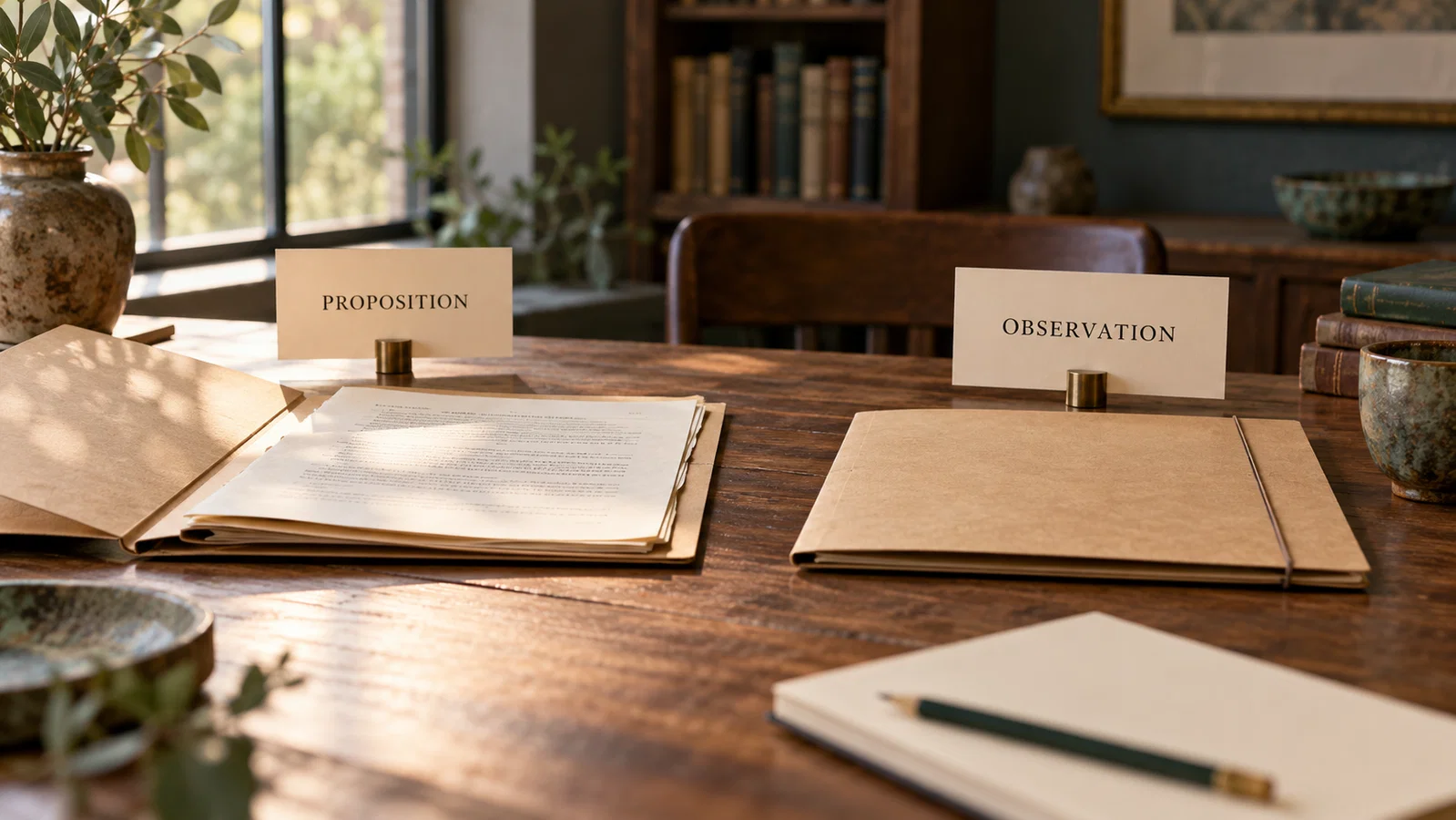
Separating what was said from what was done
The 1784 report read here investigated Deslon’s practice. Its opening cited Mesmer’s propositions; a concluding footnote explained why the commissioners considered the two men’s principles and practices comparable.[2, pp. 1–3, 64–66] That is more specific than saying the commission directly examined everything Mesmer himself did.
In some trials, the investigators obscured what the subject could see and separated an announced magnetic procedure from its actual performance. The report describes a blindfolded woman who was led to believe that Deslon was magnetizing her. No such procedure was performed, yet she developed shivering, pain and other reactions.[2, pp. 31–32, 38]
The distinction was consequential: a reaction could be observed without accepting the proposed explanation for it. These were historical experimental procedures, not a modern randomized, double-blind trial. No claim of the “first placebo study” is made here.

Keep the conclusion attached to its inquiry
Signed on 11 August 1784, the report concluded that the existence of an animal magnetic fluid had not been demonstrated. The commissioners attributed the violent effects they observed to touch, imagination and imitation, and expressed concern about repeatedly provoking crises.[2, pp. 63–64]
Those are the conclusions of this report. They should not be presented as the unanimous verdict of every contemporary inquiry, or as a judgment on all later practices called hypnosis.
Cloquet’s 1829 surgical report offers a specific comparison. It still used the language of animal magnetism and magnetic sleep, while Cloquet insisted that he was relating what he had seen and declining to draw a theoretical conclusion about magnetism.[3, pp. 132–134] These articles are connected through that distinction between observation and explanation. The connection does not establish personal transmission or a chain of invention.
Materials and images: specified portions of the original scans were read directly, not both complete books or the entire journal volume. Other contemporary inquiries, dissenting reports and replies were not individually examined here. All four images are AI editorial illustrations. The anonymous reader is imagined; the other three images are modern reading aids, not archival scenes, authentic pages or visual demonstrations of a magnetic force.
Sources and reading limits
[1] Mesmer. Mémoire sur la découverte du magnétisme animal. Genève; Paris: P. Fr. Didot le jeune; 1779. Toronto scan. Title page, prefatory pp. iii–vi and pp. 74–85, including all twenty-seven propositions and the closing remarks, were read; the rest of the book was not. The OpenLibrary edition record corroborates publication identity only.
[2] Rapport des commissaires chargés par le Roi, de l’examen du magnétisme animal. Paris: Imprimerie royale; 1784. Royal College of Surgeons scan. Title page and printed pp. 1–3, 31–32, 38–40 and 63–66 were read; the rest of the report was not. The continuation of the cup experiment beginning on p. 40 is not used. Wellcome and BnF records corroborate edition identity.
[3] Académie royale de médecine, surgical meeting account. Archives générales de médecine. 1829;20:131–134; follow-up, 290–291. BIUSanté journal scan. Both passages, their meeting headings and the volume identity were read. Only pp. 132–134 support this article’s specific comparison; they are not treated as proof of a magnetic mechanism.
Continue exploring
Related reading connects shared questions and contexts; it does not by itself establish historical influence.
Anesthesia Epochs · The Source Room · About & Editorial Method
Updated October 30, 2026. Sources and reading limits are stated above. Illustrations are labelled as original source images or AI-made. Historical accounts are educational; they are not current treatment instructions.