In April 1829 Cloquet reported removing a breast cancer while the patient talked calmly in 'magnetic sleep'; he offered no explanation, and she died nineteen days later.
Reading Library · Anesthesia Epochs · 中文版
Watch the education video (for clinicians)
1829: Cloquet's Mastectomy Under Magnetic Sleep — What Was Seen · Anesthesia Epochs Education Series

On 16 April 1829, Jules Cloquet described a breast operation to a surgical meeting. He reported that the patient had continued to converse without displaying signs of pain. He also insisted that he was relating what he had seen, without drawing a theoretical conclusion about magnetism.[1, pp. 131–134]
Preserving only the first statement turns a complicated record into an uncomplicated success story. The contemporary journal gives us more to read.
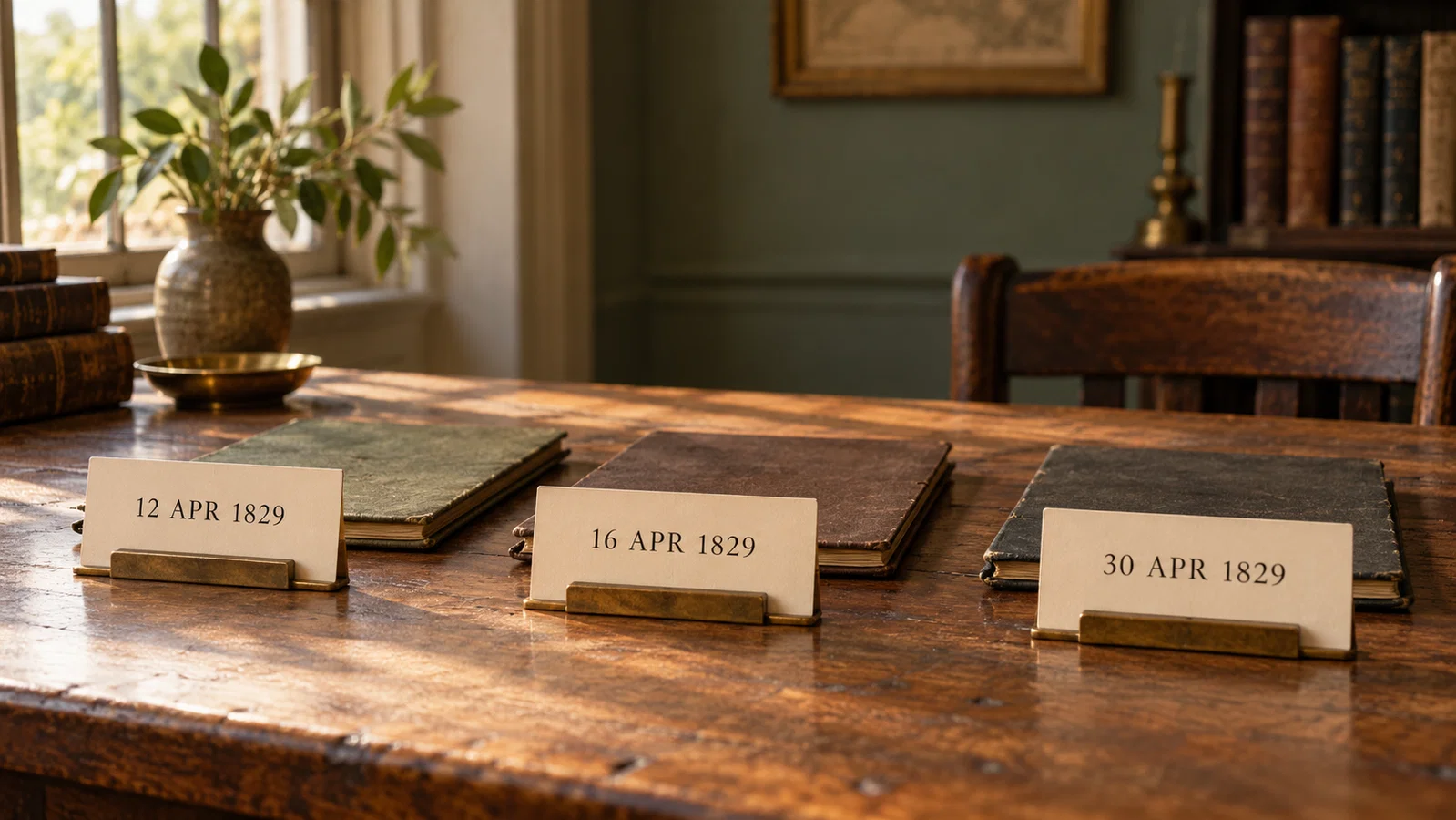
Three dates, different parts of the record
The patient consulted Cloquet about a right breast lesion on 8 April. According to the meeting account, her physician, Chapelain, had already used animal magnetism for several months in an unsuccessful attempt to resolve the breast swelling. He then proposed operating during what the account called magnetic sleep, intending to spare her the pain of the procedure.[1, pp. 131–132]
The text scheduled the operation for Sunday, 12 April. Cloquet reported it on 16 April, and the meeting of 30 April recorded the follow-up.[1, pp. 129, 132–133, 289–291] This article uses the operation date reported in that source. Publication, presentation and treatment are not interchangeable dates.
What the observation could establish
Cloquet’s account described calm conversation during the operation, without the changes in movement, expression, breathing, voice or pulse that he would have recognized as signs of pain. It also recorded a response resembling ticklishness when the skin around the wound was washed.[1, pp. 132–133] The latter detail matters: the report was not a complete measurement of every sensation at every moment.
The meeting did not agree on a magnetic explanation. Larrey and other speakers offered comparisons with patients who had endured operations without displaying pain. Cloquet repeated that he was reporting an observation rather than explaining it. A committee was appointed to examine the patient.[1, pp. 133–134]
This is a contemporary record of observation and disagreement. It does not supply a modern pain assessment or establish a reproducible, generally effective method of anesthesia.

Read the follow-up, too
At the meeting of 30 April, Moreau stated that circumstances beyond the committee’s control had prevented it from carrying out its assignment. Cloquet then reported that the patient developed chest pain, breathing difficulty and weakness on the sixteenth postoperative day. Her condition worsened, and she died on the nineteenth day. The same page recorded findings from the postmortem examination.[1, p. 290]
That passage prevents the operation from being retold as an uneventful recovery. It does not, merely through the sequence of events, establish that magnetism caused the death. Intraoperative behavior, its explanation and the patient’s eventual outcome remain separate questions. The appointment of a committee cannot be substituted for a completed independent examination.

A comparison with Mesmer’s 1779 propositions and the 1784 inquiry makes the evidentiary distinction concrete. Mesmer advanced broad claims about nervous action and treatment; the commissioners tried to separate observed reactions from the proposed fluid. Cloquet’s account shows how observations during surgery could still leave their explanation contested.[2, pp. 76, 81–82; 3, pp. 38, 63–64] This is a connection for reading the records together, not a verified line of personal transmission or invention.
Materials and images: the source used here is a journal’s account of the meetings and follow-up, not Cloquet’s signed case manuscript, the patient’s testimony or a complete later inquiry archive. “Magnetic sleep” and “animal magnetism” retain their historical meanings here; they are not equated directly with modern clinical hypnosis. All four images are AI editorial illustrations: an anonymous reading scene and modern displays of dates, observation and follow-up. None depicts the actual patient, operation or authenticated document.
Sources and reading limits
[1] Académie royale de médecine, surgical meeting accounts: “Ablation d’un cancer du sein pendant un sommeil magnétique”; follow-up, “Magnétisme animal.” Archives générales de médecine. 1829;20:131–134, 290–291. BIUSanté journal scan. Read: both passages in full, with the meeting headings on pp. 129 and 289 and the index entry on p. 627. The original account gives the age as 64; age or naming details are not used here to authenticate the event.
[2] Mesmer. Mémoire sur la découverte du magnétisme animal. 1779. Toronto scan. Read: the title page, prefatory pp. iii–vi and pp. 74–85 (also used for the Mesmer article). Only the specified propositions support this comparison.
[3] Rapport des commissaires chargés par le Roi, de l’examen du magnétisme animal. Paris: Imprimerie royale; 1784. RCS scan. Read: the title page and pp. 1–3, 31–32, 38–40 and 63–66 (also used for the Mesmer article); only the cited passages are used here.
Continue exploring
Related reading connects shared questions and contexts; it does not by itself establish historical influence.
- 1779: Mesmer's Animal Magnetism, from Fluid to Test
- 1845: James Esdaile and Painless Surgery Under Mesmerism
Anesthesia Epochs · The Source Room · About & Editorial Method
Updated October 30, 2026. Sources and reading limits are stated above. Illustrations are labelled as original source images or AI-made. Historical accounts are educational; they are not current treatment instructions.