An anesthetist and a chemist: 283 illustrations and 21 chapters, from the purity of drugs to the legal status of the anesthetist.
Reading Library · Anesthesia Epochs · 中文版
Watch the education video (for clinicians)
1914: Gwathmey and Baskerville's Anesthesia — A Place on the Staff · Anesthesia Epochs Education Series
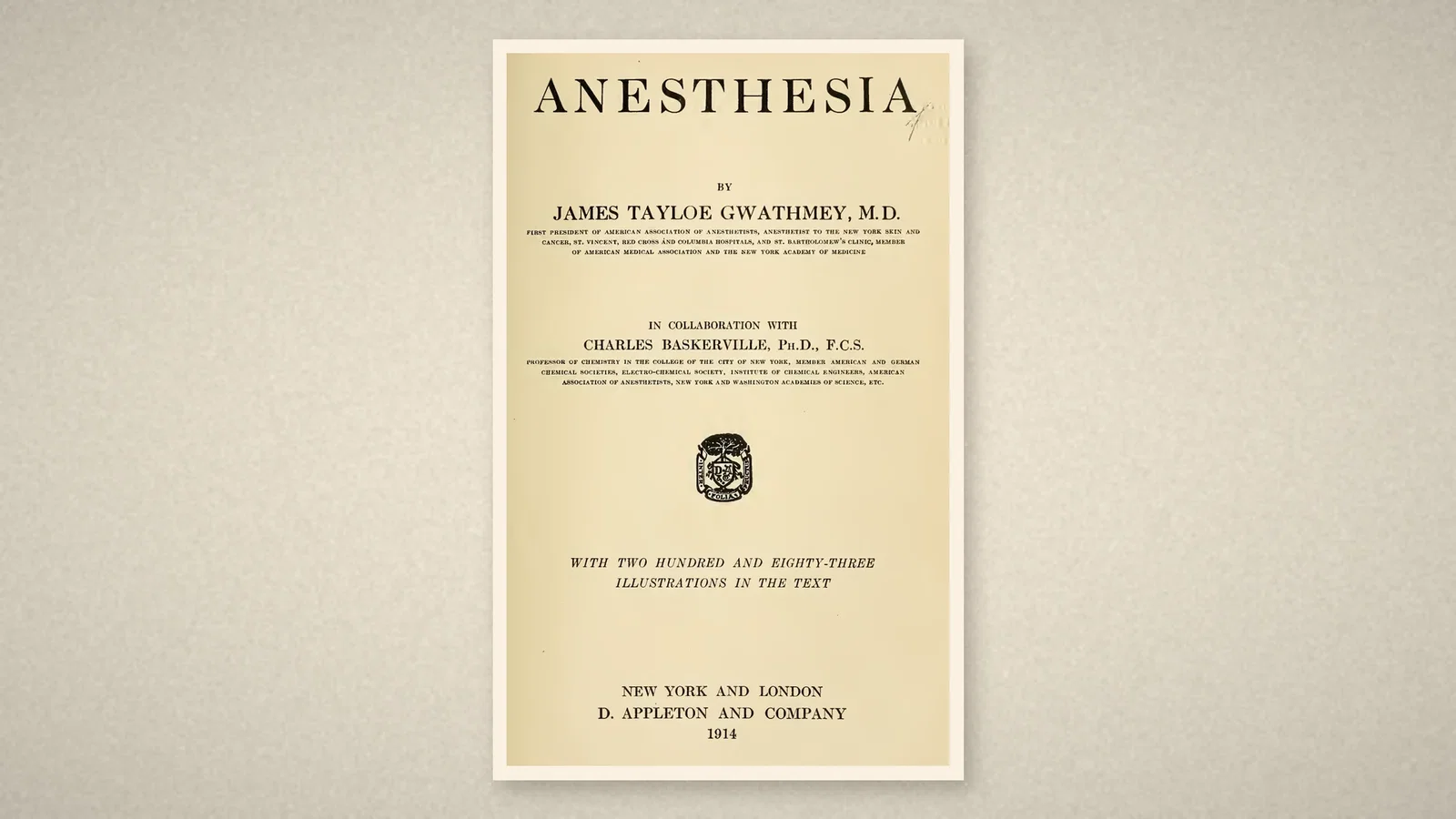
In 1914 D. Appleton and Company of New York and London published a book called Anesthesia. The title page names its author as James Tayloe Gwathmey, M.D., "First President of American Association of Anesthetists", anesthetist to the New York Skin and Cancer, St Vincent, Red Cross and Columbia Hospitals and St Bartholomew's Clinic. The collaborator was Charles Baskerville, professor of chemistry at the College of the City of New York, and the book came "with two hundred and eighty-three illustrations in the text". [1]
That a clinical anesthetist and a chemist wrote it together already says something about its approach.
Epigraph and preface
After the title page comes a verse signed "DuBartas, 1592 A.D.", describing how a surgeon, before cutting, "bringeth his patient in a senseless slumber". [1] The list of contributors includes surgeons, a dentist and a neurologist, Gatch (author of the chapter on rebreathing), and a former Assistant United States Attorney. [1]
The preface opens by saying that the administration of anesthetics, like every other part of medicine, was undergoing steady evolution, so that the best method of today might be replaced tomorrow by a safer one. The leaders of medicine and surgery were no longer content with an anesthetic that simply removed pain and let the surgeon work freely; they insisted on maintaining the patient's vitality, reducing shock as much as possible, and making recovery as comfortable as might be. [1, p. ix]
The preface then quotes the report of the American Medical Association's Committee on Anesthesia of June 1912: "Every hospital, certainly every large hospital, should have as a regular member of its staff an attending anesthetist, as is the case in some, whose authority in his special department should be as complete as is that of the attending physician or surgeon in their fields." [1, p. ix] This would matter especially in the coming years, the report explained, when the older methods, chloroform, ether, cocaine, would be competing with and modified by newer ones such as nitrous oxide, intratracheal insufflation, spinal and intravenous anesthesia. [1, p. ix]
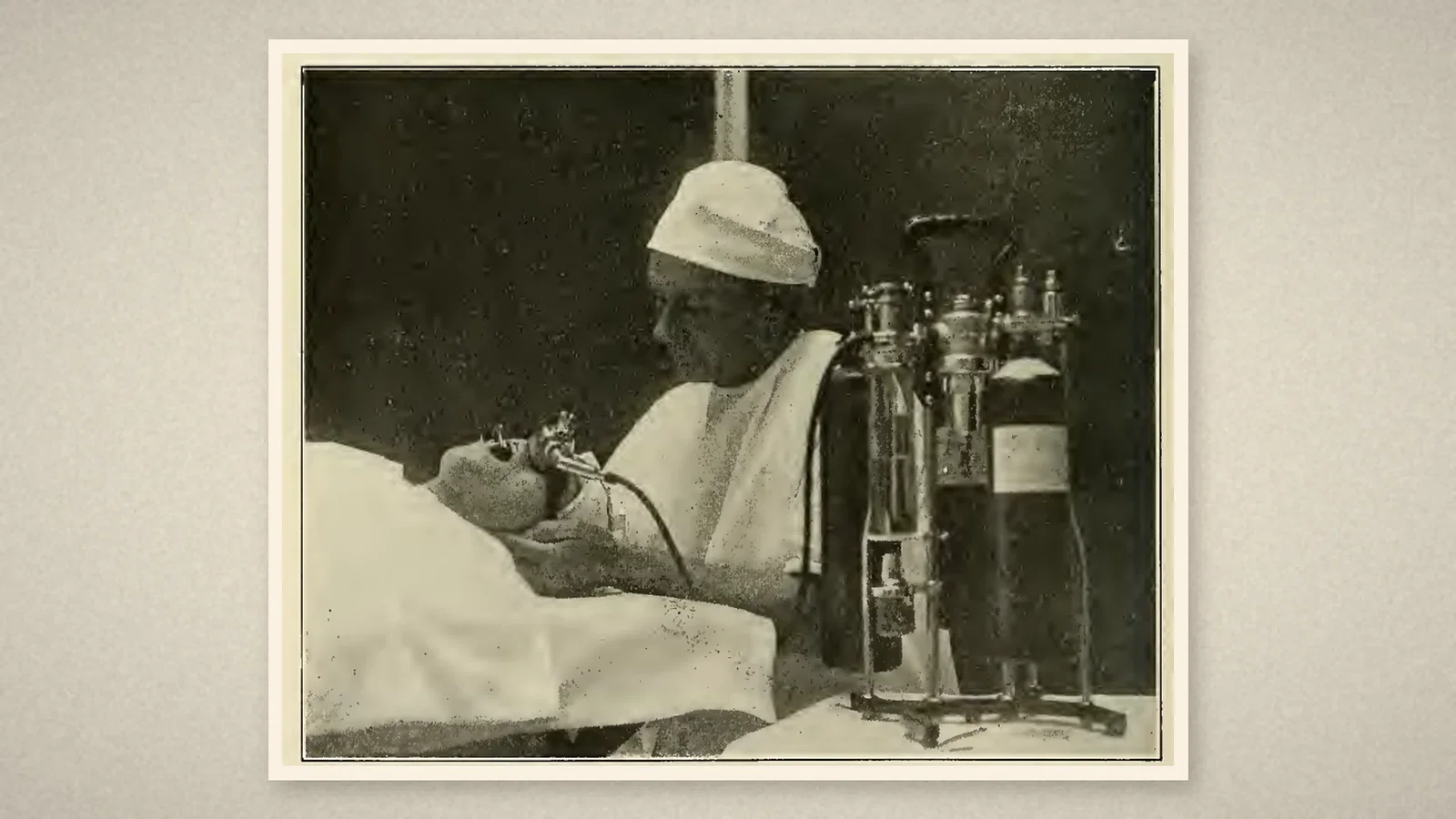
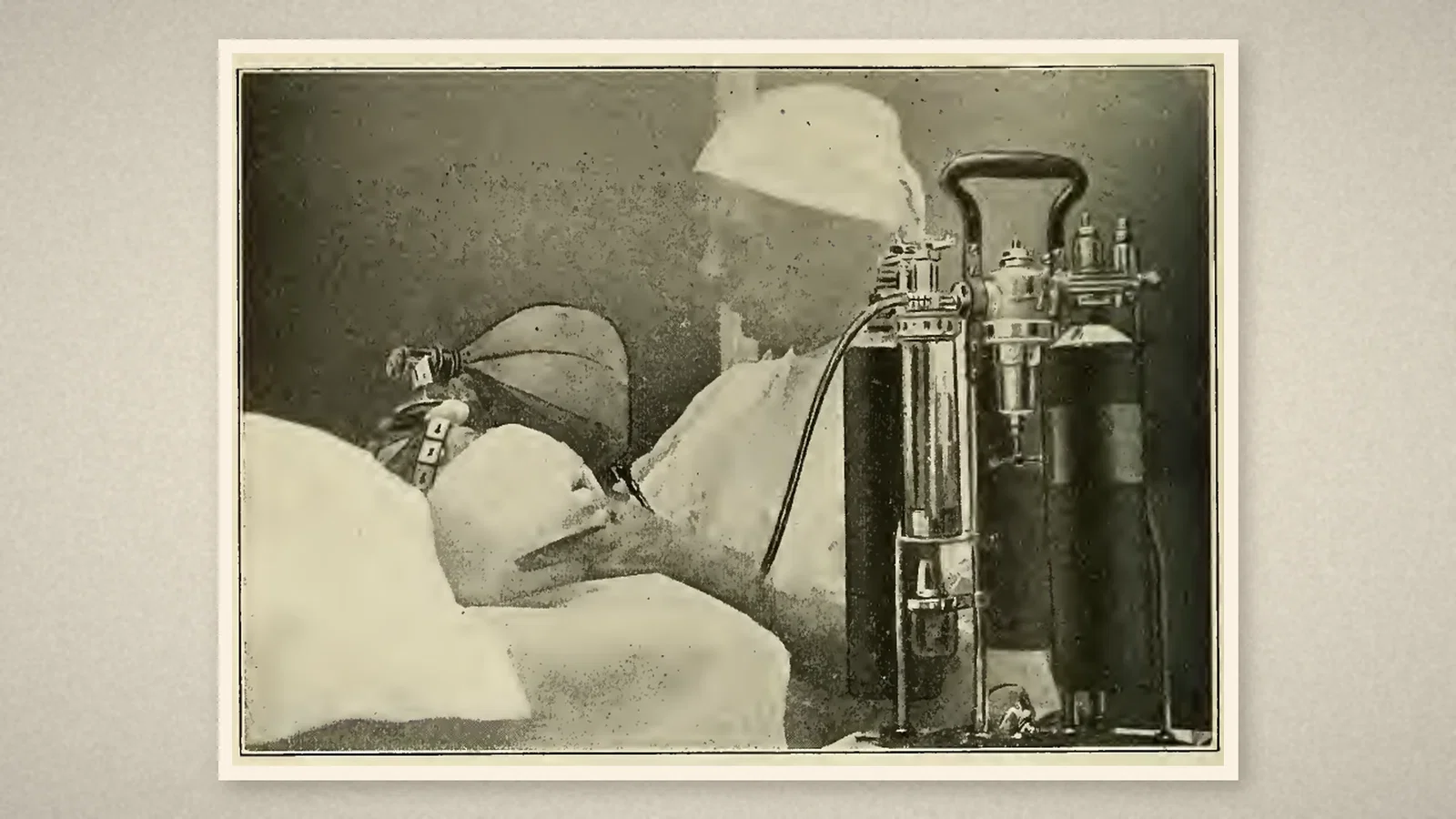
The preface sets out the book's purposes: to give the essentials of administering anesthetics in practical form; to save the busy practitioner and student from sifting the voluminous literature; to emphasize that "to bring a living being to that borderland in which life in many respects so simulates death should at no time be a fool's occupation"; and to suggest lines for further research. [1, p. x] Emphasis, the authors said, was on modern American practice, without neglecting European procedures. [1, p. x]
The chemist's place
Baskerville's part is plain in the preface. Because modern medicine increasingly recognized the importance of chemistry, the authors wrote, that side of the subject had been developed fully: the original purity of the drug, the conditions for preserving it, and its course in the body. [1, p. x] The absolute purity of the anesthetic could not be too strongly emphasized, and "only an expert chemist should pass upon the quality of an anesthetic". [1, p. xi] Chapter XX, a list of anesthetics with data and references, was presented complete "as far as we are aware, for the first time". [1, p. x]
Twenty-one chapters
The table of contents runs to twenty-one chapters: the history of anesthesia; the general physiology of inhalation anesthesia; Gatch on rebreathing; nitrous oxide, ether and chloroform; the choice of anesthetic and technique for special operations; treatment before, during and after anesthesia; anesthesia by intratracheal insufflation; anesthesia by colonic absorption of ether; the sequestration method; local anesthesia and its use in dentistry; spinal analgesia and anesthesia; mental influence in anesthesia; therapeutic uses of inhalation anesthetics; "the medico-legal status of the anesthetist"; a list of anesthetics; and statistics. [1]
Putting new methods such as colonic ether and intratracheal insufflation in the same book as the anesthetist's legal status echoes the quotation in the preface: the anesthetist was to master new techniques and to hold a hospital position and responsibility to match.
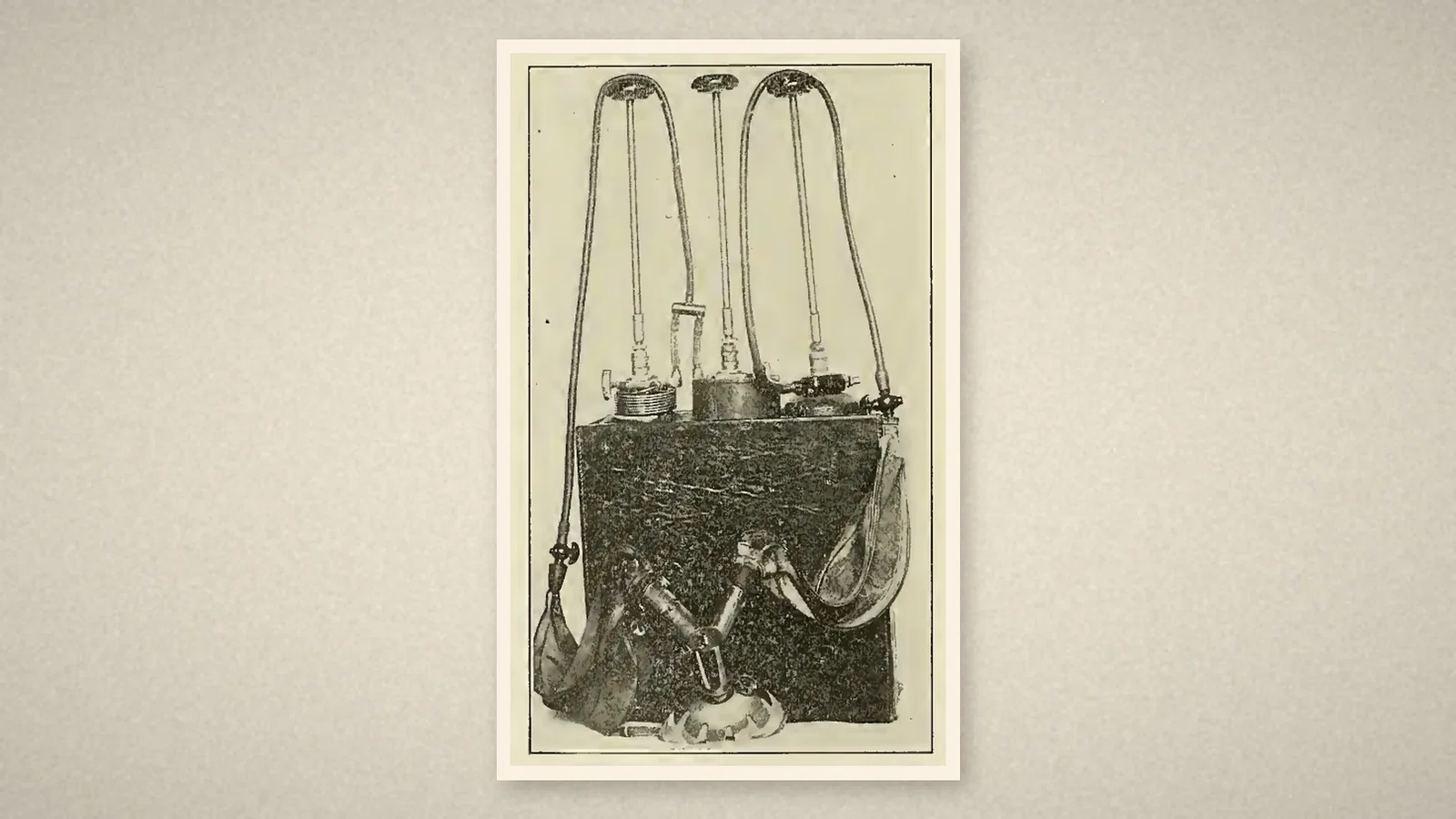
What the record shows
Anesthesia of 1914 was a comprehensive American textbook organized by an anesthetist, with many contributors and a chemist as collaborator. Its preface put "every large hospital should have an attending anesthetist" up front, and its contents placed drug purity, new techniques and legal status side by side. Together they sketch what American anesthetists of the time expected of their profession.
Sources and reading limits
Read: J. T. Gwathmey, in collaboration with Charles Baskerville, Anesthesia, New York and London: D. Appleton and Company, 1914 (Internet Archive, Columbia University copy): title page, list of contributors, epigraph, preface, table of contents (chapters I–XXI), and figures 39, 59 and 60.
Not covered: the body chapters were not read in full; this article describes the book from its title page, preface, contents and selected figures. The page count was not checked against the scan; the 283 illustrations are stated on the title page. Gwathmey's description as first president of the American Association of Anesthetists is taken from the title page. The AMA Committee on Anesthesia report of 1912 is used only as the preface quotes it.
All four illustrations are crops of the title page and figures of the 1914 book, unaltered.
- Gwathmey JT, Baskerville C. Anesthesia. New York and London: D. Appleton and Company; 1914. Internet Archive
Continue exploring
Related reading connects shared questions and contexts; it does not by itself establish historical influence.
Anesthesia Epochs · The Source Room · About & Editorial Method
Published November 2, 2026. Sources and reading limits are stated above. Illustrations are labelled as original source images or AI-made. Historical accounts are educational; they are not current treatment instructions.