A teaching network and the limits of course-completion evidence.
Reading Library · Anesthesia Epochs · 中文版
Watch the companion film
1987: The Neonatal Resuscitation Program · Watch on YouTube
Historical anchor: 1987. Date details and source qualifications are explained below.

On November 5, 1987, the first National Faculty training session for the Neonatal Resuscitation Program (NRP) took place in New Orleans. The AAP/AHA twentieth-anniversary booklet supplies the day; AAP’s official history places the launch in that November.[1, p4;3] This marks the start of a course program, not the invention of neonatal resuscitation or a verified publication date for its first textbook.
Earlier educational work supplied its foundation. In the mid-1970s, the US National Institutes of Health funded five neonatal education projects. At the Drew medical school in Los Angeles, Ronald Bloom and nurse Catherine Cropley developed a six-module Neonatal Education Program that later underpinned NRP.[1, p3;2, e142] Their collaboration helps explain a curriculum designed for people with different professional responsibilities.
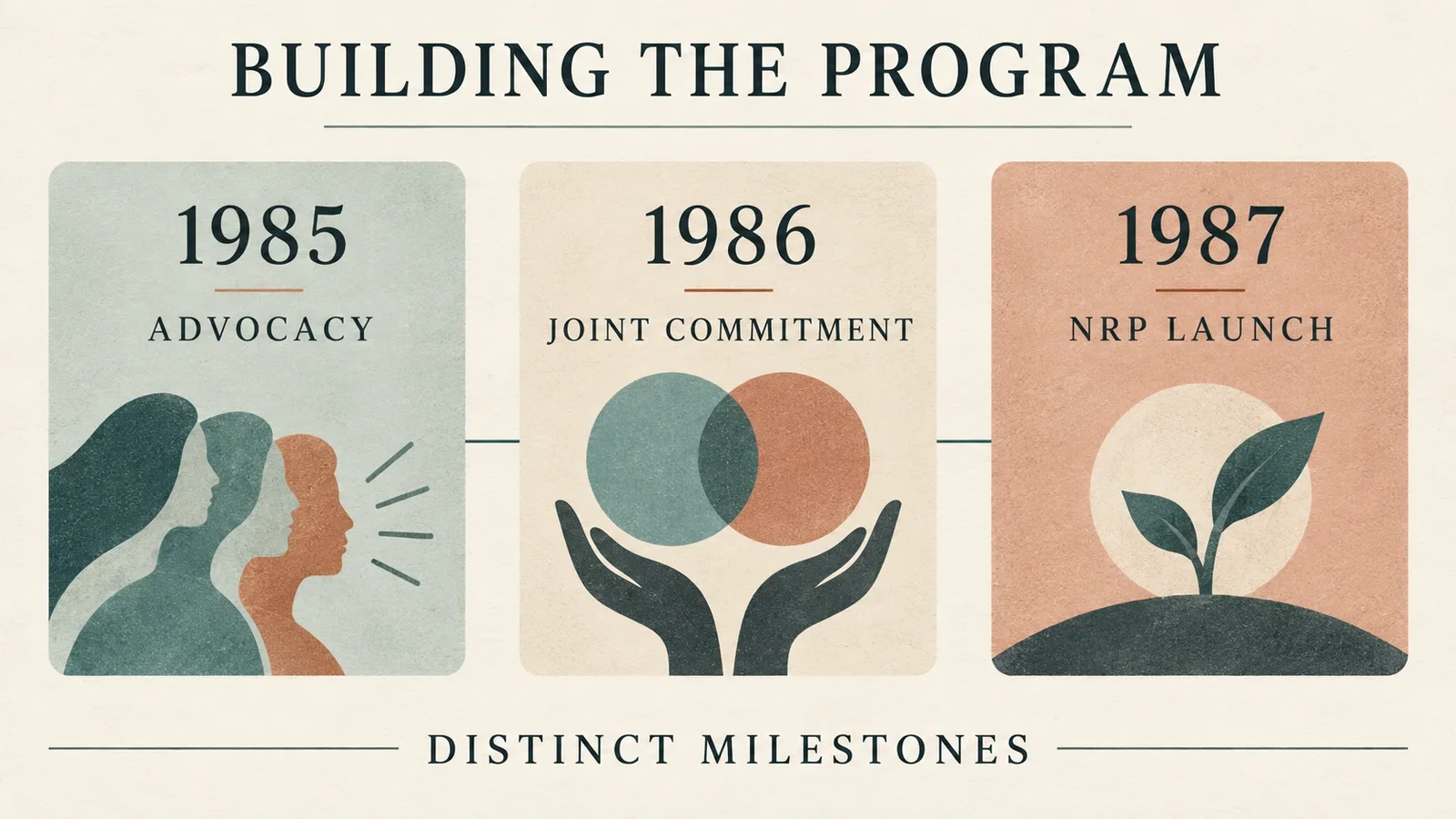
The partnership developed over several years. George Peckham called for standardized neonatal resuscitation teaching at an AHA standards conference in 1985. The anniversary timeline places AAP approval for further curriculum development and a joint AAP/AHA commitment in 1986. In 1987, AAP education director Errol Alden supported the New Orleans launch.[1, pp3–4] Nurse–physician pairs joined the national faculty, and regional and hospital instructors helped carry the course to other settings.[1, p4;2, e143]
Writing in 2008, program participant Louis Halamek described the teaching principles: use the best available evidence, organize modules around learners’ responsibilities, encourage advance self-study, and prepare instructors.[2, e143] He also acknowledged the limited early data and reliance on expert consensus. An evidence-based ambition does not mean that every early practice had randomized-trial support.
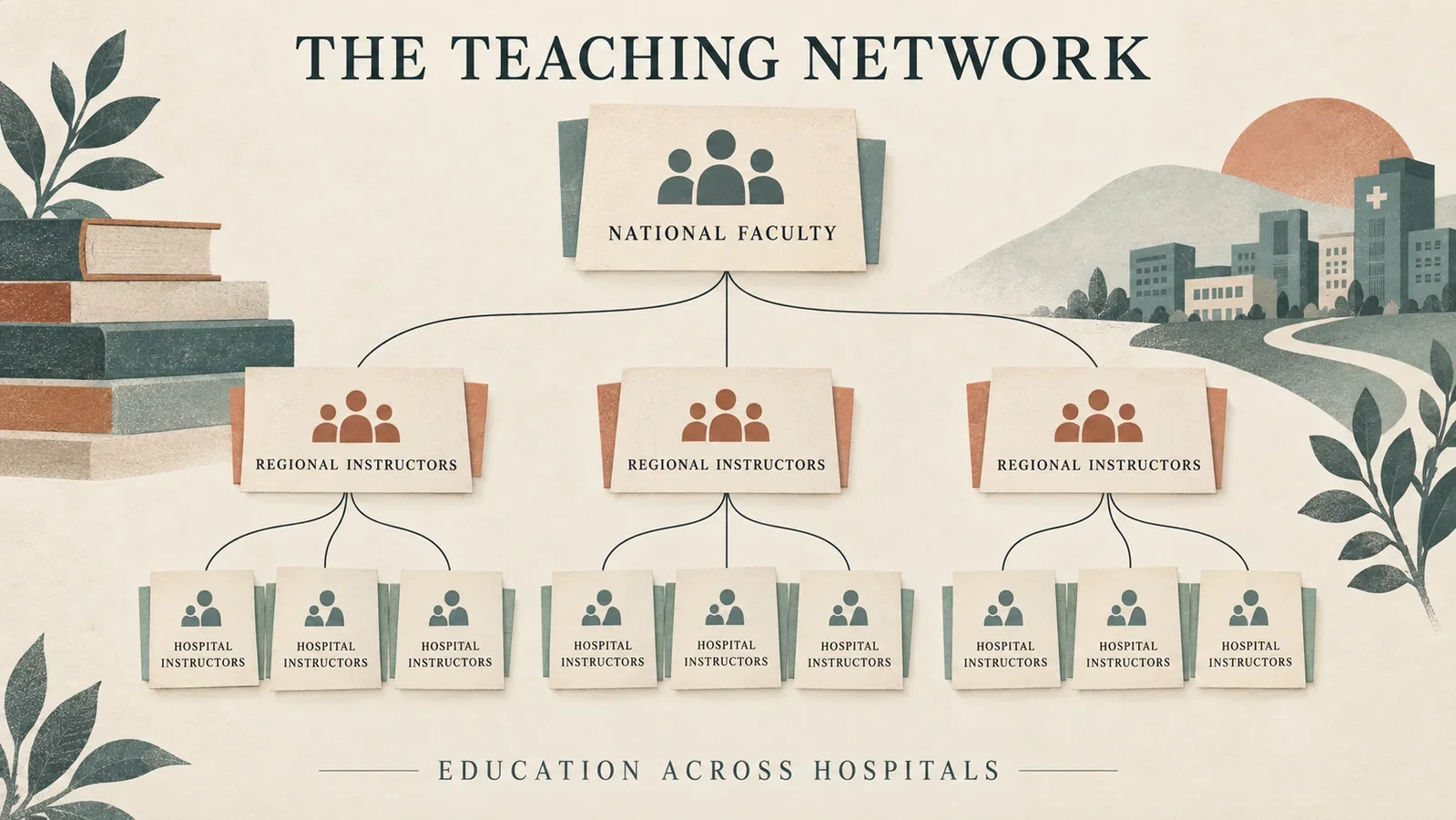
The teaching network expanded quickly. By October 1988, the anniversary account reported activity in 48 US states and Canada, with 184 national faculty and 876 trained hospital instructors.[1, p5;3] These are measures of educational reach. They are neither patient counts nor measures of delivery-room competence, and they cannot be converted into numbers of newborn lives saved.
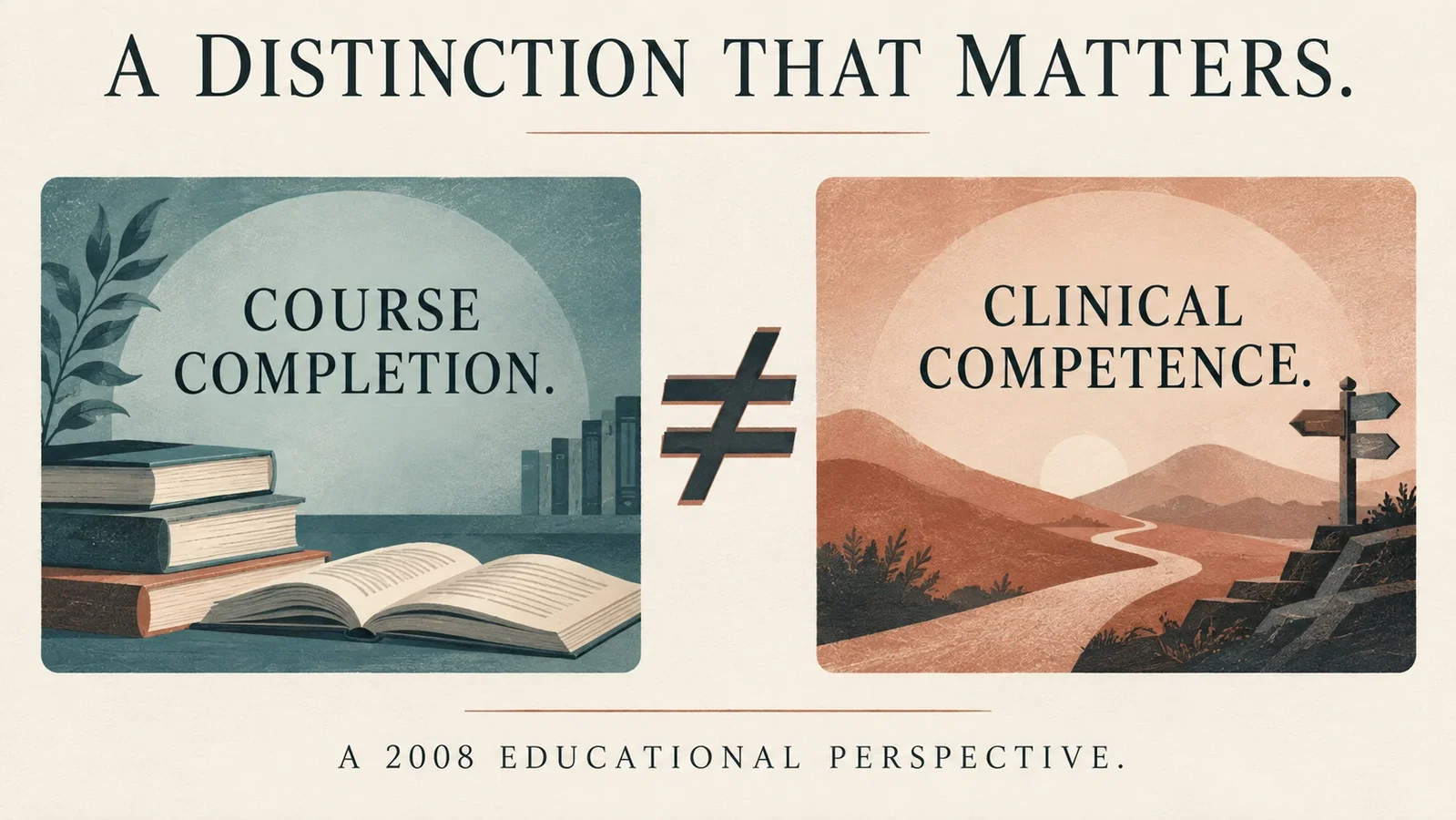
The course subsequently changed. The booklet places DVD and online-testing materials in 2006, and new high-fidelity simulation developments and educational planning in 2007. Halamek discussed teamwork, active learning and continuing practice.[1, pp12–13;2, e144–e147] Early courses included practical skills, but later simulation systems should not be placed in a 1987 classroom. His 2008 account also made a specific distinction: course completion did not itself establish clinical competence.[2, e146]
The connection with the Apgar score distinguishes assessment from action. A 2015 ACOG/AAP joint statement, citing the NRP textbook, explained that Apgar scores record newborn status and response to resuscitation; initial resuscitation must begin before the one-minute score.[4, Introduction] This later documented relationship links the two articles. It does not establish that the score caused NRP’s creation, or that these were the words of the 1987 textbook.
The 1987 article records an approach to organizing education: knowledge, practical skills and instructor preparation formed a course that could be taught across hospitals. Official histories and a participant’s account describe how it developed; they cannot, by themselves, establish a causal effect on mortality.[1–3] These original institutional documents and the article were read for this account. The 1987 textbook is not covered, and later teaching methods and clinical results have not been assigned to its first year.
Images are modern editorial concepts, not historical classroom photographs, original textbook facsimiles or patient-care algorithms.
Sources and reading limits
- AAP/AHA. Neonatal Resuscitation Program: 20th Anniversary, 1987–2007. 2007. Official original booklet. Timeline text pp3–13 and accompanying material read; eight selected original page images viewed. Retrospective institutional history, not the 1987 textbook.
- Halamek LP. The Genesis, Adaptation, and Evolution of the Neonatal Resuscitation Program. NeoReviews. 2008;9(4):e142–e149. DOI:10.1542/neo.9-4-e142. Official original article. All eight article pages read as text and original images. Participant perspective, not an outcome trial.
- AAP. NRP History. Updated January8,2026. Full substantive web text read; video not watched. This institutional account overlaps with sources1–2.
- ACOG/AAP. The Apgar Score, Committee Opinion644. October2015. Obstet Gynecol. 2015;126:e52–55. Full substantive statement and references read. Used for a later assessment-versus-action distinction, not current procedural instructions or the wording of the 1987 course.
Continue exploring
Related reading connects shared questions and contexts; it does not by itself establish historical influence.
The Source Room · About & Editorial Method
Sources and reading limits are stated above. Illustrations are labelled as original source images or AI-made. Historical accounts are educational; they are not current treatment instructions.