Reported relief, repeated adjustments and a short observation window.
Reading Library · Anesthesia Epochs · 中文版
Watch the companion film
1967: Shealy — Dorsal-Column Stimulation for Pain · Watch on YouTube
Historical anchor: 1967. Date details and source qualifications are explained below.
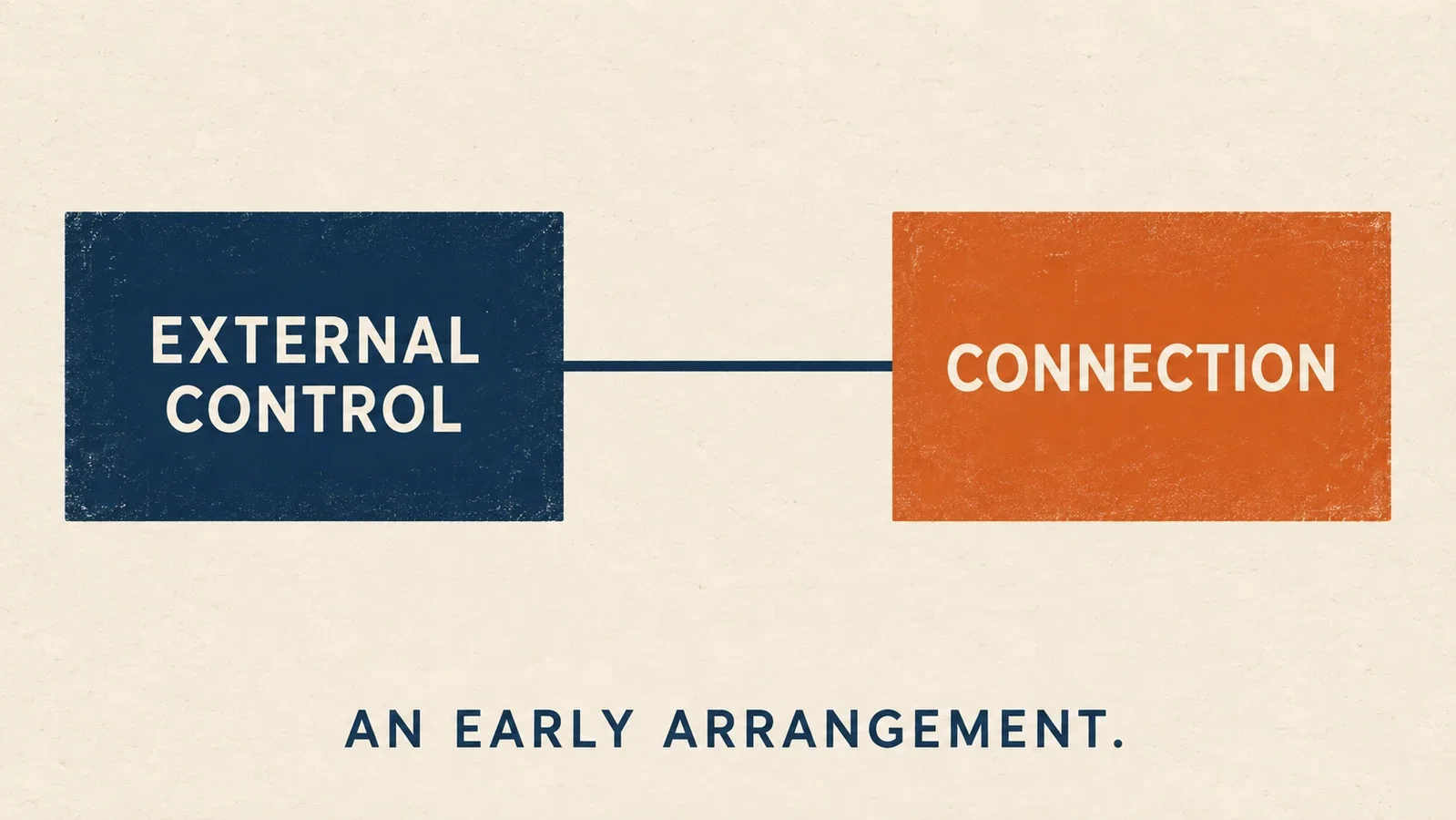
The device in this early report was connected to an external source of stimulation. A radiofrequency-induced stimulator appeared only as a plan for the next patient. That distinction locates Shealy, Mortimer and Reswick’s 1967 paper at a particular stage of development: an adjustable experimental arrangement, described through one patient’s brief course.[1]
The patient was a seventy-year-old man with inoperable lung cancer and severe pain in his lower right chest and upper abdomen. Pleural and hepatic metastases were suspected when he entered Lutheran Hospital. The authors described explaining the experimental nature of dorsal column stimulation to him and his family; his daughter, a nurse anesthetist, helped with that discussion.[1] This is the account of explanation and acceptance preserved in the paper, not documentation of a modern research-ethics review.
On March 24, an electrode was placed close to the thoracic dorsal columns and secured to the dura. Subcutaneous connectors allowed an external stimulator to be attached and its settings varied. Stimulation began that evening. The patient described a buzzing sensation across his back and chest, and the authors reported immediate relief of both the original pain and incisional pain. Pain returned after several minutes but could again be relieved by changing the stimulation frequency.[1]
The first evening’s test lasted an hour. Leg movement and several sensory responses remained grossly intact. Testing resumed the following morning and continued into the evening, apart from a two-hour interruption. Pain recurred intermittently, sometimes prompting the patient to request a frequency change. The paper states that no narcotics were administered during that period.[1] That bounded observation does not establish permanent freedom from either pain or medication.
The clinical course then changed. On the next day he became too confused for further testing, later developed aphasia and right hemiplegia, and died on March 30. Autopsy revealed previously unrecognized subacute bacterial endocarditis with embolism to the left side of the brain, along with extensive pleural and hepatic metastases. The spinal cord and electrode implant were reported intact.[1] The authors’ pathological account should be retained without turning it into an independent verdict on every possible device risk.
Their discussion described roughly a day and a half of test stimulation. It expressed encouragement about the pain relief while acknowledging that technical details still needed improvement. There was no long-term follow-up capable of establishing durable benefit in this patient.[1]

Published in the July–August 1967 issue of Anesthesia & Analgesia, the report joined clinical and engineering work. C. Norman Shealy was based at the Gundersen Clinic in La Crosse, Wisconsin; J. Thomas Mortimer and James B. Reswick were affiliated with the Engineering Design Center at Case Institute of Technology in Cleveland.[1] The ten cases mentioned in the introduction concerned peripheral nerve stimulation. They were not ten recipients of the spinal implant described here.
The connection to gate control theory requires a second distinction. In 1965, Melzack and Wall proposed that changing large-fiber input could contribute to pain control and discussed the therapeutic implications of their model.[2] In a 2014 historical review, Lorne Mendell identified gate theory as the origin of the dorsal-column stimulation approach while questioning whether it could account for the clinical effects in full.[3] The 1967 clinical report itself cited earlier experimental work and Wall and Sweet’s peripheral-stimulation study, rather than directly citing the 1965 theory paper.
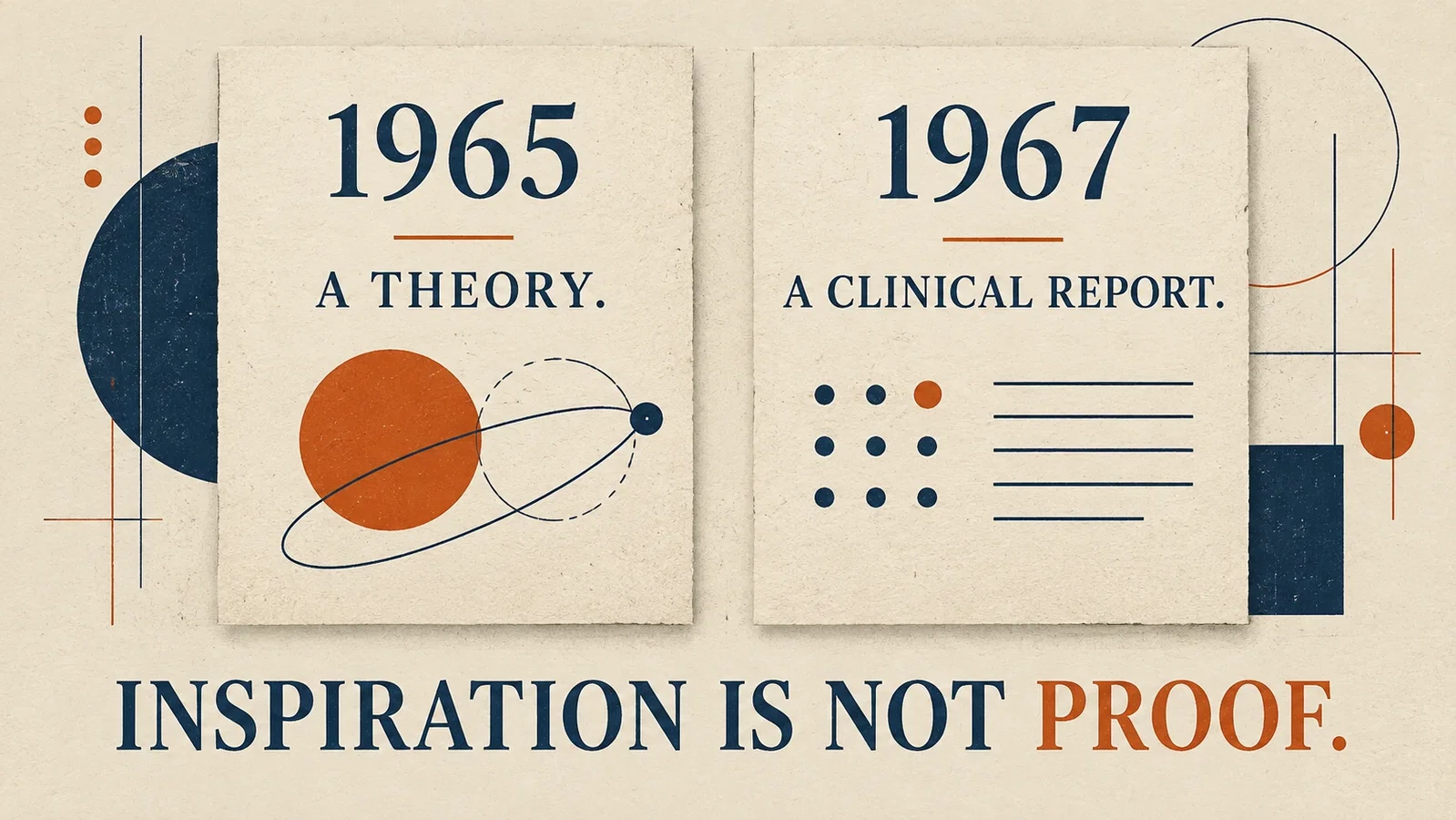
A theoretical proposal, an adjustable apparatus and a reported clinical response thus belong in the same history, with different evidentiary roles. The preliminary case gave the investigators a reason to continue. It did not, on its own, validate every part of the theory or establish the long-term effectiveness and safety of a mature treatment.[1–3]
Source and image note: The complete three-page 1967 article was read. Selected original pages of the 1965 theory paper and explicitly attributed sections of the 2014 review support the historical connection. The four images are modern editorial interpretations, not archival procedure photographs or current treatment instructions.
Sources and reading limits
- Shealy CN, Mortimer JT, Reswick JB. Electrical Inhibition of Pain by Stimulation of the Dorsal Columns: Preliminary Clinical Report. Anesth Analg. 1967;46(4):489–491. Original three-page article; DOI. All three original pages, including the figure, were read.
- Melzack R, Wall PD. Pain mechanisms: a new theory. Science. 1965;150(3699):971–979. Original scan; DOI. Original pages 971, 975 and 978 were newly read for this article.
- Mendell LM. Constructing and deconstructing the gate theory of pain. Pain. 2014;155(2):210–216. PMC author manuscript; DOI. The abstract, introduction, section on tests of closing and opening the gate, and reference 58 were read for this historical attribution. The PDF is not covered.
Continue exploring
Related reading connects shared questions and contexts; it does not by itself establish historical influence.
- Earlier connection: 1965: Melzack and Wall's Gate Control, a Model Built to Be Tested
The Source Room · About & Editorial Method
Sources and reading limits are stated above. Illustrations are labelled as original source images or AI-made. Historical accounts are educational; they are not current treatment instructions.