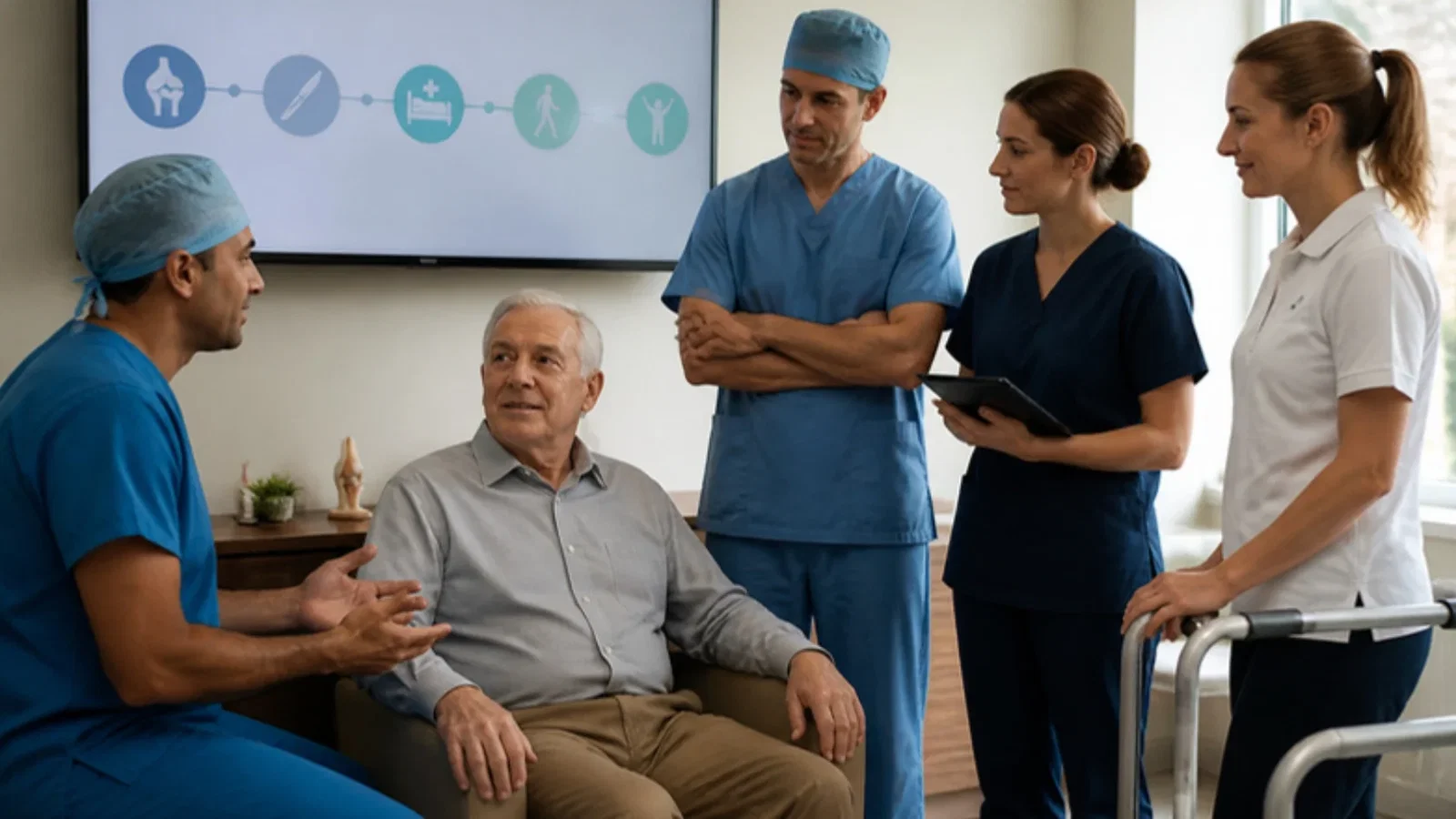
As US payment shifted from volume to value, the American Society of Anesthesiologists offered a model in which a coordinated team, led at first by anaesthesiologists, would manage the whole surgical episode from the decision to operate until after discharge.
Reading Library · Anesthesia Epochs · 中文版
Watch the education video (for clinicians)
2012: The Perioperative Surgical Home — Orange, California · Anesthesia Epochs Education Series
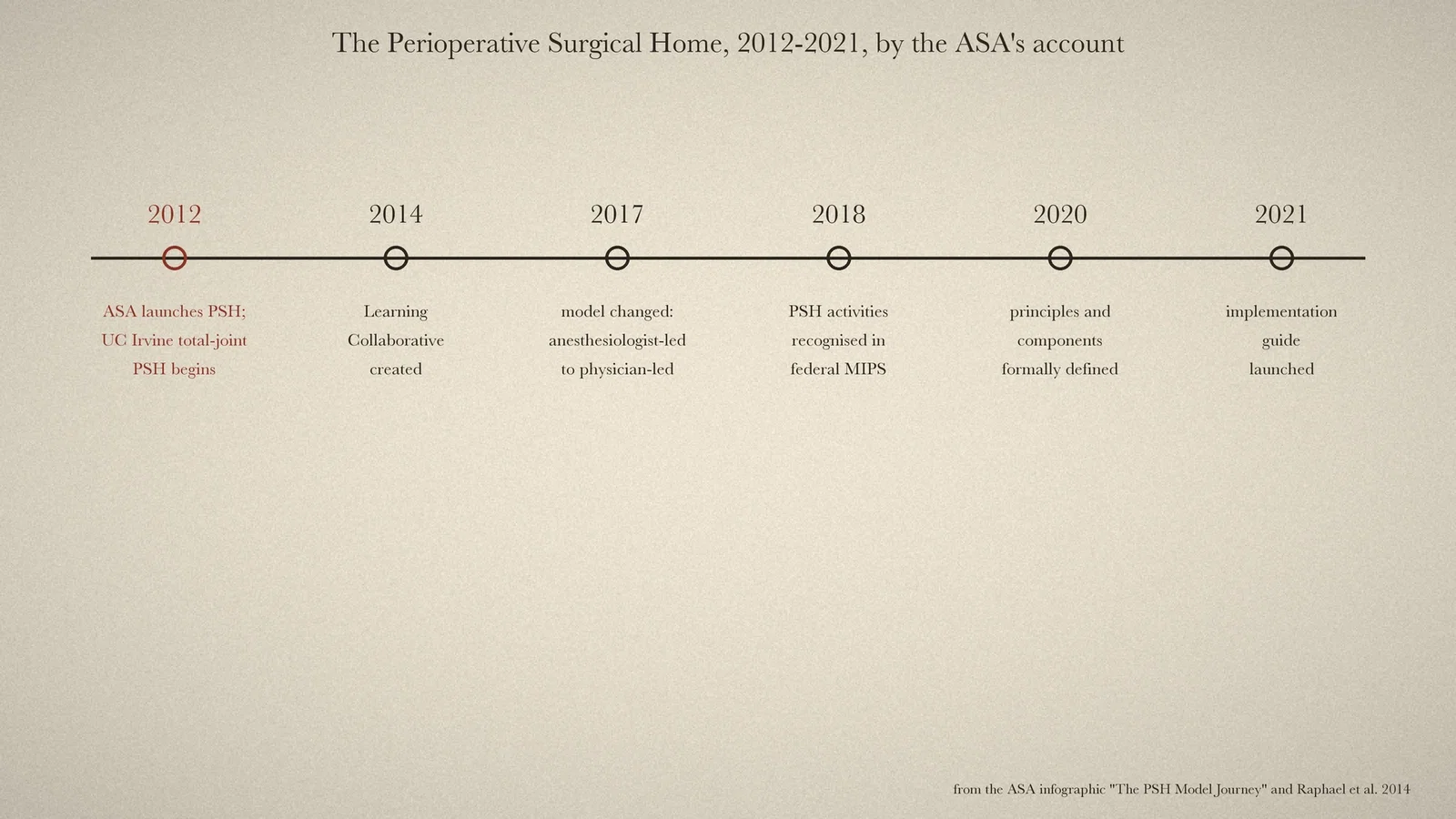
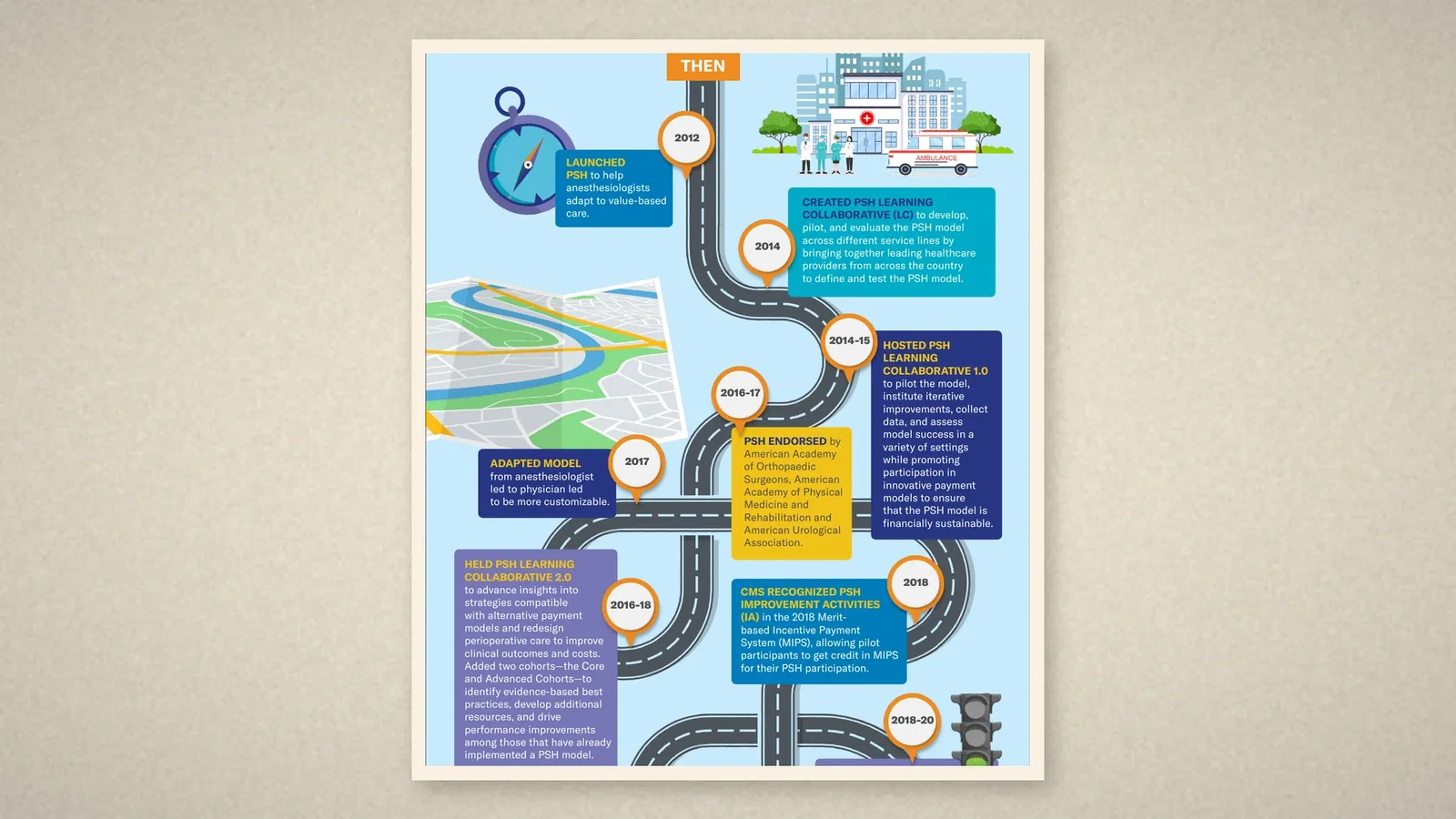
The American Society of Anesthesiologists (ASA) tells the story of its Perioperative Surgical Home (PSH) in an infographic called "The PSH Model Journey". The first stop is 2012, when the ASA "launched PSH" to help anaesthesiologists adapt to value-based care. It describes the PSH as a patient-centred, team-based model "that helps navigate patients through the entire surgical experience", from the decision to operate through discharge and beyond. [1] This article follows the idea from its first hospital programme to the arguments it provoked inside the specialty.
Why anaesthesiologists
The ASA puts the motive plainly: as American health care shifted from volume to value, anaesthesiologists would be measured by the cost-effectiveness and quality of the care they provided. [1] A 2014 report from the University of California, Irvine described the problem the model was meant to solve: perioperative care in the United States was "variable and fragmented", which raised both the risk of error and the cost. The authors wrote that the ASA had "put forward" the PSH concept as a potential solution, but that no real implementation had been reported. [4]
The first programme
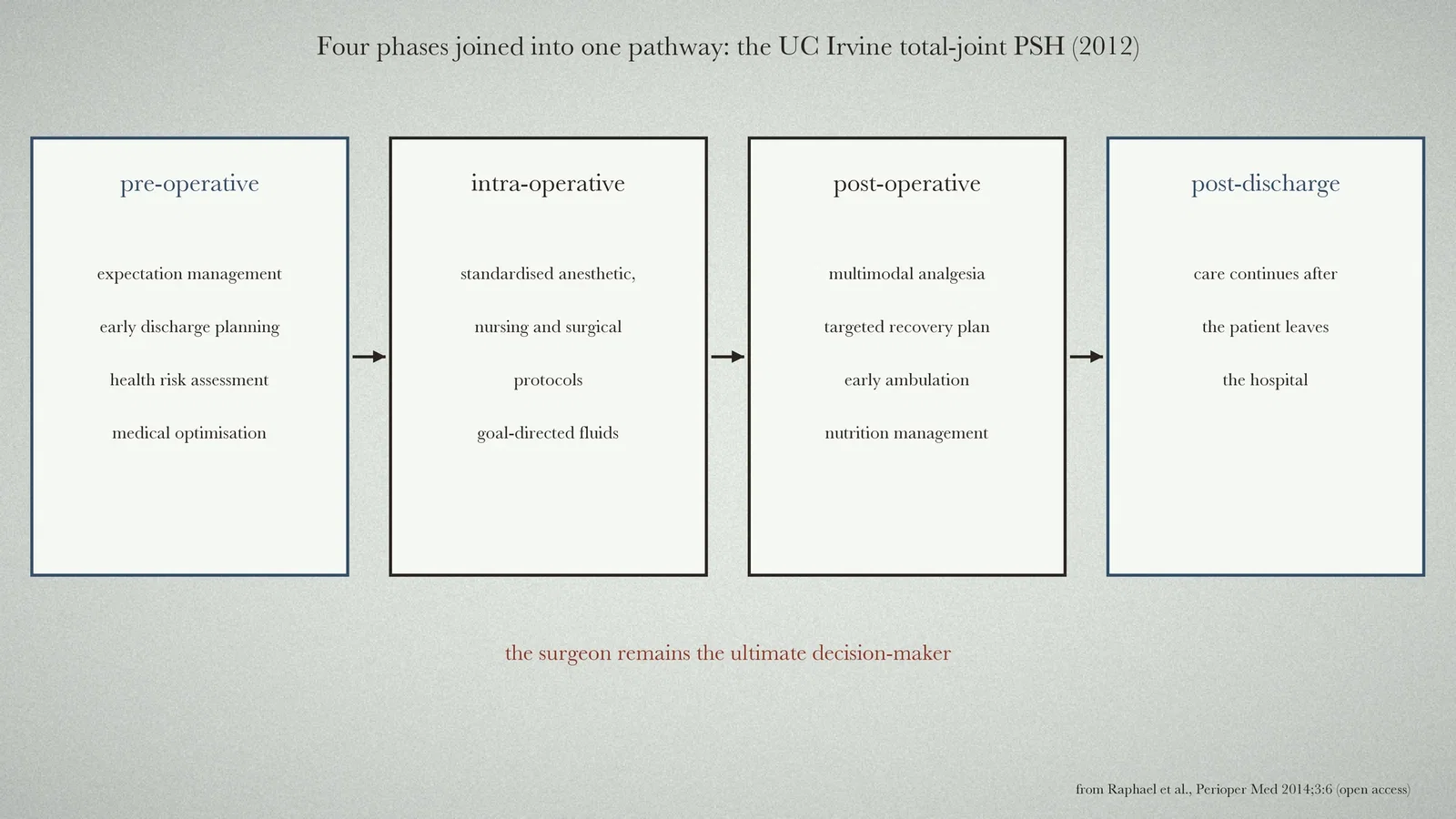
UC Irvine Health supplied one. According to D. R. Raphael and colleagues, writing in the open-access journal Perioperative Medicine, the first PSH programme began there in 2012 for all elective total knee and hip arthroplasties. It was built before an arthroplasty centre reopened at the hospital, so surgeons, anaesthesiologists, pain physicians, nurses, therapists and administrators could design it together. The aim was to join four phases, preoperative, intraoperative, postoperative and post-discharge, into one standard pathway: risk assessment and discharge planning before surgery; standard anaesthetic, nursing and surgical protocols and goal-directed fluid therapy during it; multimodal analgesia and early walking afterwards. The surgeon remained the final decision-maker. [3]
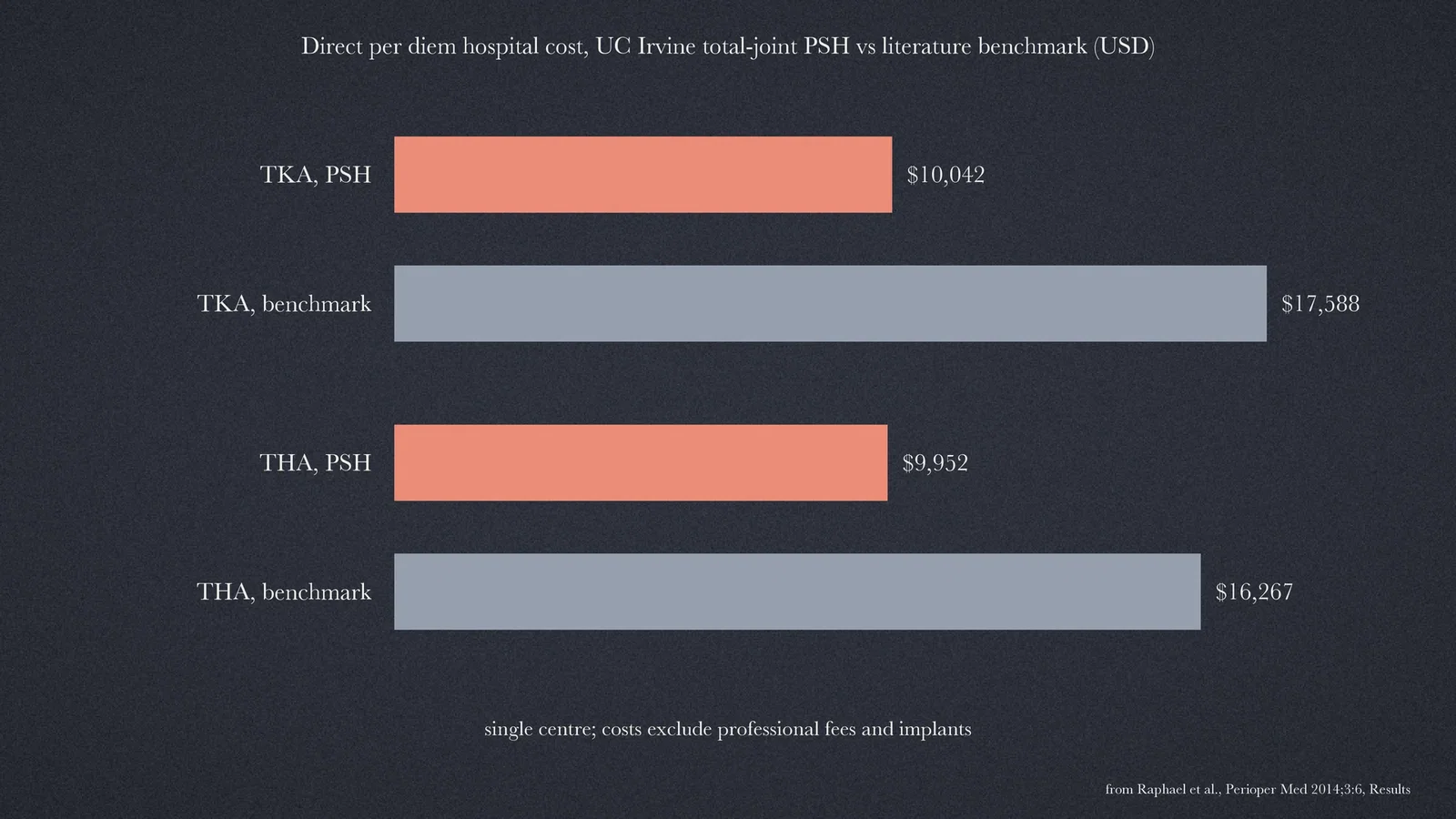
The first results came in two papers. For 51 hip and 95 knee replacements, L. Garson and colleagues reported no major complications or in-hospital deaths, a 30-day readmission rate of 0.7% and a median stay of three days; about half the patients, however, were discharged somewhere other than their usual home, and the authors said that future comparisons would have to include post-discharge costs. [4] Raphael's financial review found direct per diem hospital costs of about $10,000 for each operation, against literature benchmarks of $17,588 for knees and $16,267 for hips, and noted wide variation in implant and recovery-room costs. [3]
Spreading the model
In 2014 the ASA created a PSH Learning Collaborative to develop, pilot and evaluate the model in other hospitals. [1] Other hospitals described their own programmes; a team at a Veterans Affairs hospital in Palo Alto noted in 2016 that there was "a paucity of practical examples to follow". [7] The ASA's timeline continues with a second collaborative from 2016, endorsement by orthopaedic, rehabilitation and urological societies, and recognition of PSH activities in the federal Merit-based Incentive Payment System from 2018. [1]
The argument inside the specialty
The model was debated as soon as it appeared. In 2014 J. F. Butterworth and J. A. Green called the anaesthesiologist-directed PSH a great idea that would succeed "only if it is embraced by hospital administrators and surgeons". [5] In 2015 Anesthesia & Analgesia published a collection of editorials with titles that frame the debate: "A panacea or Pandora's box for the specialty of anesthesiology?", "A response to a presumed burning platform or a thoughtful expansion of anesthesiology?", and "Disruptive innovation and the specialty of anesthesiology: the case for the Perioperative Surgical Home". [8-10] A survey of ASA members published that year found that 38% thought physicians bore "major responsibility" for reducing costs. [6] In 2017, according to the ASA, the model itself was changed "from anesthesiologist led to physician led to be more customizable". [1]
What the record shows
The PSH was an attempt by anaesthesiologists to claim the whole surgical episode, not only the hours in the operating theatre. The first single-centre results were favourable, and the ASA kept developing the model for a decade. That it stopped describing the model as anaesthesiologist-led suggests that the claim was hard to sustain on those terms.
Sources and reading limits
Read: the ASA infographic "The PSH Model Journey" (with a page image) and the ASA PSH web page and patient leaflet; the full text of Raphael et al. 2014 (open access); the PubMed abstracts of Garson et al. 2014, Raphael et al. 2015 and Walters et al. 2016; PubMed records of the editorials and of Wanderer and Rathmell's 2015 "brief history".
Not covered: ASA governance documents on the 2012 launch; the Wood Library-Museum timeline entry that dates the Perioperative Surgical Home to 2013 (the site could not be accessed), so the article uses the ASA's own date of 2012; the texts of the editorials and of the brief history; Learning Collaborative reports; any multicentre or randomised comparison with usual care. The outcome and cost figures come from one centre, reported by the team that built the programme.
One illustration is a crop of the ASA infographic; three are drawn from the sources.
- American Society of Anesthesiologists. The PSH model journey: adapting to change, creating more value. PDF
- American Society of Anesthesiologists. Perioperative Surgical Home (PSH). Website
- Raphael DR, Cannesson M, Schwarzkopf R, Garson LM, Vakharia SB, Gupta R, Kain ZN. Total joint Perioperative Surgical Home: an observational financial review. Perioper Med (Lond). 2014;3:6. DOI
- Garson L, Schwarzkopf R, Vakharia S, Alexander B, Stead S, Cannesson M, Kain Z. Implementation of a total joint replacement-focused perioperative surgical home: a management case report. Anesth Analg. 2014;118(5):1081-9. PubMed
- Butterworth JF 4th, Green JA. The anesthesiologist-directed perioperative surgical home: a great idea that will succeed only if it is embraced by hospital administrators and surgeons. Anesth Analg. 2014;118(5):896-7. PubMed
- Raphael DR, Cannesson M, Rinehart J, Kain ZN. Health care costs and the Perioperative Surgical Home: a survey study. Anesth Analg. 2015;121(5):1344-9. PubMed
- Walters TL, Howard SK, Kou A, et al. Design and implementation of a Perioperative Surgical Home at a Veterans Affairs hospital. Semin Cardiothorac Vasc Anesth. 2016;20(2):133-40. PubMed
- Vetter TR, Pittet JF. The Perioperative Surgical Home: a panacea or Pandora's box for the specialty of anesthesiology? Anesth Analg. 2015;120(5):968-73. PubMed
- Warner MA, Apfelbaum JL. The Perioperative Surgical Home: a response to a presumed burning platform or a thoughtful expansion of anesthesiology? Anesth Analg. 2015;120(5):1149-51. PubMed
- Kain ZN, Hwang J, Warner MA. Disruptive innovation and the specialty of anesthesiology: the case for the Perioperative Surgical Home. Anesth Analg. 2015;120(5):1155-7. PubMed
- Wanderer JP, Rathmell JP. A brief history of the Perioperative Surgical Home. Anesthesiology. 2015;123(1):A23. PubMed
Continue exploring
Related reading connects shared questions and contexts; it does not by itself establish historical influence.
Anesthesia Epochs · The Source Room · About & Editorial Method
Published November 2, 2026. Sources and reading limits are stated above. Illustrations are labelled as original source images or AI-made. Historical accounts are educational; they are not current treatment instructions.