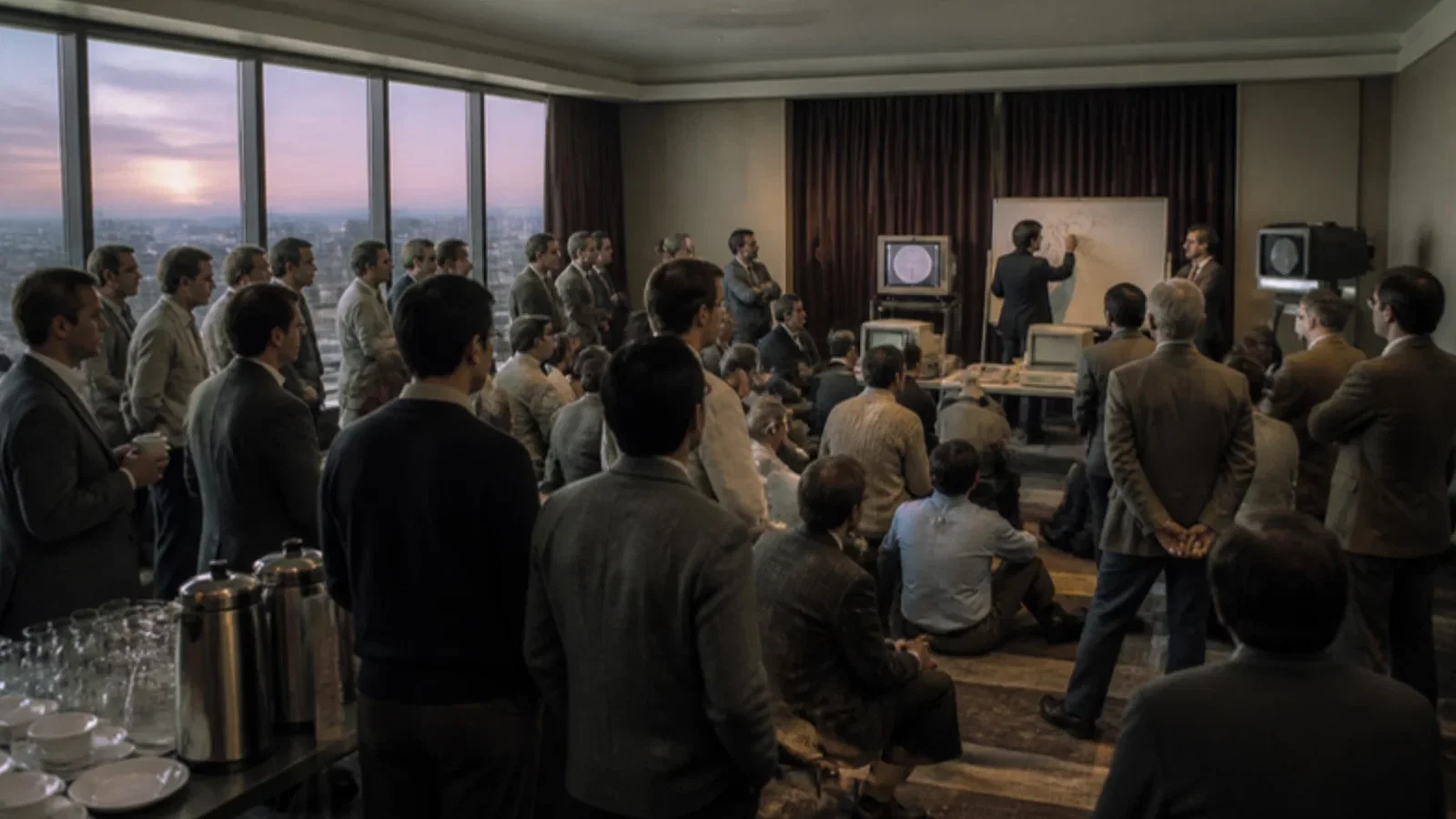
Fifty people at a dawn meeting during the ASA congress agreed that clinicians, engineers and industry needed their own society for anaesthesia technology; it went on to run the long-lived Computers in Anesthesia meetings.
Reading Library · Anesthesia Epochs · 中文版
Watch the education video (for clinicians)
1988: The Society for Technology in Anesthesia — Born at 6 a.m. · Anesthesia Epochs Education Series
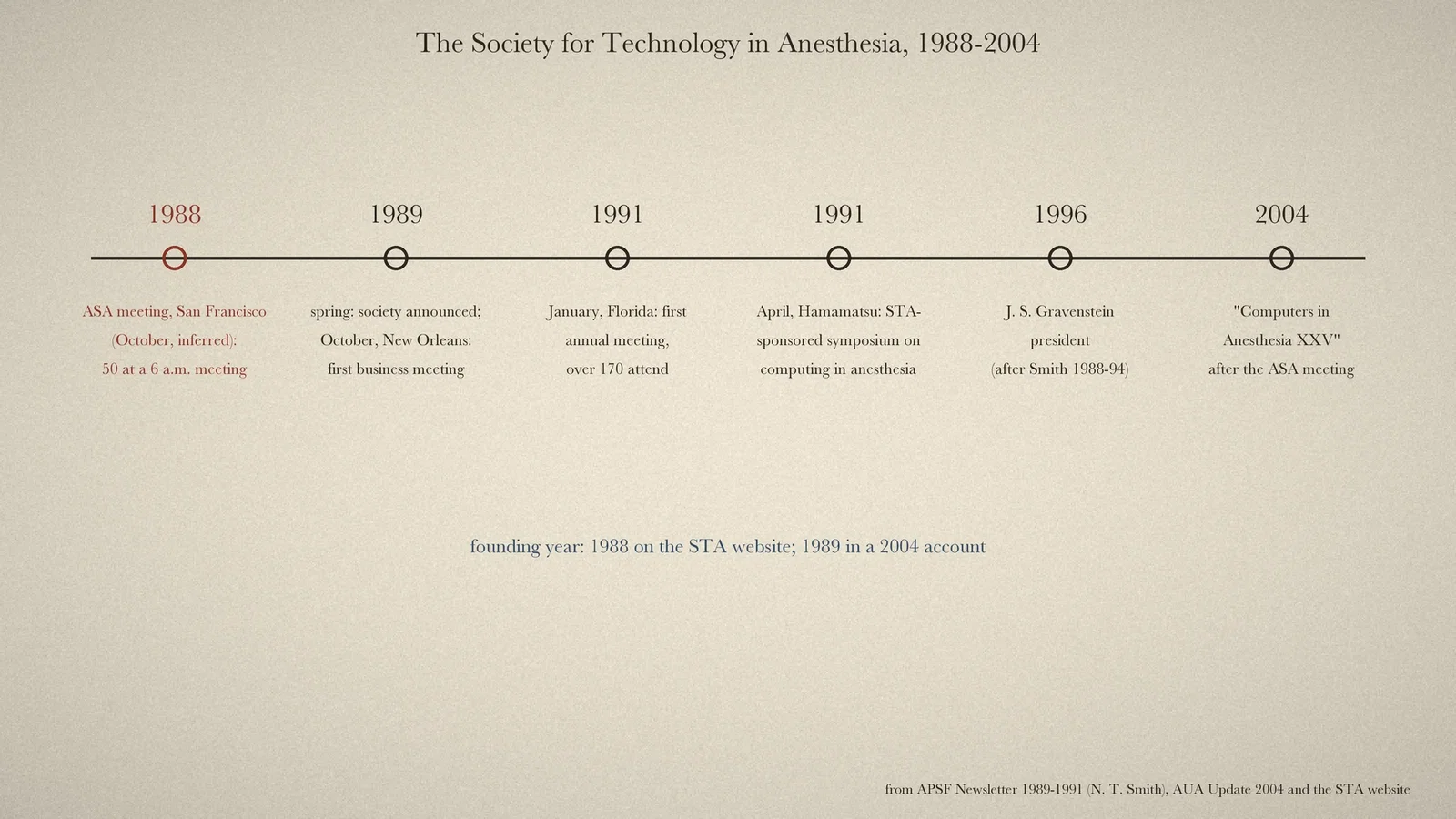
In the Spring 1989 issue of the APSF Newsletter, N. Ty Smith announced: "A new society the Society for Technology in Anesthesia (STA) has been recently formed." [1] It began with an early-morning meeting during the American Society of Anesthesiologists' (ASA) annual meeting in San Francisco. This article follows the society from that meeting to the long-running meeting series called "Computers in Anesthesia".
A problem of two languages
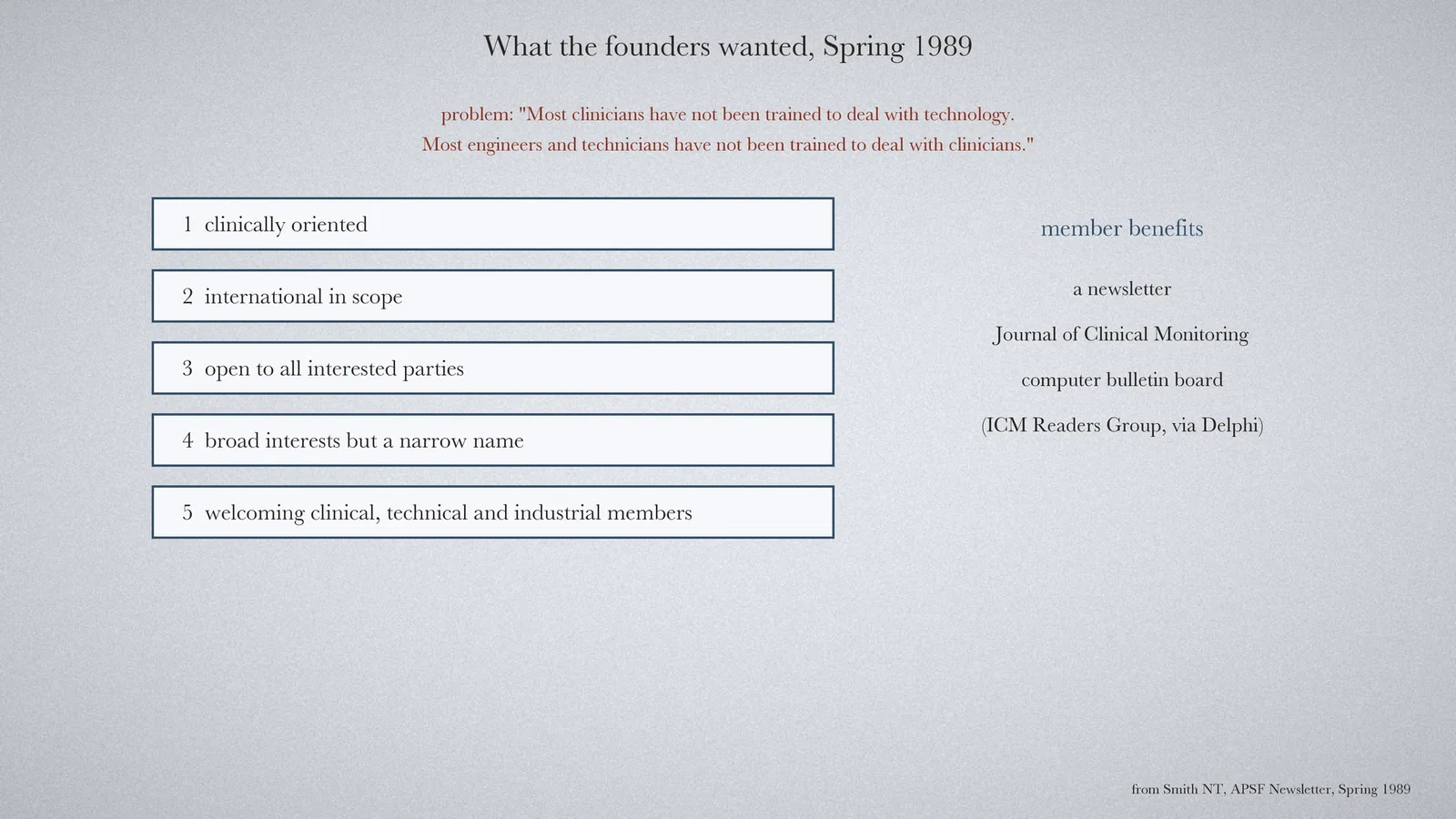
Smith's article starts from the problem. Technology and patient safety, Smith wrote, were "inexorably intertwined", and anaesthetists increasingly depended on better machines, ventilators and monitors. But "Most clinicians have not been trained to deal with technology. Most engineers and technicians have not been trained to deal with clinicians." The ASA's committees, the Anesthesia Patient Safety Foundation (APSF) and the Journal of Clinical Monitoring already addressed parts of this, but "a less formal, but still structured, means of communication" was needed. [1]
Fifty people at dawn
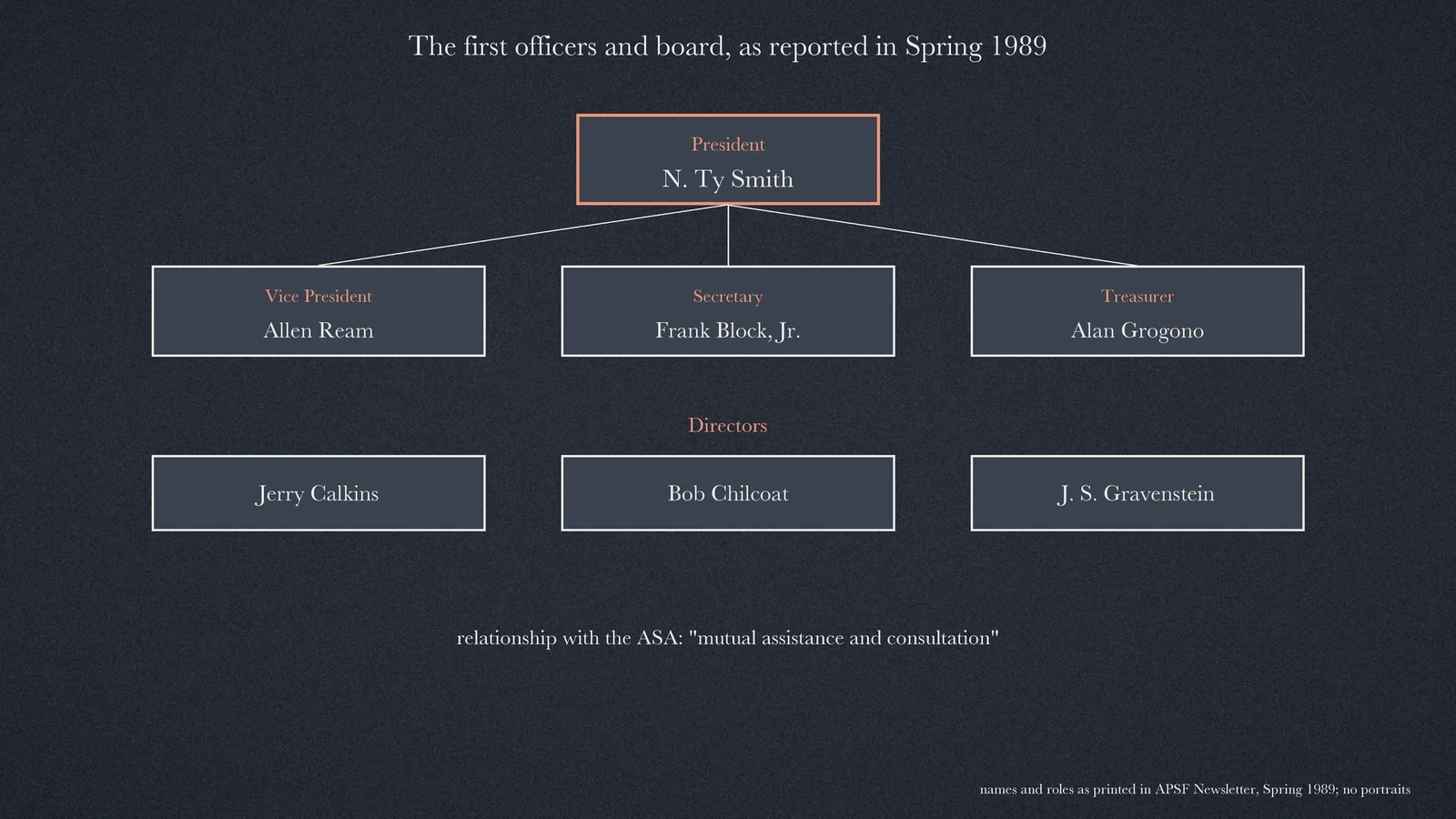
A feasibility and planning meeting was held at "the last ASA meeting in San Francisco"; since the article appeared in spring 1989, that was the ASA meeting of October 1988. "The fifty who were able to attend the 6:00 a.m. meeting agreed that such a society is needed." They chose officers on the spot: Smith as president, Allen Ream as vice president, Frank Block Jr. as secretary and Alan Grogono as treasurer, with Jerry Calkins, Bob Chilcoat and J. S. Gravenstein as directors. Relations with the ASA were to be "mutual assistance and consultation". [1]
The founders listed five aims: the STA should be clinically oriented, international, open to all interested parties, "have broad interests but a narrow name", and welcome clinical, technical and industrial members. Members would receive a newsletter, the Journal of Clinical Monitoring, and access to a computer bulletin board run through the Delphi online service. [1]
First meetings
By summer 1989 the STA was planning its first breakfast panel for the ASA meeting in New Orleans, on who deserved credit for the recent fall in anaesthetic mortality and morbidity, and its second business meeting, after which those who joined would count as charter members. [2] The first business meeting, Smith reported later, had shown how little anaesthesiologists were taught about technology, so the first annual meeting was built around education, with J. S. Gravenstein in charge. [3] It took place in Florida in January 1991. Despite the outbreak of the Gulf conflict the day before attendees were due, over 170 people came; the highlight was a lecture by Richard J. Kitz, after which the society set up a task force on what every resident should know about the technology in use. [4] The STA also sponsored an international symposium on computing in anaesthesia and intensive care in Hamamatsu, Japan, in April 1991. [3]
Computers in Anesthesia
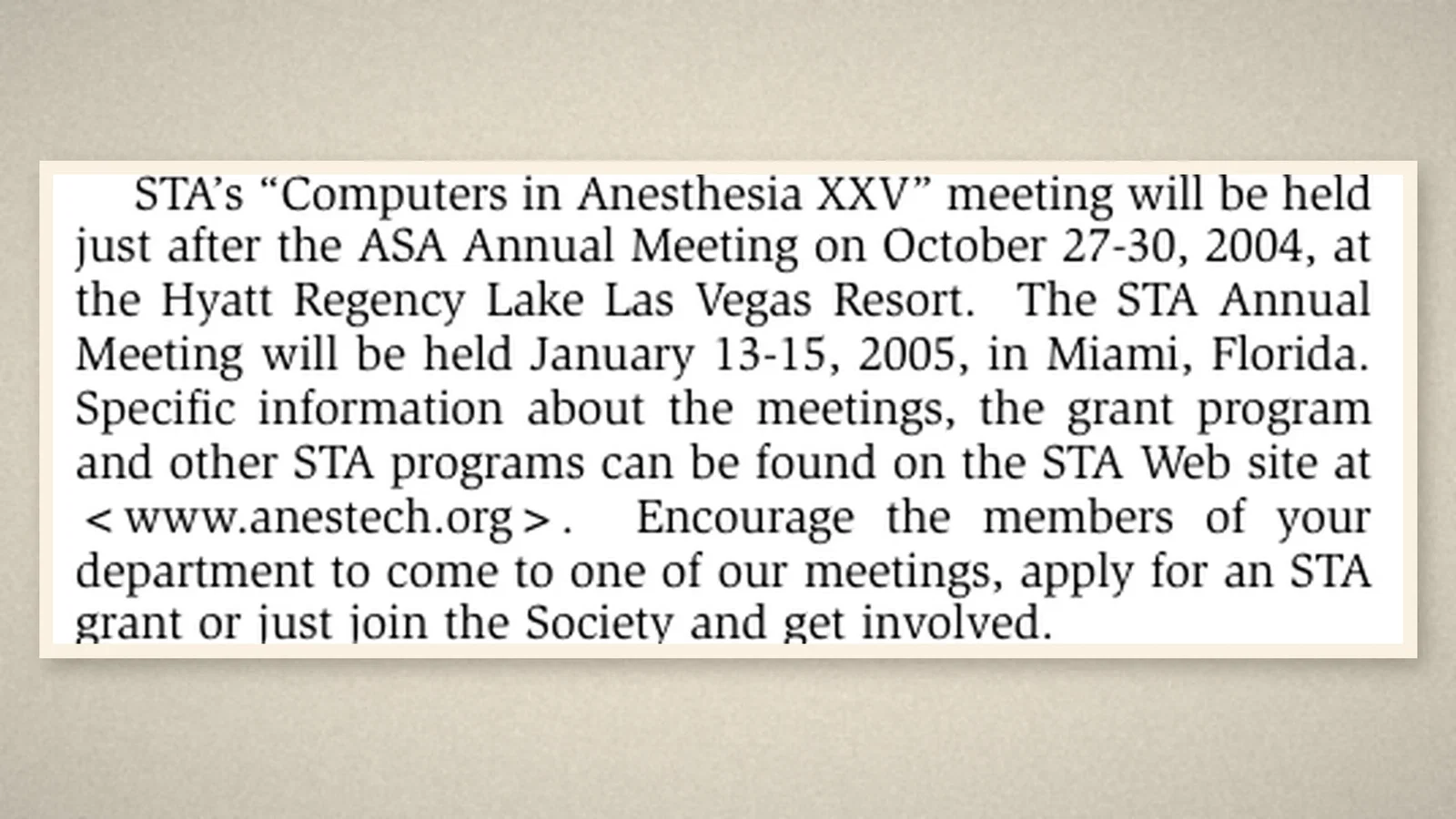
Fifteen years later the STA's president, Jeffrey M. Feldman, described the society for a newsletter of the Association of University Anesthesiologists. Besides its annual meeting, the STA sponsored, immediately after each ASA annual meeting, "a meeting devoted solely to computing related to anesthesiology called 'Computers in Anesthesia'". In 2004 it was the twenty-fifth: "Computers in Anesthesia XXV", held in Lake Las Vegas in October. [5] Feldman also noted that the STA had nurtured simulation at its meetings and fostered the creation of the Society for Medical Simulation. [5]
When was it founded?
The sources disagree slightly. The STA's website says it was "founded in 1988" and lists Smith as president from 1988 to 1994. [6,7] Feldman's 2004 article says "the founding of STA in 1989". [5] Both are defensible: the organising meeting and the first officers date from the autumn of 1988, while the announcement, the first business meeting and the charter membership date from 1989.
What the record shows
The STA grew out of a gap between the people who used anaesthesia equipment and the people who built it. Its founders, meeting at six in the morning during a congress, chose to bridge that gap with a society open to clinicians, engineers and industry alike. Its later "Computers in Anesthesia" meetings kept the specialty's computing pioneers in the same room each year.
Sources and reading limits
Read: four APSF Newsletter articles by N. Ty Smith, Spring 1989 to Summer 1991; J. M. Feldman's 2004 article in AUA Update; the STA mission and past-presidents pages.
Not covered: the Wood Library-Museum video catalogued as this topic's lead (not viewed); the April 1989 notice in the Journal of Clinical Monitoring; STA's own early newsletters; any document dating the first "Computers in Anesthesia" meeting. A twenty-fifth meeting in 2004 implies a series beginning around 1980, but this is arithmetic, not a documented date, and the relationship between that series and the STA before 1988 is not known from these sources. The October 1988 date of the San Francisco meeting is inferred from the newsletter's date.
One illustration is a crop of the 2004 AUA Update; three are drawn from the sources.
- Smith NT. Society for Technology organizes, plans future. APSF Newsletter. 1989;4(1). Archived copy
- Smith NT. The Society for Technology in Anesthesia. APSF Newsletter. 1989;4(2). Archived copy
- Smith NT. STA announces first annual meeting: January in Florida. APSF Newsletter. 1990;5(1). Archived copy
- Smith NT. STA flourishes, stages meetings, expands scope. APSF Newsletter. 1991;6(2). Archived copy
- Feldman JM. STA offers opportunities for faculty and residents. AUA Update. Fall 2004:2. PDF
- Society for Technology in Anesthesia. Our mission. Website
- Society for Technology in Anesthesia. Past presidents. Website
Continue exploring
Related reading connects shared questions and contexts; it does not by itself establish historical influence.
Anesthesia Epochs · The Source Room · About & Editorial Method
Published November 2, 2026. Sources and reading limits are stated above. Illustrations are labelled as original source images or AI-made. Historical accounts are educational; they are not current treatment instructions.