A 1946 appointment within a longer history of equipment, observation and teaching.
Reading Library · Anesthesia Epochs · 中文版
Watch the companion film
1946: Robert Smith and Boston’s Pediatric Anesthesia Team · Watch on YouTube
Historical anchor: 1946. Date details and source qualifications are explained below.
When Robert M. Smith joined Children's Hospital Boston in 1946, he entered an existing anesthesia service. Harvard's memorial identifies him as its first physician chief of anesthesia, while recording that nurses had previously provided most of the hospital's anesthetics. The qualification is essential to the story of his appointment.[1,pp.1–2]
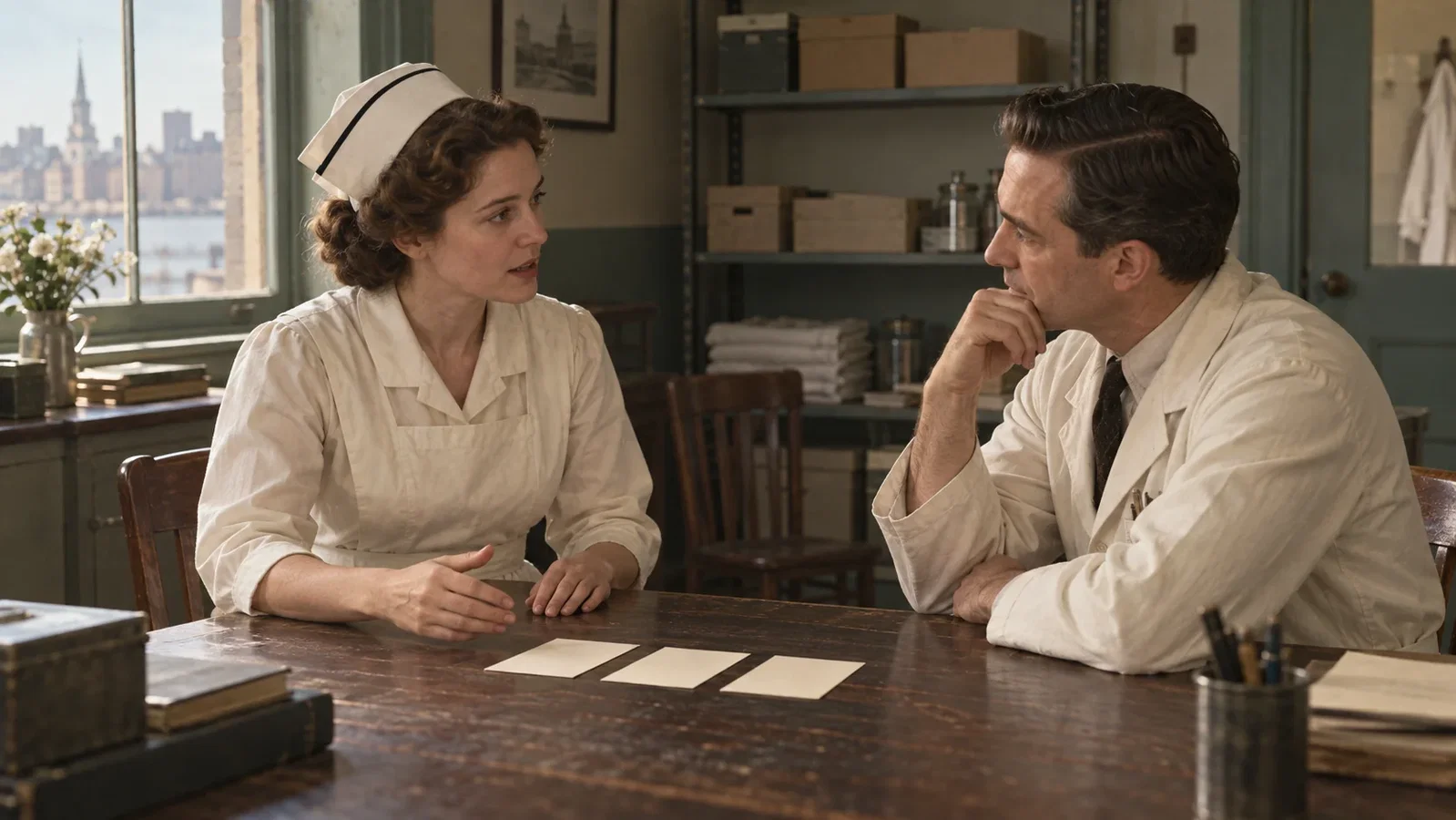
The people, room and meeting are editorial inventions, not portraits of Smith or Betty Lank or a reconstruction of a documented encounter.
Equipment already made for children
Chief nurse anesthetist Betty Lank showed Smith small masks and blood pressure cuffs made for infants. The hospital archive adds that she worked with engineer Geoffrey Dykes on her designs in the 1930s, and that Foregger had brought the equipment to market by 1940.[1,p.2;2,equipment paragraphs]
That sequence gives the appointment a different context. A new medical leadership role developed alongside nursing expertise and local engineering. The archive's account preserves those contributions instead of letting a later, more familiar name absorb the work that preceded him.[1–2]
Three dates, three kinds of work
The memorial places Smith's promotion of continuous precordial listening in the 1950s, alongside regular infant blood pressure measurement. Listening for heart and breath sounds was continuous; cuff measurements were a separate observation. Neither should be illustrated as a modern electronic monitor producing continuous digital waveforms.[1,p.2]
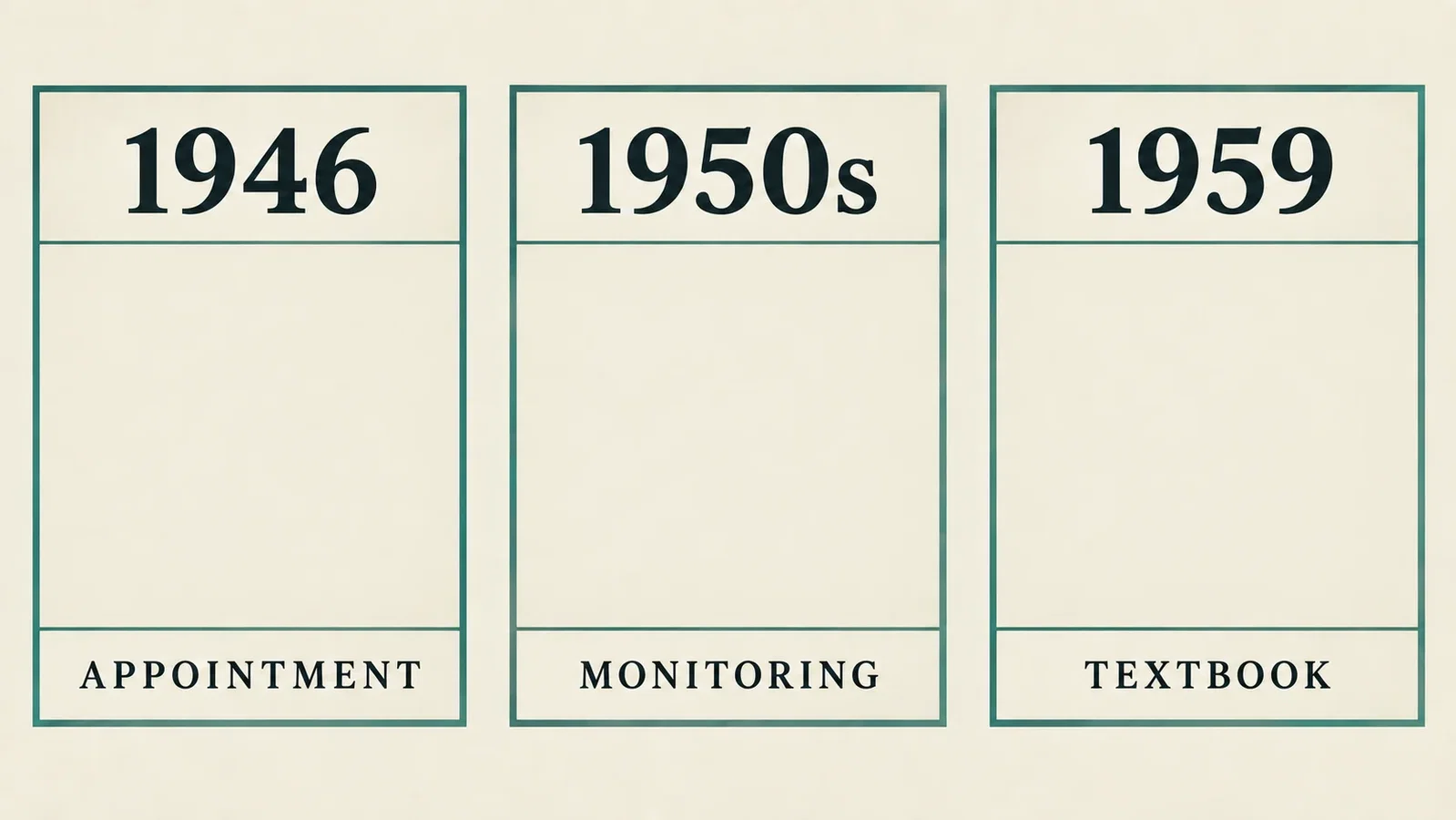
The appointment anchors this article in 1946. Work on monitoring in the 1950s and a textbook published in 1959 retain their own dates.
In 1959 Smith published Anesthesia for Infants and Children, subsequently revising it through four editions. The memorial also describes physicians travelling to Boston to learn from him. Teaching extended his work beyond the individual case and into a body of knowledge that others could study.[1,p.3]
These retrospective accounts do not supply a controlled estimate of deaths prevented by the combined changes. The appointment, observation practices, equipment and book are different kinds of evidence. They can explain a career without establishing that one person or one intervention made pediatric anesthesia safe.[1–3]
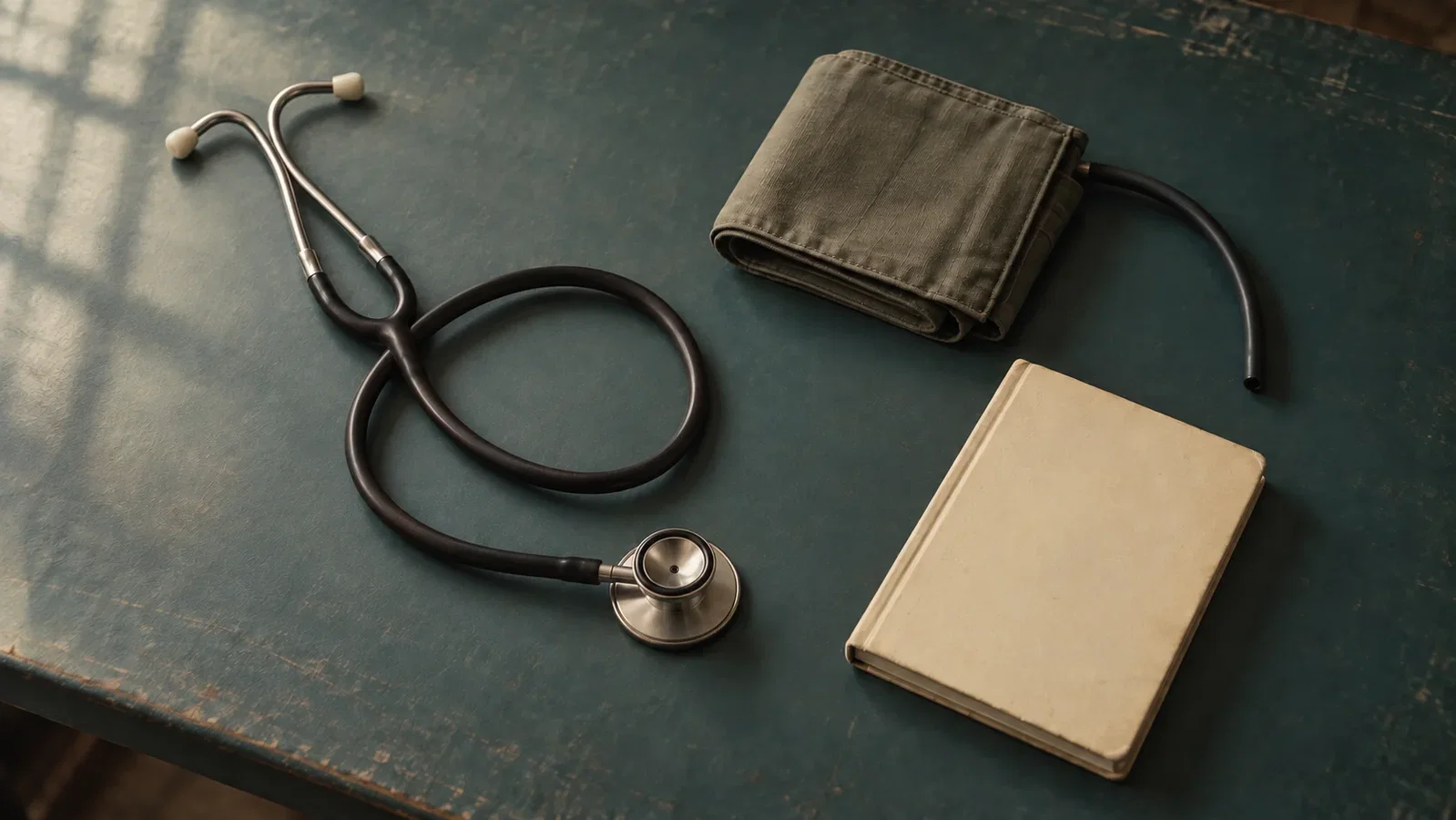
Created for a 1950s theme. These are illustrative objects, not exact reproductions of a museum specimen or instructions for connecting equipment to a patient.
Handle size and blade shape
The Wood Library-Museum holds a Foregger miniature laryngoscope attributed to Smith's work in the 1950s. Its description explains the intention behind the small handle: to encourage gentle movements when working with infants. The specimen pictured has a Miller-type blade; Macintosh and other blades were also available. That design rationale does not itself demonstrate a measured reduction in injuries.[3,Description and Catalog Record]
Macintosh's original 1943 article provides a specific comparison. Its short curved blade acted at the tongue base to lift the epiglottis indirectly. The miniature instrument's handle addressed another part of the interaction between an operator and an airway. The records describe different component choices within the same class of instrument.[3;4,p.205,Figs.1–5]
These records allow the two designs to be read together. Availability of a Macintosh-type blade does not establish that Smith took inspiration from the 1943 article, and it does not turn the museum's pictured Miller blade into a Macintosh blade. The comparison concerns instrument design; a personal line of influence would require separate evidence.[3–4]

The book is an illustrative prop, not a facsimile of the 1959 cover. The unread textbook interior is not being presented as direct evidence.
An appointment gives this article its date. The existing team and the later work give it substance. Keeping them visible allows a history of Smith's contribution to remain a history of collaboration, observation and teaching as well.[1–4]
Sources and reading limits
- Rockoff MA, Bird H, Hendren WH, et al. Robert Smith: Faculty of Medicine — Memorial Minute. Harvard Gazette. September 2, 2010. Dated institutional publication; Harvard memorial PDF · Archived copy. All four pages and the same memorial's web version were read. Page references in the text refer to the PDF. A retrospective institutional account, not a contemporary appointment letter; the two formats are one source.
- Boston Children's Hospital Archives. E–Ether. Full institutional exhibit. Entire exhibit text, captions and three associated images read. Used for the preexisting nurse anesthesia service and Lank's equipment work; an institutional retrospective, not a clinical trial.
- Wood Library-Museum of Anesthesiology. Foregger Miniature Laryngoscope. Description and complete catalog record. Accession 2011-11-17-1, access key amac. Full record and object photograph read. The catalog's biography cites overlapping memorial sources; its physical description records the museum's specimen. Underlying manufacturer catalogs and the cited 1956 article were not read.
- Macintosh RR. A New Laryngoscope. The Lancet. 1943;1:205. DOI. The complete original article on page 205, including its five figures, was read from an archived page scan. Used for a specific comparison of instrument components, without claiming personal influence on Smith.
Continue exploring
Related reading connects shared questions and contexts; it does not by itself establish historical influence.
The Source Room · About & Editorial Method
Sources and reading limits are stated above. Illustrations are labelled as original source images or AI-made. Historical accounts are educational; they are not current treatment instructions.