A 1932 eye report separates chemical modifications, clinical observations and unanswered questions about toxicity.
Reading Library · Anesthesia Epochs · 中文版
Watch the companion film
1932: Tetracaine Enters the Eye Clinic · Watch on YouTube
Historical anchor: 1932. Date details and source qualifications are explained below.
A local anesthetic arriving in an eye clinic faced a question that its chemical name could not answer: what happened when it was actually used?
In 1932, William H. Wilmer and Richard Townley Paton described their experience with Pantocain, a name associated with tetracaine. Their paper welcomed the drug into ophthalmology. It also ended with an explicit limitation: its toxicity in humans was not yet definitely known.[1, pp 31,37]
Pantocain and the US brand name Pontocaine both belong to tetracaine's history.[4, name and historical notes]
That combination of enthusiasm and qualification makes the report worth reading closely.
A modification, not a different label
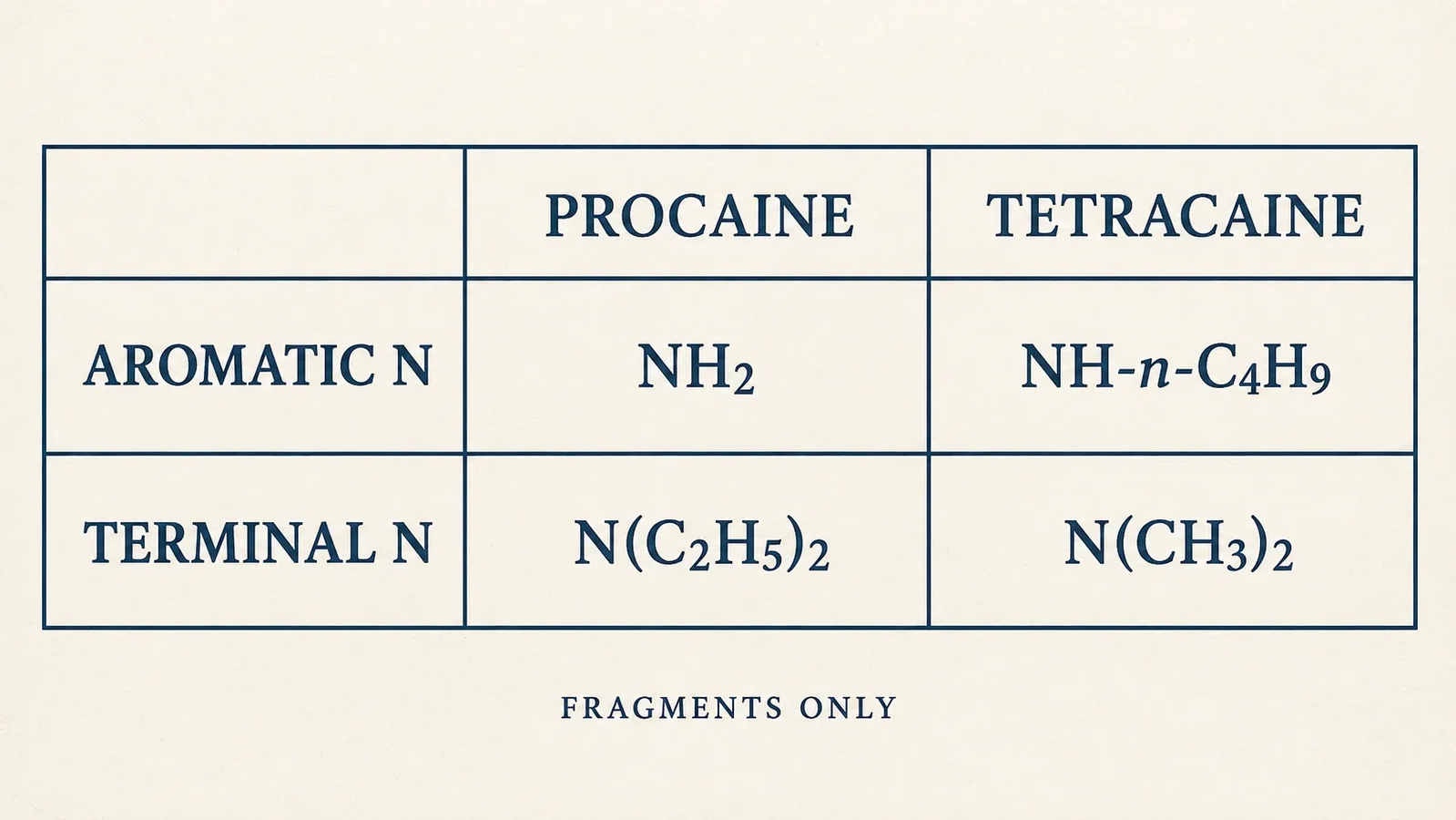
Tetracaine and procaine belong to a chemically identifiable family. Comparing the original patents makes their differences concrete.
Einhorn described esters of para-aminobenzoic acid, including the diethylaminoethyl compound associated with procaine. Eisleb's tetracaine retained the benzoate-ester framework but differed at two nitrogen-containing parts: two methyl groups replaced the two ethyl groups at the terminal nitrogen, while the nitrogen attached to the aromatic ring carried an additional normal-butyl group.[3, complete single page; 2, pp 1–2, formula and claim]
This was not simply a stronger concentration of procaine. It was a different compound. The free base and its salts also needed to be distinguished; properties assigned to one form could not automatically be transferred to the other.
Wilmer and Paton themselves introduced Pantocain as a derivative of Novocain. That contemporary wording, together with the specific chemical comparison, supports this site's related link to the procaine article. It does not establish personal contact, instruction, or a documented chain of influence between Einhorn and Eisleb.[1, p 31; 2–3]
The Eisleb patent made appealing claims: strong anesthetic action, little irritation and a favorable therapeutic index compared with earlier analogous products. Those were the inventor's performance claims. The patent did not supply a clinical investigation sufficient to turn them into a conclusion about safety in patients.[2, p 1]
The eye report provides a different kind of evidence.
More than 500 cases—and several distinct observations
Wilmer and Paton reported use in more than 500 cases at their institute. This was an account of clinical experience, not a randomized study of exactly 500 participants with standardized outcomes.[1, p 34]
Earlier pages summarized hundreds or thousands of cases reported by other investigators. Those figures must not be added together and attributed to the Wilmer institute. The paper distinguishes its literature survey from its own observations.
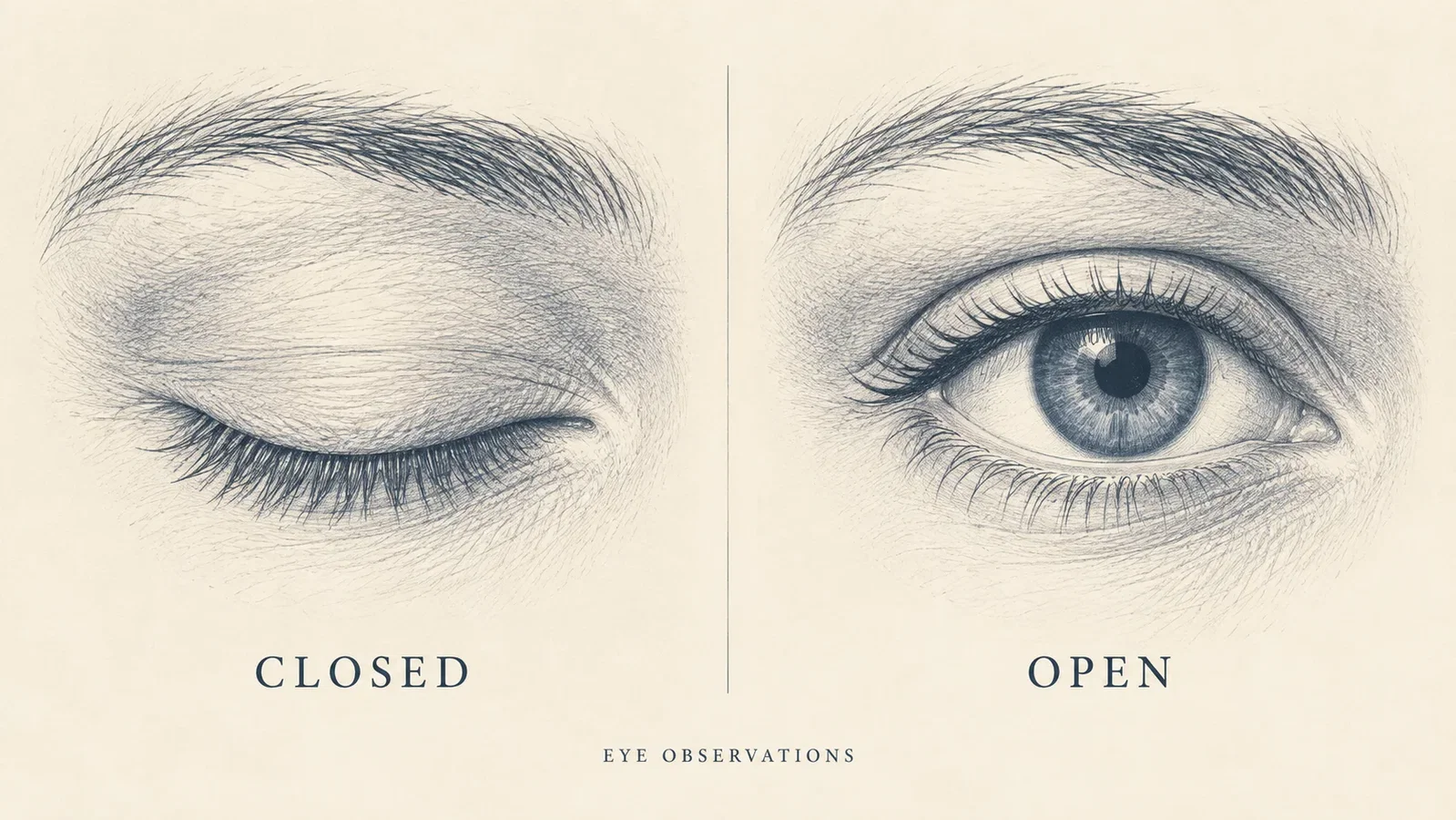
One of those observations concerned ten normal eyes. The wording does not establish ten separate participants. With the lids closed, the authors described virtually no smarting; opening them repeatedly to test sensation brought short-lived stinging and slight tearing. They also recorded the anesthetic effect and the absence of certain local injuries within that observation.[1, pp 34–35]
A summary that said only “non-irritating” would lose precisely the detail that made the observation informative.
A separate passage concerned Wilmer's own eye, which contained foreign material. Pantocain was used before the material was removed. This was a personal clinical episode, not Eisleb experimenting on himself, and not an additional member of a clearly defined ten-eye trial.[1, p 35]
The authors also described applications in examinations and operations. A chemical candidate had entered particular tasks in ophthalmic practice.
Read the footnote before declaring success
The operative account did not describe tetracaine acting alone throughout every case.
For one type of operation, the authors used Novocain with adrenaline in addition to Pantocain. They wrote that they intended to substitute Pantocain with adrenaline for that supplementary injection. A footnote then reported that the substitution had been made since the text was written, with satisfactory results.[1, p 36 and footnote]
Both parts matter. Omitting the additional drug creates a false single-agent story; omitting the footnote leaves an implemented change looking like an unfulfilled plan.
The authors reported no observed postoperative complications. That statement belongs to their experience and reporting methods. It is not a precise zero-risk estimate or a modern demonstration of comparative safety. Stinging, tearing and corneal drying described elsewhere in the account should not disappear from the retelling.[1, pp 34–37]
The limitation the authors kept
On the final page, Wilmer and Paton stated that human toxicity remained uncertain, with the relevant determinations then coming from animal experiments. Their experience was insufficient to assess unusual individual reactions. Definite antiseptic properties had not been established either.[1, p 37]
Producing local anesthesia was not the same as disinfecting tissue. Greater anesthetic potency did not, by itself, settle the margin of safety.
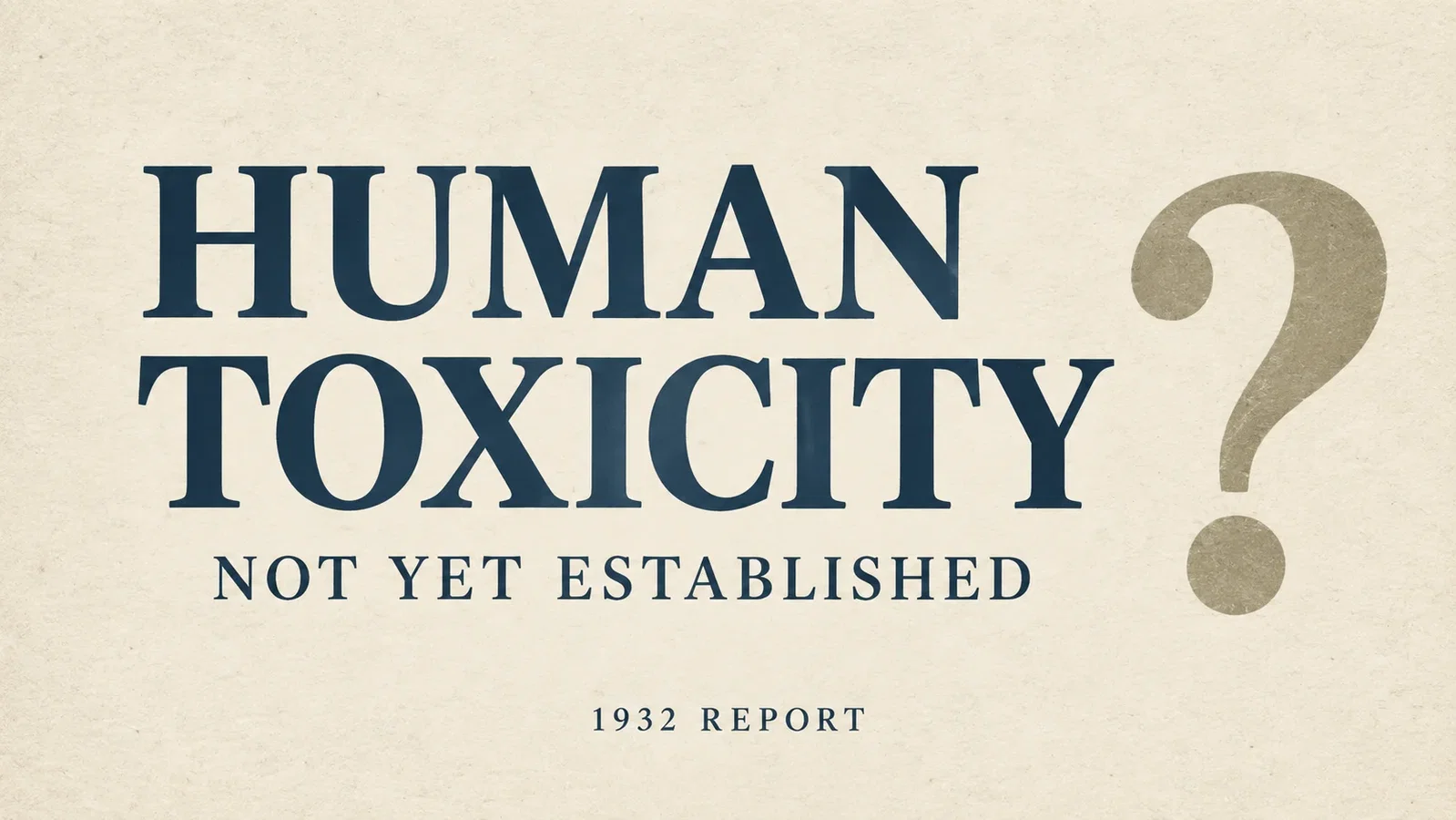
The report's value lies partly in that unfinished picture: a promising drug, specific observations and questions its authors could not yet answer.
Historical concentrations, preparation methods, instillation sequences, sedative combinations and sterilization instructions are not reproduced here. This is a history of the evidence, not current clinical guidance.
Which year belongs on the article?
The Wood Library-Museum's retrospective account dates Eisleb's synthesis to 1928. The 2020 review proof says 1930, citing the 1932 US patent. The patent itself records a Swiss application on December 22, 1930, and US grant on November 29, 1932. These legal dates do not independently establish the first synthesis year.[4, historical notes; 5, section 6.1 and reference 83; 2, header]
This article therefore uses the directly read 1932 eye report as its year-level anchor. Neither first synthesis nor first clinical use is claimed for 1932. Baltimore identifies the report's institutional setting, not Eisleb's laboratory.
The museum's surviving Pontocaine powder box has another date: its manufacture is estimated at 1938–1946. It must not be presented as original 1928 packaging.[4, catalog dating notes]
Tetracaine's passage from a modified molecule into clinical observation is already a substantial story. It does not need an invented birthday.
Sources and reading limits
- Wilmer WH, Paton RT. Pantocain as a Local Anesthetic in Ophthalmology. Trans Am Ophthalmol Soc.1932;30:31–37. PMID16692936; PMC1316837. All seven original pages, footnote and 16 references read. Original article and PDF.
- Eisleb O. Beta-dimethylaminoethyl ester of para-butylamino-benzoic acid. US1889645. Granted November 29, 1932. Complete two-page original read; patent claims are not clinical approval. Original patent.
- Einhorn A. Alkamin esters of para-aminobenzoic acid. US812554. Filed November 8, 1905; granted February 13, 1906. Original single page read. Original patent.
- Wood Library-Museum of Anesthesiology. Pontocaine, Access Key akgy, Accession 2012-12-17-2. Complete website text and catalog read; not every object photograph was inspected. Authoritative museum record · Archived copy.
- Bezerra MM, Leão RAC, Miranda LSM, de Souza ROMA. A brief history behind the most used local anesthetics. Tetrahedron.2020. DOI10.1016/j.tet.2020.131628. The 15-page file read is a corrected proof: title/abstract, sections 6.1–6.5 and associated schemes, and reference 83 were read; not the entire article. Its Scheme 19 caption mistakenly names procaine; that error is not adopted. Corrected proof.
All four images are modern historical reconstructions or editorial concepts, not original drug products, case photographs, patent facsimiles or clinical instructions.
Continue exploring
Related reading connects shared questions and contexts; it does not by itself establish historical influence.
The Source Room · About & Editorial Method
Sources and reading limits are stated above. Illustrations are labelled as original source images or AI-made. Historical accounts are educational; they are not current treatment instructions.