An appointment connected to staff, equipment and teaching.
Reading Library · Anesthesia Epochs · 中文版
Watch the companion film
1958: Vermeulen-Cranch — Room for a Specialty · Watch on YouTube
Historical anchor: 1958. Date details and source qualifications are explained below.
The University of Amsterdam’s academic register records Doreen Vermeulen-Cranch’s appointment as buitengewoon hoogleraar in anesthesiology from 1 July 1958.[1] The Dutch title matters: treating every professorial rank and chair as interchangeable would obscure the institution’s own record.
Her later account gives the appointment a practical setting. Books, equipment and a secretary gained budget support; better salaries made it possible to retain full-time staff.[2, p.268] These details connect an academic position with the everyday work of building a specialty.
Work already under way
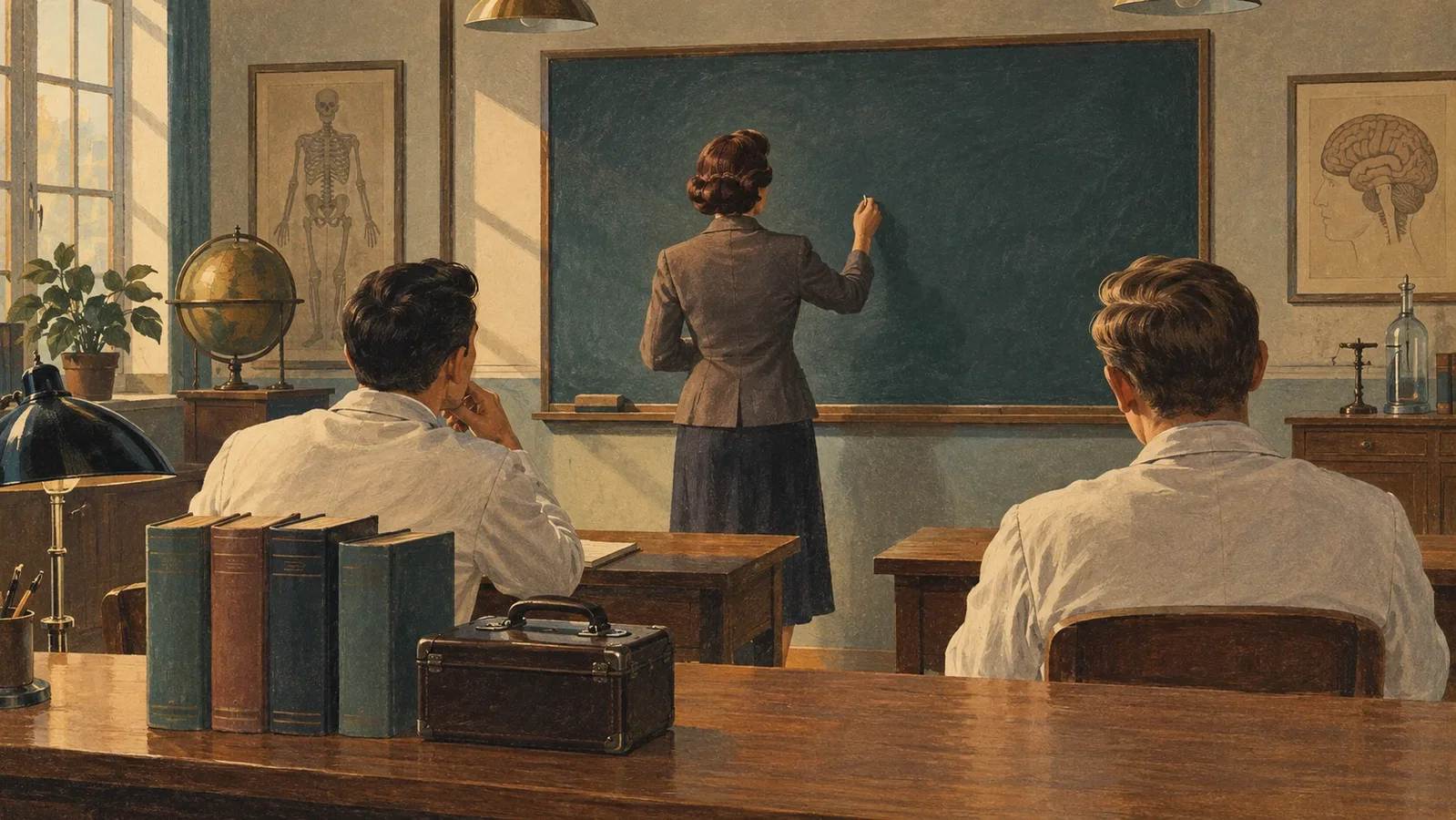
Eshuis’s memorial describes a British-trained anesthetist arriving in postwar Amsterdam in 1946 with portable equipment. The developing service involved clinical techniques, preoperative assessment, postoperative care, nursing and technical support.[3, pp.176–178] Its history therefore extends beyond a university appointment.
Training also preceded the professorship. Both her account and the memorial place the beginning of specialist training with Boeré and Mauve in 1947.[2, p.266; 3, p.177] The appointment consolidated work already under way. It did not create local anesthesia practice or teaching overnight.
The university register distinguishes two posts. Her period as privaatdocent began on 18 December 1951 and ended on 1 July 1958; the entry for buitengewoon hoogleraar follows.[1] Collapsing them into a professorship beginning in 1951 loses a distinction preserved in the detailed record.
Dates with different documentary meanings
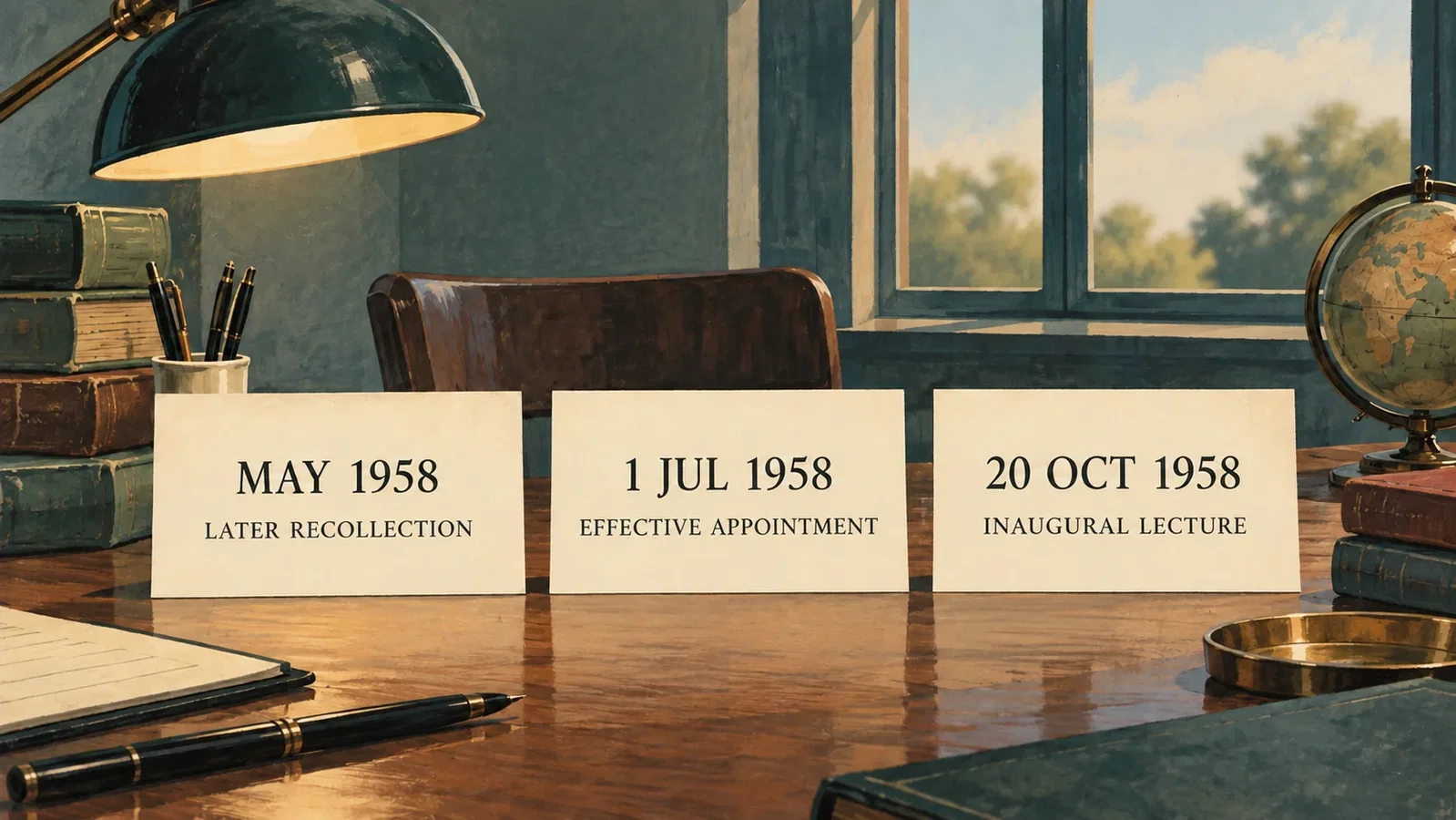
Vermeulen-Cranch later recalled becoming professor with royal consent in May 1958. The university lists 1 July as the effective date, and 20 October for her inaugural lecture, In somno securitas.[1; 2, p.267]
This article uses the university’s effective date while retaining the differing month in her recollection. The original appointment instrument, royal approval and lecture text have not been obtained. Without them, assigning May and July to specific administrative steps would be an explanation added by the writer.
What a position could support
The Dutch anesthesia society’s institutional history links the 1958 professorship with a budget, staff and equipment.[4] Her own retrospective adds office, meeting and technical support space.[2, p.268] The accounts describe the material conditions in which a department could function.
Those conditions help explain the significance of the appointment. Teaching requires people with time to teach; equipment requires maintenance; a clinical service needs continuity. An academic title becomes consequential when such work can be organized and sustained.
These are retrospective accounts, however. They are neither original budget ledgers nor a controlled comparison of patient outcomes. They support a history of departmental development, without supplying a mortality reduction attributable to the appointment.

The difficulty with a global first
The society’s account calls her the world’s first female professor of anesthesiology. Her own wording concerns a chair held by a woman.[2, p.267; 4] Those formulations require different comparisons.
Columbia University’s archival finding aid lists Virginia Apgar as Professor of Anesthesiology from 1949.[5] An unrestricted claim that the first female anesthesiology professor appeared in Amsterdam in 1958 therefore cannot stand. A narrower claim about a chair, departmental leadership or a particular academic rank would require its own institutional evidence.
Removing the broad superlative leaves a substantial history intact. It also allows the work of different women physicians to be described on its own terms, with appointments and achievements attached to the records that actually support them.
A specific connection to Waters
Recalling her early equipment in 1946, Vermeulen-Cranch named Waters canisters alongside her portable machine and endotracheal equipment.[2, p.266] That reference supplies a concrete connection to the Waters carbon dioxide absorber article.
Waters’s 1924 paper describes a mask, absorbent container and reservoir bag; its footnote identifies a 1923 conference presentation.[6, p.1] Reading the two accounts together connects an apparatus history with later clinical use. It does not establish the exact model she carried, or make the device a cause of her professorial appointment.
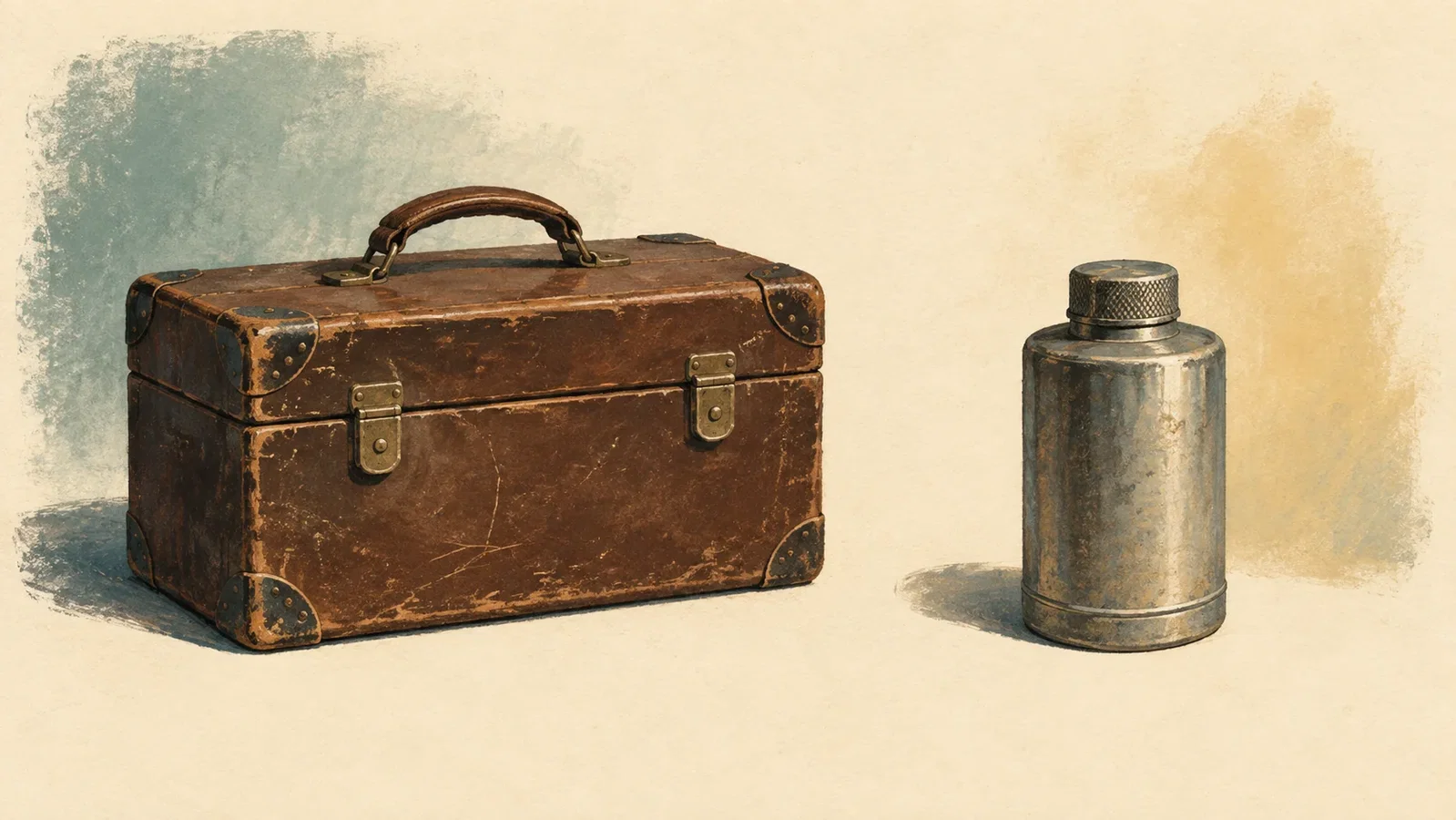
The trainees of 1947 and the resources described after 1958 belong to different stages of the same developing service. Her retrospective gives the register’s brief appointment entry a practical dimension: people, rooms and equipment with which the specialty could continue its work.
Sources and reading limits
- UvA Album Academicum: D.M.E. Vermeulen-Cranch. Full individual record read; distinguishes ranks, effective appointment and lecture dates. An institutional register, not the original 1958 appointment instrument.
- Vermeulen-Cranch DME. From Open Ether to Open Hearts. In: Anaesthesia: Essays on Its History. 1985:265–270. All six chapter pages read in a public book PDF copy, with title/copyright pages checked. The copy records a 1998 second printing. First-person retrospective; no claim to reading the entire 422-page book.
- Eshuis JH. Doreen Vermeulen-Cranch. History of Anaesthesia Society Proceedings. 2012;44:176–178. Complete three-page memorial and volume cover read. The 2011 meeting and 2012 publication are distinct; the entire 184-page volume was not read.
- Nederlandse Vereniging voor Anesthesiologie: Ereleden. Vermeulen-Cranch section read selectively. Its global-first claim is checked against source 5, not adopted without qualification.
- Columbia Archives: Virginia Apgar finding aid. Public career history and appointment table only; neither restricted patient records nor original appointment instruments accessed.
- Waters RM. Clinical Scope and Utility of Carbon Dioxid Filtration in Inhalation Anesthesia · Archived copy. Original 1924 article in the WLM 1975 reprint. Printed p.1 visually reread for this article’s apparatus comparison.
Images are AI-generated editorial reconstructions or modern conceptual illustrations, not an authentic portrait, hospital photograph, appointment document or apparatus assembly diagram.
Continue exploring
Related reading connects shared questions and contexts; it does not by itself establish historical influence.
The Source Room · About & Editorial Method
Sources and reading limits are stated above. Illustrations are labelled as original source images or AI-made. Historical accounts are educational; they are not current treatment instructions.