A 1907 English translation of the Sushruta Samhita advises giving strong wine before an operation, if the patient is used to it, so that pain is not felt; the passage is a textual instruction, not a record of a first anesthetic.
Reading Library · Anesthesia Epochs · 中文版
Watch the education video (for clinicians)
Antiquity: Wine Before the Knife — Reading the Sushruta Samhita · Anesthesia Epochs Education Series
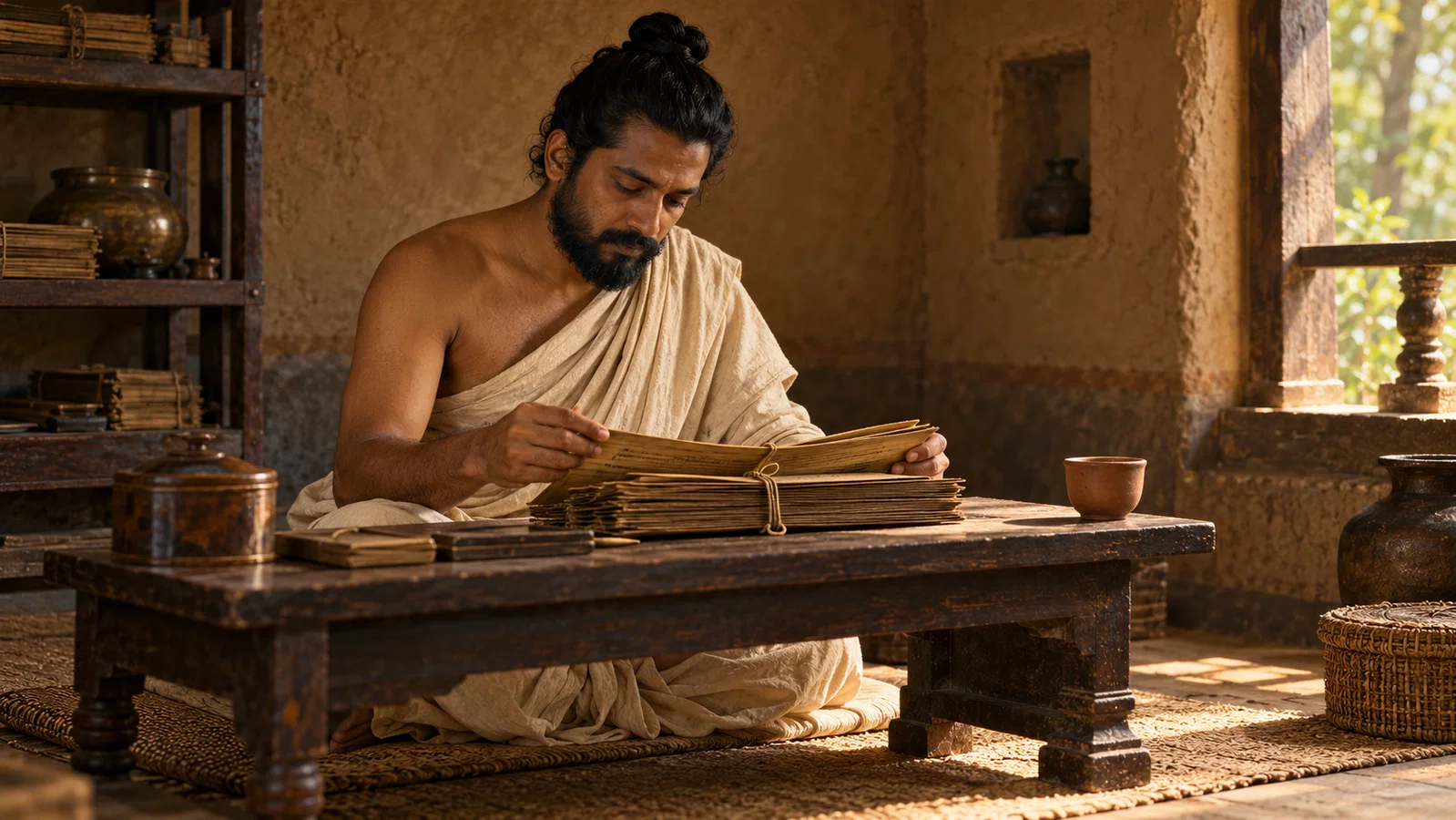
A short passage on page 160 of a 1907 English translation has a place in the history of attempts to lessen surgical pain. Its importance becomes clearer when we retain the condition attached to it. The Sushruta Samhita translation recommends strong wine before an operation if the patient is accustomed to drinking it. That qualification is part of the evidence, not an inconvenience to remove from the story.[1]
A sentence inside a surgical chapter
Kunja Lal Bhishagratna’s first volume, published in Calcutta in 1907, contains the Sutrasthanam. Chapter XVII concerns swellings, their progression toward suppuration and the judgment involved in deciding when to open them. It warns against both premature incision and leaving a suppurated swelling unopened. The sentence about wine appears within this discussion, rather than as a freestanding account of a celebrated first anesthetic.[1, pp.155–161]
On page 160, the translation says that a patient should receive a meal before the operation, or strong wine if accustomed to it. It assigns different purposes to the two: food is described as sustaining strength and guarding against fainting; wine is said to make the patient unaware of pain. The wording records an intention to change the experience of surgery. It does not report a patient series, measured anesthetic depth, a complication rate or a reproducible drug regimen.[1, p.160]
Nor should the condition be silently converted into a modern diagnosis of alcohol dependence. It belongs to the language of this translation. We can preserve its restriction without adding a clinical category that the passage does not establish.
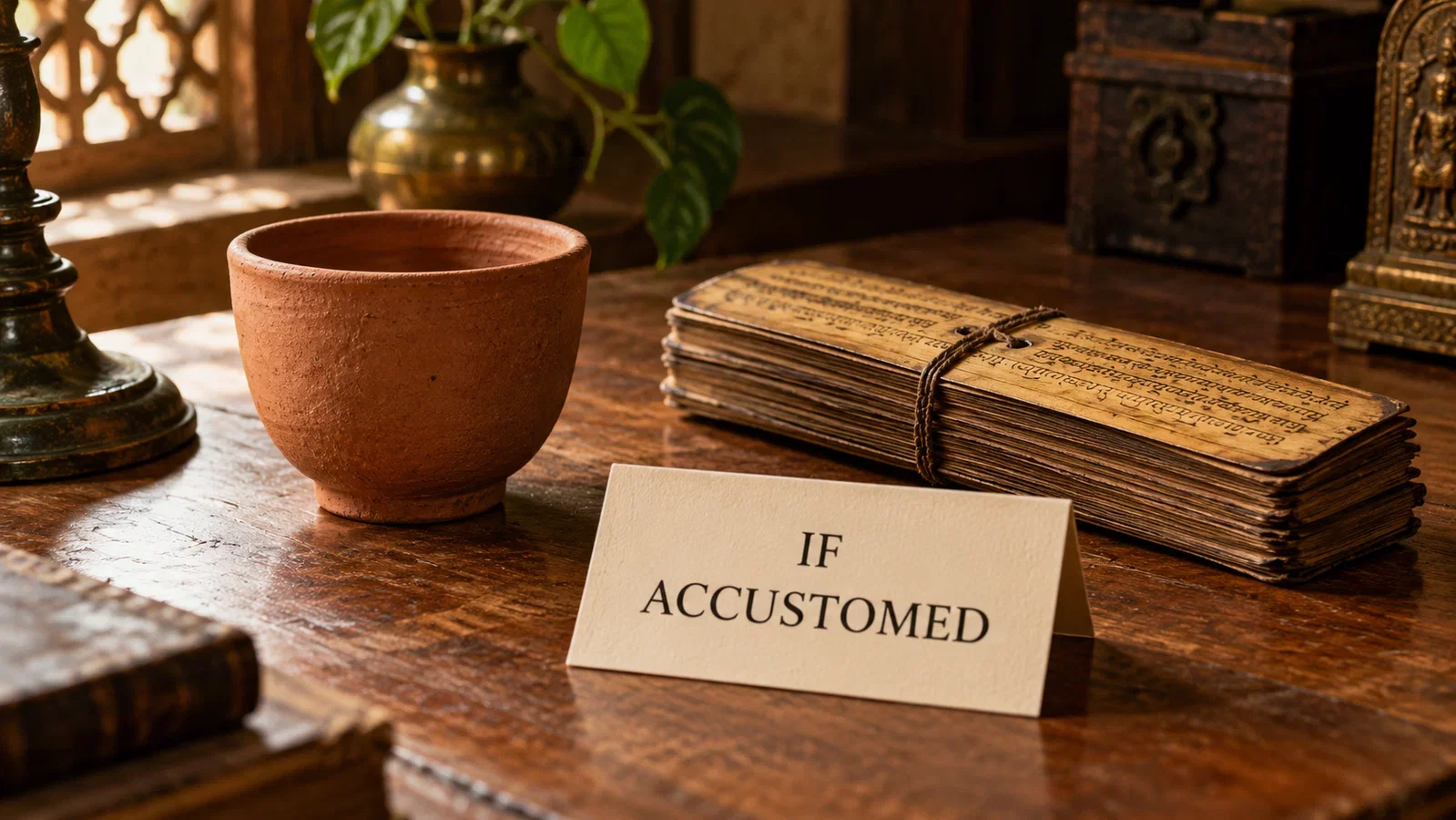
Chapter V offers a wider setting. Its opening separates preliminary measures, the principal intervention and subsequent care, then discusses equipment and assistants. These pages show attention to preparation around an operation. They are not the location of the page-160 wine passage, and their historical instructions should not be treated as present-day surgical advice.[1, pp.36–39]
Whose word is “anaesthetising”?
The English page uses the expression “anaesthetising (wine giving).” That is a useful clue to how the translator presented the text in 1907. It is not, by itself, evidence that an ancient author employed a modern definition of general anesthesia.[1, p.160]
Bhishagratna explains in his preface that he compared texts, placed some doubtful material in notes and supplied explanatory language where a literal translation seemed inadequate. He also discusses the difficulty of finding English equivalents for technical terms. His edition gives access to an important medical tradition, while retaining the interpretive choices of an editor and translator.[1, pp.ii–iii]
This article therefore makes a bounded claim: the passage, as printed in this English version, describes giving wine under a stated condition with the intended effect of reducing awareness of pain. We have not independently collated the Sanskrit witnesses or established how each term in this paragraph developed across them.

Three dates that cannot substitute for one another
Suśruta is often placed around 600 BCE. The materials examined here do not establish that date for this passage or for a particular operation. The Suśruta Project describes a long textual history and a manuscript witness, Kathmandu KL 699, dated to 878 CE. Its overview distinguishes that earlier evidence from later manuscripts and printed editions.[2]
A manuscript’s copying date, a passage’s composition and an English translation’s publication are different questions. The relevant leaves of KL 699 were not inspected for this article. This article therefore leaves its event year unassigned. On the reading timeline it is filed at 878, the date of the manuscript witness discussed by the research project; 1907 identifies the translation read here. Neither is presented as the date when surgical use of wine began.

The same restraint applies to claims about cannabis vapour or the world’s first general anesthetic. The core passage read here does not establish either. Its historical interest does not depend on attaching those claims to it.
A comparison worth making
The History of the Later Han also connects wine, a preparation and altered awareness with surgery in its account of Hua Tuo. Its wording specifically describes taking mafeisan with wine.[3] That provides a concrete reason to read this article beside this site’s Hua Tuo article: both require us to distinguish a transmitted description from a recoverable procedure. It does not establish a shared formula or a route of transmission between the traditions.
Keeping the condition and the version visible leaves a substantial subject for anesthesia history: a medical text that addresses the patient’s experience of pain before an operation, and the care required when translating that concern into a modern historical account.
Image note: all four images are AI-generated editorial illustrations. The reader is anonymous, not a portrait of Suśruta or a documented clinic; the cards are modern reading aids, and the objects are not authenticated historical artifacts.
Sources and reading limits
[1] Bhishagratna KL, ed. and trans. An English Translation of the Sushruta Samhita. Vol. I, Sutrasthanam. Calcutta; 1907. Tamil Digital Library scan. Read: title page; preface pp.i–iv; opening of introduction; Chapter V pp.36–39; complete Chapter XVII pp.155–161. The 663-page PDF was not read in full. The chapter-V contents entry differs from the actual opening pagination; citations use the body pages. This is a historical English translation, not a newly collated Sanskrit edition.
[2] Wujastyk D and the Suśruta Project. Project 1 overview, accessed October 29, 2026. Read: overview and project-completion material. Used for the distinction between manuscript evidence and later editions; no claim of independent inspection of KL 699.
[3] Fan Ye. History of the Later Han, chapter 82b, Hua Tuo section. Transmitted Chinese text. Opening two paragraphs read from the digital transcription. This is a textual comparison, not a newly authenticated surgical case.
Continue exploring
Related reading connects shared questions and contexts; it does not by itself establish historical influence.
Anesthesia Epochs · The Source Room · About & Editorial Method
Updated October 30, 2026. Sources and reading limits are stated above. Illustrations are labelled as original source images or AI-made. Historical accounts are educational; they are not current treatment instructions.