ITL-884a3a51d608
Juan Li, MD · 更新于2026年11月18日
观看视频
核心要点
- 两病重叠很常见。约 50% 拟行 TAVI 的患者合并冠心病,但只有 10% 至 20% 同时接受 PCI。[1]
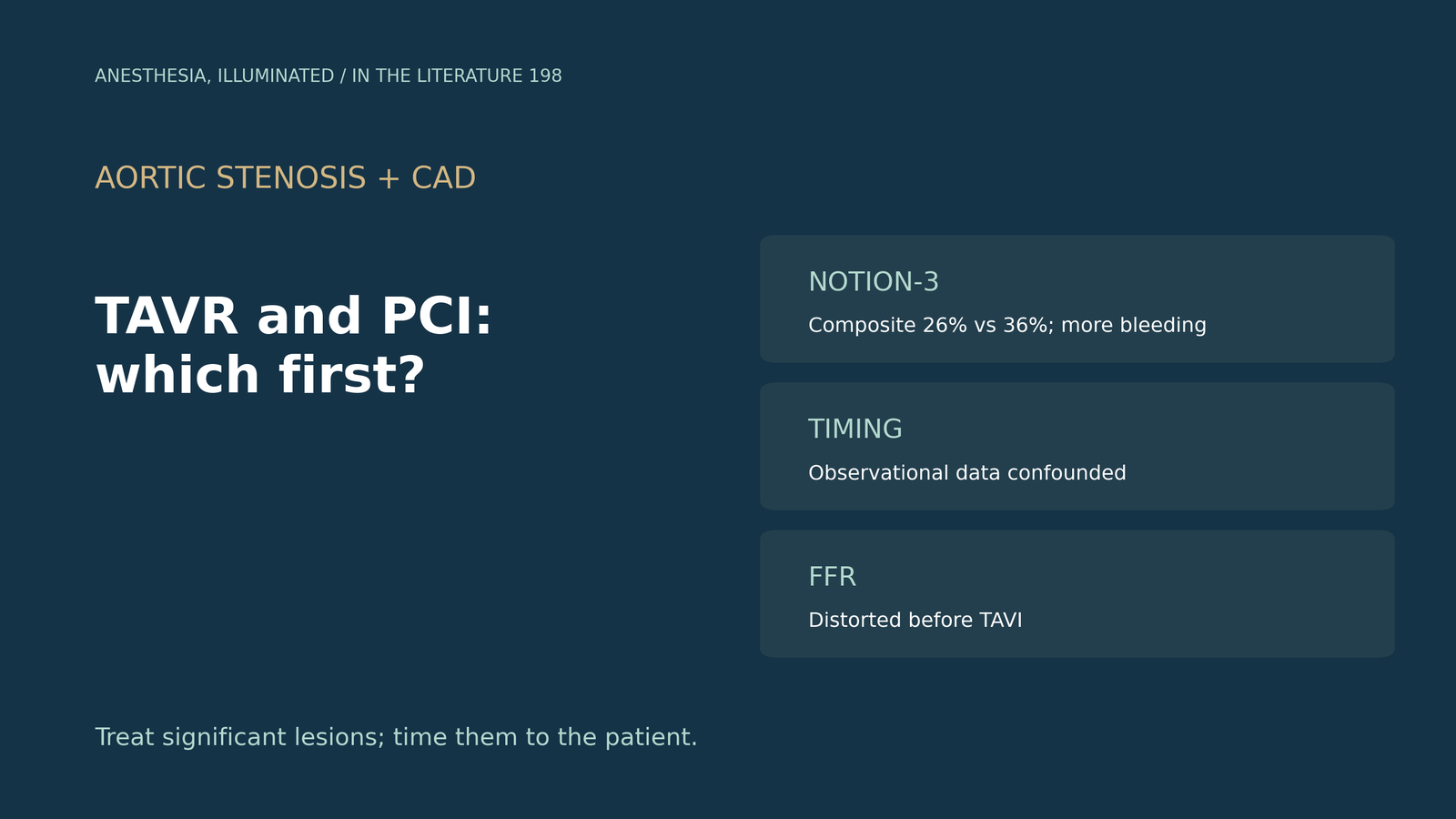
- 已有一项试验支持 PCI。NOTION-3 中,PCI(多数在 TAVI 前分期完成)使复合终点从 36% 降至 26%,主要由紧急再血运重建减少驱动,代价是出血增加。[1], [2]
- 关于时机,观察性数据指向相反方向。荟萃分析显示 TAVI 前或同期 PCI 的死亡率高于 TAVI 后 PCI,但这些均非随机研究。[3], [4]
- TAVI 前的生理学指标会失真。主动脉瓣狭窄会影响 FFR,TAVI 后再测 FFR 可能更好。[1], [4]
- 外科方案仍有一席之地。TCW 在 1 年时支持 PCI 加 TAVI,但汇总的观察性数据显示 TAVR 加 PCI 远期死亡率更高。[5], [6]
TAVI 术前,一位衰弱的 84 岁患者冠脉造影显示前降支近段狭窄 90%,除劳力性气促外没有明确心绞痛。这个病变应在换瓣之前、同期还是之后放支架,还是不处理?[1], [4]
是否需要血运重建
Harvey 等指出,约 50% 的 TAVI 患者合并冠心病。NOTION-3 随机纳入 455 例重度主动脉瓣狭窄合并显著狭窄的患者;PCI 多数在 TAVI 前分期完成(74%)。PCI 组主要终点发生率为 26%,保守组为 36%,主要由紧急再血运重建驱动,而 PCI 组出血更多(28% 对 20%)。[1] Shapeton 等将其描述为主要不良心脏事件绝对减少 10%,并与 ACTIVATION 对比:后者随机纳入 235 例患者,未发现获益;他们强调 PCI 会增加出血风险。[2]
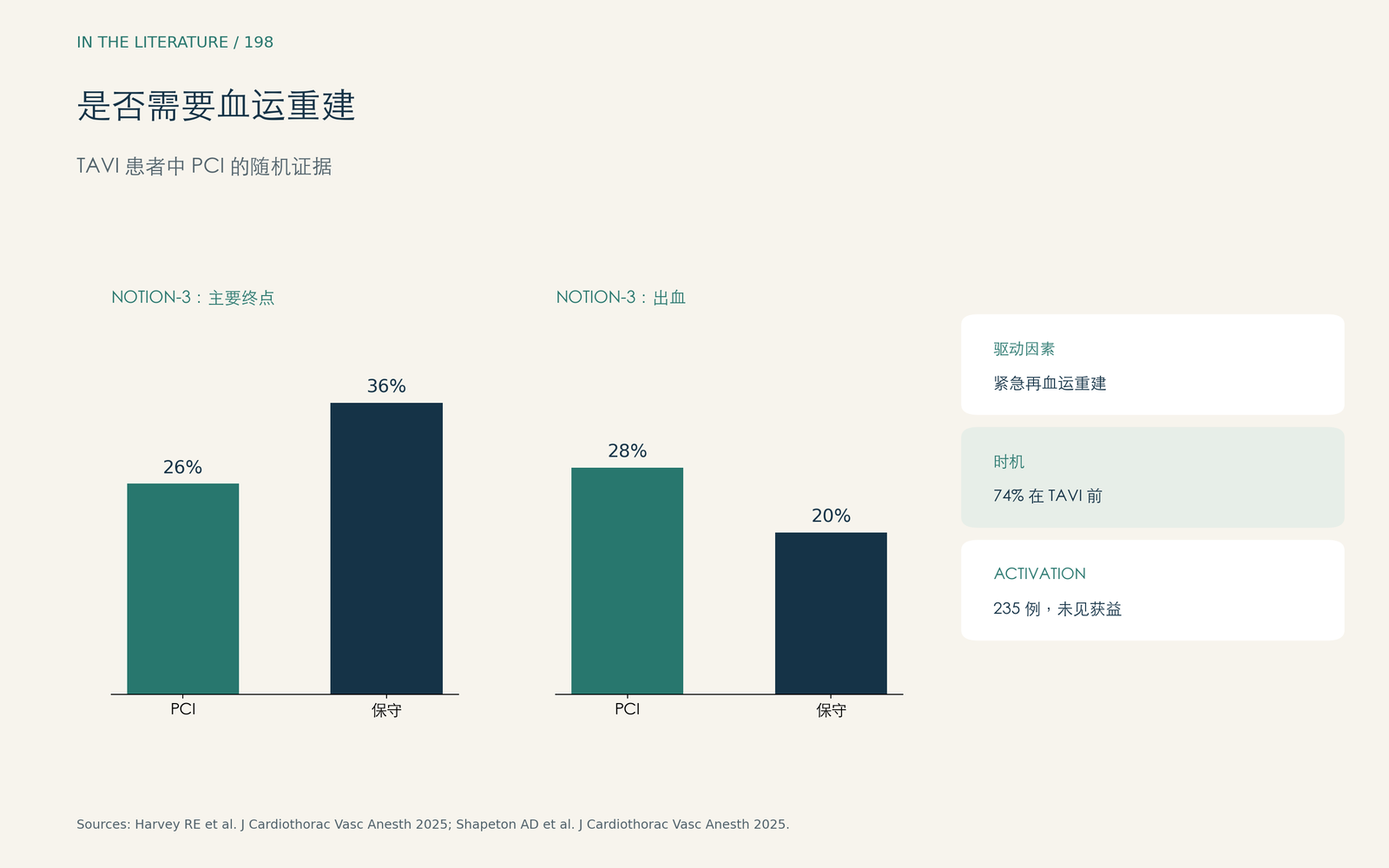
图 1. 紧急手术减少,出血增加。综合自 Harvey 等和 Shapeton 等。[1], [2] 查看大图。

什么时候做
据 Wang 等总结,指南建议在 TAVI 前对狭窄超过 70% 的近段病变行 PCI。他们对 23 项研究、15812 例患者(多为观察性)的荟萃分析认为,TAVI 前或同期 PCI 可能没有临床获益,而 TAVI 后 PCI 与较低的全因死亡率相关。[3] Murray 等发现,TAVI 前或术中 PCI 的 30 天死亡率高于术后 PCI(OR 5.70),但指出由于缺乏随机数据,时机问题尚无明确共识。他们认为先做 TAVI、再评估症状可能是合理的,并指出主动脉瓣狭窄会通过升高的左室压力影响 FFR。[4] Harvey 等补充,TAVI 后再测 FFR 可能更好。[1]
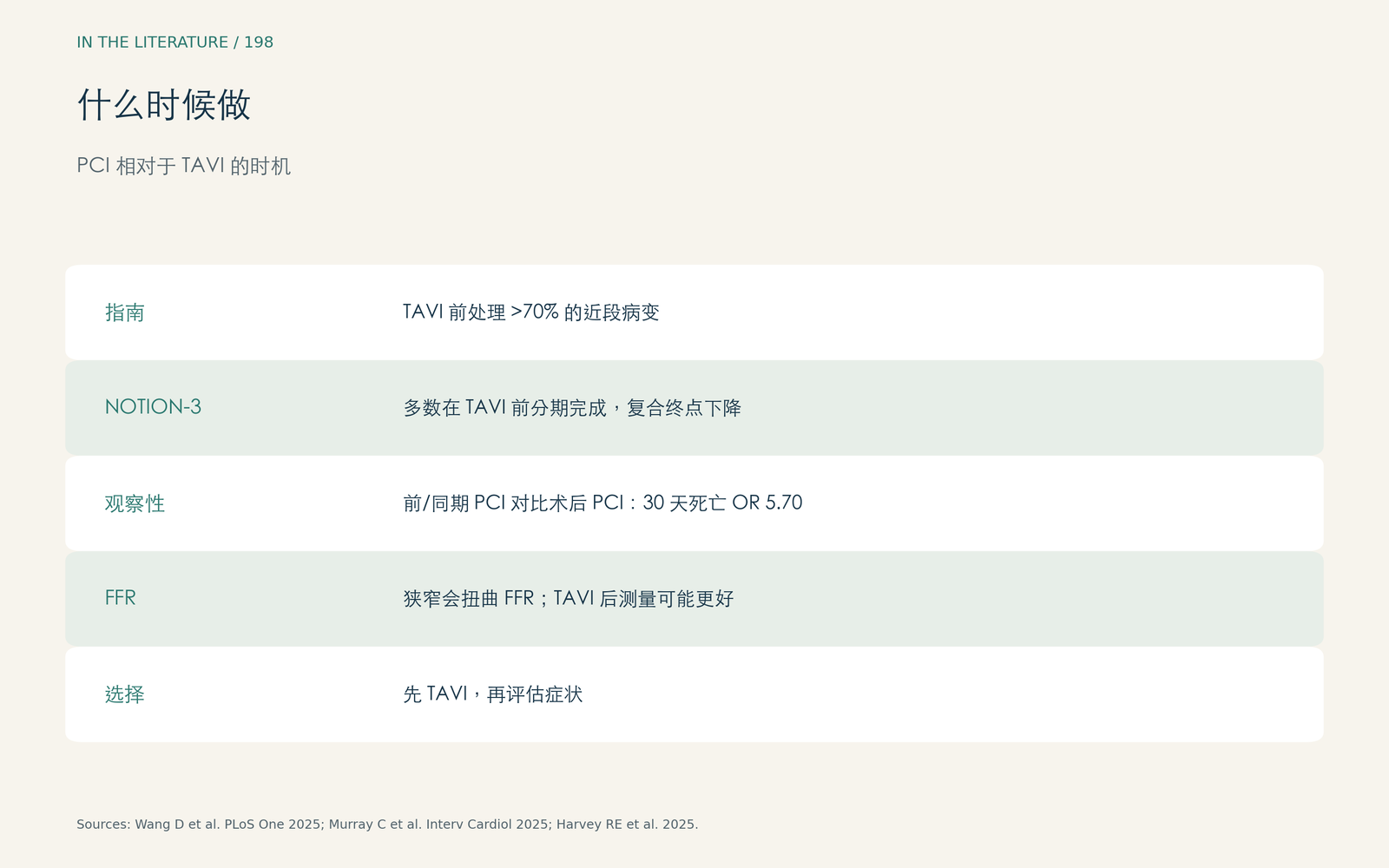
图 2. 之前、同期还是之后:信号受混杂影响。改绘自 Wang 等、Murray 等和 Harvey 等。[3], [4], [1] 查看大图。

介入还是外科?
TCW 试验纳入了 172 例 70 岁及以上患者。FFR 指导的 PCI 加 TAVI 组主要终点发生率为 4%,SAVR 加 CABG 组为 23%;1 年死亡率为 0% 对 10%。[5] Shapeton 等提醒,外科组有 22% 的患者没有接受左乳内动脉桥。[2] Fang 等的荟萃分析发现,TAVR 加 PCI 的 30 天卒中、心肌梗死和急性肾损伤更少,但中远期死亡率更高(OR 1.27)。[6]
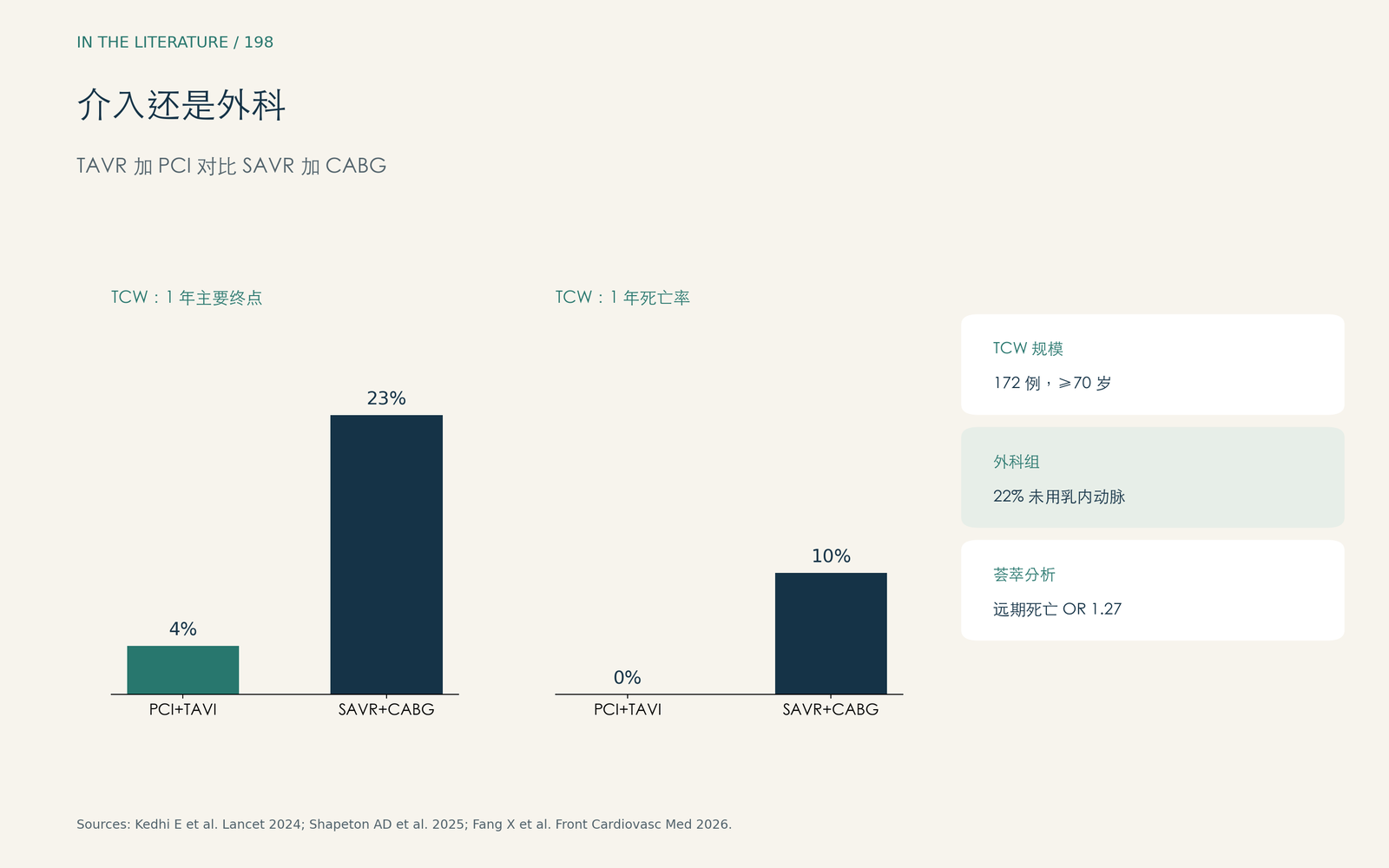
图 3. 早期安全性与远期结局之间的权衡。改绘自 Kedhi 等、Shapeton 等和 Fang 等。[5], [2], [6] 查看大图。

临床带走的三点
- 对显著的稳定病变,NOTION-3 支持 PCI(通常在 TAVI 前),以减少紧急再血运重建,代价是出血增加。[1]
- 支持 TAVI 后再 PCI 的观察性数据存在混杂;TAVI 前的 FFR 可能误导。[3], [4]
- 复杂病变时,要在 TAVR 加 PCI 的早期安全性与外科手术的远期结局之间权衡。[5], [6]
参考文献
- Harvey RE, Disque A, Poorsattar S, et al. Concomitant percutaneous coronary intervention during transcatheter aortic valve implantation: new literature supports clinical benefit. J Cardiothorac Vasc Anesth. 2025;39(9):2232–2235. doi:10.1053/j.jvca.2025.04.023
- Shapeton AD, Ortoleva J, Almarzooq ZI. The aortic valve replacement and revascularization odyssey: individualized treatment decisions in severe aortic stenosis with coronary artery disease. J Cardiothorac Vasc Anesth. 2025;39(7):1626–1629. doi:10.1053/j.jvca.2025.03.034
- Wang D, Lai S, Wang Z, et al. Impact of PCI strategies on outcomes of patients undergoing transcatheter aortic valve implantation with concomitant coronary artery disease: a systematic review and meta-analysis. PLoS One. 2025;20(4):e0321395. doi:10.1371/journal.pone.0321395
- Murray C, Ryan C, Cronin M, et al. Management of coronary artery disease in the context of transcatheter aortic valve implantation: a systematic review and meta-analysis of percutaneous coronary intervention timing and an algorithmic approach to management. Interv Cardiol. 2025;20:e21. doi:10.15420/icr.2024.51
- Kedhi E, Hermanides RS, Dambrink JHE, et al. TransCatheter aortic valve implantation and fractional flow reserve-guided percutaneous coronary intervention versus conventional surgical aortic valve replacement and coronary bypass grafting for treatment of patients with aortic valve stenosis and complex or multivessel coronary disease (TCW): an international, multicentre, prospective, open-label, non-inferiority, randomised controlled trial. Lancet. 2024;404(10471):2593–2602. doi:10.1016/S0140-6736(24)02100-7
- Fang X, Zhang X, Wei F, et al. Comparing TAVR + PCI vs. SAVR + CABG across short- and mid- to long-term horizons in patients with severe aortic stenosis and concomitant CAD: a systematic review and meta-analysis. Front Cardiovasc Med. 2026;13:1640906. doi:10.3389/fcvm.2026.1640906