ITL-d71305444c3b
Juan Li, MD · 更新于2026年11月18日
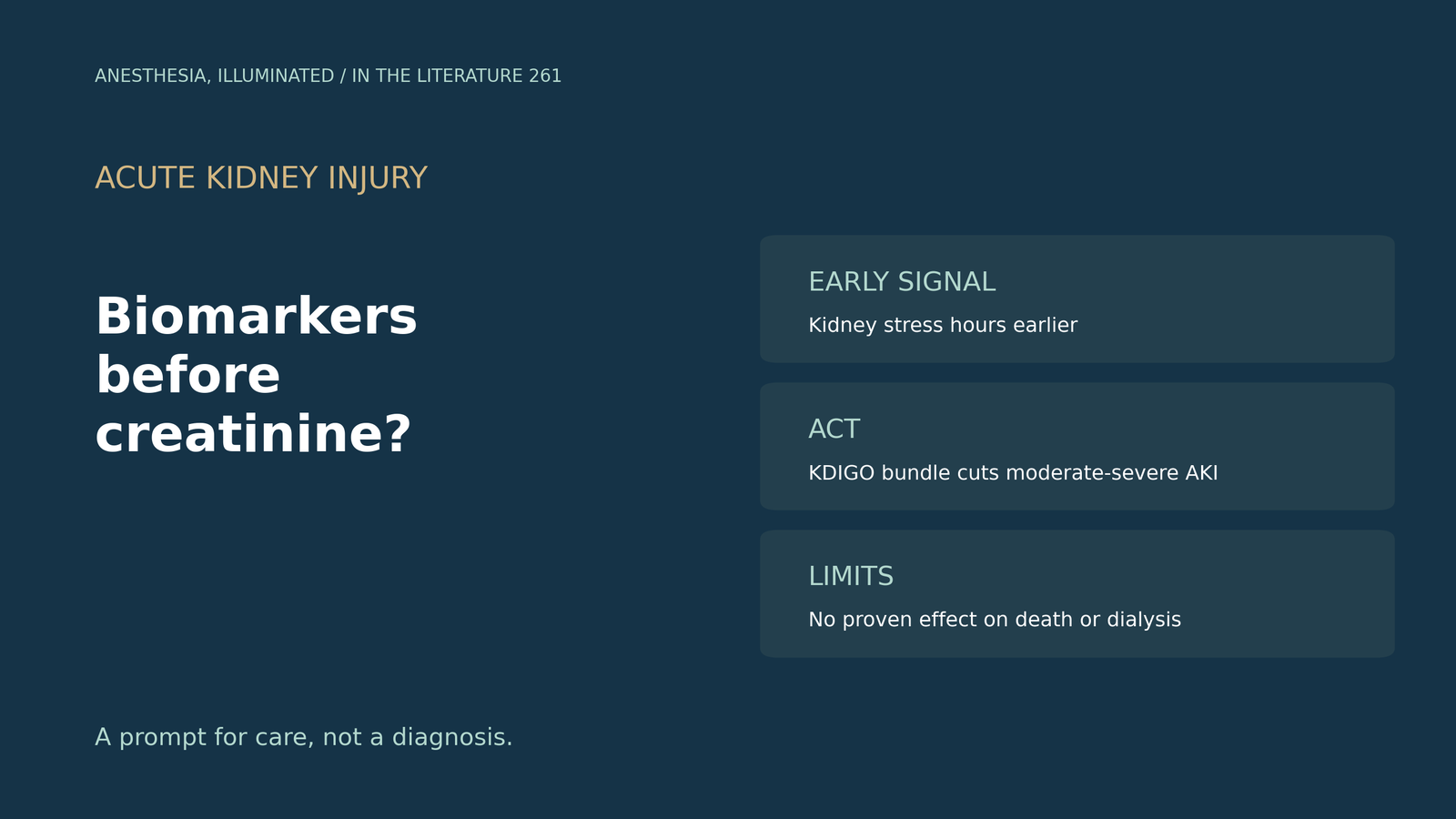
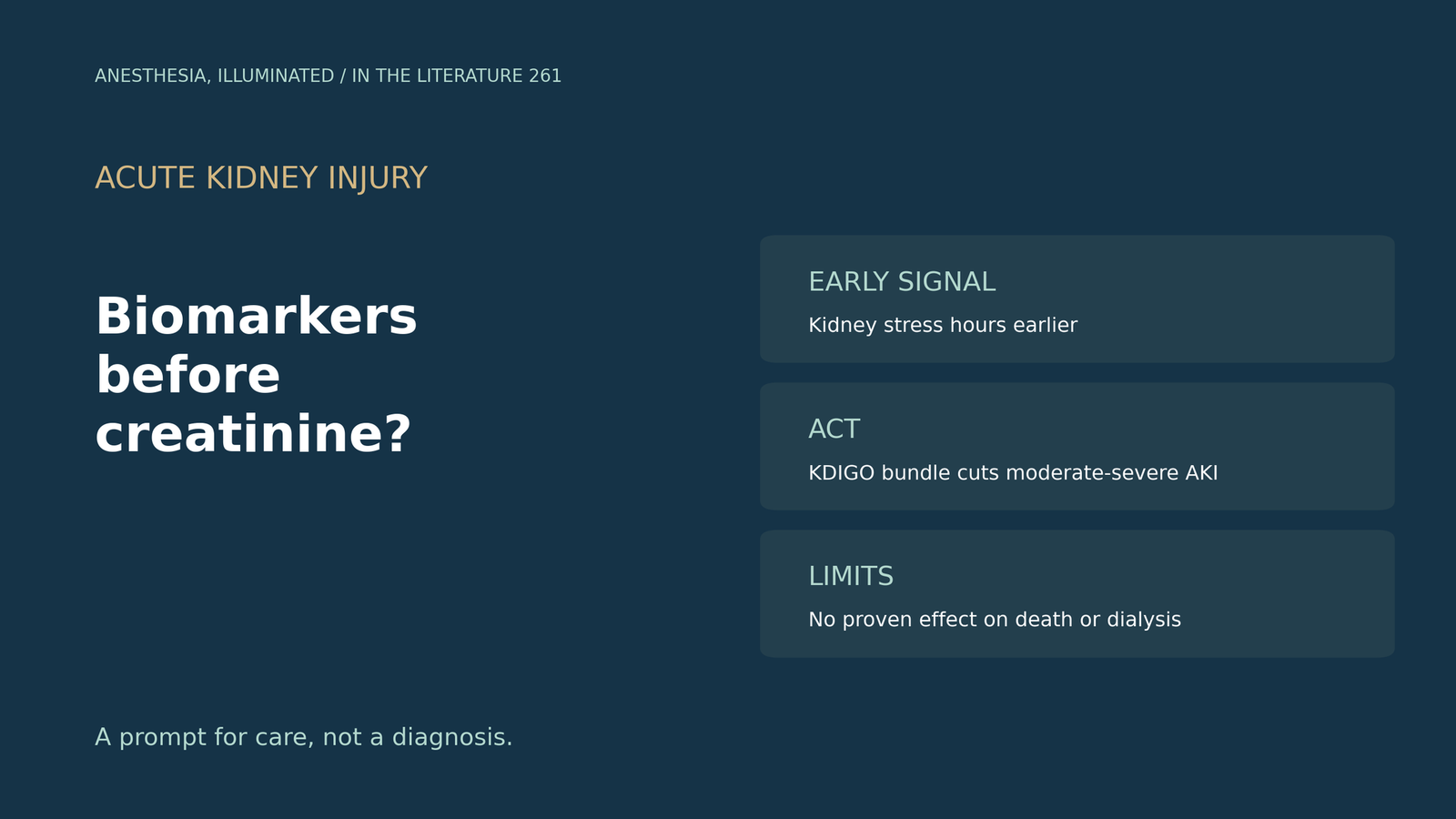
核心要点
- 准确性中等。ICU 成人中,NGAL 敏感度 65–89%,特异度 60–85%。[1]
- 手术中更早的信号。心脏手术中,术中尿 KIM1(而非 IL-18)与术后 AKI 相关。[2]
- 预测持续性 AKI。尿 CCL14 预测持续性 3 期 AKI 的 AUC 为 0.83。[3]
- 根据阳性结果采取措施对肾脏有益。PrevAKI 中,标志物阳性患者实施 KDIGO 集束措施后 AKI 从 71.7% 降至 55.1%。[4] BigpAK-2 证实大手术后中重度 AKI 减少。[5]
- 但硬结局未改善。汇总试验显示死亡、透析和 MAKE90 均无差异。[6]
心脏手术后,一位患者的肌酐仍然正常,但尿液标志物检测结果升高。这个结果会改变处理吗?
标志物发现早期 AKI 的能力
一项针对 ICU 成人的系统综述(Matarneh 等,Ren Fail 2025)显示,NGAL 敏感度 65–89%、特异度 60–85%(AUC 0.70–0.91),KIM-1 表现中等(AUC 0.64–0.80)。标志物可在肾脏损伤后 2–4 小时内升高,但 NGAL 并非完全肾脏特异,目前尚无单一标志物足以在 ICU 常规使用。[1] 心脏手术中(Silverton 等,J Cardiothorac Vasc Anesth 2021),术中尿 KIM1(而非 IL-18)与 AKI 相关;手术结束时的数值敏感度 0.95、特异度 0.49、AUC 0.72,符合其能比肌酐更早发现结构性损伤。[2] RUBY 研究(Hoste 等,Intensive Care Med 2020)分析了 364 名入组患者中的 331 名,发现尿 CCL14 预测持续性 3 期 AKI 的 AUC 为 0.83(0.78–0.87)。[3] 生理学指标也指向同一方向:体外循环后肾脏氧合恶化,肾小管损伤标志物尿 NAG/肌酐比值最多升高 7 倍(Lannemyr 等,Anesthesiology 2017);[7] 一项先导队列中,体外循环后尿氧分压越高,AKI 风险越低(RR 0.82,0.71–0.95)(Silverton 等,Anesthesiology 2021)。[8]
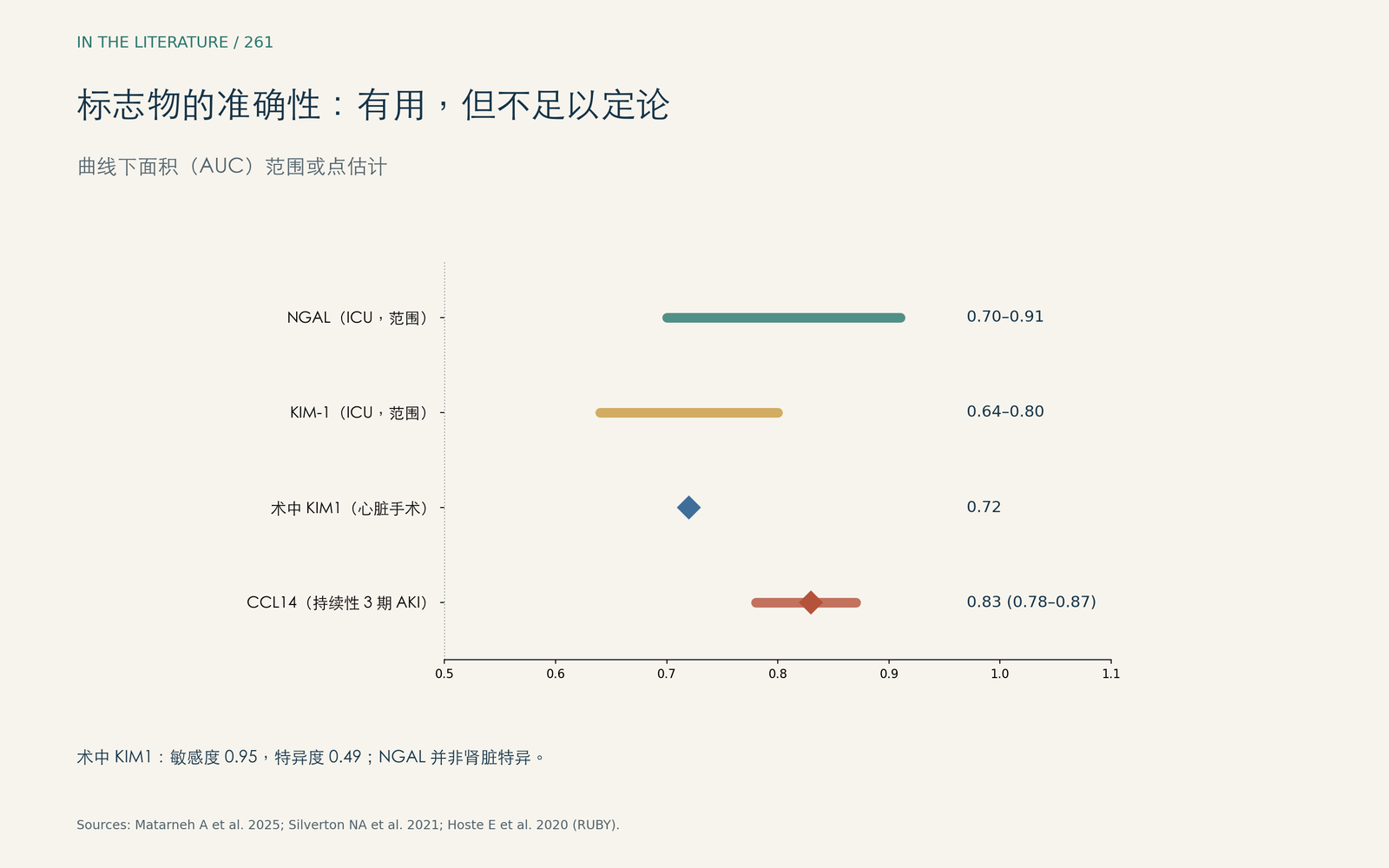
图 1. 区分能力中等到良好,但特异性有限。数据来自 Matarneh 等、Silverton 等与 RUBY 研究。[1], [2], [3] 查看大图。

标志物指导的预防试验
PrevAKI(Meersch 等,Intensive Care Med 2017)中,标志物阳性的心脏手术患者实施 KDIGO 集束措施后,AKI 发生率为 55.1% 对 71.7%,但单中心研究的效应量很可能被高估。[4] BigpAK-2(Zarbock 等,Lancet 2025)用尿液标志物识别大手术后的高危患者;1180 名随机患者中,集束组 84 名、对照组 131 名发生中重度 AKI(需治疗人数 12)。多数 AKI 诊断依据少尿标准,且试验没有检验长期结局的效能。[5] 汇总 1,851 名受试者(von Groote 等,Intensive Care Med 2026),集束组中重度 AKI 为 17.7%,对照组 27.1%(OR 0.55),死亡、透析和 MAKE90 均无差异。[6]
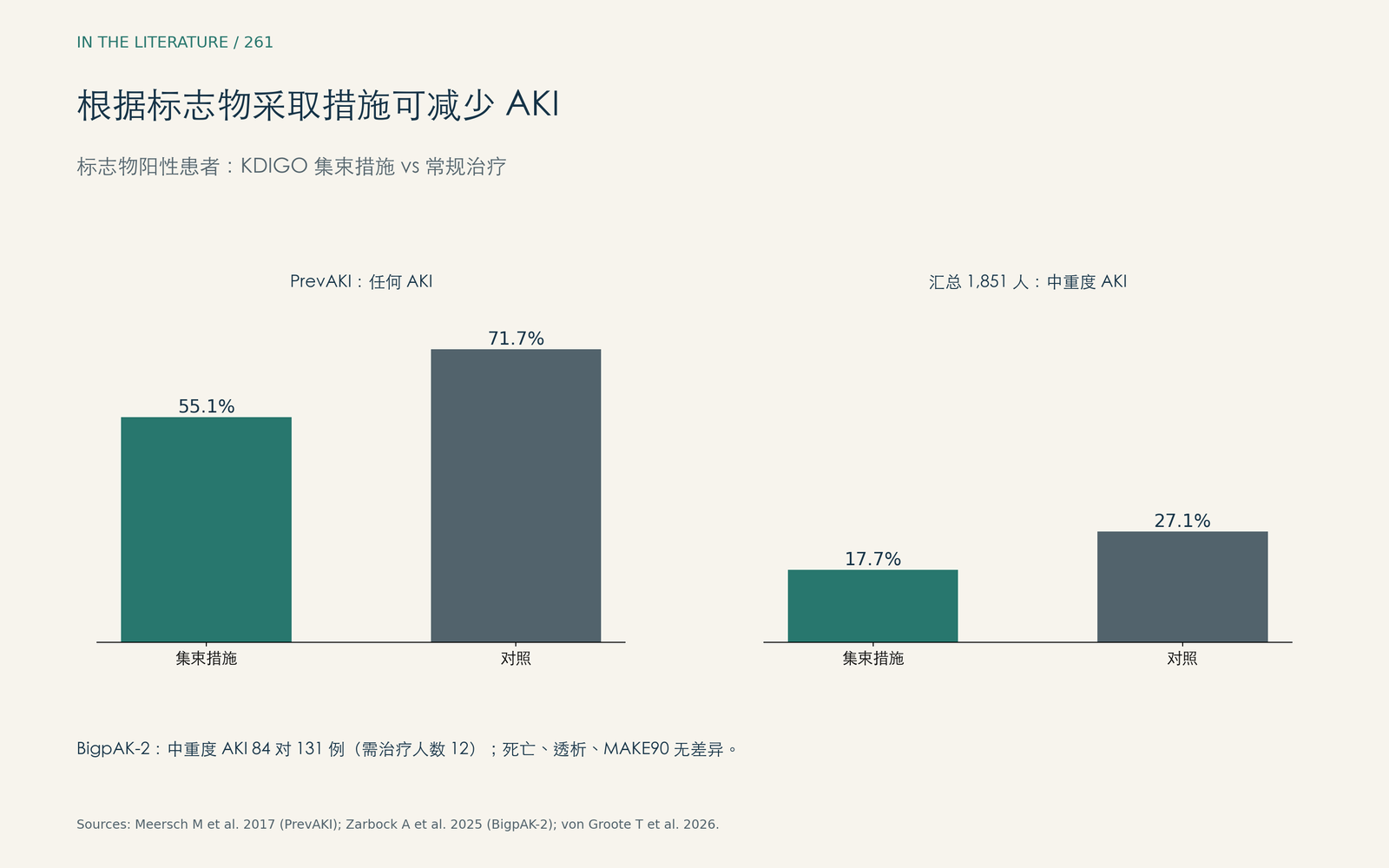
图 2. 标志物阳性患者实施 KDIGO 集束措施可减少 AKI。数据来自 PrevAKI 与 von Groote 等的汇总分析。[4], [6] 查看大图。

局限与成本
汇总分析指出,用标志物筛选患者本身的增量临床价值仍不确定,且纳入的三项试验由作者团队开展或协调。[6] 一篇综述(Cuttone 等,J Cardiothorac Vasc Anesth 2026)补充:标志物明显升高的患者中约 30% 至 40% 无需干预即可完全恢复;预防 1 例重度 AKI 可能需要检测 20 至 30 名患者,花费 6,000 至 12,000 美元。[9]
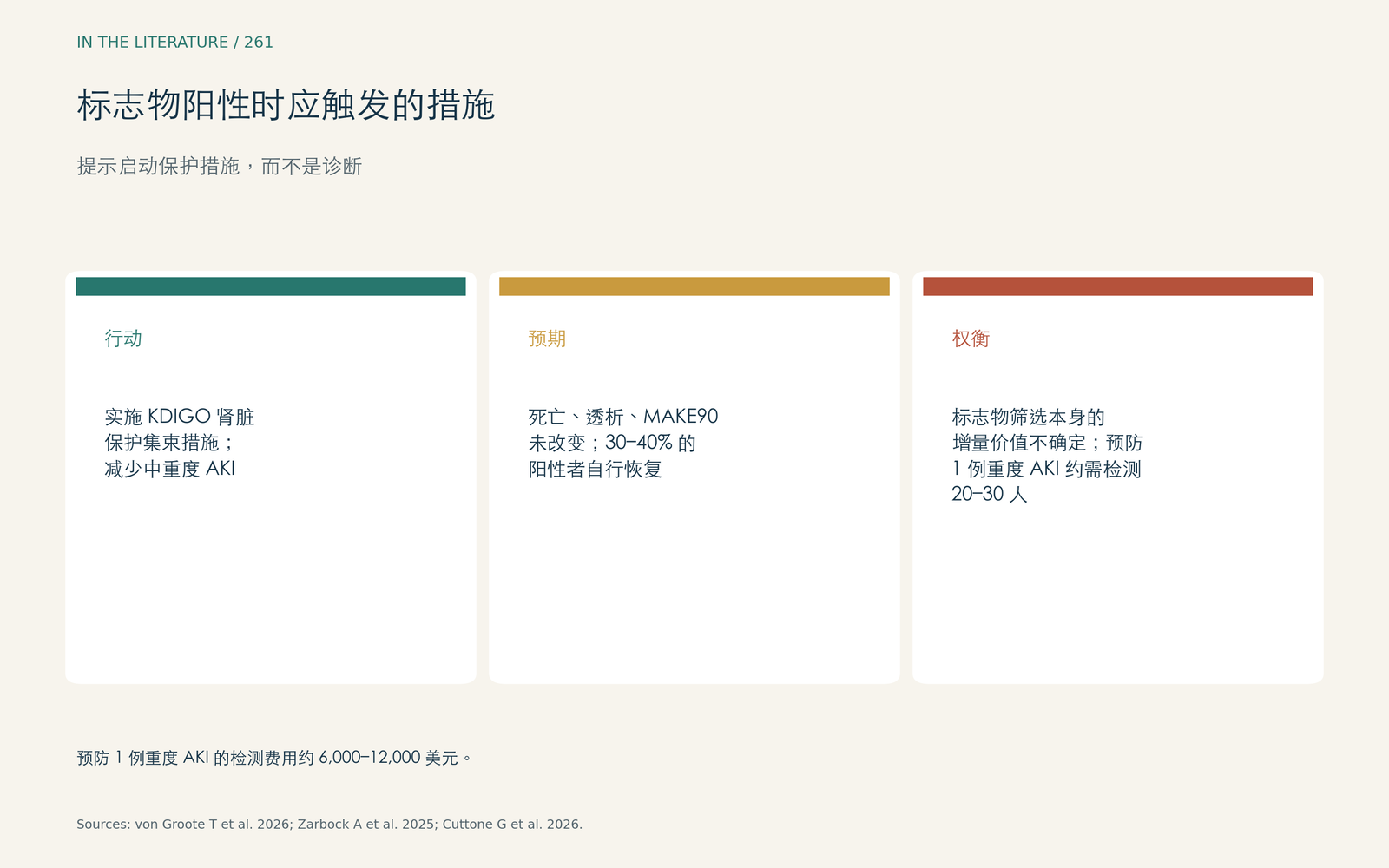
图 3. 阳性结果提示启动肾脏保护措施,而不是诊断。综合 von Groote 等、Zarbock 等与 Cuttone 等。[6], [5], [9] 查看大图。

临床带走的三点
- 标志物可在肌酐升高前提示肾脏应激,但没有任何一个单独使用就足够准确或特异。[1], [2], [3]
- 阳性结果最有价值的用途是触发 KDIGO 肾脏保护集束措施,它减少了中重度 AKI。[4], [5], [6]
- 预期的是 AKI 诊断减少,而非已证实的死亡或透析获益;还要权衡成本和假阳性。[6], [9]
参考文献
- Matarneh A, Akkari A, Sardar S, et al. Beyond creatinine: diagnostic accuracy of emerging biomarkers for AKI in the ICU – a systematic review. Ren Fail. 2025;47(1):2556295. doi:10.1080/0886022X.2025.2556295
- Silverton NA, Hall IE, Melendez NP, et al. Intraoperative urinary biomarkers and acute kidney injury after cardiac surgery. J Cardiothorac Vasc Anesth. 2021;35(6):1691–1700. doi:10.1053/j.jvca.2020.12.026
- Hoste E, Bihorac A, Al-Khafaji A, et al. Identification and validation of biomarkers of persistent acute kidney injury: the RUBY study. Intensive Care Med. 2020;46(5):943–953. doi:10.1007/s00134-019-05919-0
- Meersch M, Schmidt C, Hoffmeier A, et al. Prevention of cardiac surgery-associated AKI by implementing the KDIGO guidelines in high risk patients identified by biomarkers: the PrevAKI randomized controlled trial. Intensive Care Med. 2017;43(11):1551–1561. doi:10.1007/s00134-016-4670-3
- Zarbock A, Ostermann M, Forni L, et al. A preventive care strategy to reduce moderate or severe acute kidney injury after major surgery (BigpAK-2): a multinational, randomised clinical trial. Lancet. 2025;406(10521):2782–2791. doi:10.1016/S0140-6736(25)01717-9
- von Groote T, Bormann E, Marcello M, et al. Implementation of a kidney protection strategy to prevent acute kidney injury after major surgery in high-risk patients identified by biomarkers: a systematic review and individual participant data meta-analysis of randomized controlled trials. Intensive Care Med. 2026;52(5):1023–1034. doi:10.1007/s00134-026-08399-1
- Lannemyr L, Bragadottir G, Krumbholz V, et al. Effects of cardiopulmonary bypass on renal perfusion, filtration, and oxygenation in patients undergoing cardiac surgery. Anesthesiology. 2017;126(2):205–213. doi:10.1097/ALN.0000000000001461
- Silverton NA, Lofgren LR, Hall IE, et al. Noninvasive urine oxygen monitoring and the risk of acute kidney injury in cardiac surgery. Anesthesiology. 2021;135(3):406–418. doi:10.1097/ALN.0000000000003663
- Cuttone G, La Via L, Senussi Testa T, et al. Acute kidney injury in cardiac surgery: a comprehensive review of perioperative strategies and emerging biomarkers. J Cardiothorac Vasc Anesth. 2026;40(5):1541–1554. doi:10.1053/j.jvca.2025.11.009