
ITL-c72947908f4f
Juan Li, MD · 更新于2026年11月18日
核心要点
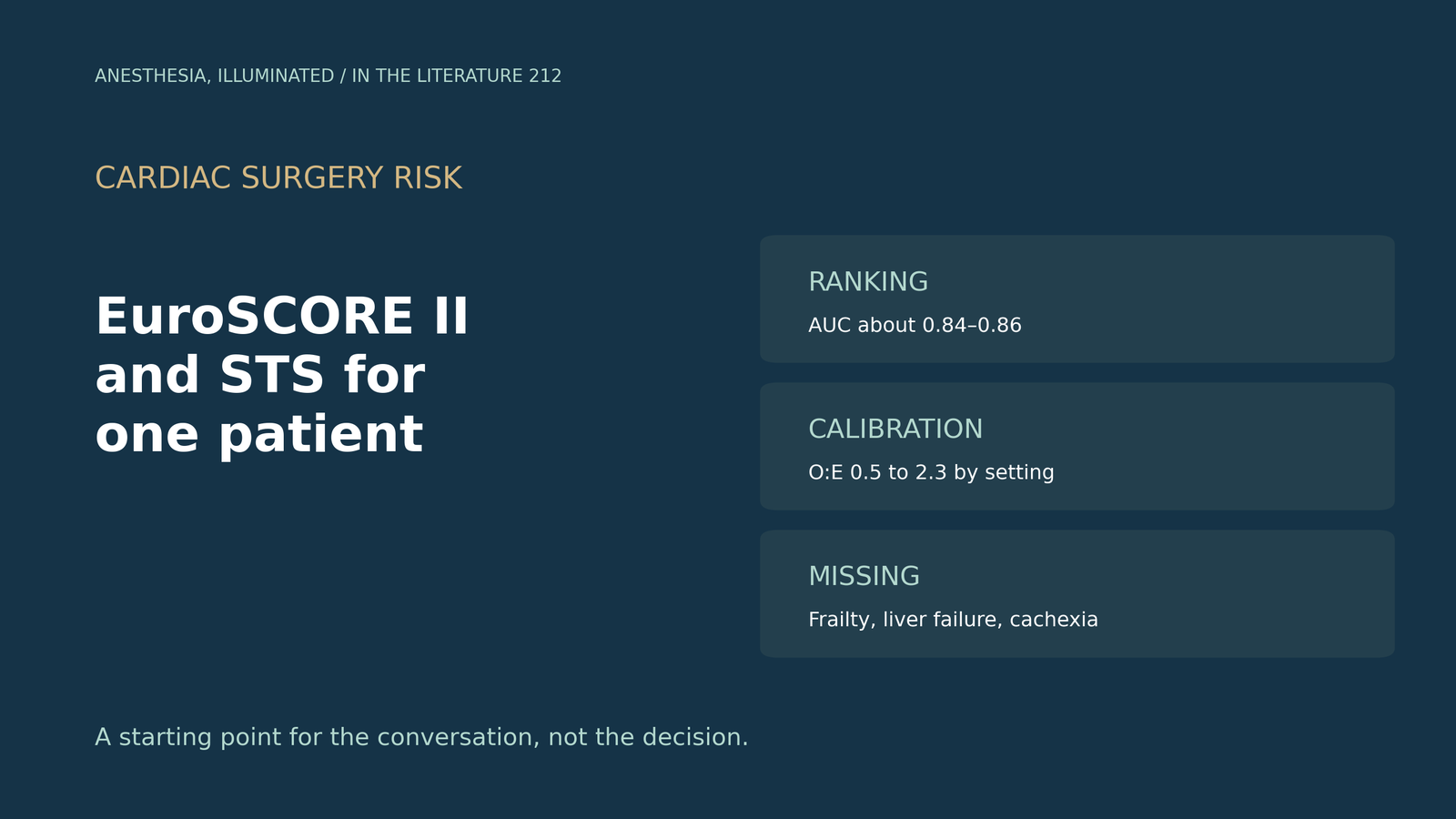
- 排序准确,但校准有偏。EuroSCORE II 和 STS 能可靠预测短期死亡,但 EuroSCORE II 在北美高估风险(O:E 0.515),在南美低估风险(O:E 2.279)。[1]
- 区分度相近。EuroSCORE II 的 AUC 为 0.844,STS 为 0.846;在一家美国中心,STS 的 O:E 为 0.68。[2]
- 校准会漂移。在荷兰,EuroSCORE II 持续高估死亡率,O:E 在 0.50 至 0.95 之间。[3]
- 时间范围很短。瓣膜手术后,STS 和 EuroSCORE 分别低估一年死亡率 51% 和 41%。[4]
- 有些风险评分看不到。156 例死亡中,60 例(38.5%)有 EuroSCORE II 未纳入的高危因素;衰弱使院内死亡风险增加一倍。[5], [6]
一位衰弱、合并肝硬化的 81 岁患者拟行主动脉瓣置换加 CABG,EuroSCORE II 为 4%。这个数字对这位患者意味着什么?在谈话中应怎样使用?[1], [5]
评分的表现
Sinha 等的荟萃分析发现,EuroSCORE II 和 STS 都能可靠预测短期死亡,常用于患者沟通和多学科讨论。EuroSCORE II(42 个人群、190 378 例患者、6254 例死亡)在北美的 O:E 为 0.515,在南美为 2.279;STS 每年重新校准,使 O:E 保持在 1 左右。[1] Ad 等发现 EuroSCORE II 和 STS 的 AUC 分别为 0.844 和 0.846,但 STS 的 O:E 为 0.68。[2] van Dijk 等发现,EuroSCORE II 在荷兰持续高估死亡率,O:E 为 0.50 至 0.95,平均 AUC 为 0.86。[3]
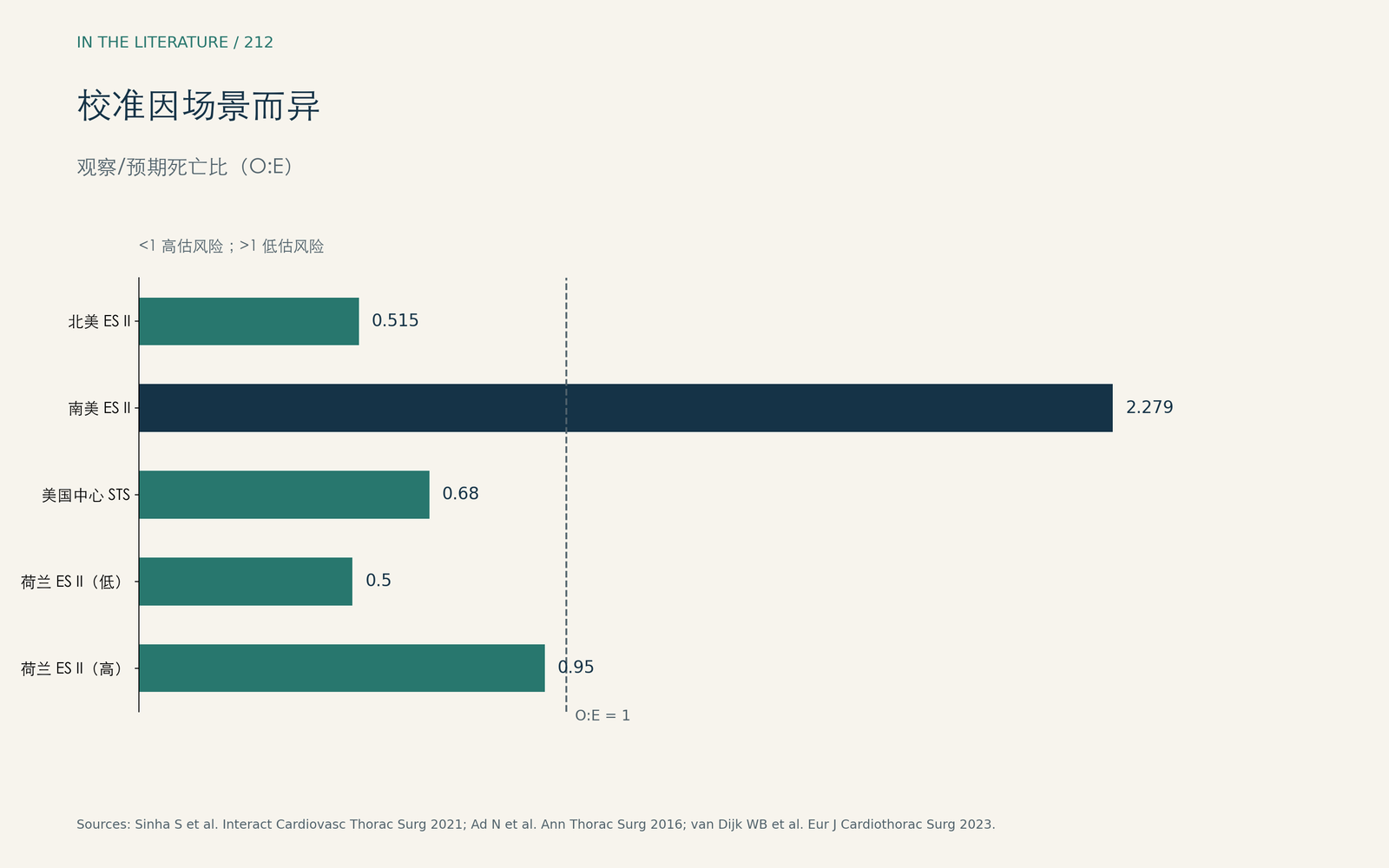
图 1. 排序好,校准不稳定。改绘自 Sinha 等、Ad 等和 van Dijk 等。[1], [2], [3] 查看大图。

评分遗漏了什么
Zhuo 等发现,瓣膜手术后 STS 和 EuroSCORE 分别低估一年死亡率 51% 和 41%,实际一年死亡率为 7.7%,但样本量小限制了检验效能。[4] Roefs 等指出,EuroSCORE II 预测的是院内死亡而不是 30 天死亡,也没有纳入所有风险因素:肝衰竭和恶病质会增加风险,156 例死亡中有 60 例(38.5%)存在额外的高危因素。[5] Iacobescu 等指出,评分区分度尚可,但校准可能较差,且未考虑体能状态和衰弱;衰弱患者的院内死亡风险增加一倍;仅凭年龄选择手术患者并不可取。[6] 反过来,评分之外的某些风险因素可能没有想象中重要:在一个 8% 患者有癌症诊断的队列中,校正后癌症与 1 年死亡率无关(Portefaix 等,J Cardiothorac Vasc Anesth 2022)。[7]

图 2. 时间范围与遗漏因素。综合自 Zhuo 等、Roefs 等和 Iacobescu 等。[4], [5], [6] 查看大图。

床旁如何使用评分
Ad 等的结论是,任何临床决策都不应只依据计算出的评分;评分用于辅助而不是主导决策。[2]

图 3. 计算、校准、补充遗漏,再讨论。综合自 Sinha 等、Ad 等、Roefs 等和 Iacobescu 等。[1], [2], [5], [6] 查看大图。

临床带走的三点
- EuroSCORE II 和 STS 风险排序准确,但百分比是否可信取决于本地校准。[1], [3]
- 它们预测的是短期死亡,并遗漏衰弱等因素。[4], [5], [6]
- 用评分开启谈话,而不是用它做决定。[2]
参考文献
- Sinha S, Dimagli A, Dixon L, et al. Systematic review and meta-analysis of mortality risk prediction models in adult cardiac surgery. Interact Cardiovasc Thorac Surg. 2021;33(5):673–686. doi:10.1093/icvts/ivab151
- Ad N, Holmes SD, Patel J, et al. Comparison of EuroSCORE II, original EuroSCORE, and the Society of Thoracic Surgeons risk score in cardiac surgery patients. Ann Thorac Surg. 2016;102(2):573–579. doi:10.1016/j.athoracsur.2016.01.105
- van Dijk WB, Leeuwenberg AM, Grobbee DE, et al. Dynamics in cardiac surgery: trends in population characteristics and the performance of the EuroSCORE II over time. Eur J Cardiothorac Surg. 2023;64(3):ezad301. doi:10.1093/ejcts/ezad301
- Zhuo DX, Bilchick KC, Shah KP, et al. MAGGIC, STS, and EuroSCORE II risk score comparison after aortic and mitral valve surgery. J Cardiothorac Vasc Anesth. 2021;35(6):1806–1812. doi:10.1053/j.jvca.2020.11.053
- Roefs MM, Daeter EJ, Thio MSY, et al. Assessing the prevalence of risk factors not included in the EuroSCORE II and their impact on hospital benchmarking in cardiac surgery. J Cardiothorac Surg. 2026;21(1):871. doi:10.1186/s13019-026-04639-z
- Iacobescu RA, Lunguleac T, Antoniu S, et al. Risk stratification for postoperative mortality in cardiac surgery: “quo vadis”? Medicina (Kaunas). 2026;62(3):606. doi:10.3390/medicina62030606
- Portefaix H, Papin G, Kantor E, et al. One-year outcome after cardiac surgery for patients with cancer: an observational monocentric retrospective study. J Cardiothorac Vasc Anesth. 2022;36(7):1934–1941. doi:10.1053/j.jvca.2021.11.014