ITL-fde792a47873
Juan Li, MD · 更新于2026年11月18日
核心要点
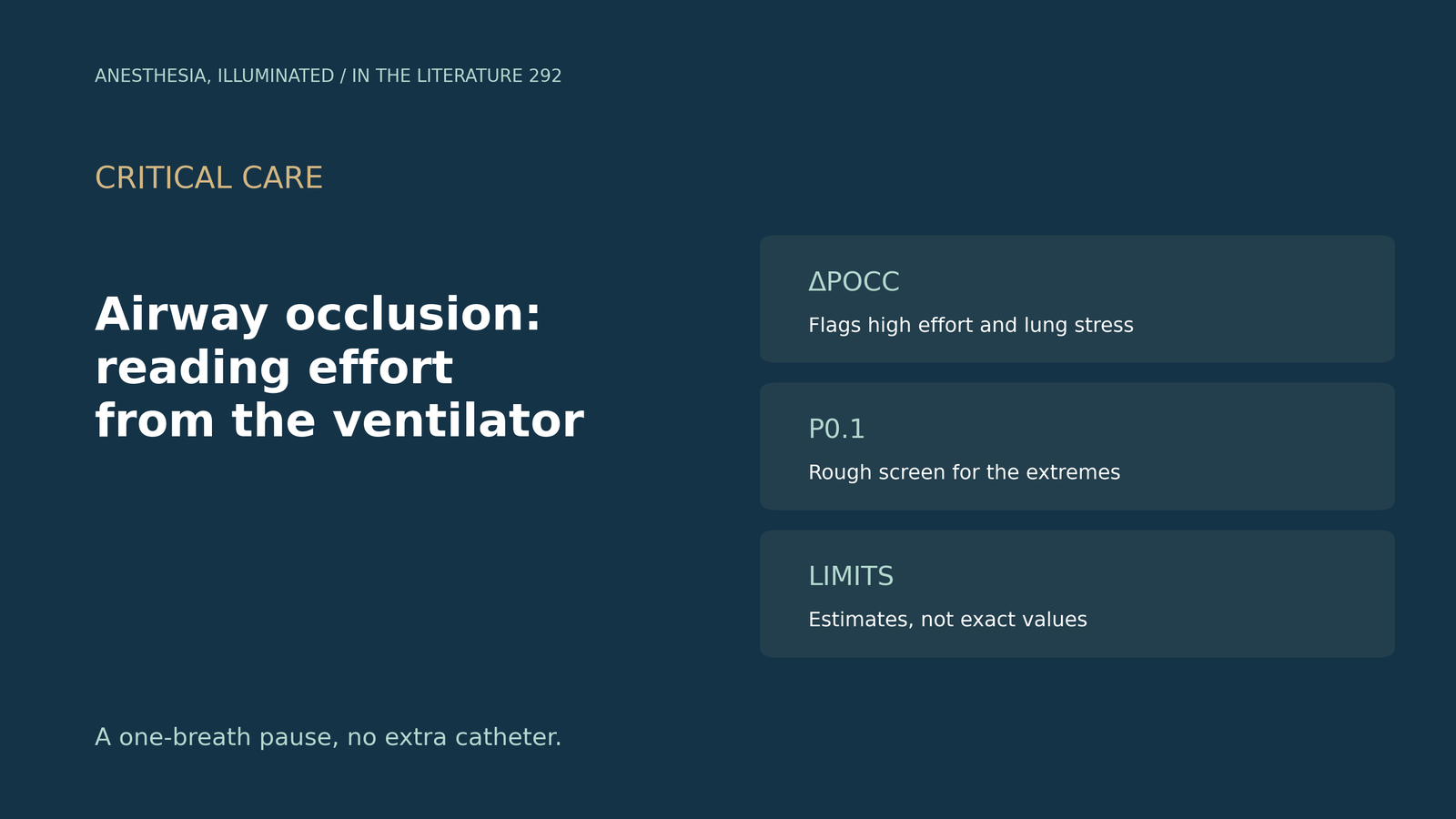
- 一次暂停,两个估计。呼气末阻断时的压力摆动(ΔPocc)可换算为肌肉压和动态肺应力,并能准确提示高努力。[1]
- 适合提示,不适合精确定量。ΔPocc 和 P0.1 都不能预测精确值,现有切点仅基于共识。[2]
- 努力不等于驱动。高驱动并不总是意味着高努力,食管压仍是参考标准。[3]
- 技术很关键。平均多次呼吸,警惕内源性 PEEP,P0.1 只用于筛查极端情况。[4], [5], [6]
一位压力支持通气的患者呼吸平稳,频率 22 次/分,潮气量 7 mL/kg,但团队怀疑存在隐匿的强吸气努力。一次简单的呼吸机暂停能看出来吗?
方法的来源
在推导研究中(Bertoni 等,Crit Care 2019),呼气末阻断压力摆动(ΔPocc)能准确识别超过 10 cmH2O 的肌肉压(AUROC 0.92)。作者采用的换算系数为:肌肉压取 −3/4,动态跨肺压取 2/3,即肌肉压约为 −3/4 × ΔPocc,动态肺应力约为 ΔPaw − 2/3 × ΔPocc。84% 的患者日肌肉压超过 10 cmH2O,但个体内一致性界限较宽。[1]
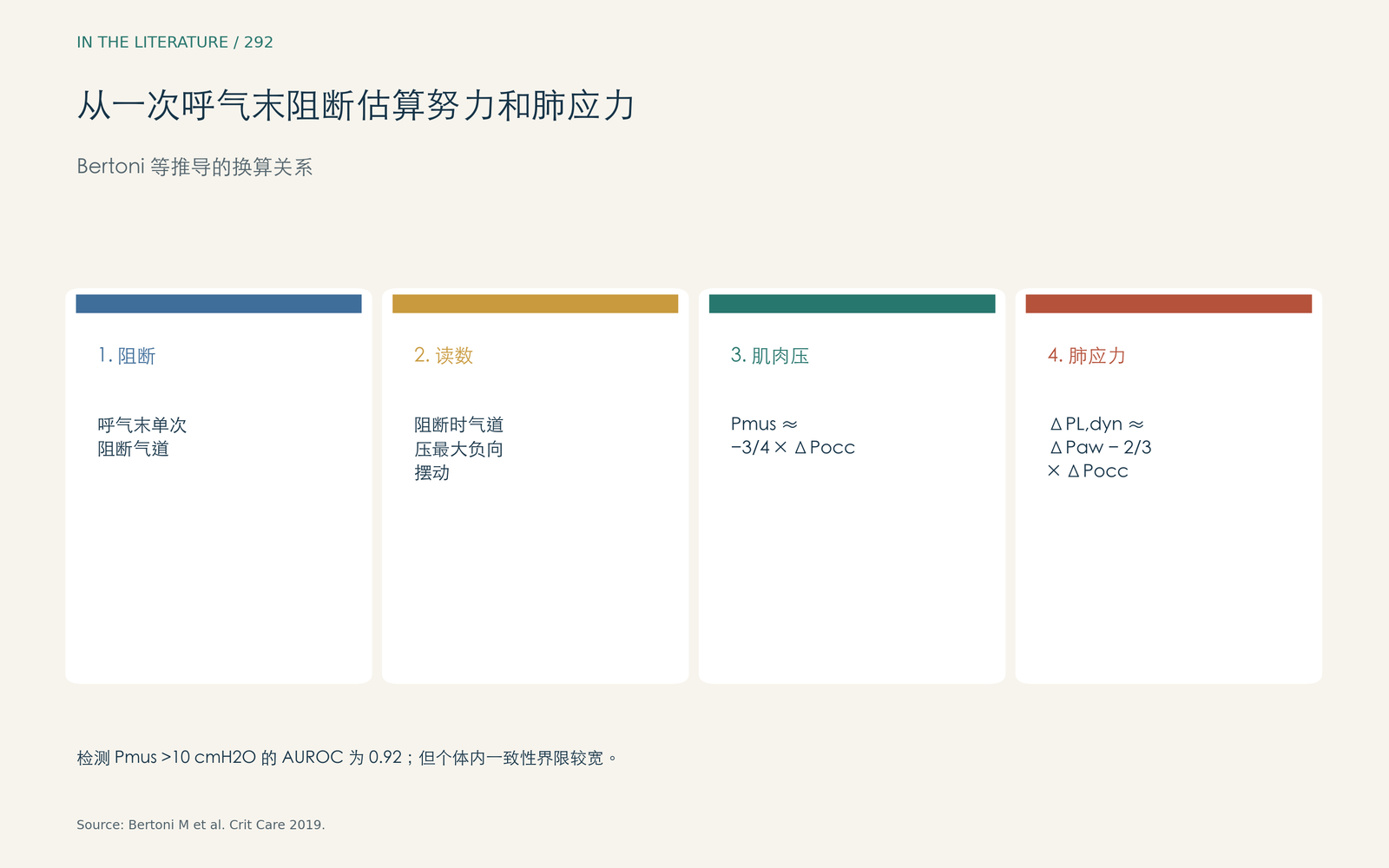
图 1. 呼气末阻断,读取 ΔPocc,再换算为肌肉压和动态肺应力。数据来自 Bertoni 等。[1] 查看大图。

准确性如何
以双球囊为参考(de Vries 等,Anesthesiology 2023),P0.1 和 Pocc 都不应用于预测努力或肺应力的精确值;Pocc 在识别高膈肌努力方面比 P0.1 更准确,而现有切点仅基于共识。[2]
ΔPocc 是整次呼吸阻断期间气道压的最大负向摆动;评估整体努力的金标准是食管压-时间乘积;呼吸驱动升高并不总是导致努力增加(Goligher 等,Intensive Care Med 2020)。[3]
如何操作及其局限
P0.1 是阻断后前 100 ms 内的气道压下降,更适合作为筛查极端努力的工具。单次随机阻断不会明显改变呼吸模式,但若阻断时内源性 PEEP 未达到平衡,ΔPocc 可能低估努力。应至少平均 3–5 次呼吸并重复测量;如需精确定量,食管测压仍是金标准(Tonelli 等,Crit Care 2025)。[4]
有人提出 ΔPocc 绝对值 6–13 cmH2O 为安全范围,但 ΔPocc 并没有确定的安全切点(Chiumello 等,Ann Intensive Care 2026)。[5] 呼吸机测得的 P0.1 与呼吸功相关性差,作者不推荐把呼吸机 P0.1 作为可靠的努力指标(Smits 等,Crit Care Med 2025)。[6]
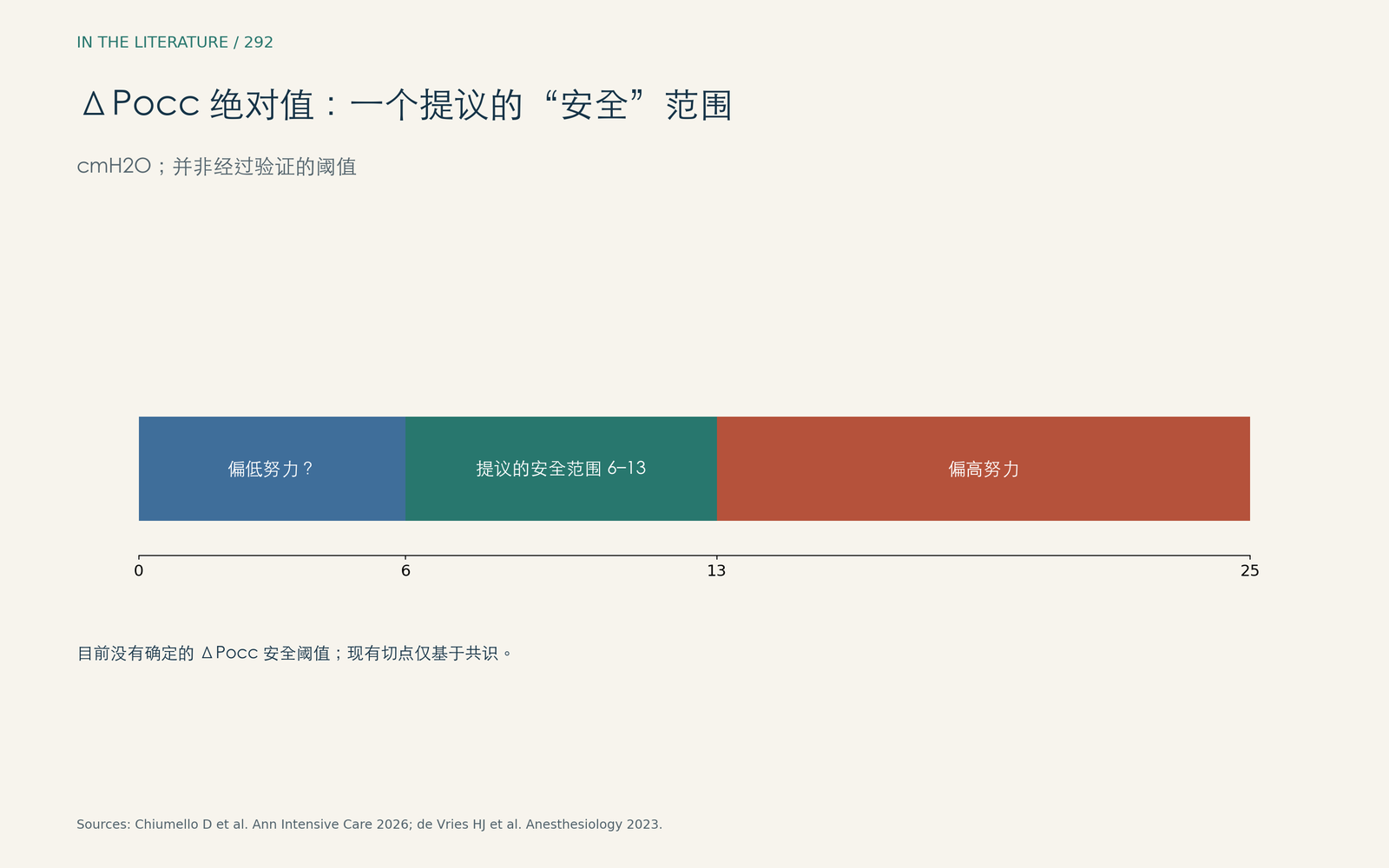
图 2. 有人提出 6–13 cmH2O 的范围,但没有经过验证的切点。数据来自 Chiumello 等和 de Vries 等。[2], [5] 查看大图。

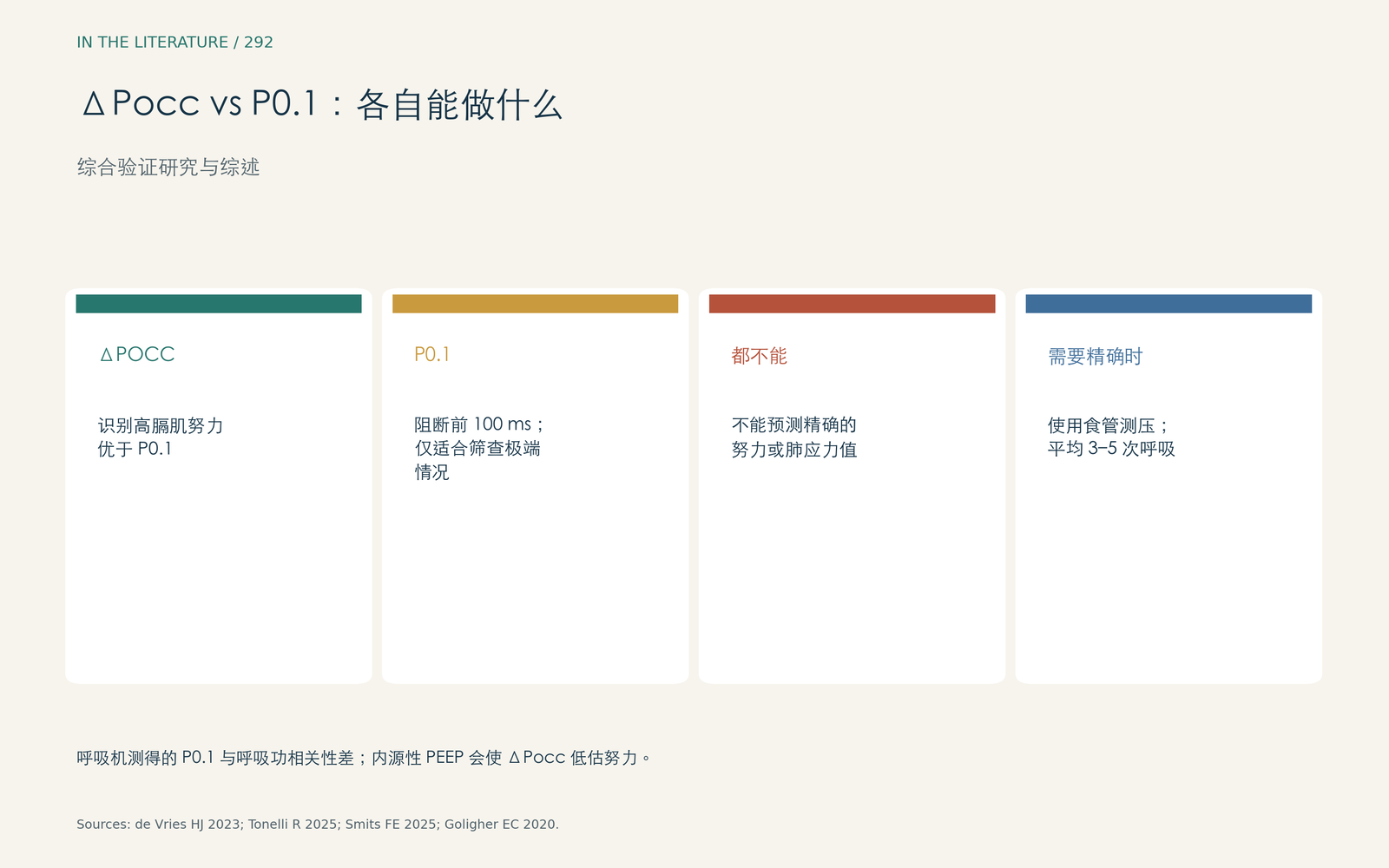
图 3. ΔPocc 更适合提示高努力;P0.1 只是粗略筛查;两者都不能给出精确值。综合 de Vries 等、Tonelli 等、Smits 等和 Goligher 等。[2], [3], [4], [6] 查看大图。

临床带走的三点
- 在辅助通气中,用呼气末阻断来提示过高的努力和肺应力。[1], [2]
- 把换算出的数值当作估计值;平均 3–5 次呼吸,并留意内源性 PEEP。[4], [5]
- 不要单独依赖呼吸机 P0.1;需要精确数值时使用食管测压。[3], [6]
参考文献
- Bertoni M, Telias I, Urner M, et al. A novel non-invasive method to detect excessively high respiratory effort and dynamic transpulmonary driving pressure during mechanical ventilation. Crit Care. 2019;23:346. doi:10.1186/s13054-019-2617-0
- de Vries HJ, Tuinman PR, Jonkman AH, et al. Performance of noninvasive airway occlusion maneuvers to assess lung stress and diaphragm effort in mechanically ventilated critically ill patients. Anesthesiology. 2023;138(3):274–288. doi:10.1097/ALN.0000000000004467
- Goligher EC, Jonkman AH, Dianti J, et al. Clinical strategies for implementing lung and diaphragm-protective ventilation: avoiding insufficient and excessive effort. Intensive Care Med. 2020;46(12):2314–2326. doi:10.1007/s00134-020-06288-9
- Tonelli R, Protti A, Spinelli E, et al. Assessing inspiratory drive and effort in critically ill patients at the bedside. Crit Care. 2025;29:339. doi:10.1186/s13054-025-05526-0
- Chiumello D, Muscas A, Mancusi S, Fioccola A. The invasive and non-invasive monitoring of inspiratory effort and drive during assisted mechanical ventilation. Ann Intensive Care. 2026;16:100003. doi:10.1016/j.aicoj.2025.100003
- Smits FE, Rietveld PJ, Snoep JWM, et al. P0.1 is an unreliable measure of effort in support mechanical ventilation in comparison with esophageal-derived measures of effort: a comparison study. Crit Care Med. 2025;53(8):e1650–e1658. doi:10.1097/CCM.0000000000006745