ITL-8a035ced95e1
Juan Li, MD · 更新于2026年11月18日
核心要点
- NLR 与死亡相关。在 12 项研究、13,262 例患者中,术前 NLR 升高与短期死亡相关(OR 3.18)。[1]
- 信号真实但粗糙。在 3249 例瓣膜手术患者中,NLR 大于 3.5 与 30 天死亡相关(5.3% 对 1.2%),但对 AKI 的预测很弱(AUC 0.556)。[2]
- 没有单一标志物区分度好。820 例患者的 10 种标志物中,对生存的最佳 C 指数只有 0.619。[3]
- 降钙素原有助于排除感染。界值 3 ng/mL 时敏感度 0.67、特异度 0.73,在低患病率下阴性预测值超过 90%。[4]
- 时间很重要。肝素和体外循环会使 HBP 早期升高,而 CRP、IL-6 和 IL-8 高峰较晚。[5]
瓣膜手术后第二天,患者发热、CRP 持续上升,术前 NLR 也偏高。这些数字到底预测什么?是否意味着感染?[1], [4]
术前 NLR 与结局
Perry 等汇总了 12 项研究、13,262 例患者:术前 NLR 升高与短期死亡相关(OR 3.18),NLR 每增加一个单位,长期死亡风险增加(HR 1.09)。各研究界值从 2.4 到 10 不等,也无法正式评估发表偏倚。[1] Tian 等研究了 3249 例瓣膜手术患者:NLR 大于 3.5 者 30 天死亡率更高(5.3% 对 1.2%;相对风险 3.236),但对 AKI 的预测很弱(AUC 0.556),且为单中心回顾性研究。[2] Liu 等在 820 例患者中比较了术前仅测一次的 10 种标志物,对生存的最佳 C 指数只有 0.619。[3] 其他血常规指标也类似:一项荟萃分析(Frentiu 等,J Cardiothorac Vasc Anesth 2023)显示,术前红细胞分布宽度升高与远期死亡率(HR 1.63)和短期死亡率(OR 2.16)相关,但研究间异质性很大。[6]
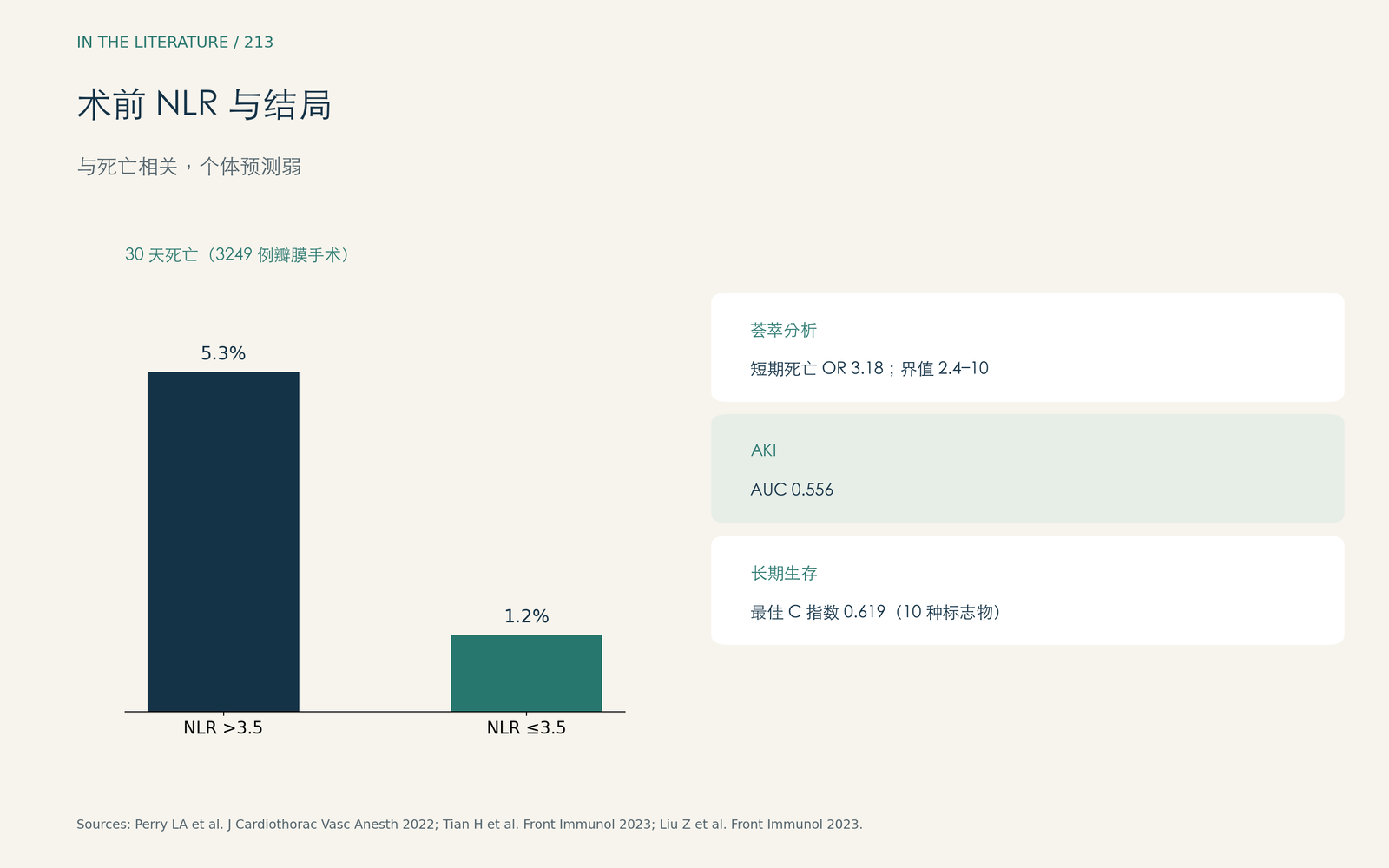
图 1. 与死亡相关,对个体预测较弱。改绘自 Perry 等、Tian 等和 Liu 等。[1], [2], [3] 查看大图。

降钙素原与感染
Nicolotti 等发现,心脏手术后降钙素原的最佳界值为 3 ng/mL,高于通常的 0.5 至 1.0 ng/mL;敏感度 0.67、特异度 0.73、AUC 0.75。患病率低于 20% 时阴性预测值超过 90%,因此降钙素原可能有助于排除感染,但没有研究预先设定界值。[4] 在体外循环术后的儿童中(Silvetti 等,J Cardiothorac Vasc Anesth 2021),术后 48 小时降钙素原对早期感染的预测能力只是中等(AUC 0.63)。[7]
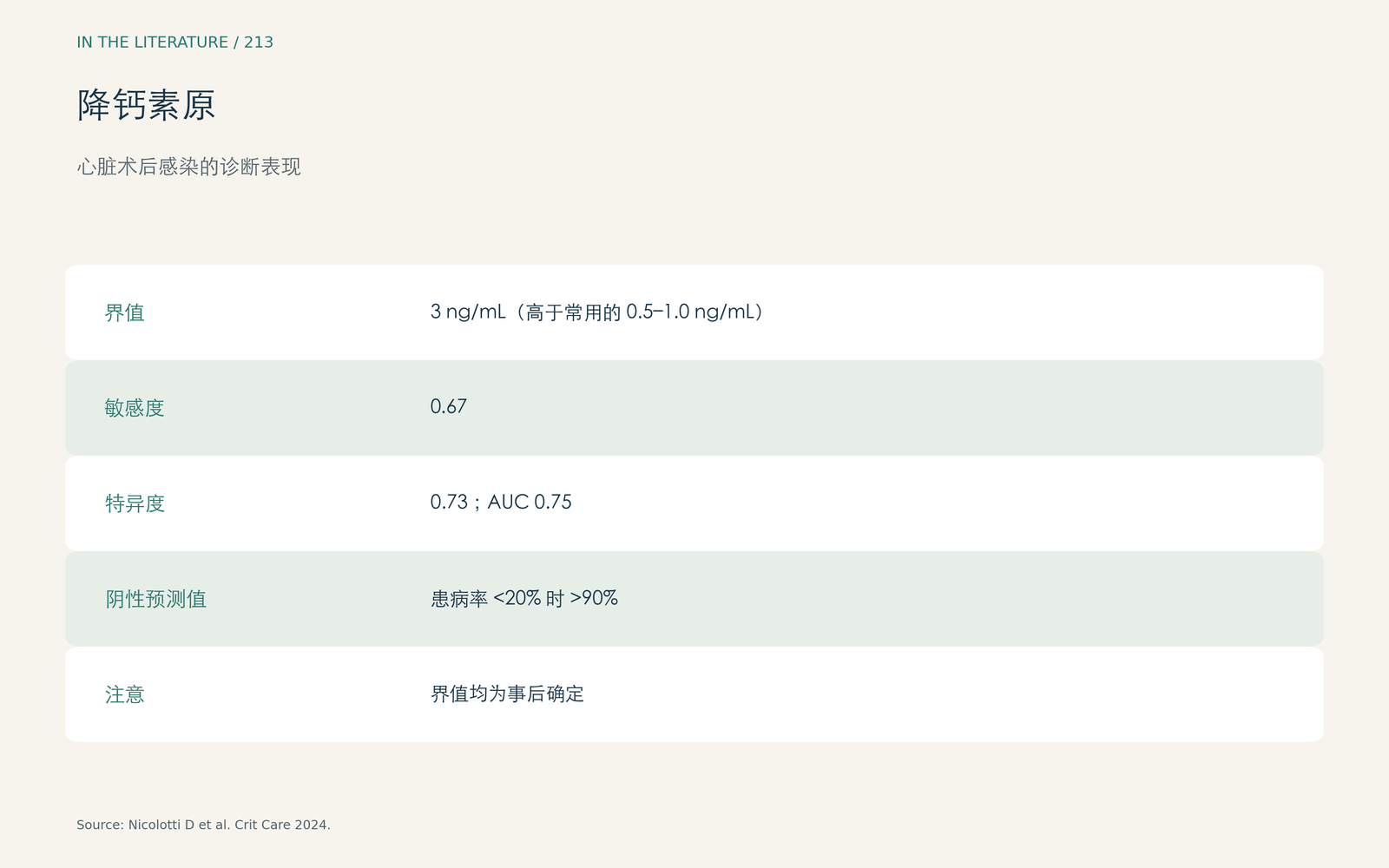
图 2. 排除比确诊更有用。改绘自 Nicolotti 等。[4] 查看大图。

为什么时间和场景很重要
Sterner 等发现,肝素结合蛋白在给予肝素后立即升高,体外循环中进一步升高,而 CRP、白细胞计数、IL-6 和 IL-8 的高峰都较晚;该先导研究样本量较小。[5] Belletti 等发现,在机械循环支持患者中,即使没有脓毒症,胰石蛋白也很高,提示心源性休克患者可能需要不同的界值。[8]
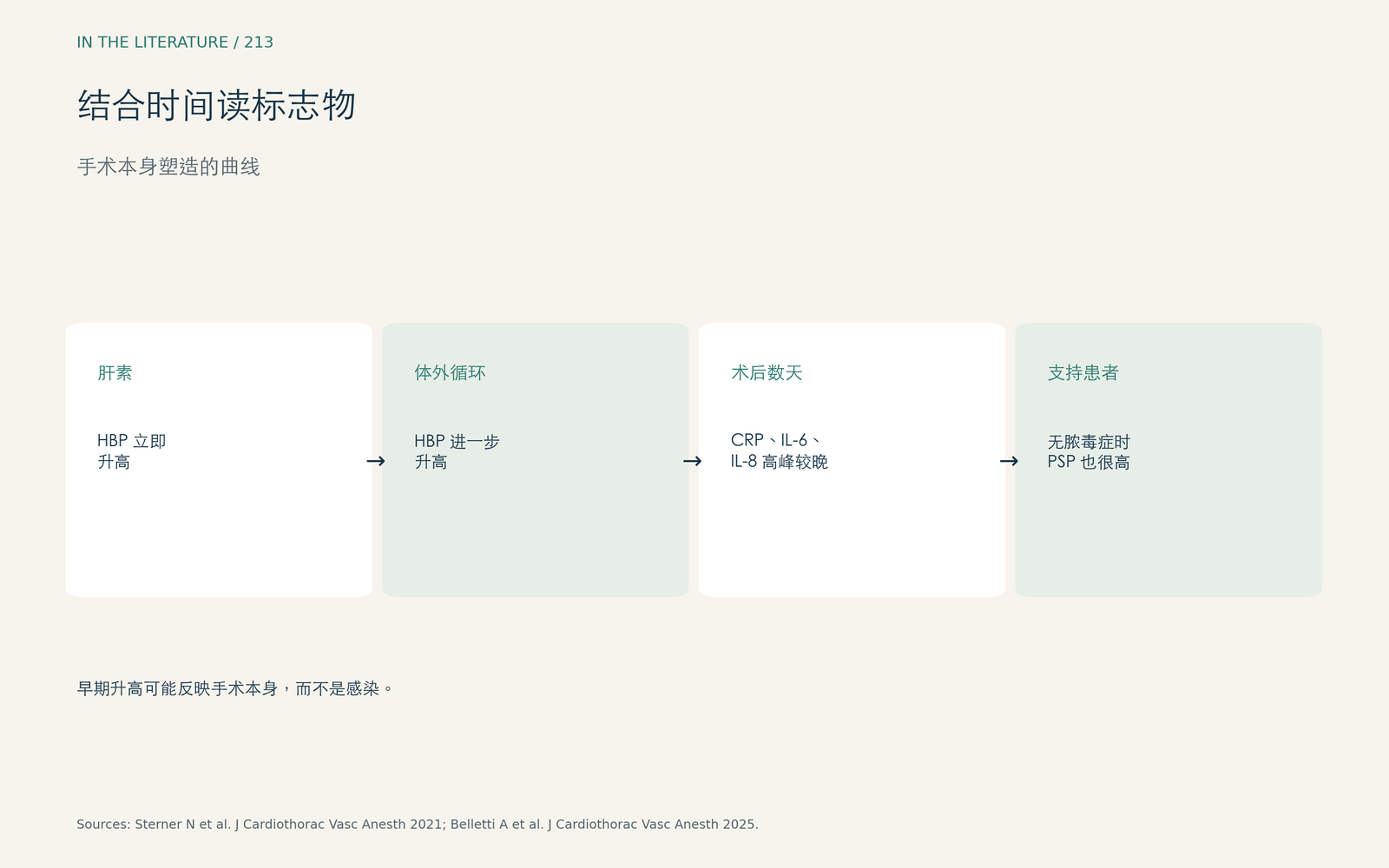
图 3. 结合时间读标志物。综合自 Sterner 等和 Belletti 等。[5], [8] 查看大图。

临床带走的三点
- 术前 NLR 高提示死亡风险较高,但不能很好地预测个体并发症。[1], [2], [3]
- 降钙素原更适合排除感染,而不是确诊感染。[4]
- 解读任何标志物都要结合距体外循环的时间和临床场景。[5], [8]
参考文献
- Perry LA, Liu Z, Loth J, et al. Perioperative neutrophil-lymphocyte ratio predicts mortality after cardiac surgery: systematic review and meta-analysis. J Cardiothorac Vasc Anesth. 2022;36(5):1296–1303. doi:10.1053/j.jvca.2021.07.001
- Tian H, Jiang X, Duan G, et al. Preoperative inflammatory markers predict postoperative clinical outcomes in patients undergoing heart valve surgery: a large-sample retrospective study. Front Immunol. 2023;14:1159089. doi:10.3389/fimmu.2023.1159089
- Liu Z, Zhu G, Zhang Y, et al. Comprehensive comparative analysis of the prognostic impact of systemic inflammation biomarkers for patients underwent cardiac surgery. Front Immunol. 2023;14:1190380. doi:10.3389/fimmu.2023.1190380
- Nicolotti D, Grossi S, Palermo V, et al. Procalcitonin for the diagnosis of postoperative bacterial infection after adult cardiac surgery: a systematic review and meta-analysis. Crit Care. 2024;28(1):44. doi:10.1186/s13054-024-04824-3
- Sterner N, Fisher J, Thelaus L, et al. The dynamics of heparin-binding protein in cardiothoracic surgery—a pilot study. J Cardiothorac Vasc Anesth. 2021;35(9):2640–2650. doi:10.1053/j.jvca.2020.12.033
- Frentiu AA, Mao K, Borg Caruana C, et al. The prognostic significance of red cell distribution width in cardiac surgery: a systematic review and meta-analysis. J Cardiothorac Vasc Anesth. 2023;37(3):471–479. doi:10.1053/j.jvca.2022.11.015
- Silvetti S, Lembo R, Mesini A, et al. Procalcitonin and early postoperative infection after pediatric cardiopulmonary bypass surgery. J Cardiothorac Vasc Anesth. 2021;35(12):3688–3693. doi:10.1053/j.jvca.2021.04.036
- Belletti A, Bonizzoni MA, Labanca R, et al. Pancreatic stone protein as sepsis biomarker in patients requiring mechanical circulatory support: a pilot observational study. J Cardiothorac Vasc Anesth. 2025;39(5):1229–1235. doi:10.1053/j.jvca.2025.01.037